


Poor Access to Safe Water Fuels Cholera Outbreak in Syria

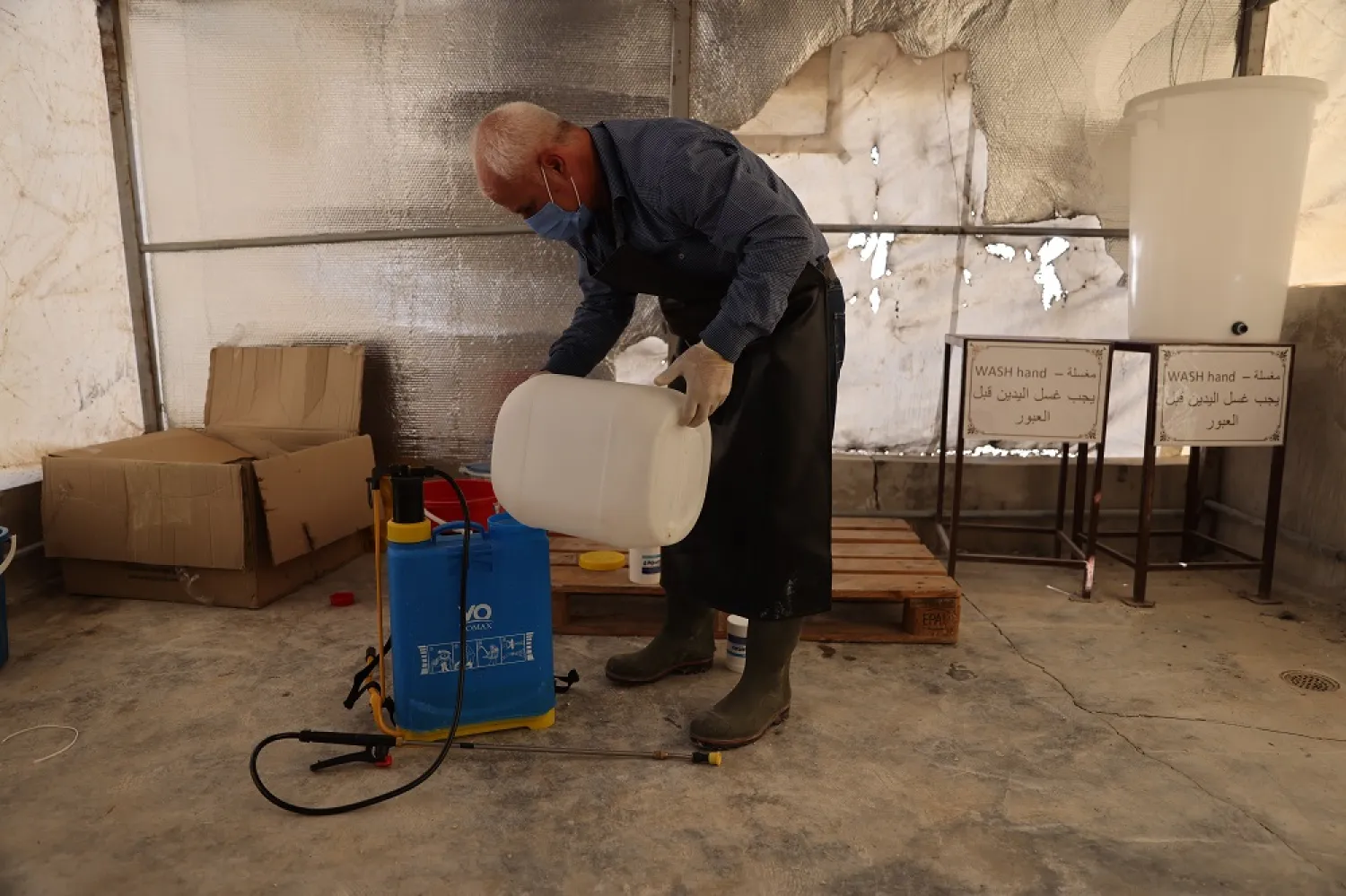
05 November 2022, Syria, Darkoush: A health worker prepares a sterilizer at cholera ward of Al-Rahma Hospital in the city of Darkoush. (dpa)
TT

Poor Access to Safe Water Fuels Cholera Outbreak in Syria

05 November 2022, Syria, Darkoush: A health worker prepares a sterilizer at cholera ward of Al-Rahma Hospital in the city of Darkoush. (dpa)

Poor access to safe water has exacerbated a cholera outbreak rampaging across Syria's war-battered provinces, where local authorities are struggling to contain the spread with chlorine tablets and vaccines.

More than 35,000 suspected cases of cholera have been reported across the country, according to the United Nations’ children's agency. UNICEF said only approximately 2,500 have been tested, of which nearly half were confirmed positive.

"Finding a single case of cholera means you've got an outbreak," said Zuhair al-Sahwi, the head of communicable and chronic diseases at the Syrian health ministry.

He said the curve had largely flattened, with a slowdown in the number of confirmed new cases daily.

Sahwi said the ministry had recorded 46 deaths as a result of delays in accessing medical care and had requested cholera vaccines from the World Health Organization.

According to the WHO, Syria’s cases are linked to a rampaging outbreak that began in Afghanistan in June - then spread to Pakistan, Iran, Iraq, then Syria and Lebanon.

Cholera is typically spread through contaminated water, food or sewage. It can cause severe diarrhoea and dehydration – which can kill if left untreated.

Syria's water pipes and pumping stations have been ravaged by more than a decade of war and a drought this year left levels in its main river, the Euphrates, particularly low.

Nabbough al-Awwa, an eye, nose, and throat doctor in Damascus, said that dumping solid waste into stagnant waters had contributed to the spread.

"If the river is running, it’s fine. But when the water levels got low because of the rising temperatures in a lot of countries in the world, these bacteria started to proliferate and spread," Awwa told Reuters.

With farmers relying on untreated river water, vegetables quickly became contaminated and the virus spread to the cities, he said.

Shops and restaurants in the capital have tweaked their menus to protect their customers.

"We stopped using leafy greens for the sake of public health," said Maher, who runs a falafel shop in Damascus.

The capital remains relatively shielded, according to WHO data, with the highest case numbers recorded in the vast desert province of Deir Ezzor in the east and Raqqa and Aleppo in the north – which rely on the Euphrates the most.

United Nations agencies have mostly been trucking water to affected communities and disbursing sterilization tablets.

But to keep up their efforts, the UN children's agency says it still needs around $9 million in funds to get it to the end of the year.



Lebanon State Media Reports Israeli Strikes after Conditional Truce Announcement

This photograph taken from the southern Lebanese area of Marjayoun shows smoke rising from the site of an Israeli strike that targeted the village of Kfar Tibnit on June 3, 2026. (Photo by AFP)
TT

Lebanon State Media Reports Israeli Strikes after Conditional Truce Announcement

This photograph taken from the southern Lebanese area of Marjayoun shows smoke rising from the site of an Israeli strike that targeted the village of Kfar Tibnit on June 3, 2026. (Photo by AFP)

Lebanese official media reported Israeli strikes on the country's south on Thursday morning, hours after an announcement that Israel and Lebanon had agreed to implement a conditional ceasefire following talks in Washington.

The state-run National News Agency (NNA) reported Israeli drone strikes along roads at several south Lebanon locations, saying at least one caused casualties.

Israel and Lebanon agreed Wednesday to implement a ceasefire but said it would require a "complete cessation" of fire by Iran-backed Hezbollah, according to a joint statement after US-led talks in Washington.


Israel Far-right Minister Slams Ceasefire with Lebanon as 'Serious Mistake'

A photograph shows the aftermath of Israeli airstrikes in the Burj al-Chamali area near the southern city of Tyre, on June 2, 2026. (Photo by Kawnat HAJU / AFP)
TT

Israel Far-right Minister Slams Ceasefire with Lebanon as 'Serious Mistake'

A photograph shows the aftermath of Israeli airstrikes in the Burj al-Chamali area near the southern city of Tyre, on June 2, 2026. (Photo by Kawnat HAJU / AFP)

Israel's far-right National Security Minister Itamar Ben Gvir criticized on Thursday a ceasefire deal with Lebanon brokered by Washington, calling it a "serious mistake".

"The ceasefire with Lebanon is a serious mistake and the pipe dreams of advisers are dragging the prime minister (Benjamin Netanyahu) to wrong decisions," the minister wrote on X.

Israel and Lebanon agreed Wednesday to implement a ceasefire but said it would require a "complete cessation" of fire by Iran-backed Hezbollah, according to a joint statement after US-led talks in Washington, said AFP.


Lebanon’s Shiite Duo Drops Israeli Withdrawal Demand in Ceasefire Talks

The Lebanese delegation participating in the Washington talks on Tuesday (Reuters) 
TT

Lebanon’s Shiite Duo Drops Israeli Withdrawal Demand in Ceasefire Talks

The Lebanese delegation participating in the Washington talks on Tuesday (Reuters) 

Recent statements by Lebanon’s Shiite duo - the Amal Movement and Hezbollah - indicate a tacit acceptance that Israeli forces could remain in Lebanese territory during an anticipated ceasefire phase.

This marks a shift from their previous insistence that any truce be accompanied by an Israeli withdrawal, the return of displaced residents to their villages, and the reconstruction of areas devastated by the war with Israel since 2023.

Israeli Prime Minister Benjamin Netanyahu on Wednesday blamed Hezbollah for the latest escalation, telling CNBC that it was being driven by Hezbollah rather than Israel and that his government remained committed to the ceasefire.

He also said that US President Donald Trump shares his objective of stripping Hezbollah of its arsenal and turning Lebanon into a demilitarized state.

A Lebanese source involved in ongoing contacts between Beirut and Washington said the demands of the Shiite duo, represented in negotiations by Parliament Speaker Nabih Berri, no longer focus on Israeli withdrawal or reconstruction.

Instead, the source said, their position is now limited to securing a ceasefire across land, sea and air, along with an end to the demolition and bulldozing operations carried out by Israeli forces in occupied Lebanese territory.

However, sources familiar with the duo’s position told Asharq Al-Awsat that the immediate objective is achieving a ceasefire in all its dimensions, stressing that subsequent steps — including an Israeli withdrawal, reconstruction efforts, and the deployment of the Lebanese Army to areas vacated by Israeli forces in southern Lebanon — would follow once a truce is in place.

Lebanese and Israeli diplomats held a second day of direct talks in Washington on Wednesday, the fourth such round since the outbreak of the war on March 2. The discussions coincided with an Israeli military escalation and intensified Lebanese contacts with Washington aimed at pressing Israel to implement a comprehensive ceasefire in Lebanon that would also apply to Hezbollah.

On Monday evening, Trump announced that a de-escalation arrangement had been reached between Hezbollah and Israel, saying that Israel would refrain from attacking Hezbollah and that Hezbollah would likewise refrain from attacking Israel. He also revealed he had stopped an Israeli strike on Beirut.

Israel on Tuesday underscored what it described as a “new equation,” under which it would strike Beirut’s southern suburbs if Hezbollah targeted northern Israel, adding that the United States had endorsed the principle.

Hezbollah Deputy Chairman of the Political Council Mahmoud Qomati told Agence France-Presse on Tuesday that the group would not accept any partial ceasefire agreement and rejected any arrangement that would trade an end to Israeli strikes on Beirut’s southern suburbs for a halt to Hezbollah attacks on northern Israel.

Meanwhile, the United Kingdom voiced support for Lebanon’s negotiating efforts. The Lebanese presidency said President Joseph Aoun received a phone call from UK National Security Adviser Jonathan Powell to discuss security and military developments in Lebanon, as well as the course of negotiations.

Powell reaffirmed Britain’s support for Lebanon and its political choices aimed at preserving the country’s security and stability, according to the presidency.