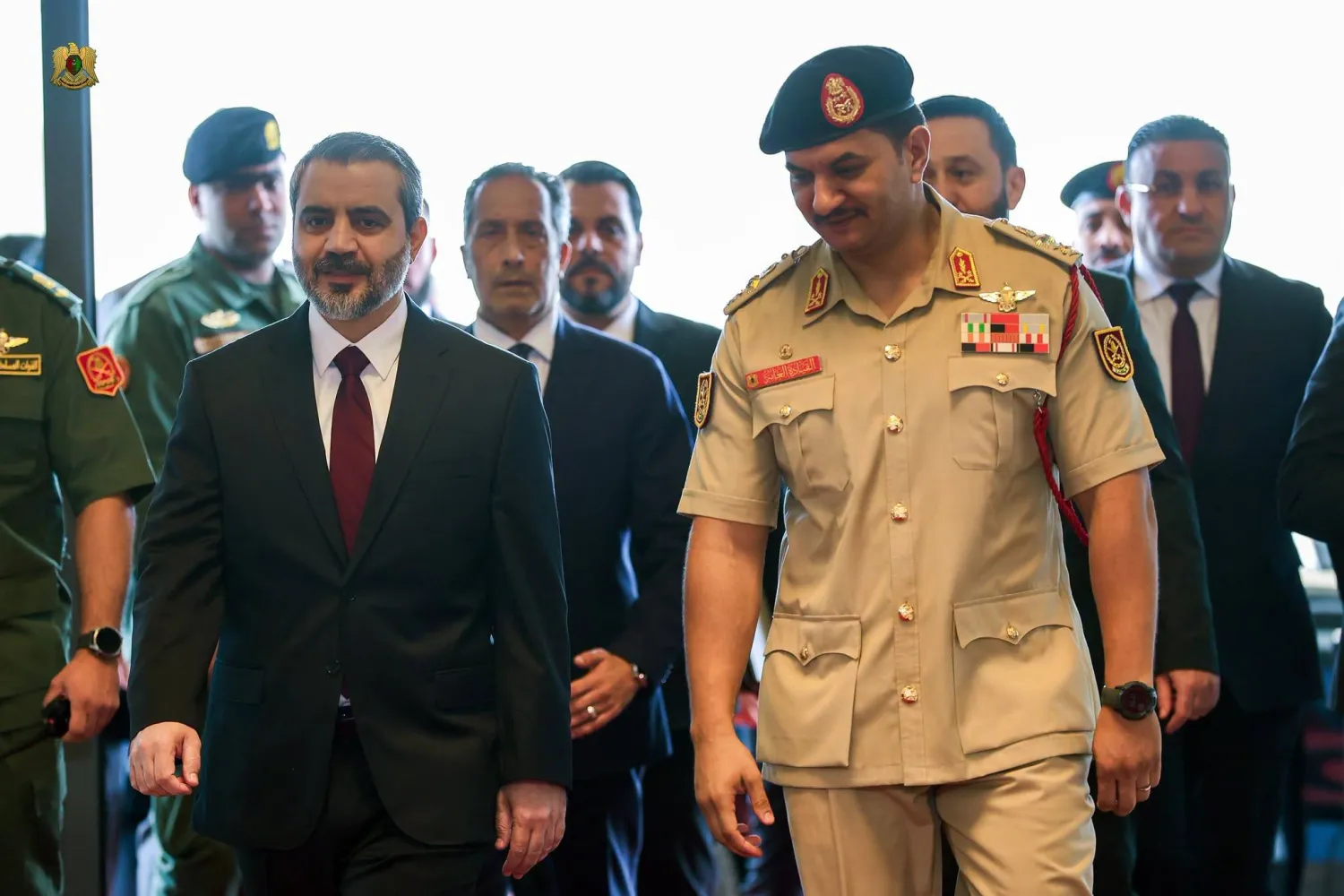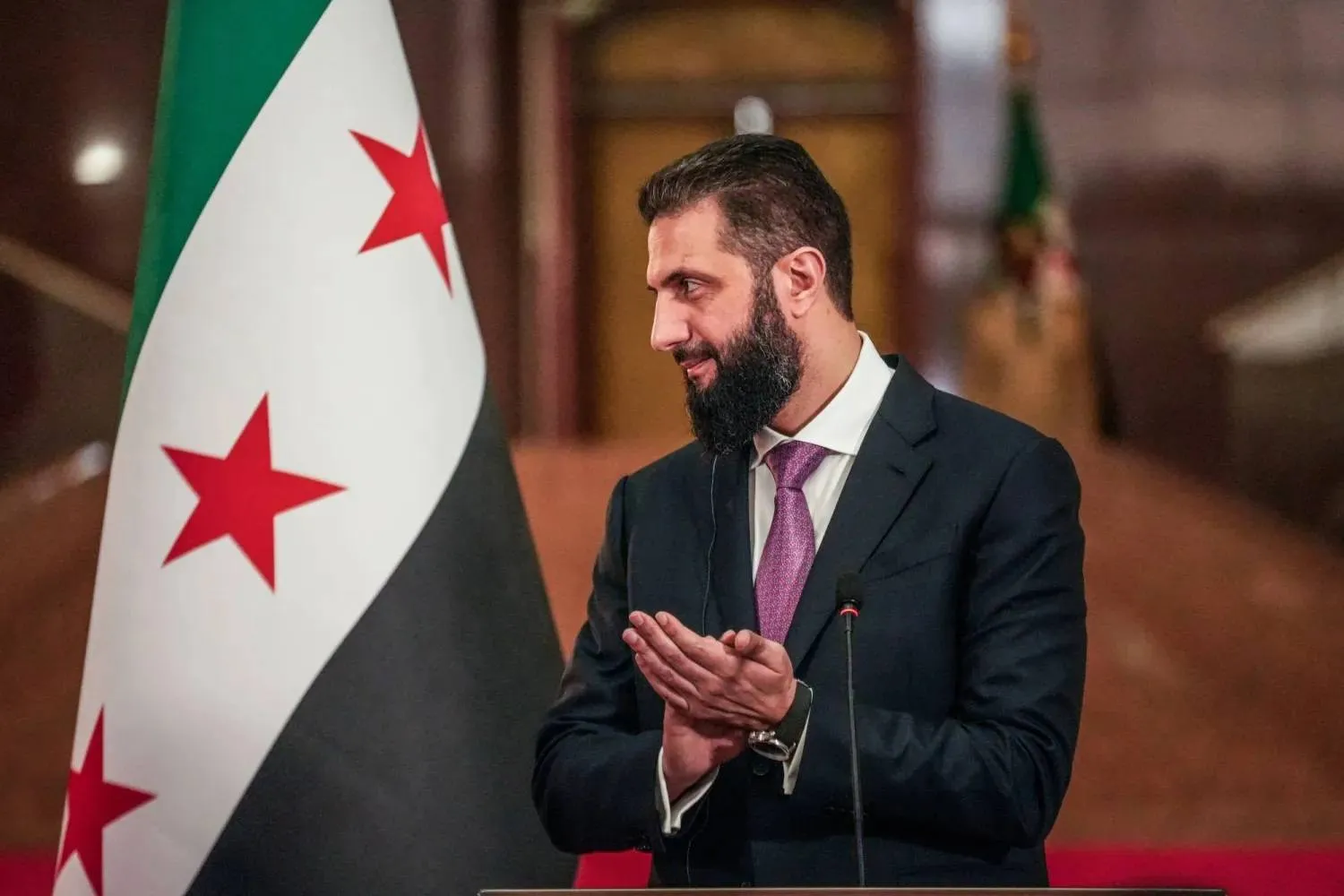

Hezbollah Secretary-General Sheikh Naim Qassem’s announcement in his latest appearance that the group was ready to hold a public meeting with the Syrian leadership “at a time deemed appropriate by both sides” has opened the door to questions about the background to the position.
It came after Syrian President Ahmed al-Sharaa said earlier in public remarks that he had no objection to sitting down with Hezbollah for talks if doing so served the interests of Syria and Lebanon.
The statements are significant because they come amid repeated remarks by US President Donald Trump about a role the government in Syria could play in dealing with Hezbollah’s weapons.
Hezbollah took part in the Syrian war from 2012 and for many years in support of the former government, engaging in bloody confrontations with Syrian rebel factions that today form the backbone of the new Syrian leadership.
In his latest remarks, Qassem said he hoped “Syria succeeds in establishing justice, remains united and drives the enemy from its territory,” adding that “a stable Syria supports Lebanon, just as a stable Lebanon supports Syria.”
Indirect contacts
The positions of al-Sharaa and Qassem appear to be a direct result of active regional mediation aimed at bridging the gap between the two sides.
Political writer Dr. Qassem Kassir, who closely follows Hezbollah’s position, pointed to “continued efforts by regional countries to open channels of communication between the new Syrian leadership and Hezbollah.”
Kassir told Asharq Al-Awsat that “indirect contacts have in fact taken place between the two sides over the past six months to calm tensions and try to find common ground for confronting shared challenges, foremost among them Israeli expansion in the region.”
Kassir said, “What Sheikh Qassem proposed was a response to these efforts, particularly at this stage, when pressure is increasing on the Syrian leadership to intervene in Lebanese affairs, whether militarily, in security matters, or politically.”
He said, “Conditions may have become more suitable for a public meeting between the two sides, particularly after the positions expressed by al-Sharaa and Qassem, with only the timing of the meeting left to be determined.”
Negotiating with the principal
Dr. Brigitte Khair, a former United Nations diplomat, said Qassem’s position toward the Syrian leadership was “linked to Tehran’s position and decision, as he implements Iranian orders.”
She said his announcement that he was ready to meet and hold talks with the Syrian leadership confirmed that Hezbollah felt besieged and in crisis, particularly amid repeated US talk of assigning al-Sharaa to deal with Hezbollah’s weapons in Lebanon’s Bekaa Valley, as well as the failure of all attempts to smuggle weapons and drugs through the Syrian border.
“That is why we see it trying to escape forward,” she said.
Avoiding an open confrontation
Dr. Maher al-Tamran, a Syrian political writer and researcher, said: “It is not easy to read Hezbollah’s announcement of its readiness for dialogue with the new Syrian leadership separately from the major transformations that have swept through the region.”
“What is happening is not a reconciliation between two identical projects, but an attempt by each side to understand and deal with the new reality,” he said.
“Damascus wants to establish the image of a state that controls its own decisions and sovereignty, while Hezbollah is trying to adapt to a phase in which it has lost an important part of the environment that gave it strategic depth and a broad presence in Syria.”
Al-Tamran told Asharq Al-Awsat: “When Qassem announces Hezbollah’s readiness for dialogue, this reflects an awareness that continuing the confrontation with the new Damascus may not be a realistic option.”
“The group, which relied for many years on a strategic relationship with the former Syrian government, now finds itself facing a new authority with a different vision of the nature of the state and its foreign relations.”
“Opening channels of dialogue can therefore be understood as an attempt to reduce risks, prevent the political dispute from turning into an open confrontation and preserve some room for influence at a time when regional influence is being redrawn.”
Al-Tamran said that “despite the importance of opening the door to communication, the path will not be easy because there are deep issues that cannot be easily overcome, most notably weapons, sovereignty, the legacy of the war and regional balances.”
“Dialogue may therefore produce understandings on the border, preventing escalation and regulating political relations, and perhaps reshape Syrian-Lebanese relations on new foundations.”