


Iran Sentences Belgian Aid Worker to 28 Years in Prison

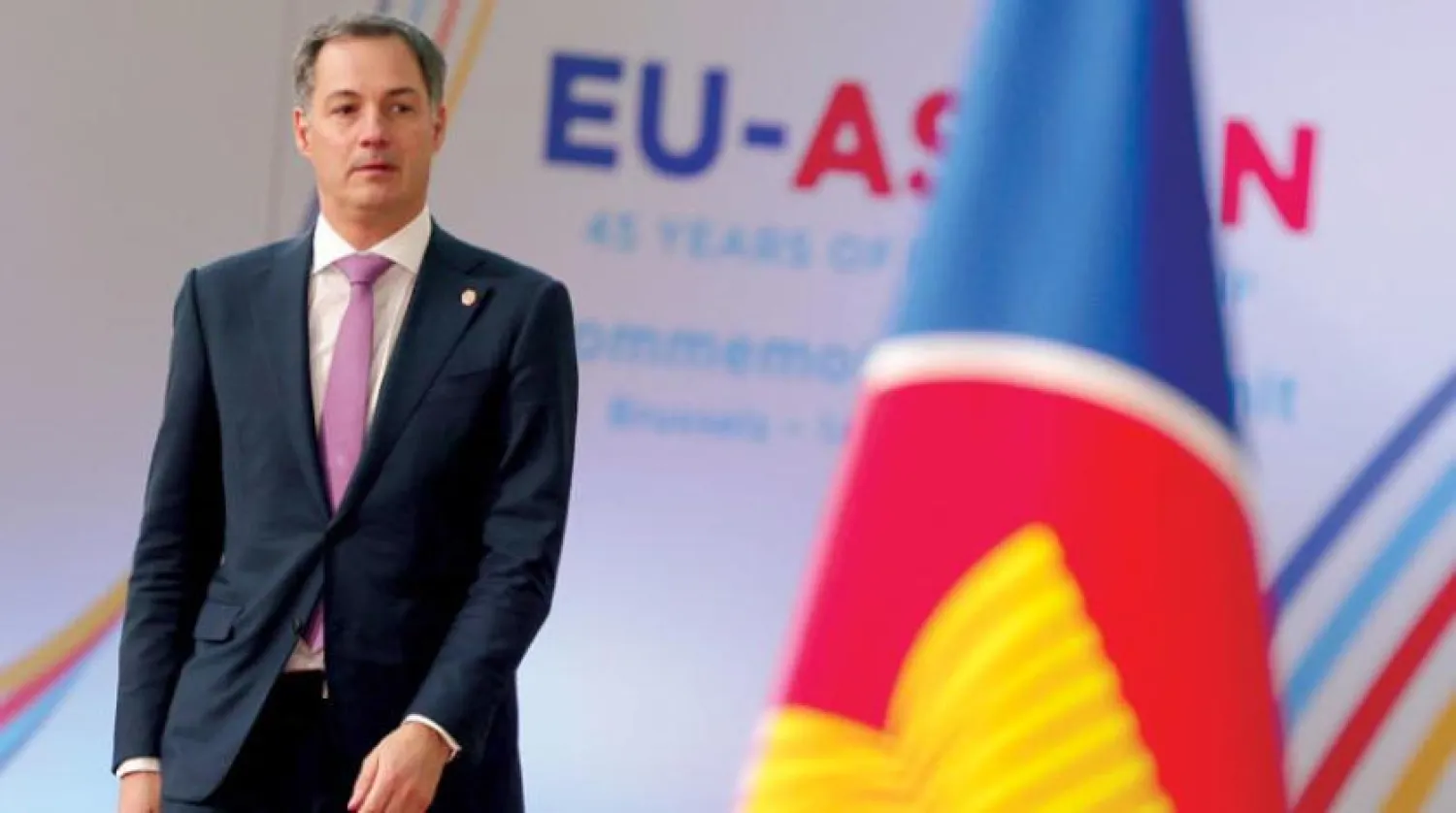
Belgium's Prime Minister Alexandre de Croo (AP)
TT

Iran Sentences Belgian Aid Worker to 28 Years in Prison

Belgium's Prime Minister Alexandre de Croo (AP)

The Iranian authorities sentenced Belgian aid worker Olivier Vandecasteele to 28 years in prison, according to a spokesman for his family.

Vandecasteele, 41, was arrested in Iran at the end of February and was once held in Evin prison over "fabricated series of crimes" on suspicion of espionage.

Belgium and Vandecasteele's family stresses that he is innocent and is the "victim of the shady international game," insisting that he is being held only as a hostage in Tehran's efforts to pressure Belgium to release an Iranian agent convicted of terrorism.

"The family is devastated," family spokesman Olivier Van Steirtegem told AFP after the government informed them of the news.

"Can you imagine? If there's no solution, he could stay in prison until 2050. He'll be almost 70," said the spokesman, urging Belgium to find a way to revive a prisoner swap treaty.

Van Steirtegem said that Vandecasteele's family had been invited to meet Belgium's Prime Minister Alexandre de Croo and several ministers.

Justice Minister Vincent Van Quickenborne received a call from his Iranian counterpart communicating the court's verdict, but that they had no details on the charges.

Last week, Belgium's Constitutional Court suspended the controversial treaty, pending a final ruling on its legality within three months.

Opponents of the Iranian government rejected the deal, which they say is "tailor-made" to allow the release of Assadollah Assadi, an Iranian diplomat sentenced to 20 years in prison after an Antwerp court found him guilty of delivering explosives to a couple from Belgium who intended to travel to Paris to target a meeting of the Iranian exiled opposition.



Reports: UK PM Exchanged Messages with Trump Aide Imposter

Prime Minister Andy Burnham speaks with apprentices and staff at the met office during a visit on August 14, 2026 in Exeter, United Kingdom. (Reuters)
TT

Reports: UK PM Exchanged Messages with Trump Aide Imposter

Prime Minister Andy Burnham speaks with apprentices and staff at the met office during a visit on August 14, 2026 in Exeter, United Kingdom. (Reuters)

New British Prime Minister Andy Burnham exchanged messages with someone posing as Susie Wiles, the White House chief of staff, several media outlets reported on Monday.

According to Politico, which broke the story quoting anonymous sources, the British leader sent a "few messages" via an unspecified communication channel to a person he believed to be Wiles before becoming suspicious.

The incident was deemed serious enough for the British embassy in Washington to raise the matter with the White House, according to two sources cited by Politico.

Neither the date nor the content of the exchanges is known.

Burnham succeeded former Labour Party leader Keir Starmer as prime minister on July 20.

"We do not comment on national security matters," a spokesperson for Burnham's Downing Street office said, without denying the exchanges.

Burnham is not the first prominent British politician to fall victim to this type of hoax.

In 2024, the British government released a video of a phone call in which the then foreign minister David Cameron was duped by someone posing as former Ukrainian president Petro Poroshenko.

The Foreign Office explained at the time that it had disclosed the incident to preempt any attempt by the perpetrators to manipulate the footage.


Iran Threatens to Go On Offensive in Strait of Hormuz if Diplomacy with US Fails

A ship near the Strait of Hormuz (Reuters)
TT

Iran Threatens to Go On Offensive in Strait of Hormuz if Diplomacy with US Fails

A ship near the Strait of Hormuz (Reuters)

Iran has decided to shift its policy from defensive to "fully offensive" due to the deadlock in efforts to agree a permanent end to its war with the United States, a senior Iranian official told Reuters on Monday.

Progress towards peace talks and a resumption of oil tanker traffic through the strategic Strait of Hormuz has ground to a halt, with no sign that the warring parties are moving towards ending the conflict that the US and Israel launched on February 28.

"Iranian entities must be prepared to escalate tensions in the Strait of Hormuz and wider region, as Iran will be ready to make decisions and take action on difficult decisions," the Iranian official said, adding that Tehran would conduct a "timely and precise" military attack to break the US naval blockade if diplomacy failed, Reuters reported.

Monday marked the day by which Iran and the United States were expected to reach a final deal under a memorandum of understanding agreed in June and aimed at ending the war.

Signed on June 17, the MoU set out a 60-day timeframe, extendable by mutual consent, by which Washington and Tehran should reach an agreement that would cover broader issues such as the fate of Iran's nuclear programme.

The MoU, which declared the immediate and permanent cessation of military operations on all fronts, quickly unravelled, however, due to a dispute over control of the Strait of Hormuz.

IRAN TO SET DEADLINE

Tehran said point 5 of the MoU gives it the right to manage the waterway, while Washington rejected that interpretation. Hostilities resumed as Tehran began firing on vessels it said were trying to sail through the waterway on an unapproved route.

US President Donald Trump said on July 7 that the pact was "over". Tehran has repeatedly accused Washington of consistently violating its commitments.

"Within the short period of a few weeks set by Iran, all the agreement's provisions must be implemented by the US. This is a precondition for further negotiations with the US," the Iranian official told Reuters, adding that mediators would share Tehran's deadline with Washington and regional states.

Both Iran and the United States have stepped up rhetoric over the past week.

Trump warned Americans in a speech at a rally on Friday to prepare for continued high fuel prices as a result of the war, while also saying that "after we finish defeating Iran ... pretty soon I'll be declaring the Hormuz Strait a territory of the United States".

Earlier on Monday, Trump posted on his Truth Social platform: "The number one Goal is, and always will be, that Iran cannot have, in any way, shape, or form, a Nuclear Weapon", repeating one of his stated rationales for the war.


Trump Says Iran Cannot Have a Nuclear Weapon

President Donald Trump boards Air Force One at Morristown Airport, Sunday, Aug. 16, 2026, in Morristown, N.J. (AP Photo/Julia Demaree Nikhinson)
TT

Trump Says Iran Cannot Have a Nuclear Weapon

President Donald Trump boards Air Force One at Morristown Airport, Sunday, Aug. 16, 2026, in Morristown, N.J. (AP Photo/Julia Demaree Nikhinson)

US President Donald Trump reiterated on Monday that Iran cannot have a nuclear weapon amid a lack ⁠of progress in diplomatic ⁠efforts to resolve the Middle East conflict.

"The ⁠number one Goal is, and always will be, that Iran cannot have, in any way, shape, or form, ⁠a Nuclear ⁠Weapon," Trump said in a post on Truth Social.

His comment came as the 60-day negotiating period to find a peace deal between the US and Iran was expiring, with no word of an extension and both sides seemingly as far apart as they were two months ago.

Iran said Monday it is working to finalize a joint statement with Oman on a plan to manage the transit of ships through the Strait of Hormuz.

Fully reopening the waterway to commercial shipping has been a key demand of the United States, but it remains unclear whether the deal will meet Washington's criteria.