


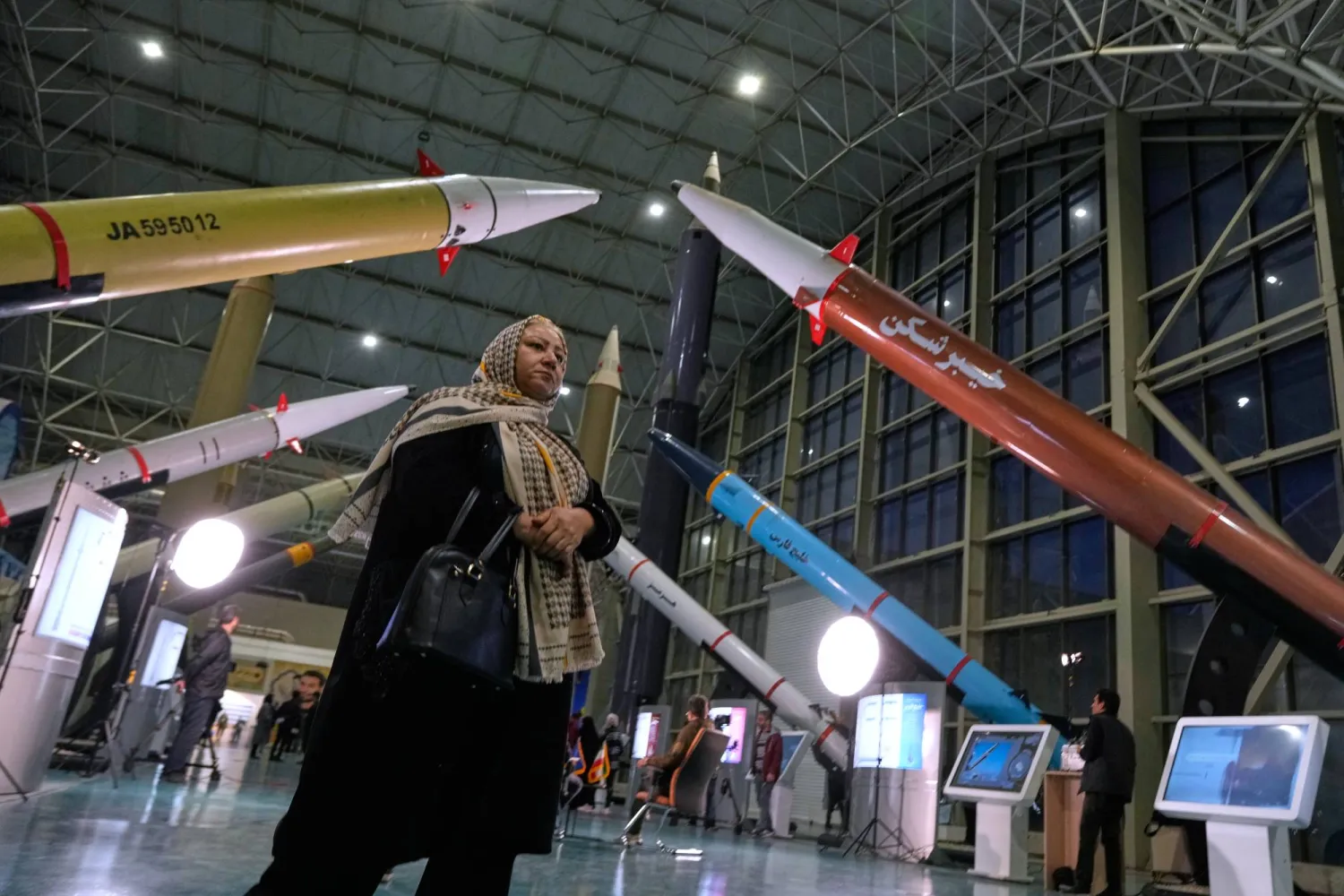

The US intelligence community assesses that Iran has between 1,500 and 2,500 missiles in its arsenal, leaving Tehran with significant capacity to attack US and allied targets if all-out war resumes, the Wall Street Journal reported Sunday, citing US officials.
That is a low-confidence assessment, the officials said, due to the complications of tracking the precise number of missiles Iran has ready for launch or in storage. Even so, officials said it was clear Iran retained a formidable stockpile.
Despite the damage inflicted on Iran's missile production facilities by US and Israeli strikes, Tehran has continued replenishing its arsenal, albeit at a slower pace than before the war, relying primarily on components it had stored in advance, according to the WSJ. Iran also retains a large number of drones and short-range missiles, the officials said.
Iran's efforts to replenish its arsenal contradict statements by senior US administration officials, including President Donald Trump himself, that its military had been destroyed.
According to the officials, the rebuilding effort is also influencing internal discussions within the Trump administration over whether to launch another offensive against Iran alongside Israel.
Israeli military officials, meanwhile, estimate that Iran still possesses more than 1,500 ballistic missiles, although assessments vary among officials in the region because of the difficulty of determining the exact number.
Simone Ledeen, who served as deputy assistant secretary of defense for the Middle East during Trump's first term, said that even the lowest estimate of 1,500 missiles would mean Iran had replenished more than half of its estimated prewar stockpile.
She said Tehran rebuilt its arsenal between the 12-day war in June 2025 and the start of the current war in February.
50 missiles a month
Last week, western intelligence assessment cited by Bloomberg indicated that Iran can produce roughly 50 ballistic missiles per month, about half its prewar capacity, despite months of US and “Israeli” airstrikes that have heavily damaged its industrial base.
According to a Western official citing military intelligence reports, Iran most likely retains at least 1,700 ballistic missiles and continues building more at roughly half the prewar rate.
Its conventional military forces have largely been wiped out by the air campaign, yet the remaining stockpile and production capacity provide significant retaliatory potential.
Israel had estimated Iran possessed about 2,500 ballistic missiles before the war.
Since the conflict began on Feb. 28, Iran has launched more than 4,900 Shahed propeller-driven cruise missiles and at least 2,200 ballistic missiles, according to Bloomberg Economics.
Meanwhile, a bigger issue for US forces is missile interceptors: the more than 6,000 weapons Iran launched around the region ate up at least 1,000 Lockheed Martin Corp. Patriot PAC-3 interceptors, according to Bloomberg Economics analysis, $4 million weapons that are produced at a rate of just 650 a year.
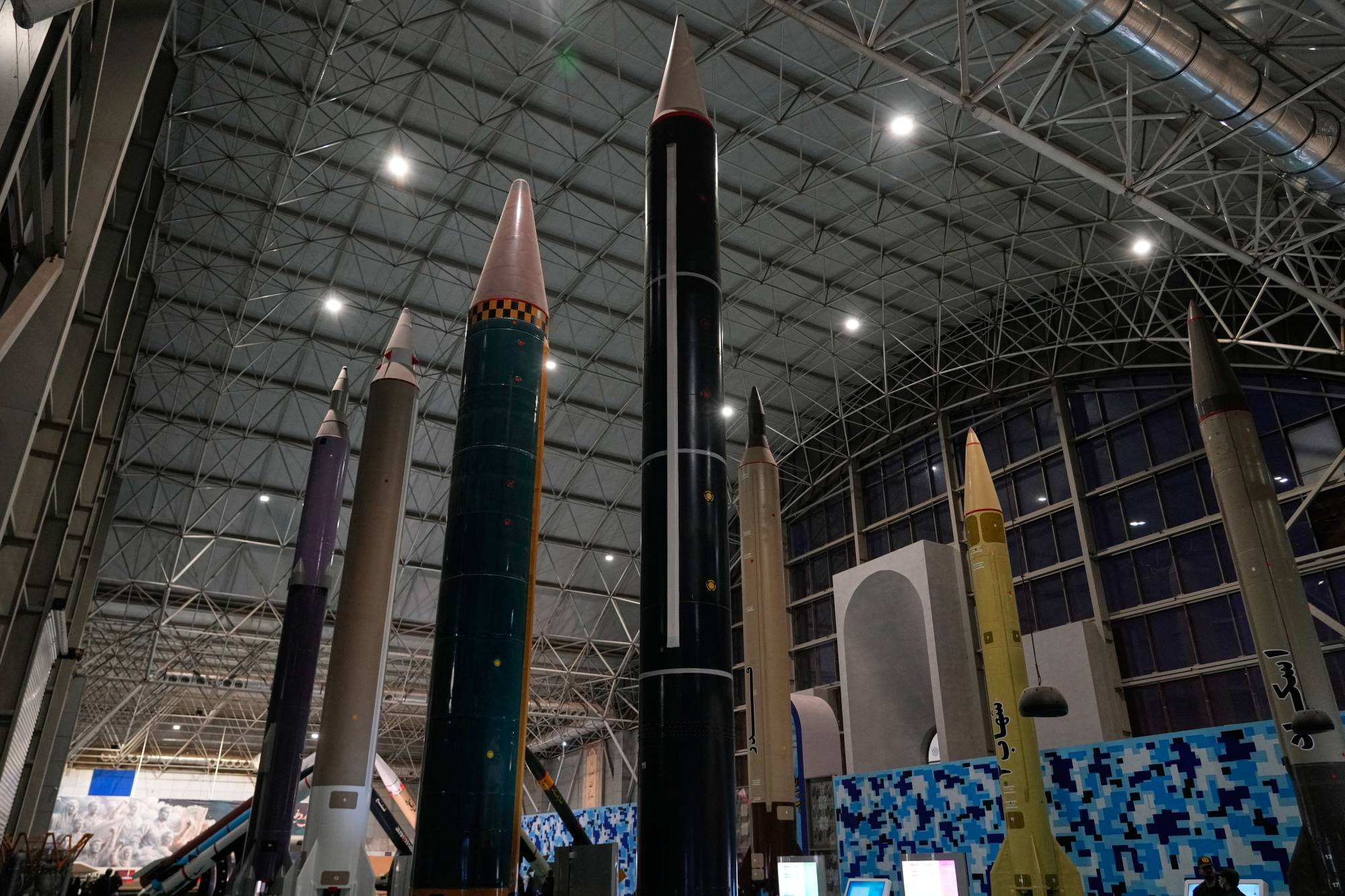
A WSJ report in April said Iran had thousands of short- and medium-range ballistic missiles at underground sites. US and Israeli strikes had blocked the entrances to some of these facilities. However, satellite images later showed that Iran had managed to clear the debris and regain access to some of them.
An Israeli official said the missiles stored at the underground sites likely survived intact.
Sophisticated tactics
Israeli and US officials said Iran's use of ballistic missiles, drones and more sophisticated tactics to target US military facilities, radar installations and early-warning systems across the Middle East prompted Washington to relocate numerous US military assets to Israel, which is considered safer.
Iran has also improved the effectiveness of its attacks by enhancing its intelligence and targeting data, with the help of allies, including Russia, and through tactics such as combining missiles and drones.
Bilal Saab, senior managing director of Washington-based geopolitical risk firm Trends US, said the number of missiles is not the only thing that matters.
“It's not just the size of that arsenal. It's how Iran uses it, and its commanders have learned a few tricks to be more effective,” he said.
Iran’s messages
In recent days, Iran has sought to send messages regarding the resumption and expansion of its ballistic missile program, after the US and Israeli militaries targeted most of its known missile bases during the recent war.
Iran’s Revolutionary Guard Corps spokesman General Hossein Mohebbi confirmed the removal of the 2,000-kilometer ceiling.
“That restriction has been lifted for us,” he declared, without specifying a new range or whether Iran possessed missiles exceeding the previous limit. He promised to demonstrate those capabilities “in practice.”
Iran is known to possess missiles with a range not exceeding 2,000 kilometers.
Earlier this month, Supreme Leader Mojtaba Khamenei had issued an order to respond to threats of any scale or type with an “immediate and effective response without geographical restrictions.”
Khamenei issued the directives during his first publicly announced meeting with senior military commanders since taking office.
Meanwhile, Iranian state television displayed an inspection of a strategic missile facility belonging to the IRGC.
It aired footage on Tuesday describing the underground complex as a new “missile city.”
During his inspection of the strategic missile facility, Armed Forces Chief of Staff Maj. Gen. Ali Abdollahi said, “If the enemy makes a foolish move, our response will extend beyond the region,” promising further “surprises” in the next war.
On Saturday, Iran’s Tasnim news agency said the country could introduce technical modifications to its long-range missiles, enabling them to reach US territory.
The agency said modifications to the Khorramshahr-4’s warhead could increase its range to 3,000 or 4,000 kilometers by reducing the weight of its warhead to 1,500-kilogram instead of 2,000.


