


Oil Slides on Worries on China, IMF Slow-Growth Expectations

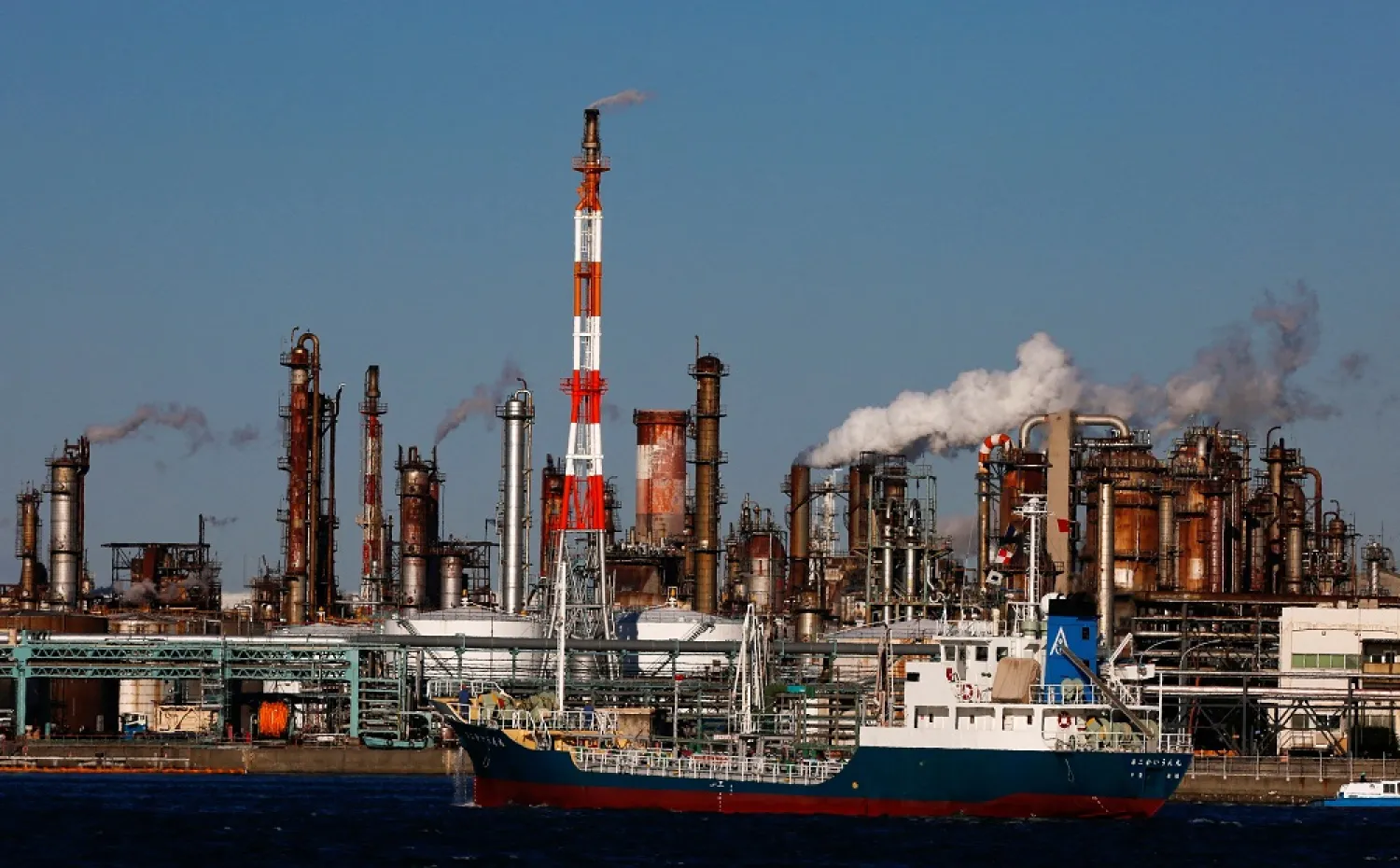
A ship passes a petro-industrial complex in Kawasaki near Tokyo December 18, 2014. (Reuters)
TT

Oil Slides on Worries on China, IMF Slow-Growth Expectations

A ship passes a petro-industrial complex in Kawasaki near Tokyo December 18, 2014. (Reuters)

Oil prices slid on Tuesday from their highest levels in a month after Chinese economic data dampened market sentiment and the head of the International Monetary Fund warned of a tougher 2023.

Brent crude futures had fallen by 25 cents, or 0.29%, to $85.66 a barrel by 0400 GMT, while US West Texas Intermediate crude was at $80.06 a barrel, down 20 cents, or 0.25%.

Weaker factory data from China, the world's largest crude importer and second-largest oil consumer, weighed on prices. The Caixin/Markit manufacturing purchasing managers' index fell to 49.0 in December from 49.4 in November. The index has stayed below the 50-point mark that separates growth from contraction for five straight months.

Yet there was a return to regular activity in China on Monday, as some people in key cities braved the cold and a rise in COVID-19 infections, raising the prospect of a boost to the economy and oil demand as more recover from infection.

"The market cannot expect a rapid recovery of the Chinese economy after three years of (pandemic controls), the mass bankruptcy of small and medium-sized enterprises, the soaring unemployment rate, the rapid increase in the social savings rate, and the rapid growth in the number of infections and deaths in recent months," said analyst Leon Li from CMC Markets.

This followed news of a larger-than-expected increase in the first batch of oil product export quotas for 2023 released by China's government. A handful traders attributed that to expectations of poor domestic demand as the country continued to battle COVID-19 waves.

Furthermore, IMF Managing Director Kristalina Georgieva said on Sunday that the United States, Europe and China - the main engines of global growth - were all slowing simultaneously, making 2023 tougher than 2022 for the global economy.

Oil prices settled more than 2% higher on Friday, with Brent and WTI ending 2022 up 10.5% and 6.7% on a year before, respectively.

Commodities saw a substantial $12.3 billion bullish flow in the week that ended on Dec. 27, the single largest weekly bullish flow in 2022, Societe Generale analysts said in a Jan. 3 note.

"The commodity with the largest flow was Brent, which saw a $3.4 billion bullish flow as Russia outlined its response to the EU and G7 imposed price cap on the country's crude exports to third parties," the analysts said.

President Vladimir Putin banned the supply of crude and oil products from Feb. 1 for five months to nations that abided by the cap. His decree also included a clause that allowed him to overrule the ban in special cases.

Russian crude has been diverted to India and China from Europe. Traders said Moscow planned to increase diesel exports from the Baltic sea port of Primorsk to 1.81 million tons in January, but exports from Tuapse were expected to fall to 1.333 million tons.

Looking to coming months, lead energy analyst at DBS Bank Suvro Sarkar expects concerns over global economic slowdown to continue competing with the pace of China's reopening in driving oil prices.

"A weaker USD will help to an extent, (while) short term factors will include inventory updates and data on Russian supplies," he said.



Riyadh Kicks off Energy Week with Ministerial Meeting on Supply Security, Market Stability

Preparations for the International Energy Forum's Ministerial Meeting in Riyadh (Asharq Al-Awsat)
TT

Riyadh Kicks off Energy Week with Ministerial Meeting on Supply Security, Market Stability

Preparations for the International Energy Forum's Ministerial Meeting in Riyadh (Asharq Al-Awsat)

Riyadh will host the 17th ministerial meeting of the International Energy Forum on Sunday, bringing together ministers, officials and energy industry leaders to discuss supply security, market stability and closer cooperation between producing and consuming nations.

The meeting comes as rising geopolitical risks threaten oil and gas flows, underscoring the importance of resilient infrastructure and export routes.

The meeting, hosted by Saudi Arabia in cooperation with Italy and Nigeria, is being held under the theme “Energy Security and Shared Goals in a New Era.” It is part of a series of international meetings and events taking place in the Saudi capital from Oct. 11-15, bringing together government officials, corporate leaders, international organizations and experts from around the world.

Energy security has taken on growing importance amid supply disruptions and risks to maritime chokepoints, particularly the Strait of Hormuz. These challenges have raised questions about markets’ ability to absorb shocks, secure energy flows and provide alternative export routes when traditional shipping lanes are disrupted.

The week’s agenda extends beyond supply security to cover investment in the energy sector, shifts in global demand, the use of digital technologies and artificial intelligence, the development of clean energy sources, carbon management and the role of critical minerals in building future energy systems.

Clean Energy, Innovation on the Agenda

Alongside the International Energy Forum’s ministerial meeting, Riyadh will host the 17th Clean Energy Ministerial (CEM17) and the 11th Mission Innovation Ministerial (MI-11) from Oct. 11-13, bringing together ministers, officials, private-sector leaders and representatives of research and innovation institutions.

The meetings will focus on accelerating the development of clean energy technologies and scaling up their deployment, turning innovations into practical solutions to support energy system transitions. Discussions will also address ways to strengthen cooperation among governments, companies and research centers, and support technologies that improve efficiency and reduce emissions.

These issues reflect the expanding international debate over the future of energy, which now extends beyond boosting production and securing supplies to include investment in grids and new technologies, meeting growing electricity demand, and balancing energy security with affordability and sustainability.

World Petroleum Congress opens on Monday

The week’s events will continue with the official opening of the 25th World Petroleum Congress (WPC Energy) on Monday at the Riyadh International Convention and Exhibition Center, under the theme “Pathways to an Energy Future for All.” The congress and its accompanying exhibition will run through Oct. 15.

The congress will bring together energy ministers, corporate executives, experts and investors to discuss oil and gas markets, energy security and investment, artificial intelligence and digital transformation, critical minerals, carbon management, natural gas and the evolution of the global energy mix through strategic and ministerial sessions.

The program will also include workshops and technical seminars organized by the Organization of Arab Petroleum Exporting Countries (OAPEC) during the congress.

Together, the meetings and events aim to provide a platform for dialogue among governments, producers, consumers, companies and international institutions at a time when energy markets face overlapping challenges related to geopolitics, supply reliability, investment needs and rapid technological change.


World Bank in Talks with Dozens of Countries about Crisis Aid, Banga Says

FILE PHOTO: Ajay Banga, President of the World Bank Group, reacts during the Clinton Global Initiative 2026 Annual Meeting in New York City, US, September 23, 2026. REUTERS/Jeenah Moon/File Photo/File Photo
TT

World Bank in Talks with Dozens of Countries about Crisis Aid, Banga Says

FILE PHOTO: Ajay Banga, President of the World Bank Group, reacts during the Clinton Global Initiative 2026 Annual Meeting in New York City, US, September 23, 2026. REUTERS/Jeenah Moon/File Photo/File Photo

The World Bank is in discussions with 30 to 40 countries about potential crisis aid to help them manage energy shocks and price increases triggered by the war in the Middle East, its president, Ajay Banga, told Reuters in an interview.

Banga said the global economy had proven fairly resilient, in part due to big AI investments and adjustments in supply and demand for oil, which meant that few countries had sought the initial $25 billion in crisis funds that the World Bank had made available when the war began in late February.

However, a sharp spike in diesel and fertilizer prices and other factors, including the looming super El Niño weather effect, were adding to challenges facing developing countries, Banga said in an interview ahead of this week's annual meetings of the International Monetary Fund and World Bank.

"There is pressure, and so I think maybe over the coming months, more countries will come for some slice of that first $50 to $60 billion," Banga said, referring to the initial $25 billion plus ‌another $35 billion that countries ‌could tap by diverting resources from already approved World Bank projects.

"We'll see, but we're ready. ‌We're ⁠engaged. We're having conversations ⁠with a number of them, you know, 30 to 40 countries are in dialogue with us," he said.

Many developing countries have been hit hard by the spike in energy prices and high interest rates that have increased borrowing costs at a time when their fiscal coffers are still depleted by measures taken during the COVID-19 pandemic and the spike in inflation following Russia's invasion of Ukraine.

World Bank estimates show that developing countries owe external creditors about $400 billion in 2026, with interest payments alone comprising one-third of the total.

Banga said more countries had shown interest in retooling existing projects than in tapping the immediate crisis window to address their liquidity needs. If the situation worsened, the Bank could ⁠make available as much as $100 billion in funds, he said, exceeding the $70 billion disbursed during ‌the pandemic.

The World Bank last month announced that it attracted a record $112 billion in ‌private capital in the year ended June versus $69 billion a year earlier, and more than triple the 2022 total before Banga, a former Mastercard ‌CEO, became president.

That was on top of the $123 billion invested from the bank's own resources for that year, for a ‌combined $235 billion, Banga said, underscoring the importance of tapping all available resources, especially at a time when Western countries have sharply cut official bilateral development aid.

"There is no one answer that fits when the world has these kinds of issues. What you need to do is figure out how to cut your coat to suit your cloth," Banga said.

Banga said he expected further gains in private capital flows in coming years, aided by expanded ‌political risk guarantees from the bank's Multilateral Investment Guarantee Agency, growth in local currency financing, and continued work on regulatory reforms that made it easier for foreign investors.

The private capital jump ⁠was biggest in projects in upper-middle-income ⁠countries like Argentina or India, which accounted for $50 billion of the private capital, and lower-middle-income countries including Bangladesh and Angola, which accounted for $37 billion. But more work was needed to boost the roughly $3 billion in private capital flowing to low-income countries.

"In the smaller countries, it hasn't multiplied enough, and there are challenges," he said, noting the bank would announce some new initiatives this week aimed at ensuring micro-, small- and medium-sized businesses also had access to private capital.

Banga said private capital growth was also regionally spread, with the largest increase seen in Latin America and the Caribbean, which accounted for $36.3 billion of last year's total, followed by Europe and Central Asia with $21.3 billion, South Asia with $19.2 billion and Africa with $22 billion.

The top 10 recipient countries were Brazil, India, Türkiye, Romania, Nigeria, Argentina, South Africa, Bangladesh, Mexico and Chile, the Bank said.

Banga said the World Bank and IMF were working together to address the high debt levels plaguing many developing countries through a series of initiatives, including efforts to boost countries' domestic revenue collections.

The Bank had already set up some debt-for-development swaps for Angola and Ivory Coast, and a portfolio-based guarantee for Argentina, and was working on over a dozen more projects.

"We've got 14 or 15 in the pipeline, helping them rotate out higher-priced old debt for newer-priced debt with our guarantees," with the difference then targeted at education, healthcare, water, or nature programs, he said.


Saudi Industrial Production Falls 23.5% in August

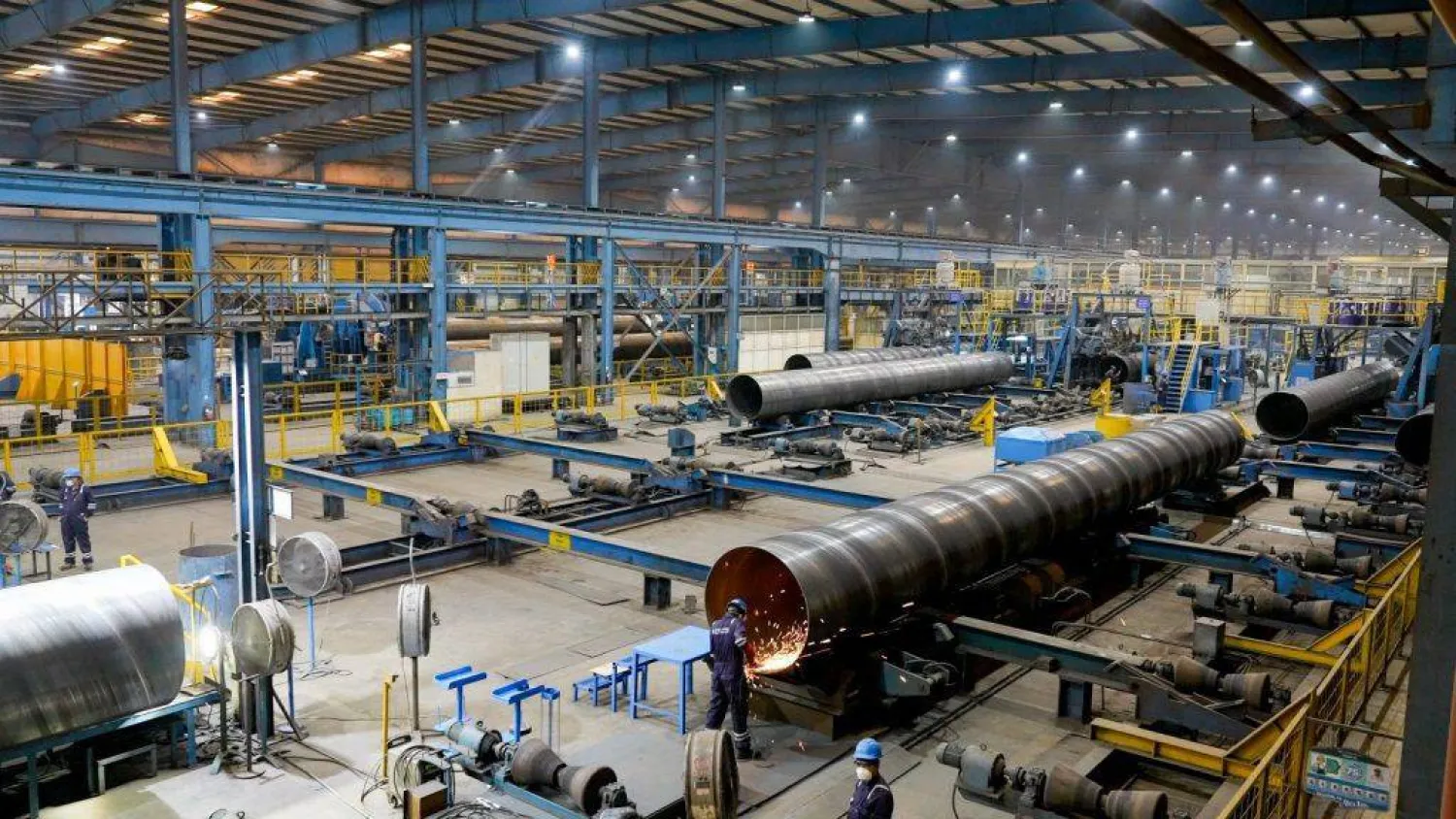
A factory operated by Saudi Arabia’s East Pipes Integrated Company for Industry. (Company photo)
TT

Saudi Industrial Production Falls 23.5% in August

A factory operated by Saudi Arabia’s East Pipes Integrated Company for Industry. (Company photo)

Saudi Arabia’s industrial production index fell 23.5% in August 2026 from a year earlier, weighed down by declines in mining and quarrying and manufacturing activity, data from the General Authority for Statistics showed on Sunday.

On a monthly basis, the index dropped 14% from July, amid declines in both main activities.

The data showed that the oil activities index fell 33.6% year on year, while the non-oil activities index rose 1.2%, reflecting divergent performances between the two sectors during the month.

By economic activity, the mining and quarrying index declined 35.8% year on year and 24% from July. The manufacturing index fell 8.8% annually and 3.2% month on month.

The decline in manufacturing was driven by a 24.1% year-on-year drop in the manufacture of coke and refined petroleum products, and a 3.3% decrease in the manufacture of chemicals and chemical products.

Some industrial activities, however, recorded annual growth. The index for electricity, gas, steam and air conditioning supply rose 9.4%, while the index for water supply, sewerage, waste management and remediation activities increased 7.4%.

On a monthly basis, the non-oil activities index rose 1.4%, while the oil activities index fell 21.5%, according to the authority’s preliminary data.