


Oil Steadies after Biggest Start of the Year Drop in Decades

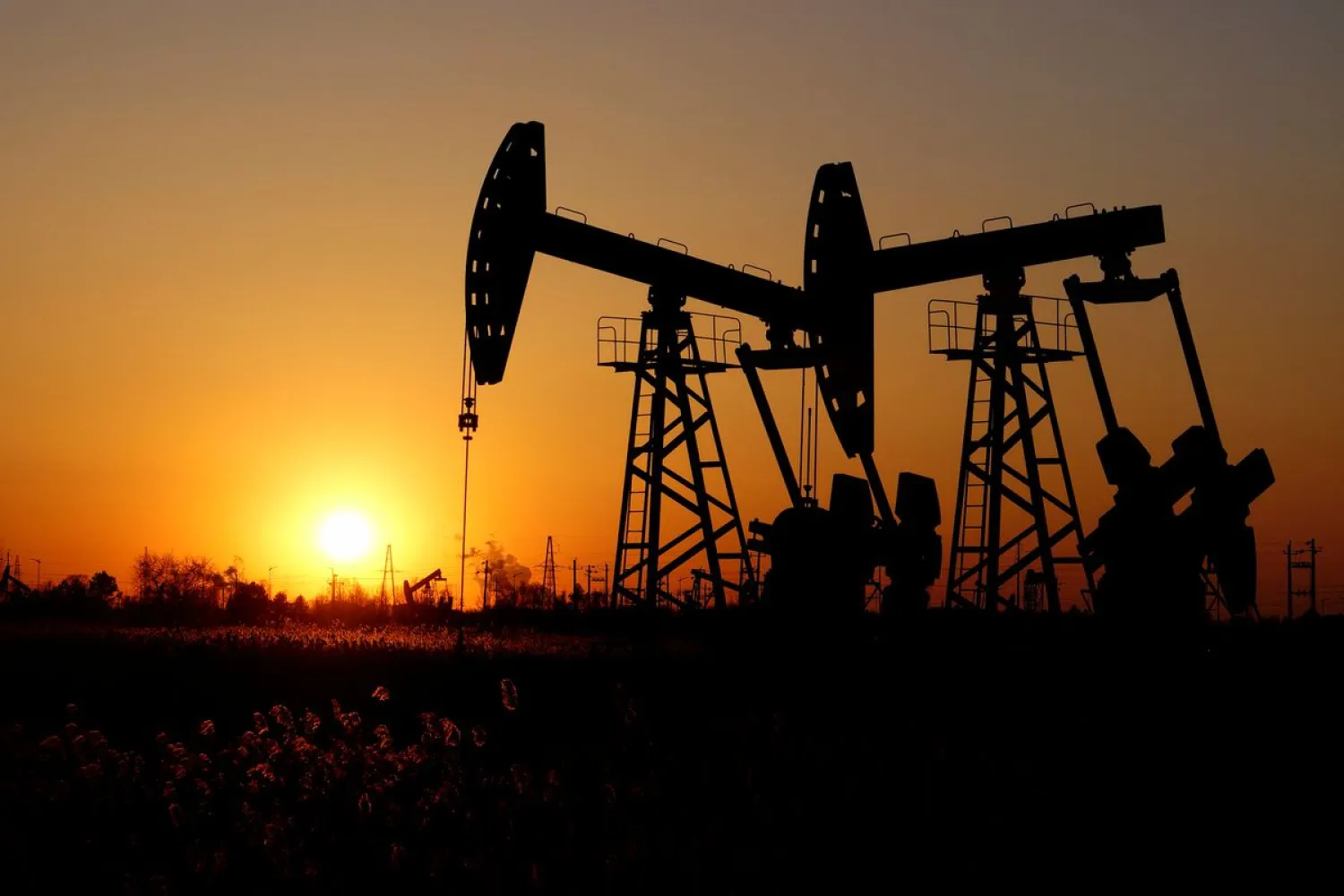
Pumpjacks are seen against the setting sun at the Daqing oil field in Heilongjiang province, China December 7, 2018. REUTERS/Stringer
TT

Oil Steadies after Biggest Start of the Year Drop in Decades

Pumpjacks are seen against the setting sun at the Daqing oil field in Heilongjiang province, China December 7, 2018. REUTERS/Stringer

Oil steadied on Thursday in volatile trade after posting the biggest two-day loss for the start of a year in three decades with the shutdown of a US fuel pipeline providing support and economic concerns capping gains.

Big declines in the previous two days were driven by worries about a global recession, especially since short-term economic signs in the world's two biggest oil consumers, the United States and China, looked weak.

Helping drive gains early on Thursday was a statement from top US pipeline operator Colonial Pipeline, which said its Line 3 had been shut for unscheduled maintenance with a restart expected on Jan. 7.

Tamas Varga of oil broker PVM said the rebound was due to the pipeline shutdown and added: "There is no doubt that the prevailing trend is down; it is a bear market."

Brent crude was up 60 cents, or 0.8%, to $78.44 a barrel at 1435 GMT, while US West Texas Intermediate crude was down 26 cents, or 0.4%, to $72.58. Both contracts were up over $2 earlier.

Both benchmarks' cumulative declines of more than 9% on Tuesday and Wednesday were the biggest two-day losses at the start of a year since 1991, according to Refinitiv Eikon data.

Reflecting near-term bearishness, the nearby contracts of the two benchmarks traded at a discount to the next month, a structure known as contango, Reuters reported.

On Wednesday, figures showing US manufacturing contracted further in December pressured prices, as did concerns about economic disruption as COVID-19 works its way through China, which has abruptly dropped strict curbs on travel and activity.

"China's pandemic and reopening challenges weigh on the market mood and put the bull thesis of a demand rebound under scrutiny," said Norbert Rücker, analyst at Swiss private bank Julius Baer.

Also weighing were inventory figures from the American Petroleum Institute, which according to market sources showed a rise in US crude and gasoline stocks.

Official inventory data from the Energy Information Administration is out at 1530 GMT.


TotalEnergies Board Backs CEO Pouyanne's Mandate Renewal

Patrick Pouyanne, CEO of TotalEnergies, attends the ROG.e, Brazil's largest oil and gas event in Rio de Janeiro, Brazil, September 21, 2026. REUTERS/Ricardo Moraes
TT

TotalEnergies Board Backs CEO Pouyanne's Mandate Renewal

Patrick Pouyanne, CEO of TotalEnergies, attends the ROG.e, Brazil's largest oil and gas event in Rio de Janeiro, Brazil, September 21, 2026. REUTERS/Ricardo Moraes

TotalEnergies said on Friday its board unanimously backed the renewal of Chairman and CEO Patrick Pouyanne's mandate and reaffirmed the relevance of the ⁠energy major's strategy ⁠ahead of its investor update scheduled for Monday.

In May, investors had overwhelmingly approved lifting the age limits for ⁠its chair and CEO roles, paving the way for Pouyanne to remain at the helm through 2033.

The board says TotalEnergies' strategy remains built around Oil & Gas and Integrated Power businesses.


Asian Markets Mixed after Oil Gains

Japan's 10-year yield reached a fresh 30-year high in morning trade on Friday. Kazuhiro NOGI / AFP
TT

Asian Markets Mixed after Oil Gains

Japan's 10-year yield reached a fresh 30-year high in morning trade on Friday. Kazuhiro NOGI / AFP

Asian markets were mixed Friday after recent oil price surges and as US and Japanese bond yields hit multi-year highs with no end in sight for the Middle East war.

A two-month extension of a trade truce between the United States and China left several issues unresolved, analysts said, shifting lingering risks into the future.

Oil prices eased slightly on Friday, with Brent Crude shedding 0.7 percent after spiking more than three percent Thursday to extend previous gains, AFP said.

Global stocks had mostly fallen Thursday, as the benchmark US 10-year Treasury yield rose to its highest level since 2007, and the 30-year yield reached its highest since 2004.

Japan's 10-year yield reached a fresh 30-year high in morning trade on Friday.

"Bond yields are bouncing around like a see-saw," Kathleen Brooks, research director at XTB, wrote in a note.

"There is no clear direction for markets," she said, listing various unknown factors such as "are we in a bond crisis or not?" and "Is the Iran war getting worse or is the situation improving?"

"While these questions remain unanswered, volatility will continue to dominate, especially in the commodity and bond markets," Brooks said.

Tokyo rose 1.2 percent Friday, but Hong Kong fell nearly two percent, with Sydney and Jakarta also down. Shanghai, Taipei and Seoul were closed for holidays.

Stock falls this week have been mild, along with "fairly moderate" movements in foreign exchange markets despite nonetheless a "clear preference for the dollar", Brooks said.

Japanese Finance Minister Satsuki Katayama told reporters that US President Donald Trump had expressed concerns over the weak yen during a bilateral meeting in Washington this week.

Trump hosted Chinese leader Xi Jinping for a lavish state dinner at the White House on Thursday, after a day of pomp and ceremony that masked deep tensions between the rival superpowers.

While business was on the menu at the state dinner, expectations of any major breakthroughs from Xi's visit are low.

One minor success -- the extension of a trade truce by two months until January -- was less than the two years that the Chinese had been hoping for.

Lloyd Chan at MUFG said that "renewed geopolitical risks in the Middle East are occurring against an already tight oil-market backdrop, raising concerns over both supply and inflation".

"Meanwhile, US-China trade risks remain in the background," he added.

"The trade truce has been extended by just two months to 10 January, leaving issues over tariffs, agricultural purchases, rare earths, and technology restrictions unresolved."


US Business Lobbies Say Diesel Export Ban Would Backfire

US Energy Secretary Chris Wright holds a press conference on the sidelines of the International Atomic Energy Agency (IAEA) General Conference in Vienna, Austria, September 14, 2026. (Reuters)
TT

US Business Lobbies Say Diesel Export Ban Would Backfire

US Energy Secretary Chris Wright holds a press conference on the sidelines of the International Atomic Energy Agency (IAEA) General Conference in Vienna, Austria, September 14, 2026. (Reuters)

Trade associations representing large US companies and energy suppliers urged President Donald Trump to resist calls for a diesel fuel export ban, arguing the move would backfire.

"Export bans would lead to less fuel production, tighter supplies, and rising costs for American families, farmers, and truckers," said the September 23 letter, which was signed by the US Business Roundtable, the American Petroleum Institute and more than two dozen other trade groups.

"While we understand the urge for a silver bullet, there are no easy answers."

High fuel prices have emerged as a major drag in the upcoming midterm elections for Trump's Republican Party. Candidates from rural regions in Iowa and other states have urged an export ban on diesel, which is also used in trucks and other hauling vehicles.

While Trump administration officials such as Energy Secretary Chris Wright have rejected a ban, Trump himself on Tuesday signaled support for the move.

"I've called for that too. I've said let's not send out the diesel," Trump said on Tuesday.

Diesel prices in the United States have hit records due to the ongoing US-Iran war. Diesel prices currently average $6.51 per gallon, up 76 percent from the year-ago level.

The business groups argue exports allow "US refineries to balance their systems and maximize production," according to the letter. "An export ban would require refineries to throttle utilization to reduce diesel production to equal domestic demand. Falling utilization would result in less gasoline and jet fuel production and higher prices for those products as well."

Andy Lipow, of Lipow Oil Associates, a Houston consultancy, said there is limited storage capacity in the US Gulf Coast, home to much of the nation's refining capacity.

"If you were to ban diesel exports, the refiners have two choices. One is find a place to store it, or two is not to make it," said Lipow.
