


Shtayyeh Warns of Palestinian Authority’s Collapse

 Palestinian Prime Minister Mohammad Shtayyeh at the weekly cabinet meeting held in Ramallah (WAFA)
Palestinian Prime Minister Mohammad Shtayyeh at the weekly cabinet meeting held in Ramallah (WAFA)
TT

Shtayyeh Warns of Palestinian Authority’s Collapse

 Palestinian Prime Minister Mohammad Shtayyeh at the weekly cabinet meeting held in Ramallah (WAFA)
Palestinian Prime Minister Mohammad Shtayyeh at the weekly cabinet meeting held in Ramallah (WAFA)

Palestinian Prime Minister Mohammad Shtayyeh warned Monday that Israeli sanctions on the Palestinian Authority “will promptly lead to its collapse.”

Speaking to Haaretz, Shtayyeh was referring to the retaliatory sanctions the Israeli cabinet imposed over the weekend on the PA, including seizing 140 million shekels ($39 million) in tax revenues.

“The measure is another nail in the Palestinian Authority’s coffin, unless there is immediate intervention by the international community, namely the administration in Washington and Arab countries.”

The Prime Minister considered these measures as a new war against the Palestinian people, their resources and funds.

“We’re reading the map as clearly as possible: Increasing settlement construction while severing Jerusalem from the West Bank, annexing Area C and now crushing the PA – that is the program guiding the Israeli government,” Shtayyeh said.

The PM dismissed the Israeli claims accusing the PA’s request from the UN to give its opinion on Israel’s control of the West Bank as one-sided.

“Any occupation is one-sided, the construction in the settlements is one-sided, everything is one-sided – and if we turn to the UN and the international community – that’s forbidden and one-sided?,” he asked.

Shtayyeh's warnings, which fell on deaf ears in Israel, came at a time when the Palestinians conveyed to their US and Israeli counterparts clear messages that the continuation of this Israeli policy will be met with Palestinian decisions, even if their outcomes lead to the “collapse of the Authority.”

Informed sources told Asharq Al-Awsat that the messages also threatened that the Palestinian leadership will activate the decisions of the Palestinian Central Council related to canceling agreements with Tel Aviv and suspending recognition of Israel.

The messages said the PA does not care if its decisions lead to retaliatory Israeli measures that will lead to its collapse, affirming that everyone must pay the price for their actions.

Speaking at the opening of the weekly cabinet meeting held in Ramallah on Monday, Shtayyeh accused Israel of trying to cause the collapse of the PA by undermining it financially and institutionally and impede its performance and provision of services to its people.

However, he stressed that “acts of piracy, looting and vengeance practiced by the occupying Power will not discourage our people and our leadership from continuing in their political, diplomatic and legal struggle. We do not barter our right to self-determination and our freedom for money or privileges.”

Last Sunday, Israeli Finance Minister Bezalel Smotrich signed a decree to block 139 million shekels ($39.6 million) in tax revenue from the Palestinian Authority and redirect it to families of victims, as part of punitive measures against the PA’s international legal action against Israel, decided upon by the government.

When Smotrich was asked whether he was concerned the move could bring about the collapse of the PA, he said: “As long as the Palestinian Authority encourages terror and is an enemy, I have no interest for it to continue to exist.”

The move is one of the steps approved by the government on Friday to penalize the Palestinians in retaliation for their push for the UN’s highest judicial body to give its opinion on Israel’s control of the West Bank.

The other punitive measures against the PA include the revocation of travel permits for top Palestinian officials that allow them to travel easily in and out of the West Bank, unlike ordinary Palestinians, and the freezing of Palestinian construction in parts of the West Bank.

Smotrich on Sunday hailed a years-long campaign to offset the PA’s regular payments to terror convicts and to families of dead Palestinian attackers, calling it a “just struggle…not only in providing retroactive justice, but also as a deterrent.”

Israel has made such deductions in the past, following 2018 legislation on the matter, but only partially upholds the policy, as officials are keenly aware that the PA is dangerously close to financial collapse.

The new Israeli decision puts more pressure on the Authority's already faltering finances.

According to Shtayyeh, the PA is planning to turn to Arab League countries and ask them to implement previous commitments to provide the Palestinians with an economic safety net.

The PA also plans to request additional support from the US and Europe.

US National Security Advisor Jake Sullivan is slated to visit Ramallah later this month, and Shtayyeh said the PA intends to demand the US advance steps to prevent its collapse and halt the Israeli attempt “to crush the two-state solution.”

Beyond “positive statements,” the Biden administration has so far done little to present a different policy than its predecessor in confronting Israel, Shtayyeh told Haaretz.


US, Qatar, Egypt, Türkiye, Urge Restraint in Gaza

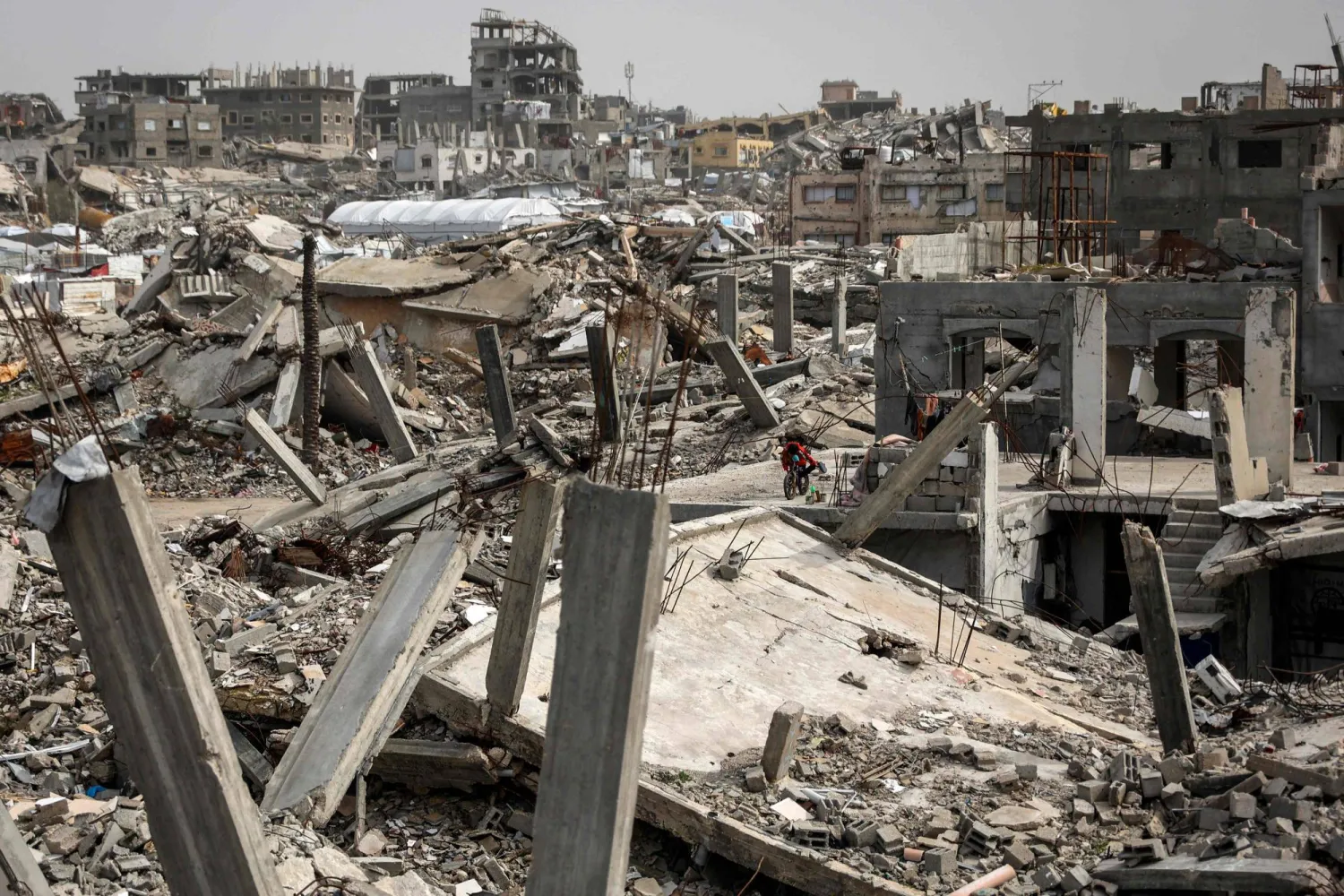
Members of the Palestinian Civil Defense remove the rubble of a destroyed home as they search for the bodies of Palestinians killed during the conflict in Khan Younis, southern Gaza Strip, 20 December 2025. (EPA)
TT

US, Qatar, Egypt, Türkiye, Urge Restraint in Gaza

Members of the Palestinian Civil Defense remove the rubble of a destroyed home as they search for the bodies of Palestinians killed during the conflict in Khan Younis, southern Gaza Strip, 20 December 2025. (EPA)

The United States was joined Saturday by Qatar, Egypt and Türkiye in urging parties in the Gaza ceasefire to uphold their obligations and exercise restraint, the chief US envoy said after talks in Miami.

Top officials from each nation met with Steve Witkoff, President Donald Trump's special envoy, to review the first stage of the ceasefire that came into effect on October 10.

"We reaffirm our full commitment to the entirety of the President’s 20-point peace plan and call on all parties to uphold their obligations, exercise restraint, and cooperate with monitoring arrangements," said a statement posted by Witkoff on X.

Their meeting came amid continuing strains on the agreement.

Gaza's civil defense said six people were killed Friday in Israeli shelling of a shelter. That brought to 400 the number of Palestinians killed by Israeli fire since the deal took effect.

Israel has also repeatedly accused Hamas of violating the truce, with the military reporting of its three soldiers killed in the territory since October.

Saturday's statement cited progress yielded in the first stage of the peace agreement, including expanded humanitarian assistance, return of hostage bodies, partial force withdrawals and a reduction in hostilities.

It called for "the near-term establishment and operationalization" of a transitional administration which is due to happen in the second phase of the agreement, and said consultations would continue in the coming weeks over its implementation.

Under the deal's terms, Israel is supposed to withdraw from its positions in Gaza, an interim authority is to govern the Palestinian territory instead of Hamas, and an international stabilization force is to be deployed.

On Friday, US Secretary of State Marco Rubio expressed hope that countries would contribute troops for the stabilization force, but also urged the disarmament of Hamas, warning the process would unravel unless that happened.


Lebanese Deputy PM to Asharq Al-Awsat: No Political Negotiations with Israel

Smoke rises from the site of a series of Israeli airstrikes that targeted the outskirts of the southern Lebanese village of al-Katrani on December 18, 2025. (AFP)
TT

Lebanese Deputy PM to Asharq Al-Awsat: No Political Negotiations with Israel

Smoke rises from the site of a series of Israeli airstrikes that targeted the outskirts of the southern Lebanese village of al-Katrani on December 18, 2025. (AFP)

Lebanon’s Deputy Prime Minister Tarek Mitri denied on Saturday that the appointment of civilian negotiators between Lebanon and Israel means that political negotiations have been launched between the two neighbors.

He told Asharq Al-Awsat that the negotiating team is primarily tasked with ensuring that the Lebanese army carries out Lebanon’s part of the ceasefire with Israel.

The army is close to completing the first phase of the agreement to impose state monopoly over arms in southern Lebanon, he added.

Other phases of the deal will follow to cover the whole of Lebanon.

Mitri added that attention must be focused on not giving Israel excuses to attack Lebanon, meaning Lebanon must meet its ceasefire obligations.

He warned, however, that Israel "could expand its military operations in Lebanon with or without excuses."

He noted that the United States appears to be pressuring Israel against launching a new war against Lebanon.

Lebanon is close to completing the disarmament of Hezbollah south of the Litani River, Prime Minister Nawaf Salam said on Saturday, as the country races to fulfil a key demand of its ceasefire with Israel before a year-end deadline.

The US-backed ceasefire, agreed in November 2024, ended more than a year of fighting between Israel and Hezbollah and required the disarmament of the Iran-aligned group, starting in areas south of the river adjacent to Israel.

Lebanese authorities, ‌led by President ‌Joseph Aoun and Salam, tasked the Lebanese ‌army ⁠on August ‌5 with devising a plan to establish a state monopoly on arms by the end of the year.

"Prime Minister Salam affirmed that the first phase of the weapons consolidation plan related to the area south of the Litani River is only days away from completion," a statement from his ⁠office said.

"The state is ready to move on to the second ‌phase - namely (confiscating weapons) north of the ‍Litani River - based on the ‍plan prepared by the Lebanese army pursuant to ‍a mandate from the government," Salam added.

The statement came after Salam held talks with Simon Karam, Lebanon's top civilian negotiator on a committee overseeing the Hezbollah-Israel truce.

Since the ceasefire, the sides have regularly accused each other of violations, with Israel questioning the Lebanese army's efforts to disarm Hezbollah. ⁠Israeli warplanes have increasingly targeted Hezbollah in southern Lebanon and even in the capital.

Israel has publicly urged Lebanese authorities to fulfil the conditions of the truce, saying it will act "as ‌necessary" if Lebanon fails to take steps against Hezbollah, which has refused to disarm.


Lebanese PM to Asharq Al-Awsat: 2nd Phase of Disarmament to Begin Soon Covering Regions between Litani, Awali

Prime Minister Nawaf Salam and ambassador Simon Karam meet on Saturday. (PM's office)
TT

Lebanese PM to Asharq Al-Awsat: 2nd Phase of Disarmament to Begin Soon Covering Regions between Litani, Awali

Prime Minister Nawaf Salam and ambassador Simon Karam meet on Saturday. (PM's office)

Lebanon would have completed the first phase of the army’s plan to impose state monopoly over arms, or the disarmament of Hezbollah, by the end of the year.

Prime Minister Nawaf Salam’s office confirmed on Saturday that the first phase was close to completion.

“The first phase of the weapons consolidation plan related to the area south of the Litani River is only days away from completion,” it said.

“The state is ready to move on to the second ‌phase - namely (confiscating weapons) north of the ‍Litani River - based on the ‍plan prepared by the Lebanese army pursuant to ‍a mandate from the government,” Salam added.

The cabinet will meet at the beginning of the new year after the first phase is completed.

Salam, meanwhile, told Asharq Al-Awsat that the second phase of the disarmament will cover the areas between the Litani and Awali Rivers to its north.

The third phase will cover Beirut and Mount Lebanon and the fourth covers the Bekaa followed by remaining regions.

Lebanese sources said the army has completed most of its report on its disarmament efforts south of the Litani. It has completed the confiscation and destruction of thousands of tons of ammunition and military gear. It has discovered around a hundred military tunnels in the region.

As it stands, the army is unlikely to ask for an extension of the deadline to complete the first phase by the end of the year. It may ask for a “technical” extension for a few weeks if necessary.

Salam refused to go into the details of the government’s next step after it receives the army’s detailed report on the disarmament south of the Litani.

“The military has succeeded in imposing complete state authority over the regions from south of the Litani to the southern border, except for the areas occupied by Israel and from where it should withdraw without delay,” the PM told Asharq Al-Awsat.

He confirmed that the government will convene at the beginning of the year to assess the first phase of the disarmament, stressing that Israel must take reciprocal steps, such as ceasing its violations of the ceasefire.

This will not prevent Lebanon from moving on to the second phase of implementing state monopoly over arms, he revealed.

Progress hinges of Hezbollah’s cooperation with Lebanon’s efforts to limit possession of weapons to the state and move towards activating state institutions in the South and kick off the reconstruction process with the help of Lebanon’s friends, he added.

“Imposing state monopoly over weapons is a Lebanese need before it is an international one,” he declared.

Everyone should be concerned with facilitating the process to end the cycle of violence, he urged.

Salam met on Saturday with Simon Karam, Lebanon's top civilian negotiator on the Mechanism committee overseeing the Hezbollah-Israel truce.

Karam briefed Salam on the latest meeting of the Mechanism.

Hezbollah continues to resist calls to disarm, saying the ceasefire with Israel does not cover areas north of the Litani. Party officials continue to tie disarmament to Israel’s withdrawal from regions it occupies in the South.