ISIS Attacks Still Claim Iraqi Lives Five Years after Defeat

Iraqi security member in Karbala (AFP)
TT

ISIS Attacks Still Claim Iraqi Lives Five Years after Defeat

Iraqi security member in Karbala (AFP)

The attack came after sunset in the quiet Iraqi village of Albu Bali when ISIS group gunmen drove into town and unleashed fire with automatic rifles.

"I heard the shots, I went out and I saw my nephew lying on the ground," recalled Ali Menwar about the deadly violence that shattered the local calm on December 19.

The group of extremists "arrived at about 8:15 pm and started firing randomly", said another local from the mainly Shiite village, Abbas Mazhar Hussein, 34.

As Menwar rushed inside, bullets smashed into the wall around him and two grazed his neck, which now bears angry red scars, before he could slam the gate shut behind him, AFP said.

Others were less lucky in the village of 5,000 people, about 70 kilometers (40 miles) north of the capital Baghdad.

"My son, my grandson and my cousins fell as martyrs," said Menwar's neighbor Jabbar Alwan, his eyes welling up with tears.

"It's very painful," said the elderly man, who lost four relatives. "We didn't expect this."

When it was all over, eight people lay dead and another six were wounded in Albu Bali.

None of the attackers have been caught.

- Fear of reprisals -
Iraq has come a long way since major fighting ended over five years ago against ISIS, putting an end to their self-declared "caliphate" which once stretched across swathes of Iraq and Syria.

After a grueling urban battle in the northern Iraqi city of Mosul, forces backed by a US-led coalition declared victory over ISIS in the country in late 2017.

But periodic attacks still claim lives among Iraq's war-weary citizens who have endured decades of conflict which flared especially after a 2003 US-led invasion toppled dictator Saddam Hussein.

An ISIS ambush last December 18 killed nine federal policemen in Kirkuk, 100 kilometers north of Baghdad -- but all too often it is civilians who fall victim.

Claiming the bloody attack on the Telegram messaging service, ISIS did not refer to civilians but claimed it had targeted "rawafid militiamen", a term used to describe members of the Shiite-led former paramilitary group Hashed al-Shaabi.

Sheikh Khalis Rashid, the local chief, said Iraq's Prime Minister Mohammed Shia al-Sudani had called him after the attack and "begged me to prevent any" violent reprisal.

Such reprisals would likely have taken the form of attacks on nearby Sunni-majority villages sometimes accused of providing a safe haven to the extremists, the local chief said.

- 'Gangster operations' -
According to a police colonel who asked not to be named, "the terrorists hide in the countryside and continue to attack sporadically".

The municipality of Al-Khalis, where Albu Bali is located, is used as a "transit" zone for extremists, explained mayor Uday al-Khadran.

The surrounding Diyala province and neighboring Salaheddin are crossroads for extremists to the northern autonomous Kurdistan region, which according to Khadran "is not secure".

A United Nations report last July estimated that "between 6,000 and 10,000" ISIS fighters remained across Iraq and Syria, "concentrated mostly in rural areas".

According to Khadran, the group "no longer conducts military operations or seizes territory".

Instead, he labelled ISIS attacks as "gangster operations", noting that while there were security forces in the village at the time of the attack, there were not enough military forces.

Since the bloody attack on Albu Bali, nearly 200 army, police and Hashed forces have been stationed there, and surveillance cameras have been installed, said the police colonel.

But Alwan, the bereaved resident, said the villagers now live in fear of "another incident" and predicted grimly that "this was not the last one".


Iraq PM Dismisses Shatri as Head of Intelligence

Iraqi Prime Minister Ali al-Zaidi. (INA)
TT

Iraq PM Dismisses Shatri as Head of Intelligence

Iraqi Prime Minister Ali al-Zaidi. (INA)

Iraqi Prime Minister Ali al-Zaidi dismissed on Monday Hamid al-Shatri as chief of national intelligence.

The PM will assume the position in an acting role until a replacement is appointed.

Al-Shatri was appointed to his position on December 19, 2024, by then PM Mohammed Shia al-Sudani.

Al-Shatri was born in Dhi Qar in southern Iraq. He held several positions, including Director General of Intelligence and Counter-Terrorism at the Iraqi Ministry of Interior, a role he assumed in January 2021.

In November 2021, he was appointed deputy head of the National Security service, later becoming its head - a position he held until July 2023, when he was transferred to the National Security advisory.


Syria Says at Least Six Dead in Jordan Strikes, Closes Nasib Crossing

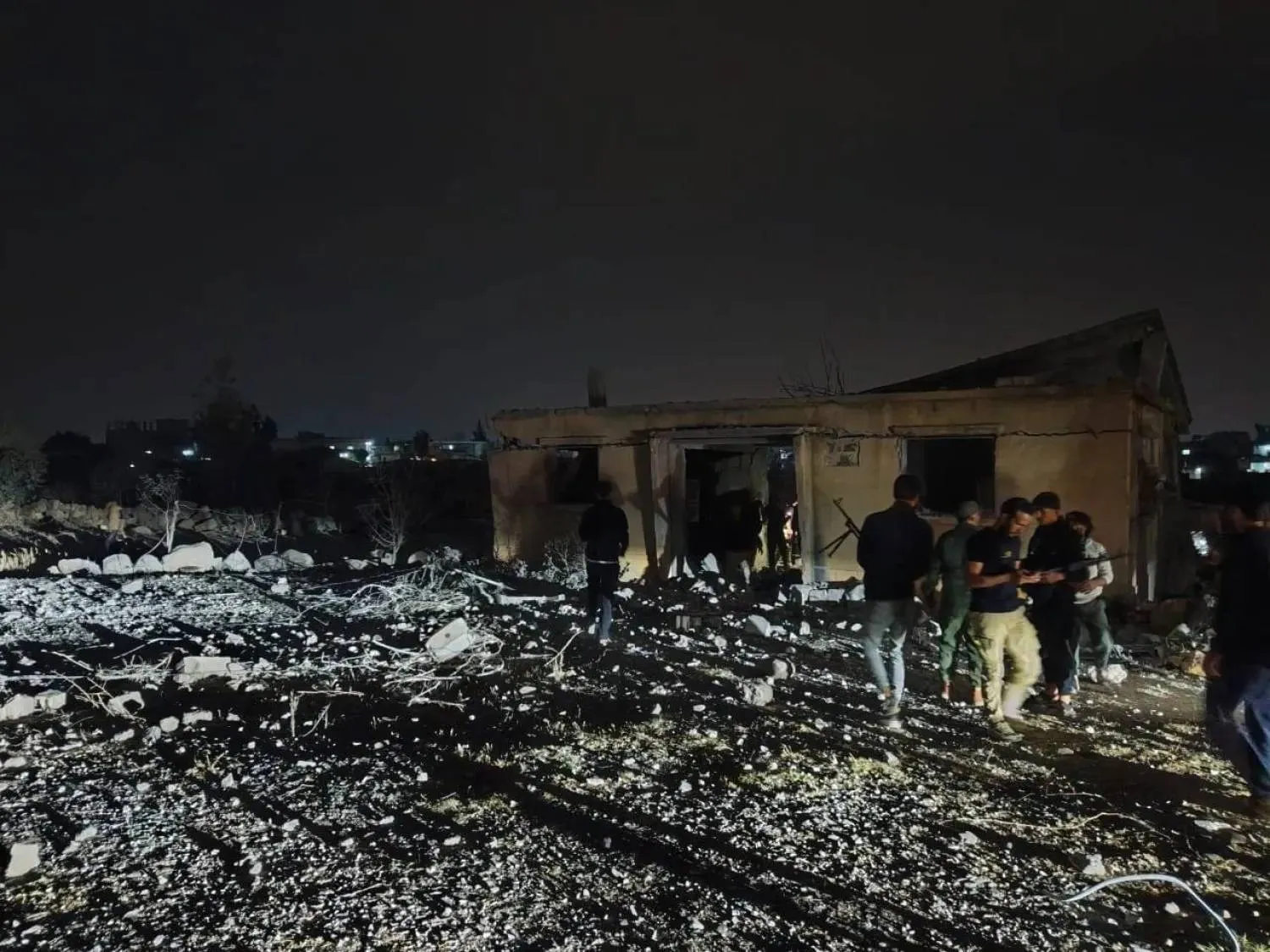
Destruction is seen at the site of the Jordanian strike on Daraa, Syria.
TT

Syria Says at Least Six Dead in Jordan Strikes, Closes Nasib Crossing

Destruction is seen at the site of the Jordanian strike on Daraa, Syria.

Syrian authorities said at least six people were killed in strikes on Monday in the country's south, as Jordan said it had targeted "terrorist organizations" after a deadly attack on a church.

In a statement on Tuesday, the government stressed that the military operation was conducted without prior coordination or notification with the Syrian side.

In an updated statement, health authorities in Daraa province reported "six martyrs, including three children and a woman", after earlier reporting eight victims.

The government “expressed its full solidarity with the affected Syrian families and extended its heartfelt condolences to the martyrs’ families, wishing a speedy recovery for the injured.”

It confirmed that relevant national authorities are closely monitoring the situation to assess the needs of the affected population and provide immediate required support and humanitarian relief.

The statement noted that competent authorities have launched comprehensive investigations to establish the full circumstances of the targeting.

Simultaneously, Syria has opened direct channels of communication with officials in Jordan to review the incident.

The Syrian government “underscored the imperative of joint field and security coordination regarding any actions along the border region, underlining the need to uphold the sovereignty of Syria and preserve the security and stability of both brotherly nations.”

Syrian authorities later shut the Nasib border crossing with Jordan in wake of the strikes.

On Friday, gunmen killed nine people during a funeral service at the Greek Orthodox St George's Church in the village of Hammoud in Karak governorate, southern Jordan.

Major General Abdullah al-Maaytah, Jordan's director of public security, on Monday named the three detained suspects as Hazza Zaidan Mohammed, Meshal Zaidan Mohammed and Ahmad Sami Hussein.

The trio, two of them brothers and the other related by marriage, were cornered at an abandoned house where they had barricaded themselves inside and opened fire on security forces.

"All three terrorists have been injured. They have been taken to hospital and are still receiving treatment," Maaytah told a press conference.

One of the suspects was in critical condition, Jordan's state broadcaster Al-Mamlaka reported. There were no casualties among the security forces, it added.

Jordan's King Abdullah II said in a post on X that security forces "chased them to the very end".

"We vowed the terrorists would not escape punishment, and no proponent of dark ideologies that divide Jordanians will be tolerated," he wrote.

Earlier, the king visited wounded victims of the church attack in hospital.


Report: Hezbollah Readies for New Regional War with Funds from Iran

17 April 2026, Lebanon, Jiyyeh: A displaced Lebanese woman flashes the victory sign and displays Hezbollah and Iranian flags as they drive along the highway linking Beirut to southern Lebanon in the Jiyyeh area. (dpa)
TT

Report: Hezbollah Readies for New Regional War with Funds from Iran

17 April 2026, Lebanon, Jiyyeh: A displaced Lebanese woman flashes the victory sign and displays Hezbollah and Iranian flags as they drive along the highway linking Beirut to southern Lebanon in the Jiyyeh area. (dpa)

Lebanese armed group Hezbollah has spent three months preparing for a possible resumption of hostilities with Israel, after receiving an infusion of cash from Iran, according to Lebanese security personnel briefed on its activities.

The group, founded by Iran's Revolutionary Guards in 1982, has been dealt severe blows in two wars with Israel since 2024, with thousands of fighters and many of its leaders killed, and much of its arsenal destroyed.

Invading Israeli forces now occupy its heartland of villages in southern Lebanon, and political pressure has built up in Beirut for its disarmament.

It nevertheless remains committed to fighting Israel and has used a lull in hostilities since June to rearm, with a focus on procuring explosives and producing drones that can be flown into Israeli positions, two Lebanese security sources told ‌Reuters.

One of the ‌sources, and another close to Hezbollah, said the group had received tens of ‌millions ⁠of dollars from ⁠Iran to help boost its military capabilities. That is in addition to around $200 million that the group received from Tehran to aid displaced families in its Shiite heartlands, which Reuters reported earlier this month.

The group has been restoring command-and-control structures that broke down in key battles, according to one of those sources and three other security officials familiar with the group's operations.

In response to questions from Reuters, Hezbollah's media office said Israel's occupation of Lebanese land made any resistance to it a legitimate right. It rejected the suggestion that its command-and-control systems had broken down.

Israel's military declined to comment. Iran's permanent mission to the ⁠United Nations in Geneva did not immediately respond to Reuters questions.

A US State Department ‌spokesman said Washington would keep strangling Hezbollah's finances through sanctions and other measures. ‌A US Treasury spokesperson said Iran was running out of money and ways to move money.

HEZBOLLAH ON ALERT

Hezbollah's effort comes ‌amid continued tensions in the wider Middle Eastern conflict ignited by the US-Israeli attack on Iran in February.

Hezbollah opened ‌fire in support of Iran on March 2, triggering an Israeli offensive that killed more than 4,000 people and uprooted a quarter of Lebanon's population, mostly members of Hezbollah's Shiite constituency.

Hostilities largely abated over the summer as an interim Iran-US deal included a Lebanon ceasefire and Washington mediated talks between Lebanon and Israel. Full-scale hostilities have not resumed in Lebanon despite the collapse of the ‌US-Iranian deal, though Israel continues deadly strikes in the south.

Hezbollah is on alert for a possible US-Iran escalation, potentially reigniting the Lebanon front.

The sources told Reuters the group ⁠had not yet managed ⁠to fully prepare its stockpiles or fighting force.

Hezbollah is still restocking, acknowledging this month that explosives seized by Lebanese authorities belonged to it and were intended for use against Israel. A Hezbollah official and a Lebanese security source told Reuters they were specifically for its explosive drones.

ISRAEL'S REMOTE WARFARE PROVED A CHALLENGE, SOURCES SAY

The group will also need to repair command-and-control capabilities after losses on key fronts, including the flashpoint town of Bint Jbeil and the strategic Ali al-Taher ridge, according to one of the Lebanese sources and three security officials.

They said Hezbollah's tactic of operating in small units and rationing the use of anti-tank rockets left some units isolated on those fronts, struggling to confront Israel's remotely operated systems including weaponized drones and armed remote-controlled vehicles.

The Israeli military told Reuters it uses remotely-operated systems to monitor southern Lebanon and reduce troops' threat exposure.

Hezbollah has not explicitly said whether it would take part in the eruption of fresh hostilities, but its media office said it was wary of giving Israeli leaders any justification to escalate in Lebanon, particularly as the group was concerned about its constituents being displaced once more.