


43 Al-Shabaab Members Killed in Somalia

Somali forces patrol in Mogadishu. (AP)
TT

43 Al-Shabaab Members Killed in Somalia

Somali forces patrol in Mogadishu. (AP)

Somalia’s President Hassan Sheikh Mohamud called Monday on the Army to be prepared for the second phase of the offensive operation against terrorist militants remaining in the country.

Meanwhile the Somali News Agency, Sonna, quoted official sources as saying that more than 40 members of al-Qaeda-linked Shabaab militants were killed in battles in the northeast of Somalia.

The agency said 43 members of the Kharijite (the term the Somali government uses to refer to the Islamist group) were killed during bloody battles that took place last Monday among terrorist groups in the Golis Mountains, northeast Somalia.

The sources added that during the attack, three Al-Shabaab leaders were killed. “ISIS militias defeated the Khawarij and controlled the area where the two extremist groups were fighting,” the sources affirmed.

Meanwhile, the Military Court of Somalia’s Puntland State sentenced ten Al-Shabaab members to death by firing squad on Sunday for committing terrorist operations in several regions.

Two of the accused, Adde Abdullahi Mohamed Elmi and Abdiqani Suleyman Jama Saylor, were convicted of the murder of freelance radio journalist Jamal Farah Adan in Galkaayo. Both men received the death sentence after exhausting all appeal options.

Early this month, 13 people from al-Shabaab and ISIS were executed by firing squad in Somalia’s northeastern state of Puntland.

Separately, the Somali President praised on Sunday the Army for gaining success in the fight against Al-Shabaab militants and ordered them to be prepared for the second phase of the offensive operation against the terrorists who still remain in western parts of Middle Shabelle and Hiiraan region under Hirshabelle State in Somalia.

Mohamud, together with a Government delegation, and Hir-Shabelle State President, Ali Gudlawe Hussein visited the Aden Yabal district in the Middle Shabelle region where he met with community members and listened to a report on the living conditions.

Aden Yabal was Al-Shabaab’s major stronghold in the past 15 years.

“The withdrawal of Al-Shabaab movement from the strategic city of Aden Yibal means that it was militarily and economically defeated,” the President said, explaining that the region was the most important economic stronghold for the terrorist group.

“This is clear evidence of the inability of the Kharijites to militarily confront the national army,” he said, adding that the militants have failed to find a safe haven and that their ideology threats against the local population have ended.


Iraq Border Crossings with Iran Reopen

Stranded Iranians and Iraqis wait at the Iraq-Iran border following the Iraqi government's decision to close the Shalamsheh border crossing in the southern Basra province on September 12, 2026. (Photo by Hussein FALEH / AFP)
TT

Iraq Border Crossings with Iran Reopen

Stranded Iranians and Iraqis wait at the Iraq-Iran border following the Iraqi government's decision to close the Shalamsheh border crossing in the southern Basra province on September 12, 2026. (Photo by Hussein FALEH / AFP)

Iraqi authorities said passenger traffic had resumed at key border crossings with Iran after being closed Saturday following drone attacks launched from Iraq that closed Saudi Arabia’s East-West oil pipeline.

Baghdad acknowledged that the attack had originated from Iraq.

Iraqi Prime Minister Ali al-Zaidi had ordered specific dates to be set for reopening three border crossings with Iran: Shalamcheh, Mandali, and Al-Sheeb, Iraq’s Security Media Cell said.

The three border crossings are located in the provinces of Basra, Maysan, and Mandali.

The attacks against Saudi Arabia were carried out from near the Al-Sheeb border crossing in Maysan province, prompting the prime minister to dismiss the commander in charge of Maysan and place the heads of its security agencies under his direct command, while referring them for investigation.

Analysts said the border closures amounted to an unprecedented “warning message” to Iran, as Iraqi authorities tightened security and launched investigations into violations at the crossings.


Sisi Meets Pezeshkian in New Delhi, Calls on Iran to Stop the Escalation

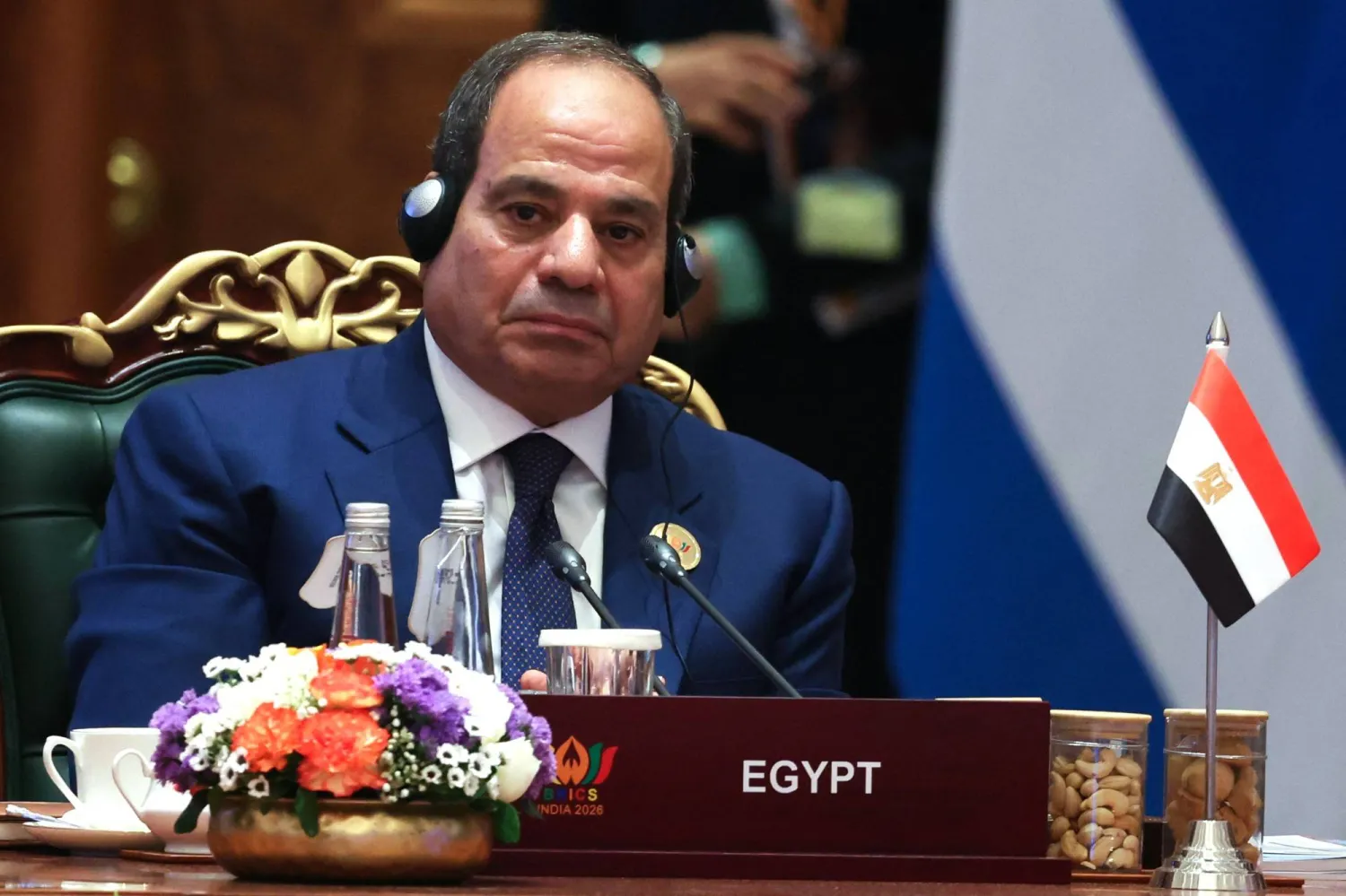
In this pool photograph distributed by the Russian state agency Sputnik, Egypt's President Abdel Fattah al-Sisi attends the 18th BRICS Summit in New Delhi on September 13, 2026. (Alexander Kazakov / POOL / AFP)
TT

Sisi Meets Pezeshkian in New Delhi, Calls on Iran to Stop the Escalation

In this pool photograph distributed by the Russian state agency Sputnik, Egypt's President Abdel Fattah al-Sisi attends the 18th BRICS Summit in New Delhi on September 13, 2026. (Alexander Kazakov / POOL / AFP)

Egyptian President Abdel Fattah al-Sisi called on Iran on Sunday to “stop the escalation” in the region and attacks on Arab countries “to preserve the principles of good neighborliness and boost the historic and cultural ties that bind the people of the region.”

Sisi met with Iranian President Masoud Pezeshkian on the sidelines of the BRICS Summit in New Delhi.

Egyptian presidential spokesman Mohamed el-Shennawy said Sisi stressed to Pezeshkian Cairo’s “firm stance in supporting efforts to restore stability in the region.”

Egypt hopes that Iran would “exert all possible efforts to stop the escalation and reach a sustainable comprehensive peaceful settlement to the crisis that would protect the sovereignty and assets of the nations in the region.”

Egypt has constantly expressed its full support to the security and stability of Arab countries, rejecting any form of violation that may undermine their sovereignty and stability.

It has repeatedly called for an immediate end to the escalation, saying serious dialogue and diplomacy were the ways to resolve pending issues in the region.

During a telephone call with Pezeshkian in May, Sisi called on Iran to show “some flexibility” and “avoid miscalculations”.

He expressed Cairo’s categorical rejection of any attack on the sovereignty of Gulf countries and threats to their territories.

Egypt and Iran severed diplomatic ties in 1979 before restoring diplomatic representation at the level of charge d’affaires eleven years later.

Egyptian and Iranian ministers have held several meetings in the past three years to discuss the possibility of developing relations between their countries.

Iranian Foreign Minister Abbas Araghchi has visited Cairo on more than one occasion where he has met with Sisi and senior officials.

Araghchi met his Egyptian counterpart Badr Abdelatty on the sidelines of the BRICS Summit.


Fighting in Yemen Intensifies as Govt Attacks Houthis Along Read Sea

A member of the Yemeni government forces, including National Army and Taiz Axis forces, mans a turret mounted on the back of a pickup truck at a checkpoint along the al-Kadha frontline west of Taiz in western Yemen on September 13, 2026. (AFP)
TT

Fighting in Yemen Intensifies as Govt Attacks Houthis Along Read Sea

A member of the Yemeni government forces, including National Army and Taiz Axis forces, mans a turret mounted on the back of a pickup truck at a checkpoint along the al-Kadha frontline west of Taiz in western Yemen on September 13, 2026. (AFP)

The conflict in Yemen intensified on Sunday, as government forces launched attacks against Iran-backed Houthi group along the Red Sea.

The Yemeni government vowed to send more forces to the Red Sea coast after conceding a “painful” defeat last week when Houthis captured the port city of Mokha and an island on the Bab al-Mandeb Strait, a crucial shipping alternative to the Strait of Hormuz.

The United Nations estimated that more than 80,000 people have been displaced by the fighting since the start of September.

One woman said a mortar shell fell nearby as she fled in the middle of the night from the town of Khawkha in the Houthi-held Hodeidah province along the Red Sea, shortly before it was captured by the militants.

“I saw with my own eyes cars and buses burning, and bodies of children and women were lying on the road in a horrific scene,” said the woman, who spoke on condition of anonymity out of concern for her and her family’s safety.

The Saudi civil defense overnight said a Houthi projectile fell in a different area near the border with Yemen along the Red Sea, injuring two people and damaging a mosque and several other buildings.

The National Resistance, a government-allied force that had controlled coastal areas, said more than 500 government fighters were killed on the west coast over the past four weeks — its first comprehensive toll. It said about 1,500 others had been wounded in the fighting since August 9.

It said more than 1,000 Houthis had been killed in the Hodeidah and Taiz provinces.

Sultan al-Aradah, a member of the ruling Presidential Leadership Council, described the collapse of government forces in the port city of Mokha and elsewhere on Yemen’s west coast as “painful and regrettable.”

Al-Aradah said in the televised interview aired late Saturday that forces “are currently regrouping and will return to the battle in one form or another.”

On Sunday, the Yemeni military said it launched airstrikes on Houthi positions in Mokha and the coastal town of Dhubab, and elsewhere in Taiz province.

The Houthis also reported strikes by the government forces in the province, as well as artillery shelling in the province of Saada, the Houthi stronghold on Yemen's northern borders.

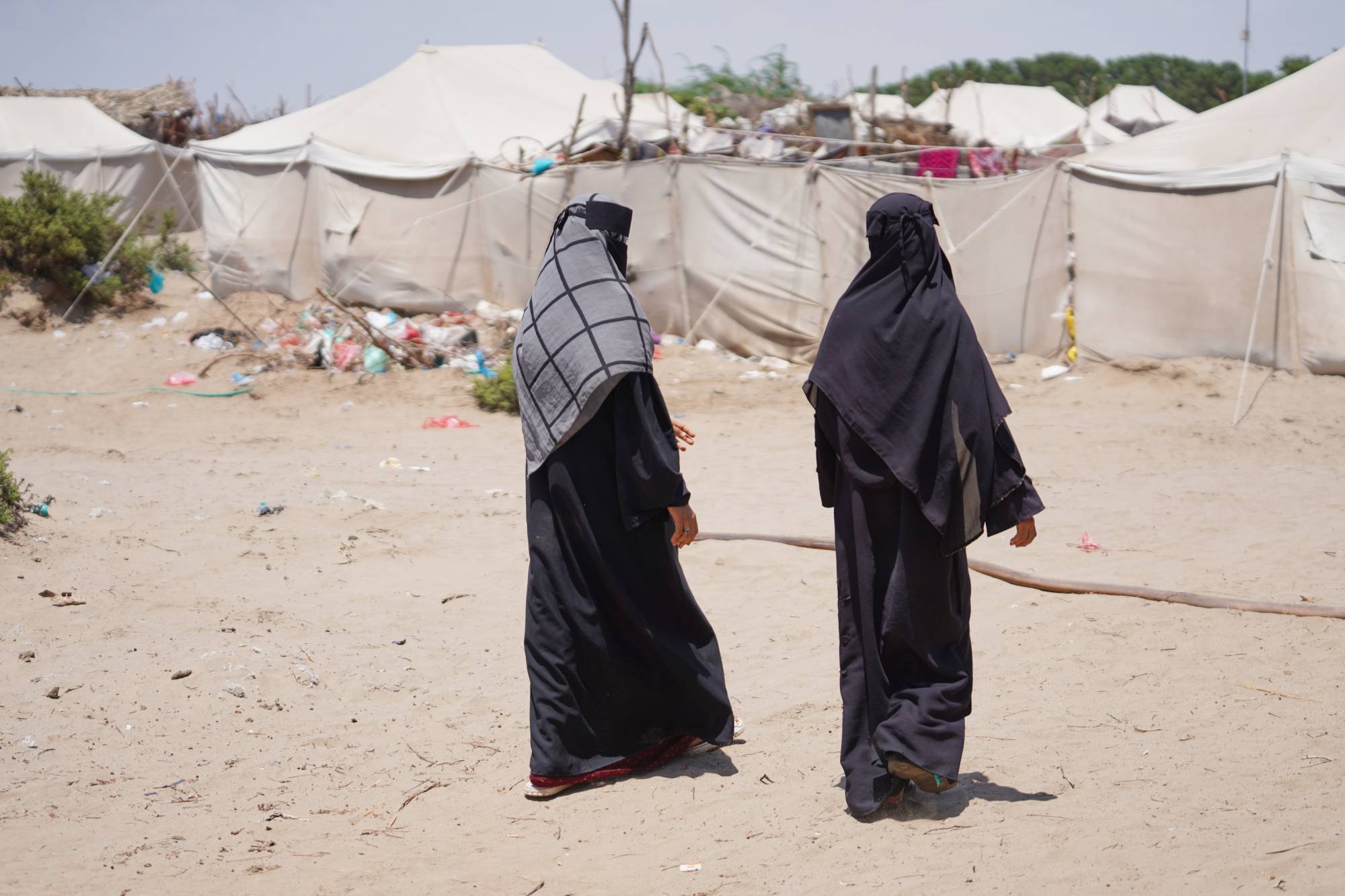
Displaced Yemenis, from al-Khawkha city, 400 kilometers (249 miles) southwest of Sanaa, walk past their temporary shelter in Aden, Yemen, Sunday, Sept. 13, 2026. (AP)

The Houthis' advance puts them just 20 miles (32 kilometers) from the US military base in Djibouti, on the other side of the Bab al-Mandeb Strait. It's the main US base in Africa and one of several foreign military bases in Djibouti, including those of China, France and Japan.

The small Horn of Africa nation is already seeing the arrival of displaced Yemenis making the perilous water crossing. More than 2,000 Yemenis have reached Djibouti, the International Organization for Migration said Sunday.

Djibouti's Economy and Finance Minister Ilyas M. Dawaleh, said on X that the country's navy, coast guard and other specialized agencies were conducting rescue operations and providing emergency assistance.

Yemenis displaced by fighting worry about their survival

The UN migration agency said Sunday that more than 82,000 people in Yemen have been displaced since the beginning of September.

“The displaced people are in a very bad condition,” said Ahmad al-Masawi, the director of the Al Salam camp in the southern port city of Aden, who appealed to international organizations for assistance. “They left their homes quickly without any clothing or anything. They are crammed in camps, houses and even on roads."

Hussein Haydara sat outside a shelter at the camp in a white undershirt, as his children waited to be assigned to a tent. He worried about how far the shelter is from schools, hospitals and markets, and wondered how they will survive the next weeks or months.

Haydara had fled his home in Hodeidah once before, when the Houthis took it over in 2015. But this time feels more precarious.

“With the first displacement, we had time to plan things but this time we were forced to escape all of a sudden. One could hardly take their children and the lightest stuff possible,” he said.
