Shao Zheng, chargé d'affaires of the Chinese Embassy to Yemen, rejected reports that equipment and components linked to the Houthi group's missile programs had been supplied by Chinese companies, dismissing the allegations as baseless.
He stressed that Beijing maintains strict controls on exports of dual-use materials and complies with relevant UN Security Council resolutions.
In an interview with Asharq Al-Awsat, Shao said China was prepared to receive any information or reports provided by the Yemeni government concerning the allegations and conduct a comprehensive investigation.
He explained that Beijing had repeatedly informed the Yemeni government of its willingness to examine any evidence or reports related to the matter and investigate them thoroughly.
The Chinese diplomat also said his country was closely monitoring military developments in Yemen and continued to support the internationally recognized Yemeni government, as well as the country's sovereignty, territorial integrity and national unity.
He urged the Houthis to abandon military action and return to peaceful dialogue.
China-Yemen Relations
Shao said China and Yemen are celebrating the 70th anniversary of their diplomatic relations this year, noting that Beijing is working to strengthen exchanges and cooperation with Yemen in political, economic, cultural, educational, scientific and other fields.
He described Yemen as a close friend, brotherly nation and valued partner, expressing China's readiness to build on seven decades of diplomatic relations to deepen cooperation across various sectors.
The two countries recently organized several events to mark the anniversary, including seminars, interviews and press conferences.
Shao noted that many Yemenis, including government officials, had praised bilateral relations, with some describing the friendship between China and Yemen as deeper than the ocean and higher than the mountains.
He expressed hope that relations would continue to grow stronger.
Coordination with the Yemeni Government
Shao described coordination between China and the Yemeni government as excellent, noting that communication and exchanges between the two sides continue through correspondence, telephone calls and official visits.
He said China had recently hosted several Yemeni officials, including the interior minister, who spent 10 days in the country discussing ways to strengthen cooperation in public security.
A delegation of approximately 10 Yemeni government officials is also scheduled to visit China later this month, with Beijing having prepared a comprehensive program for the visit.
Turning to student exchanges, Shao said a group of around 10 Yemeni students from the University of Aden and other universities visited China last month.
During their visit, the students learned about developments in the country, met Chinese counterparts and toured artificial intelligence centers and Chinese universities.
He said they showed considerable interest in what they saw.
Military Developments in Yemen
Shao said China was closely following recent developments in Yemen, noting that events had accelerated significantly over the past several months, with new developments emerging almost daily.
He reaffirmed Beijing's consistent support for the internationally recognized Yemeni government, as well as Yemen's sovereignty, territorial integrity and national unity, stressing that China would maintain this position.
Navigation in the Red Sea and Bab el-Mandeb
Shao emphasized China's opposition to attacks on vessels in the Red Sea and the Bab el-Mandeb Strait, stressing the importance of ensuring the uninterrupted flow of international trade and supplies.
He said Beijing supports freedom of navigation in both waterways and hopes to see an end to the war in Yemen, which has lasted nearly 12 years.
The Yemeni people have suffered greatly throughout the conflict, he said, adding that China is providing additional humanitarian assistance and hopes for de-escalation and an eventual peaceful settlement.
Shao reaffirmed China's commitment to safe passage for vessels through Bab el-Mandeb and the Red Sea, as well as other strategic waterways, including the Strait of Hormuz.
He noted that Beijing had repeatedly emphasized, both at the UN Security Council and in regional forums, the need to prevent attacks on shipping.
Shao said approximately 10 percent of international trade passes through the Bab el-Mandeb Strait, including shipments of gas, oil, fertilizers and grain.
Many developing countries depend on these essential commodities, particularly fertilizers needed for agricultural production, he explained.
He stressed that China is working with other countries to protect trade flows and maritime navigation.
Attacks on Civilians in Saudi Arabia
Shao also conveyed China's condemnation of attacks targeting airports and other similar facilities in Saudi Arabia. He called for de-escalation and urged all parties to take steps to prevent further tensions in the region and beyond.
He reaffirmed Beijing's support for peaceful dialogue and a political settlement to achieve regional peace and stability.
Contacts with the Houthis
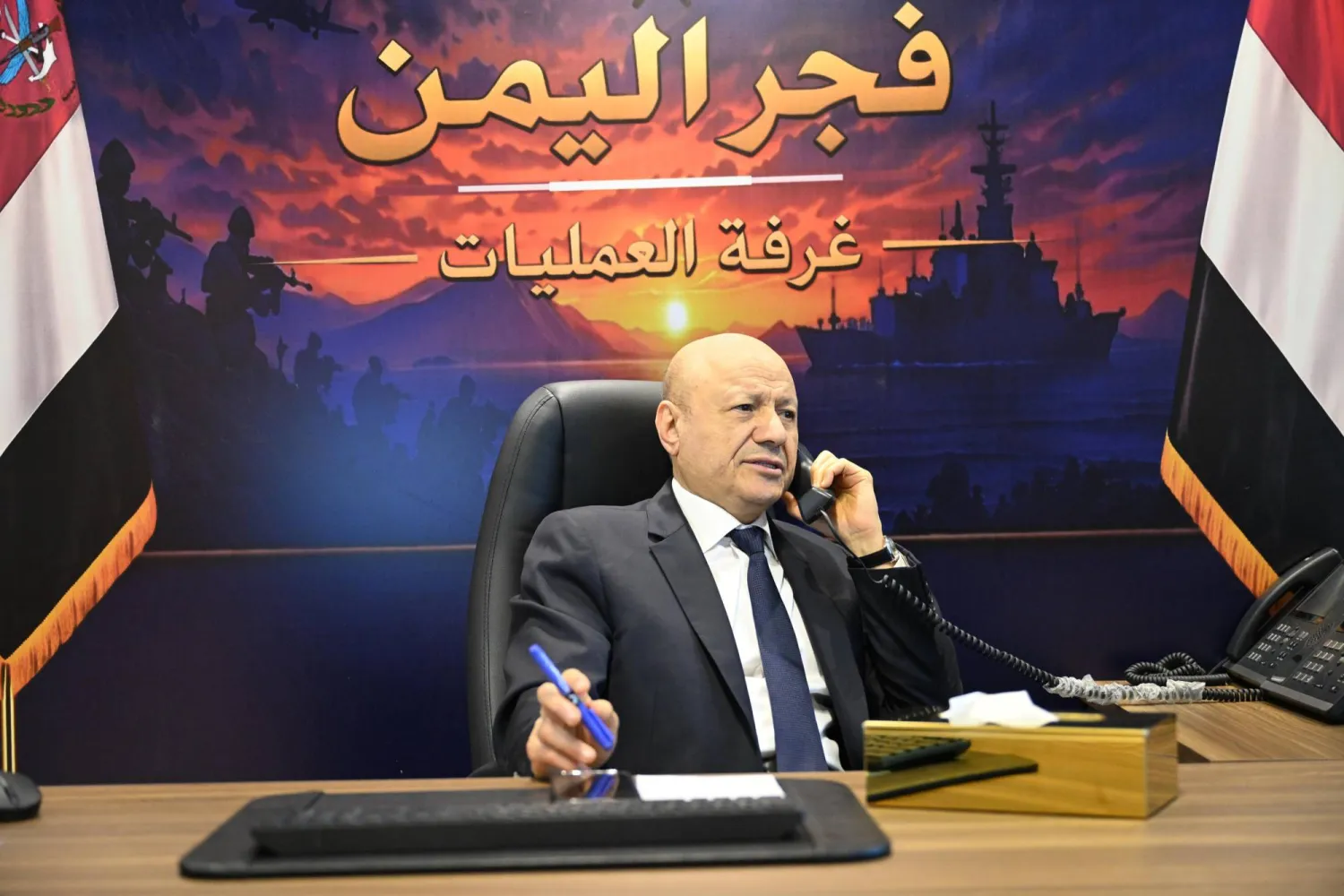
Asked whether China maintains any contact with the Houthis, Shao emphasized Beijing's support for the internationally recognized Yemeni government, Presidential Leadership Council Chairman Rashad al-Alimi, the council itself, the prime minister and the new government formed earlier this year.
He said China was calling on all Yemeni parties to return to the negotiating table and urging the Houthis to abandon military action in favor of peaceful dialogue.
Shao stressed that China's efforts remain focused on reducing tensions, restoring peace and stability, and helping Yemen return to calm as soon as possible.
Reports of Chinese Equipment Reaching the Houthis
Responding to reports that Chinese suppliers had provided the Houthis with equipment and components associated with military applications, Shao said Beijing strictly regulates exports of dual-use materials and goods.
He stressed that China complies with UN Security Council Resolution 2216 and other relevant resolutions.
Shao rejected the allegations against China as entirely unfounded, insisting that the country's strict export controls meant the claims would not withstand scrutiny.
Asked whether Beijing had discussed the issue with the Yemeni government, he said communication and exchanges between the two sides were continuing at various levels.
He explained that China had made its position on controlling exports of such goods clear to the Yemeni authorities and would continue enforcing its regulations.
Shao reiterated China's readiness to investigate any information submitted by the Yemeni government, saying Beijing would welcome relevant materials or reports and conduct a comprehensive investigation into their contents.
He also denied that any Chinese personnel were stationed in Sanaa.
China withdrew all its diplomats from the city after the war broke out in 2015, he explained, and the embassy has since operated from temporary premises in Riyadh.
Chinese Projects in Yemen
Shao said China has undertaken numerous development and humanitarian projects in Yemen, with approximately 100 such projects in place before the war.
He revealed that Beijing signed a new development assistance agreement earlier this year, providing the Yemeni government with an additional grant of 50 million yuan, building on previous commitments.
China is also working to provide further investments and assistance, he said.
Shao noted that he had held discussions with several Yemeni ministers and officials, including representatives of the Interior Ministry, to explore ways of strengthening the ministry's capabilities and improving working conditions in public security.
He also highlighted China's announcement that it would apply zero tariffs to all Yemeni exports, allowing Yemeni products, including fisheries products, to enter the Chinese market directly.
On education, Shao said China encourages Yemeni students to pursue their studies at Chinese institutions.
Approximately 6,500 Yemeni students are currently studying in China, he said, adding that Beijing is offering additional scholarships.
Coordination with Saudi Arabia
Shao confirmed that he maintains frequent contact and exchanges with Saudi Ambassador to Yemen Mohammed Al-Jaber.
He said the two diplomats meet regularly and communicate by telephone whenever necessary, describing their relationship as one of friendship and partnership.
Shao expressed hope that China and Saudi Arabia could cooperate in helping Yemen rebuild and achieve lasting peace and stability as soon as possible.
He praised Saudi Arabia's efforts to assist the Yemeni people, including the construction of schools, hospitals, bridges and other development projects.
The Chinese diplomat said his country possesses extensive expertise in reconstruction and development, noting that discussions with the Saudi side have included the possibility of implementing solar energy projects and other initiatives.
He added that trilateral cooperation involving China, Saudi Arabia and Yemen could provide an opportunity to explore a wide range of development projects.