

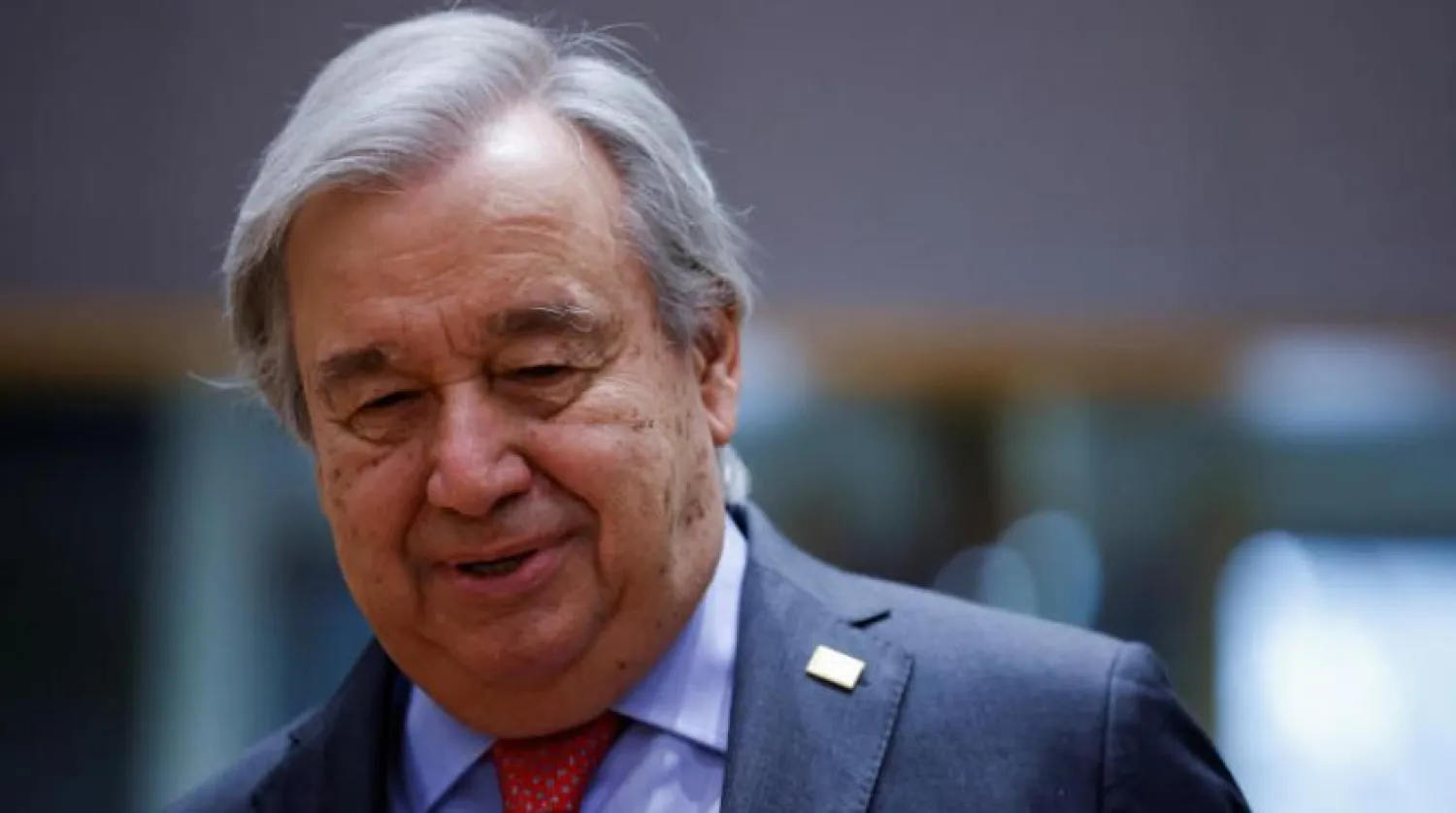

UN Chief Guterres Makes Second Visit to Somalia

UN Secretary General Antonio Guterres (Reuters)
TT

UN Chief Guterres Makes Second Visit to Somalia

UN Secretary General Antonio Guterres (Reuters)

UN Secretary-General Antonio Guterres arrived in Mogadishu on Tuesday to kick off a brief visit to Somalia, a country scarred by protracted armed conflict and climate disasters.

Guterres was given a red-carpet welcome at the capital's airport by Somalia's Foreign Minister Abshir Omar Huruse who posted pictures of the event on Twitter.

Somalia has imposed a security lockdown on Mogadishu for the visit, with most roads closed and public transport restricted.

Guterres's trip comes with the country in the grip of a calamitous drought that has driven many to the brink of famine, while the government is also engaged in a major offensive to put down a bloody insurgency.

The UN chief, who previously visited Somalia in March 2017, is due to hold talks with political leaders and visit a camp for internally displaced people, according to local media reports.

The United Nations has launched a $2.6 billion appeal for humanitarian aid for the troubled Horn of Africa nation, but it is currently only 13 percent funded.

Five straight failed rainy seasons in parts of Somalia as well as Kenya and Ethiopia have led to the worst drought in four decades, wiping out livestock and crops and forcing at least 1.7 million people from their homes in search of food and water.

While famine thresholds have not been reached in Somalia, the UN says about half its population will need humanitarian assistance this year, with 8.3 million affected by the drought.

"The crisis is far from over -- needs remain high and urgent," the UN's resident coordinator for Somalia, Adam Abdelmoula, said last week in Geneva.

"Some of the most affected areas continue to face the risk of famine."

Adding to the woes, seasonal rains in March led to flooding that claimed the lives of 21 people and displaced more than 100,000, he said, while warning that the rains were unlikely to be enough to improve the food security outlook for many.

Offensive against Al-Shabaab
Somalia was hit by a famine in 2011 which killed 260,000 people, more than half of them children under six, partly because the international community did not act fast enough, according to the UN.

A report by the UN and the Somali government released in March said that drought may have led to 43,000 "excess deaths" last year, with children under the age of five accounting for half the victims.

One of the poorest countries on the planet, Somalia has been wracked by decades of civil war, political violence and a bloody insurgency by the Al-Qaeda affiliate Al-Shabaab.

President Hassan Sheikh Mohamud last year declared "all-out war" against the militants and sent in troops in September to back an uprising against Al-Shabaab launched by local clan militias in central Somalia.

In recent months, the army and the militias known as "Macawisley" have retaken swathes of territory in an operation backed by an African Union force known as ATMIS and US air strikes.

The government claimed late last month that more than 3,000 Al-Shabaab fighters had been killed since it launched the offensive.

It also said in a statement issued by the information ministry that 70 towns and villages had been "liberated" from Al-Shabaab, which has been fighting the fragile central government for more than 15 years.

It was not possible to independently verify the claims.

Al-Shabaab has frequently retaliated against the offensive with bloody attacks, underlining its stability to continue to strike civilian, political and military targets despite the government's advances.

In a report to the UN Security Council in February, Guterres said that 2022 was the deadliest year for civilians in Somalia since 2017, largely as a result of Al-Shabaab attacks.



Report: Israel Aims to Ensure More Palestinians Are Let Out of Gaza Than Back in

 A general view of destroyed houses in areas marked as 'Yellow Line' by the Israeli military, in east of Gaza City, January 16, 2026. (Reuters)
A general view of destroyed houses in areas marked as 'Yellow Line' by the Israeli military, in east of Gaza City, January 16, 2026. (Reuters)
TT

Report: Israel Aims to Ensure More Palestinians Are Let Out of Gaza Than Back in

 A general view of destroyed houses in areas marked as 'Yellow Line' by the Israeli military, in east of Gaza City, January 16, 2026. (Reuters)
A general view of destroyed houses in areas marked as 'Yellow Line' by the Israeli military, in east of Gaza City, January 16, 2026. (Reuters)

Israel wants to restrict the number of Palestinians entering Gaza through the border crossing with Egypt to ensure that more are allowed out than in, three sources briefed on the matter told Reuters ahead of the border's expected opening next week.

The head of a transitional Palestinian committee backed by the US to temporarily administer Gaza, Ali Shaath, announced on Thursday that the Rafah Border Crossing - effectively the sole route in or out of Gaza for nearly all of the more than 2 million people who live there - would open next week.

The border was supposed to have opened during the initial phase of President Donald Trump's plan to end the war, under a ceasefire reached in October between Israel and Hamas.

Earlier this month, Washington announced that ‌the plan had now ‌moved into the second phase, under which Israel is expected to ‌withdraw ⁠troops further from ‌Gaza and Hamas is due to yield control of the territory's administration. The Gaza side of the crossing has been under Israeli military control since 2024.

The three sources, who spoke on condition of anonymity due to the sensitivity of the issue, said it was still not clear how Israel planned to enforce limits on the number of Palestinians entering Gaza from Egypt, or what ratio of exits to entries it aimed to achieve.

Israeli officials have spoken in the past about encouraging Palestinians to emigrate from Gaza, although they deny intending to transfer the population out by ⁠force. Palestinians are highly sensitive to any suggestion that Gazans could be expelled, or that those who leave temporarily could be barred from returning.

The ‌Rafah Crossing is expected to be staffed by Palestinians affiliated with the ‍Ramallah-based Palestinian Authority and monitored by EU personnel, ‍as took place during an earlier, weeks-long ceasefire between Israel and Hamas early last year.

The Israeli prime ‍minister's office did not immediately respond to a request for comment for this story. The military referred questions to the government, declining to comment.

An Israeli official told Reuters the government would determine when the border would open and that Palestinians would not be able to leave or enter Gaza without approval from Israel.

The three sources said that Israel also wants to establish a military checkpoint inside Gaza near the border, through which all Palestinians entering or leaving would be required to pass and be subjected to Israeli security checks.

The US ⁠Embassy in Israel did not immediately respond to a request for comment on whether Washington supported Israel in limiting the number of Palestinians entering Gaza or setting up a checkpoint to screen those entering and leaving.

Under the initial phase of Trump's plan, the Israeli military partially pulled back its forces within Gaza but retained control of 53% of the territory including the entire land border with Egypt. Nearly all of the territory's population lives in the rest of Gaza, under Hamas control and mostly in makeshift tents or damaged buildings.

The sources said that it was not clear how individuals would be dealt with if they were blocked by Israel's military from passing through its checkpoint, particularly those entering from Egypt.

The Israeli government has repeatedly objected to the opening of the border, with some officials saying Hamas must first return the body of an Israeli police officer held in Gaza, the final human ‌remains of a hostage due to be transferred under the ceasefire's first phase.

US officials in private say that Washington, not Israel, is driving the rollout of the president's plan to end the war.


Report: US Pressures Iraq to ‘Rapidly’ Disarm Iran-Backed Factions

Iraqi border security force personnel patrol in their armored vehicles along the border with Syria, in Sinjar district, northern Iraq on January 22, 2026. (AFP)
TT

Report: US Pressures Iraq to ‘Rapidly’ Disarm Iran-Backed Factions

Iraqi border security force personnel patrol in their armored vehicles along the border with Syria, in Sinjar district, northern Iraq on January 22, 2026. (AFP)

US officials have been pressuring Iraq to disarm Iran-backed armed factions, reported the Financial Times on Friday.

“In tense meetings with senior Iraqi political leaders tasked with forming the next government, US officials have in recent weeks also pushed the Iraqis to produce a ‘credible’ plan to rapidly disarm the groups,” it said.

Washington is exerting pressure on senior Iraqi politicians to form a government that excludes those factions, amid US President Donald Trump's efforts to curb Tehran's influence in Baghdad.

The newspaper quoted informed sources as saying that American officials threatened to take punitive measures if Baghdad did not do so, including economic measures, such as limiting dollar flows related to Iraqi oil sales.

Since 2003, under an arrangement after the American invasion of Iraq, Washington has been sending Baghdad cash shipments worth billions of dollars annually via monthly air freight flights, which are funds collected from Iraqi oil sales, the proceeds of which are deposited in the country's account with the Federal Reserve.

However, the United States has long been concerned that armed factions and Iran would use these funds. In 2015, Washington temporarily suspended dollar supplies to Baghdad amid concerns that they were flowing to Tehran and the ISIS extremist group.

The sources said that Iraqis fear instability and the outbreak of an economic crisis if Washington stops these supplies again.


Israel Aims to Ensure More Palestinians Are Let Out of Gaza than Back In

People stand at the gate of the border crossing between Egypt and the Gaza Strip, in Rafah, Egypt, February 11, 2025. REUTERS/Amr Abdallah Dalsh
TT

Israel Aims to Ensure More Palestinians Are Let Out of Gaza than Back In

People stand at the gate of the border crossing between Egypt and the Gaza Strip, in Rafah, Egypt, February 11, 2025. REUTERS/Amr Abdallah Dalsh

Israel wants to restrict the number of Palestinians entering Gaza through the border crossing with Egypt to ensure that more are allowed out than ​in, three sources briefed on the matter said ahead of the border's expected opening next week.

The head of a transitional Palestinian committee backed by the US to temporarily administer Gaza, Ali Shaath, announced on Thursday that the Rafah Border Crossing - effectively the sole route in or out of Gaza for nearly all of the more than 2 million people who live there - would open next week.

The border was supposed to have opened during the initial phase of President Donald Trump's plan to end the war, under a ceasefire reached in October between Israel and Hamas.

Earlier this month, Washington announced that the plan had now ‌moved into the ‌second phase, under which Israel is expected to withdraw troops further from ‌Gaza ⁠and ​Hamas ‌is due to yield control of the territory's administration. The Gaza side of the crossing has been under Israeli military control since 2024.

The three sources, who spoke on condition of anonymity due to the sensitivity of the issue, said it was still not clear how Israel planned to enforce limits on the number of Palestinians entering Gaza from Egypt, or what ratio of exits to entries it aimed to achieve, Reuters reported.

Israeli officials have spoken in the past about encouraging Palestinians to emigrate from Gaza, although they deny intending to transfer the population out by force. Palestinians ⁠are highly sensitive to any suggestion that Gazans could be expelled, or that those who leave temporarily could be barred from returning.

The Rafah ‌Crossing is expected to be staffed by Palestinians affiliated with the ‍Ramallah-based Palestinian Authority and monitored by EU personnel, ‍as took place during an earlier, weeks-long ceasefire between Israel and Hamas early last year.

The Israeli ‍prime minister's office did not immediately respond to a request for comment for this story. The military referred questions to the government, declining to comment.

The three sources said that Israel also wants to establish a military checkpoint inside Gaza near the border, through which all Palestinians entering or leaving would be required to pass and be subjected to Israeli ​security checks.

Two other sources also said that Israeli officials had insisted on setting up a military checkpoint in Gaza to screen Palestinians moving in and out.

The US Embassy in ⁠Israel did not immediately respond to a request for comment on whether Washington supported Israel in limiting the number of Palestinians entering Gaza or setting up a checkpoint to screen those entering and leaving.

Under the initial phase of Trump's plan, the Israeli military partially pulled back its forces within Gaza but retained control of 53% of the territory including the entire land border with Egypt. Nearly all of the territory's population lives in the rest of Gaza, under Hamas control and mostly in makeshift tents or damaged buildings.

The sources said that it was not clear how individuals would be dealt with if they were blocked by Israel's military from passing through its checkpoint, particularly those entering from Egypt.

The Israeli government has repeatedly objected to the opening of the border, with some officials saying Hamas must first return the body of an Israeli police officer held in Gaza, the ‌final human remains of a hostage due to be transferred under the ceasefire's first phase.

US officials in private say that Washington, not Israel, is driving the rollout of the president's plan to end the war.