


Hackers Announce Major Breach of Iranian Foreign Ministry Websites

N/A
N/A
TT

Hackers Announce Major Breach of Iranian Foreign Ministry Websites

N/A
N/A

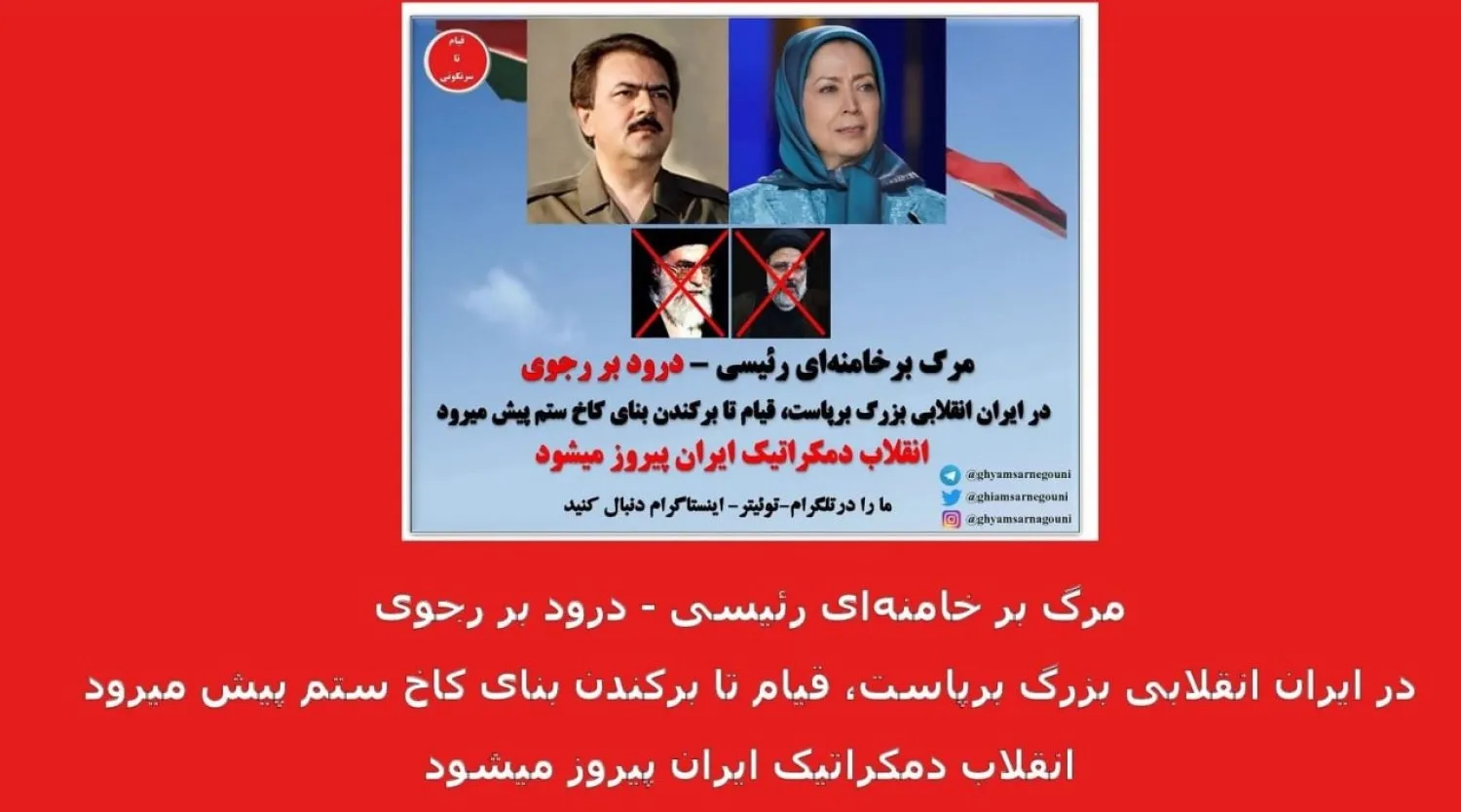
A group of hackers closely linked to the Iranian opposition organization Mujahideen-e Khalq (MEK) have claimed responsibility for a major breach of 75 electronic servers associated with numerous websites linked to the Iranian Foreign Ministry.

This breach marks the most recent in a series of cyberattacks aimed at Iranian government institutions and facilities.

The hacktivist group ‘Uprising till Overthrow', according to its Telegram account, released hundreds of identification documents, minutes of meetings, the ministry’s correspondence, phone numbers of ministry officials, and the names of 11,000 employees of the foreign ministry, among others.

Iranian authorities have not commented on the documents and information leaked by the group. However, the website of the Iranian Foreign Ministry experienced an outage for several hours following the announcement of the cyberattack.

Since Sunday morning, the Iranian Foreign Ministry's website has displayed a message indicating that it is undergoing routine maintenance and updates that are expected to be completed in a few minutes.

The hackers have revealed that they obtained the documents by breaching 75 servers belonging to the Iranian Foreign Ministry’s e-network.

They indicated that the ministry’s main server, which has a capacity of 50 terabytes, was also breached.

The documents expose the “internal workflow” and “infrastructure” of the ministry.

Through their Twitter account, the hackers claimed to have infiltrated 210 websites within the Iranian Foreign Ministry’s system.

Among the documents released is a list of members of the diplomatic corps abroad, most of whom are due to end their missions before the current Foreign Minister Hossein Amir-Abdollahian took office.

One document includes the names of diplomats representing the Basij forces affiliated with the Revolutionary Guard.

A picture of Amir-Abdollahian’s membership card in the Basij forces, the paramilitary arm of the Revolutionary Guard, surfaced in the leaked documents.

A Twitter account affiliated with the hackers wrote that “Amir-Abdollahian is a former member of the Revolutionary Guard and Quds Force, and currently an active member of the Basij forces.”

In addition, the hackers leaked a picture of the passport of Ali Shamkhani, who is the Secretary-General of the Iranian National Security Council, along with several of his assistants and security team.

The leaked documents provide extensive information about various departments and units within the Iranian Foreign Ministry, including communication channels with other agencies and decision-making centers. Additionally, the documents reveal details such as the types of vehicles used by diplomats and their mobile phone numbers.



100 Leading Israeli Thinkers Warn of ‘Internal Collapse’

An Israeli boy holds a toy gun in the occupied West Bank city of Hebron in March 2024 (AFP) 
TT

100 Leading Israeli Thinkers Warn of ‘Internal Collapse’

An Israeli boy holds a toy gun in the occupied West Bank city of Hebron in March 2024 (AFP) 

One hundred prominent Israeli thinkers, researchers and former officials have warned that Israel faces a critical choice: become a major power or risk collapse, arguing that while the country has the potential to achieve greater regional influence, its “foundations are rusting.”

The warning emerged from an in-depth study by MIND Israel, a nonpartisan organization specializing in foreign and security strategy. Maariv reported Sunday that the research identified another type of danger alongside external security threats: an existential threat from within.

“If we do not address these foundations, not only will we fail to become a major power, but the entire structure will collapse,” warned Dr. Avner Golov, MIND Israel’s vice president.

The study, involving 100 experts, identified six critical issues requiring urgent decisions: Israel’s regional standing, the quality of its human capital, the relationship between the economy and security, governance and national resilience, demographic changes, and relations with the United States.

MIND Israel President Maj. Gen. (res.) Amos Yadlin noted that the organization intends to present the issues to the public ahead of elections in late October and encourage voters to question party leaders about them.

Presenting the research, Golov explained that the researchers’ review of history found that civilizations tend not to be destroyed from outside while they remain strong internally.

“Internal processes dismantle them,” he added, citing declining social cohesion, erosion of trust in state institutions, the prioritization of short-term political gains over long-term national interests and an inability to adapt.

Contrasting views

Golov outlined two opposing assessments encountered by the researchers. One held that Israel had survived a global pandemic, social upheaval, the Oct. 7 attack and its aftermath while maintaining a resilient economy, technological leadership and strong security capabilities — evidence, in that view, that the country was moving toward becoming a major power.

The other argued that a process of collapse had already begun, driven by an identity crisis, declining governance and a political emergency.

“We believe both sides are right,” Golov concluded, arguing that Israel simultaneously faces historic opportunities and serious internal vulnerabilities.

Asked what the public should do with the questions raised by the study, Golov urged voters to look beyond questions of governing coalitions and demand concrete plans from political leaders. Key measures, he maintained, should be taken during a new government’s first 100 days.

Turning to security policy, Golov called for an updated version of Israel’s traditional “Iron Wall” doctrine following Oct. 7.

He argued that Israel could no longer rely solely on containing enemies behind defensive barriers but must seek to shape developments beyond them.

“The wall still needs to be strong, but we cannot rely only on that,” he stressed.

Golov also urged Israel not to depend exclusively on the United States and to strengthen regional relationships.

“Alongside the walls, we need bridges,” he concluded.


Iran's Guards Threaten to Hit New Targets if US Attacks

Image from a video published by the US Central Command (CENTCOM) of its operations within the naval blockade on Iran.
TT

Iran's Guards Threaten to Hit New Targets if US Attacks

Image from a video published by the US Central Command (CENTCOM) of its operations within the naval blockade on Iran.

Iran's Revolutionary Guards on Monday warned they would attack new targets and deploy new weapons if the US launches further attacks on the country.

Almost seven months into their war, Tehran and Washington remain locked in a stalemate, though neither side appears willing to return to full-scale war, said AFP.

In a statement, a spokesman for the Iranian Revolutionary Guards Corps, the ideological arm of Iran's military, said "there will certainly be significant changes in our defense and our counteroffensive" in the event of a new US attack.

"We will introduce new weapons with new capabilities into the battlefield, and the world will be surprised," he said.

"Our targets will not necessarily be the same as before either. We have new targets that have not yet been attacked."

The Guards also said they were prepared for a "prolonged war".

On Saturday, the central command of Iran's military said the US was planning new action against Tehran, according to state television, but it did not elaborate.

Fighting between the US and Iran has eased in recent days after a flare-up at the end of last month, though Tehran continues sporadic attacks on commercial ships in the Strait of Hormuz.

Both sides are maintaining rival blockades in the waterway in an effort to exert pressure.


Explosion Injures 3 South Korean Military Officers in Border Area with North Korea

This handout photo taken on August 4, 2025 and provided by the South Korean Defense Ministry shows South Korean soldiers removing loudspeakers that were set up for propaganda broadcasts near the Demilitarized Zone separating the two Koreas in an undisclosed location in South Korea. (Photo by Handout / South Korean Defense Ministry / AFP)
TT

Explosion Injures 3 South Korean Military Officers in Border Area with North Korea

This handout photo taken on August 4, 2025 and provided by the South Korean Defense Ministry shows South Korean soldiers removing loudspeakers that were set up for propaganda broadcasts near the Demilitarized Zone separating the two Koreas in an undisclosed location in South Korea. (Photo by Handout / South Korean Defense Ministry / AFP)

An explosion near South Korea's heavily fortified border with North Korea injured three South Korean military officers on Monday, South Korea's Defense Ministry said.

The ministry said the explosion occurred during an unspecified operation in the Demilitarized Zone, a border buffer zone separating the two nations that is commonly referred to as the DMZ.

The cause was not immediately clear, the ministry said.

South Korean officials did not say whether it was possible the explosion was caused by a land mine planted by North Korea, which has added mines, anti-tank barriers and other front line fortifications in recent months as relations between the war-divided rivals have sharply deteriorated.

Two of the officers were airlifted from the site by helicopter, while the third was transported by land before being airlifted, according to the ministry. The officers are being treated at a military hospital near the capital Seoul, The Associaqted Press said.

The DMZ, which is 248 kilometers (155 miles) long and 4 kilometers (2.5 miles) wide, is one of the world’s most heavily armed borders. An estimated 2 million mines are peppered inside and near the border, which also is guarded by barbed wire fences, tank traps and combat troops on both sides. The zone is a legacy of the Korean War from 1950 to 1953, which ended with an armistice but not a peace treaty.

There have been growing concerns in South Korea about increased activity by North Korean soldiers near the military demarcation line as the North strengthens its border defenses during prolonged tensions between the countries. The South Korean military has not officially confirmed media reports that North Korean soldiers crossed the MDL more than 20 times during front line operations in August alone.

The South’s military fired warning shots to repel some 10 North Korean soldiers who crossed the military demarcation line at the eastern section of the DMZ in April 2025. The North Korean soldiers retreated after the South broadcast audio warnings and fired the shots and there were no clashes. In June 2024, North Korean troops crossed the border three times, prompting South Korea to fire warning shots.

North Korean leader Kim Jong Un in recent years has suspended virtually all cooperation and diplomacy with South Korea while declaring Seoul as his most hostile enemy during a stalemate in his larger nuclear negotiations with Washington.

North Korean mines in past years have occasionally washed down a swollen river into South Korea, killing or injuring civilians. In August 2015, land mine blasts maimed two South Korean soldiers and caused tensions between the two Koreas to flare.