


Al-Jaber Says Saudi Arabia Mediates Among Yemenis, Expresses Optimism in Breakthrough

The inauguration of the rehabilitation of Aden International Airport. (SABA)
TT

Al-Jaber Says Saudi Arabia Mediates Among Yemenis, Expresses Optimism in Breakthrough

The inauguration of the rehabilitation of Aden International Airport. (SABA)

Saudi Arabia's ambassador to Yemen Mohammed Al-Jaber has affirmed that Riyadh is exerting mediation efforts among Yemeni factions, including the Houthis.

Warring parties in Yemen are “serious” about ending a devastating eight-year-old conflict but it is impossible to predict when talks between Yemenis, much less a breakthrough, might happen, the envoy told AFP.

“Everybody is serious. Serious means everybody is looking for peace,” Al-Jaber said, adding that “it’s not easy to be clear about the next steps.”

“Nothing is clear, but I’m optimistic, and we hope - God willing - Yemenis can find a way as soon as possible.”

On his way back from Aden to Riyadh, Jaber said: “Because of Saudi Arabia’s relationship with all Yemenis, including the Houthis, we used our leverage to convince all Yemenis to sit at the table and discuss those issues.”

“In the end, it’s about Yemenis,” he added, though he also noted the two sides currently “refuse to sit together.”

Chairman of the Yemeni Presidential Leadership Council Dr. Rashad al-Alimi said in a televised interview with TV channels Al Arabiya and AlHadath that the Council hails Saudi Arabia's mediation efforts to end the war, establish peace, and reach a comprehensive political solution based on agreed-upon international, regional, and local references.

“We are in favor of these efforts, we support them since early time,” he said, adding that the militias have always refused the peace process and continue until this moment to threaten to return to war, and to mobilize militants.

Alimi commented on the inauguration of Saudi-funded projects in Yemen, saying this is a message to the Iranian regime, which is backing the Houthis, that the Saudi-led Arab Coalition is supporting health, roads, and all walks of life whether relief or development.

This is also a message to the Houthis and their supporters that “we want peace. We want more projects, development, and peace.”

Iran has continued supplying weapons and drugs that fuel the Yemen war despite its agreement to restore diplomatic ties with Saudi Arabia, US Special Envoy for Yemen Tim Lenderking said on Thursday.

"The Iranians have continued to smuggle weaponry and narcotics toward this conflict, and we are very concerned that this would continue despite the benefits that would come from a Saudi-Iran deal. So, I think that is a space we have to watch," Lenderking said.

Yemeni Minister of Information, Culture, and Tourism Moammar al-Eryani accused Iran of supporting the terrorist Houthis through weapons and drug smuggling.

Eryani said in official statements that only two days before the US seizure of a fishing boat loaded with drugs that set sail from Iran's Chabahar Port, another ship loaded with drugs that set sail from the same port of Iran and destined for Yemen was seized.

He said the seizure of the vessels reveals that the Tehran regime continues to support Houthi militias with weapons and drug shipments in flagrant violation of international laws and conventions.

The Yemeni minister called for an international condemnation of Iran, saying, "the international community, the United Nations, and the permanent members of the UN Security Council must fulfill their legal responsibilities and condemn Iran's stance that undermines the efforts to achieve peace in Yemen."



SDRPY Hosts Yemen Partners Group with UN and International Participation

Officials are seen at the SDRPY-hosted meeting in Riyadh. (SPA)
TT

SDRPY Hosts Yemen Partners Group with UN and International Participation

Officials are seen at the SDRPY-hosted meeting in Riyadh. (SPA)

The Saudi Program for the Development and Reconstruction of Yemen (SDRPY) hosted in Riyadh on Wednesday a meeting of the Yemen Partners Group (YPG), co-chaired by the Yemeni government, United Kingdom, and World Bank, with the participation of the United Nations and international organizations.

Yemeni Prime Minister and Minister of Foreign Affairs and Expatriates Dr. Shaya Mohsin Zindani; UN Secretary-General’s Special Envoy for Yemen Hans Grundberg; UN Resident Coordinator and Humanitarian Coordinator in Yemen Julien Harneis and Saudi Ambassador to Yemen and SDRPY Supervisor General Mohammed bin Saeed Al Jaber, as well as a number of ambassadors, representatives of international organizations, and donor entities attended the meeting.

Zindani expressed confidence in the new government and its clearly defined priorities that it will work to implement, which will help achieve stability and economic recovery.

He stressed the government’s aim to maximize benefit from the vital projects and initiatives provided by Saudi Arabia through the SDRPY, which offers important support for basic sectors and for boosting development efforts across Yemen.

Zindani expressed his appreciation to Saudi Arabia for its continued support to Yemen, commending the level of cooperation with the SDRPY and its efforts in supporting and empowering national institutions.

For his part, Grundberg emphasized the importance of the development projects provided by the Kingdom, particularly at this stage, noting positive indicators in Yemen, especially improvements in energy-sector stability.

Governor of the Central Bank Ahmed Ghaleb reviewed the bank’s priorities, stressing its commitment to transparency, the need to combat inflation, and the importance of international coordination and support to address challenges.

Al Jaber underscored the importance of continuing joint efforts to overcome obstacles facing peace and development in Yemen under the leadership of the Yemeni government.

The meeting is an important opportunity to learn about the priorities of the government and Central Bank, strengthening coordination to ensure that development and financial support is directed efficiently and effectively, and to assist donor entities and international organizations in aligning their interventions with the government’s priorities, he added.

The meeting reviewed a package of Saudi development projects worth SAR1.9 billion provided to Yemen in January, which helped boost energy-sector stability through the fuel derivatives grant, ensuring the continued operation of hospitals and vital service facilities.

It reviewed other development projects and initiatives scheduled for delivery during the coming period.


Saudi Foreign Minister Receives Letter on Bilateral Ties from Russian Counterpart

Vice Minister of Foreign Affairs Waleed Elkhereiji and Russian Ambassador to the Kingdom Sergey Kozlov meet in Riyadh on Wednesday. (SPA)
TT

Saudi Foreign Minister Receives Letter on Bilateral Ties from Russian Counterpart

Vice Minister of Foreign Affairs Waleed Elkhereiji and Russian Ambassador to the Kingdom Sergey Kozlov meet in Riyadh on Wednesday. (SPA)

Saudi Minister of Foreign Affairs Prince Faisal bin Farhan bin Abdullah received on Wednesday a letter from Russian Foreign Minister Sergei Lavrov on bilateral relations and ways to support and boost them across various fields.

The message was received on behalf of the Foreign Minister by Vice Minister of Foreign Affairs Waleed Elkhereiji during a meeting in Riyadh with Russian Ambassador to the Kingdom Sergey Kozlov.

They reviewed bilateral relations and discussed issues of mutual interest.


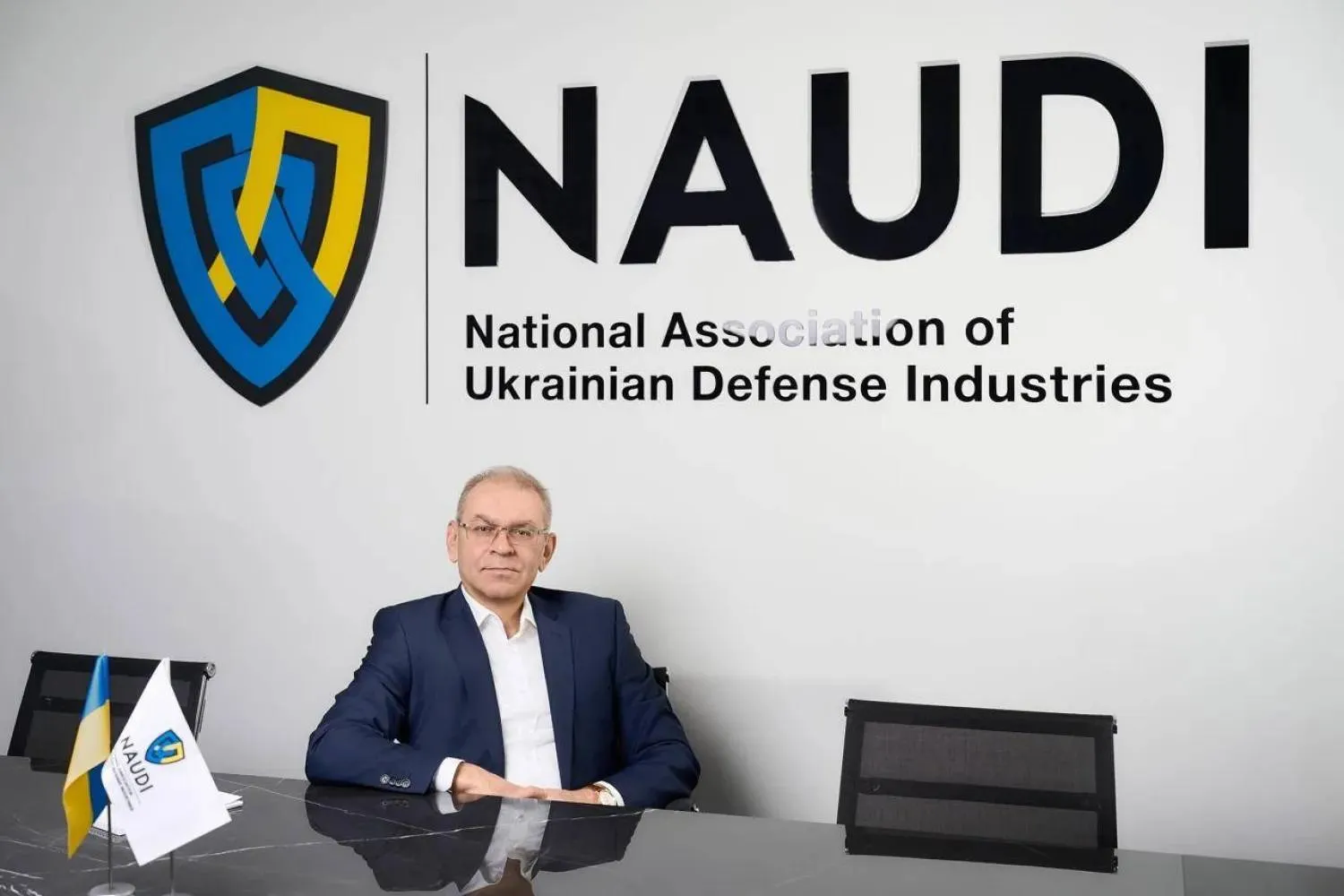
NAUDI Chairman to Asharq Al-Awsat: Ukraine Aims to Resume, Expand Defense Cooperation with Saudi Arabia

Chairman of the National Association of Ukrainian Defense Industries (NAUDI) Serhii Pashynskyi. (Asharq Al-Awsat)
TT

NAUDI Chairman to Asharq Al-Awsat: Ukraine Aims to Resume, Expand Defense Cooperation with Saudi Arabia

Chairman of the National Association of Ukrainian Defense Industries (NAUDI) Serhii Pashynskyi. (Asharq Al-Awsat)

Chairman of the National Association of Ukrainian Defense Industries (NAUDI) Serhii Pashynskyi revealed that Kyiv was counting on Saudi Arabia to achieve peace and stability in Ukraine given its role as a “significant and authoritative regional leader”.

In an interview to Asharq Al-Awsat, he said: “We aim in the near future to define concrete plans for the renewal and further expansion of Ukrainian-Saudi defense cooperation.”

He made his remarks as NAUDI took part in the World Defense Show 2026 in Riyadh.

“We are open to considering opportunities for establishing joint ventures, developing specific technologies, and localizing production on the territory of Saudi Arabia. We are ready to deepen cooperation that has been actively developing since 2014,” Pashynskyi said.

“Our participation in World Defense Show 2026 has a clear objective: to demonstrate the technological capability of Ukraine’s defense sector, which has undergone real testing in wartime conditions. At the joint NAUDI stand, we present our latest developments with confirmed combat experience, share practical insights into their operational use, and discuss tactics of employment,” he explained.

“Today, member companies of the Association already maintain dozens of international contracts in the format of industrial cooperation, and the geography of our partnerships continues to expand. This is precisely the message we seek to convey to our international and regional partners,” he stated.

Saudi-Ukrainian military cooperation

Commenting on military cooperation between Saudi Arabia and Ukraine, he said: “Prior to the full-scale invasion, there was active and effective cooperation between Ukraine’s defense-industrial complex and the Kingdom’s defense institutions and companies.”

“We are interested in restoring these contacts. In line with the position of Ukrainian President Volodymyr Zelenskyy, regarding controlled exports, we aim in the near future to define concrete plans for the renewal and further expansion of Ukrainian-Saudi defense cooperation,” he went on to say.

Moreover, Pashynskyi revealed that an official intergovernmental agreement between the Ukrainian and Saudi governments on cooperation in the field of defense was signed in Kyiv on February 5, 2020, and duly approved by the respective governments.

“The agreement establishes a comprehensive legal framework for bilateral defense interaction. It covers cooperation between the defense industries of both countries, military education and personnel training, exchange of information in the field of defense technologies, transfer of specific military technologies and equipment, including electronic, radar, and telecommunications systems, as well as issues related to defense medical support,” he explained.

“Ukraine highly values the principled and consistent position of Saudi Arabia, which is based on unwavering respect for the provisions of the UN Charter and the fundamental principles of international law, particularly with regard to ensuring territorial integrity and protecting state sovereignty,” he added.

“An important moral and humanitarian component of Ukrainian-Saudi relations is the Kingdom’s sincere solidarity with the Ukrainian people, which is reflected in the humanitarian assistance provided, particularly to support internally displaced persons,” he told Asharq Al-Awsat.

Ukrainian products at the World Defense Show

Elaborating on the Ukrainian products displayed at the World Defense Show, Pashynskyi said: “NAUDI member companies produce a full spectrum of defense products, from 7-inch FPV drones to the Bohdana self-propelled artillery system, which is physically displayed at the exhibition.”

“Ukraine has become a global pioneer in the mass combat use of FPV drones, as well as in the development and deployment of maritime unmanned platforms. We possess unique and extremely valuable experience in operating these systems under real combat conditions,” he stressed. “The private sector accounts for more than 70% of Ukraine’s total defense-industrial production.”

Among the key exhibits are the Bohdana self-propelled howitzer, manufactured in significant quantities by the company Ukrainian Armor and actively employed in combat operations; the Varta armored vehicle; the Protector unmanned ground system; the MAC maritime drone; reconnaissance UAVs Shark, PD-2, mini Shark, and Furia; the Krechet air defense command-and-control system; heavy drones Kazhan and Shmavik; UAV munitions produced by UBM; FPV drones manufactured by General Cherry; and electronic warfare systems developed by Piranya Tech.

Preserving lives

Pashynskyi revealed that more than 50% of the needs of Ukraine’s Defense Forces are currently met by the domestic defense-industrial complex, from FPV drones to cruise missiles, 155-mm artillery systems, ammunition, electronic warfare (EW) and electronic intelligence (ELINT) systems.

“According to last year’s results, NAUDI member companies supplied the Defense Forces with products worth approximately EUR 4 billion,” he said. “Since 2022, the industry has undergone large-scale relocation and deployment of new production facilities. Today, Ukraine is without exaggeration one of the world’s leaders in the pace of weapons and ammunition production.”

“Our primary priority is preserving the lives of service members. That is why special emphasis is placed on unmanned systems that enhance soldier effectiveness without replacing the soldier,” he continued.

“A key advantage is the direct connection with frontline units. This allows manufacturers to receive real-time feedback and rapidly modernize their solutions. While R&D processes in other countries may take years, for Ukrainian companies the path from concept to serial production often takes just 3 to 6 months.”

“Some companies have increased FPV drone production from several thousand units in 2023 to over 500,000 units in 2025 and these are not isolated cases,” Pashynskyi revealed.