


UNESCO Launches Framework for Enabling Intercultural Dialogue in Arab Region

Participants and experts discussed Wednesday the state of Intercultural Dialogue in the Arab region, and the ways to promote it using the UNESCO framework
TT

UNESCO Launches Framework for Enabling Intercultural Dialogue in Arab Region

Participants and experts discussed Wednesday the state of Intercultural Dialogue in the Arab region, and the ways to promote it using the UNESCO framework

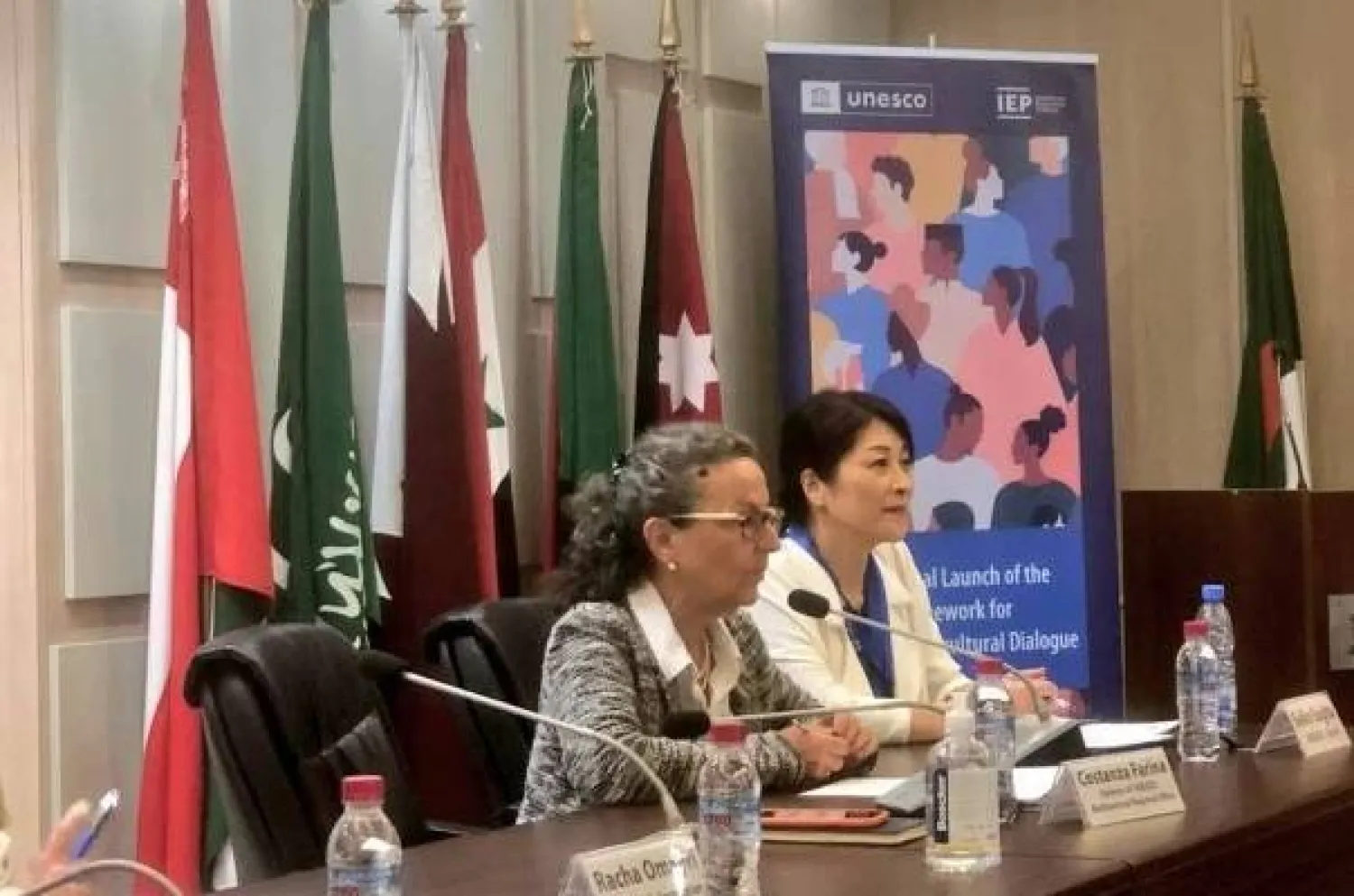
The UNESCO Regional Office in Beirut has hosted a conference for the Arab regional launch of the UNESCO Framework for enabling Intercultural Dialogue, in close collaboration with the Anna Lindh foundation.

Participants and experts discussed Wednesday the state of Intercultural Dialogue in the Arab region, and the ways to promote it using the UNESCO framework.

Recognizing the potential for Intercultural Dialogue and the need for better data on Intercultural Dialogue to effectively tackle pressing global issues, UNESCO has developed the UNESCO Framework for Enabling Intercultural Dialogue in partnership with the Institute for Economics and Peace.

Including data from over 160 countries, the Framework serves as a guide on how best to improve the structures, values and processes that enable Intercultural Dialogue, knowing that Intercultural Dialogue can be defined as a process undertaken to realize transformative communication that requires space or opportunities for engagement and a diverse group of participants committed to values such as mutual respect, empathy and a willingness to consider different perspectives. An important tool for peace, conflict prevention, fragility reduction, and human rights promotion, a knowledge gap on what makes dialogue effective has hindered our ability to use this tool until now.

Speaking at the opening of the conference, Princess Rym Ali, President of the Anna Lindh Foundation said: “Diversity is a fact, but inclusion is a choice. I am proud to share Anna Lindh's powerful words during the Arab regional launch of UNESCO's framework for Enabling Intercultural Dialogue in Lebanon. In our collaboration with UNESCO, we strive to foster intercultural understanding among Euro-Med youth. Together, let's uphold the shared values of diversity, inclusion, and equality, as we embark on this transformative journey.”

UNESCO Assistant Director-General for Social and Human sciences Gabriela Ramos said that the region is rich in cultural heritage that reflects a wealth of diversity.

“From the Maghreb to the Arabic peninsula, the region holds one of the most ancient civilizations and is home to 450 million people. Despite this richness, the region is home to many of today’s global challenges ...Investing in Intercultural Dialogue is therefore a vital step towards building the trust and collective will to build a better future for all,” added Ramos.

“We now can prioritize and sequence investments to enhance dialogue for transformative impact. Today, we have the opportunity to take a significant step towards our goal, here in the Arab States, by using this initiative as a means to evaluate opportunities in the region for fostering intercultural dialogue and finding concrete ways to implement and contextualize this framework locally.”

Director of the UNESCO Regional Office Costanza Farina said: “As you may know that the Framework offers data sets and a rich analysis of key macro- and micro-level societal factors that create the space and opportunity for successful Intercultural Dialogue. According to its findings, the Arab region performs at different levels in Social Cohesion and Skills and Values. Inclusion, and Global Citizenship Education and Freedom of Expression are the areas which require more attention and hence actions.”

“In these consultations over next two days, we will share and use data and findings from the framework to deepen your collective analysis of gaps, challenges, and opportunities in the Arab region. In this regard, global conversations, and normative instruments such as the Mondialcult Declaration (2022) and Windhoek +30 Declaration (2021) respectively offer a robust policy framework for Intercultural Dialogue. Leveraging youth social innovation and skills enhancement is the core of the Youth Declaration of the recent Transforming Education Summit held in NY in September 2022. In this regard, youth perspectives in analyzing challenges and opportunities in the region and reflecting youth aspirations will be very important.”

“The key outcome of our consultations will be a roadmap which identifies priorities and actionable recommendations for the systemic use and operationalization of the Framework. The roadmap will enable the scaling up of a more sustainable intercultural dialogue in the Arab region.”

The Framework includes nine domains consisting of 21 indicators. Global, regional, and country level data on all nine domains can be accessed through the online platform for the Framework, serving as a guide on needs and priorities in regard to supporting intercultural exchange for policymakers. The first of its kind, the Framework provides stakeholders not only with an understanding of the environment behind intercultural dialogue, but also how to enable intercultural dialogue within their specific context. The Framework also shows for the first time the direct connection between peacefulness, conflict prevention and non-fragility, and human right protection with intercultural dialogue creating an additional incentive for countries to foster this important tool.



Cultural Camp at King Abdulaziz Camel Festival Showcases Saudi Heritage

The camp celebrates authentic Saudi heritage and reinforces culture as a cornerstone of national identity - SPA
TT

Cultural Camp at King Abdulaziz Camel Festival Showcases Saudi Heritage

The camp celebrates authentic Saudi heritage and reinforces culture as a cornerstone of national identity - SPA

The cultural camp is a key feature of the 10th King Abdulaziz Camel Festival, held in Al-Sayahid desert. The camp celebrates authentic Saudi heritage and reinforces culture as a cornerstone of national identity, according to SPA.

It offers a range of programs, including live performances and interactive events, that highlight camels' historical significance in Arab culture and illustrate the values of patience, strength, and belonging.

The camp has attracted over 2,000 guests from 71 nationalities, emphasizing its global appeal as a cultural platform for diversity and tradition.

Visitors engage with cultural content through innovative methods that merge authenticity with modern technology, enhancing awareness of the camel's cultural legacy. This initiative aligns with Saudi Vision 2030 by preserving heritage and connecting younger generations with their roots.


Tuwaiq Sculpture 2026 Announces 25 Participating Artists for Seventh Edition

The 2026 edition features a month-long live sculpting phase alongside a community engagement program - SPA
TT

Tuwaiq Sculpture 2026 Announces 25 Participating Artists for Seventh Edition

The 2026 edition features a month-long live sculpting phase alongside a community engagement program - SPA

Under the Royal Commission for Riyadh City and Riyadh Art, Tuwaiq Sculpture has announced the selection of 25 artists for the seventh edition of the annual sculpture symposium and exhibition, taking place from January 10 to February 22, 2026.

This year’s edition unfolds under the curatorial theme “Traces of What Will Be,” inviting artists to reflect on how sculptural form can express the physical, cultural and conceptual traces that shape the future of cities and communities, SPA reported.

A total of 25 artists from 18 countries, including Saudi artists, have been selected for the seventh edition. Their proposals reflect a diverse range of artistic approaches, responding to the theme through explorations of transformation, place, and materiality.

Director of the Tuwaiq Sculpture Symposium Sarah Alruwayti said: "The seventh edition of Tuwaiq Sculpture received more than 590 applications, reflecting the cultural diversity and global interest in the symposium. The selection of the 25 participating artists was carried out by a jury of industry experts and specialists. Their proposals show meaningful engagement with the theme and reflect the strength and diversity of contemporary sculptural practice. We look forward to welcoming them to Riyadh for the creation of new works that will become lasting additions to the city.”

Building on the evolving material practice of the symposium, Tuwaiq Sculpture 2026 introduces two sculpting categories: granite with optional stainless-steel integration and reclaimed metal. Twenty artists will work in granite, while five will create new works in reclaimed metal. Over four weeks, they will produce large-scale sculptures that will later be added to Riyadh Art’s permanent public art collection.

The 2026 edition features a month-long live sculpting phase alongside a community engagement program, inviting visitors to witness the creation of artworks and take part in panel discussions and workshops. The symposium will conclude with a public exhibition showcasing the completed sculptures from its seventh edition.


ALECSO Celebrates Opening of Arabic Calligraphy Center in Saudi Arabia

Arabic calligraphy adorns wrcades, Walls of the Grand Mosque of Makkah - SPA
TT

ALECSO Celebrates Opening of Arabic Calligraphy Center in Saudi Arabia

Arabic calligraphy adorns wrcades, Walls of the Grand Mosque of Makkah - SPA

The Arab League of Educational, Cultural and Scientific Organization (ALECSO) congratulated Saudi Arabia on the opening of the Prince Mohammed bin Salman Global Center for Arabic Calligraphy in Madinah on December 22, 2025.

In a statement, ALECSO called the center a significant addition to the Arab and Islamic cultural landscape, noting its role in preserving Arabic calligraphy and enhancing its global presence, SPA reported.

This achievement reflects the Kingdom's commitment to culture and heritage, aligning with Saudi Vision 2030’s objectives of fostering cultural creativity and reinforcing Arabic identity.

ALECSO emphasized that such institutions serve as global bridges for cultural exchange and ensure the relevance of traditional arts through dedicated research and training facilities.