




Silvio Berlusconi, the boastful billionaire media mogul who was Italy's longest-serving premier despite scandals and allegations of corruption, died Monday, according to Italian media. He was 86.
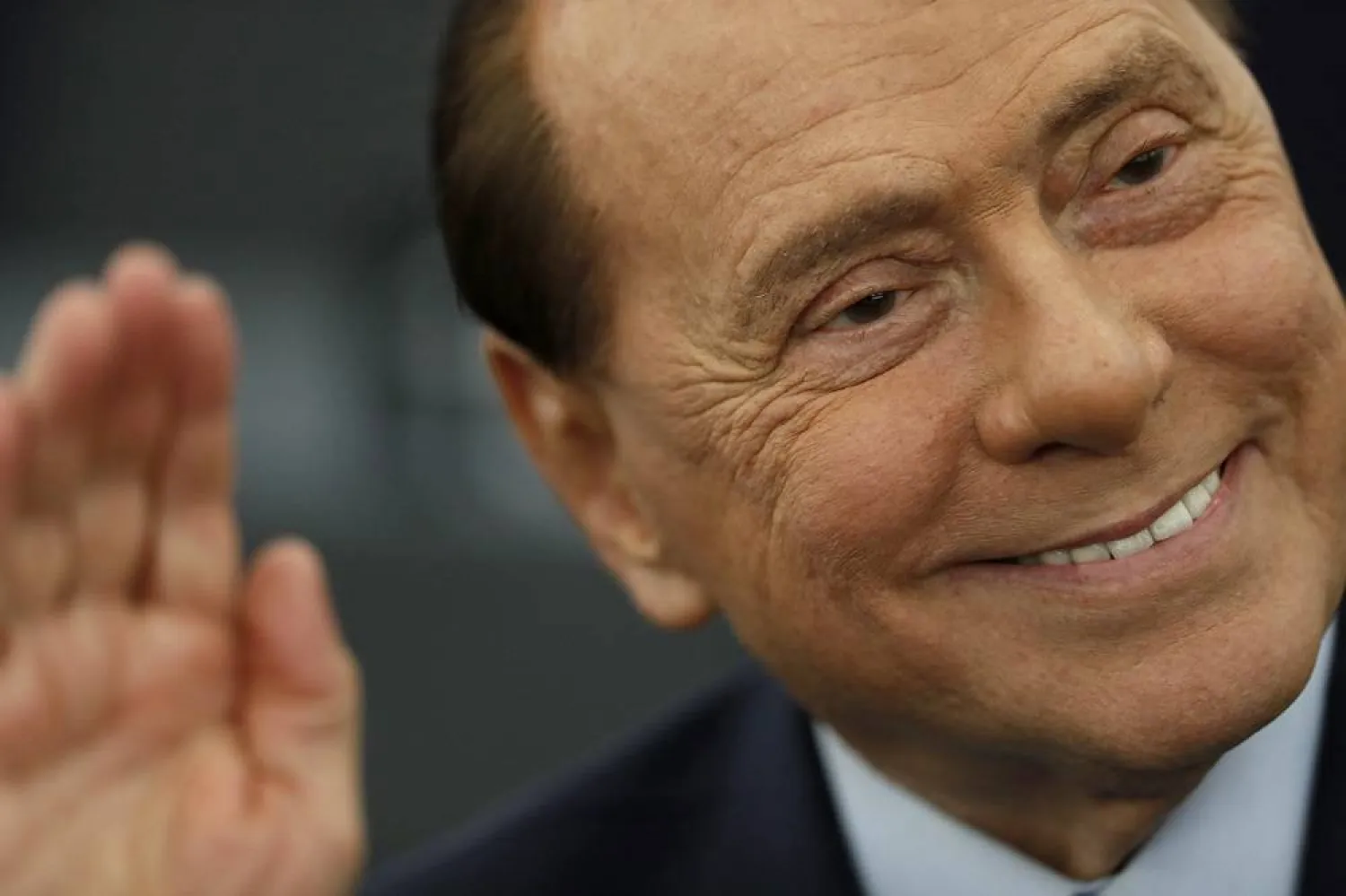
Berlusconi’s Mediaset television network announced his death with a smiling photo of the man on its homepage and the headline: “Berlusconi is dead.”
Berlusconi was hospitalized on Friday for the second time in months for treatment of chronic leukemia. He also suffered over the years from heart ailments, prostate cancer and was hospitalized for COVID-19 in 2020.
A onetime cruise ship crooner, Berlusconi used his television networks and immense wealth to launch his long political career, inspiring both loyalty and loathing.
To admirers, the three-time premier was a capable and charismatic statesman who sought to elevate Italy on the world stage. To critics, he was a populist who threatened to undermine democracy by wielding political power as a tool to enrich himself and his businesses.
His Forza Italia political party was a coalition partner with current Premier Giorgia Meloni, a far-right leader who came to power last year, although he held no position in the government.
His friendship with Russian President Vladimir Putin put him at odds with Meloni, a staunch supporter of Ukraine. On his 86th birthday, while the war raged, Putin sent Berlusconi best wishes, and the Italian boasted he returned the favor.
Another former premier, Matteo Renzi, recalled Berlusconi’s divisive legacy in a message on Twitter. “Silvio Berlusconi made history in this country. Many loved him, many hated him. All must recognize that his impact on political life, but also economic, sport and television, has been without precedence."
League party leader Matteo Salvini called Berlusconi “a great man and a great Italian.”
As Berlusconi aged, some derided his perpetual tan, hair transplants and live-in girlfriends who were decades younger. For many years, however, Berlusconi seemed untouchable despite the personal scandals.
Criminal cases were launched but ended in dismissals when statutes of limitations ran out in Italy's slow-moving justice system, or he was victorious on appeal. Investigations targeted the tycoon's steamy so-called “bunga bunga” parties, or his businesses, which included the football team AC Milan, the country's three biggest private TV networks, magazines and a daily newspaper, and advertising and film companies.
Only one led to a conviction — a tax fraud case stemming from a sale of movie rights in his business empire. The conviction was upheld in 2013 by Italy's top criminal court, but he was spared prison because of his age, 76, and was ordered to do community service by assisting Alzheimer’s patients.
He still was stripped of his Senate seat and banned from running or holding public office for six years, under anti-corruption laws.
He stayed at the helm of Forza Italia, the center-right party he created when he entered politics in the 1990s and named for a soccer cheer, “Let's go, Italy.” With no groomed successor in sight, voters started to desert it.
He eventually held office again -– elected to the European Parliament at age 82 and then last year to the Italian Senate.
Berlusconi’s party was eclipsed as the dominant force on Italy’s political right: first by the League, led by anti-migrant populist Matteo Salvini, then by Meloni's Brothers of Italy party, with its roots in neo-fascism. Following elections in 2022, Meloni formed a governing coalition with their help.
He suffered personal humiliations as well. Berlusconi lost his standing as Italy’s richest man, although his sprawling media holdings and luxury real estate still left him a billionaire several times over.
The Catholic Church, at times sympathetic to his conservative politics, was scandalized by his antics, and his wife of nearly 20 years divorced him, but Berlusconi was unapologetic, declaring: “I’m no saint.”
Berlusconi insisted that voters were impressed by his brashness.
“The majority of Italians in their hearts would like to be like me and see themselves in me and in how I behave,” he said in 2009, during his third and final stint as premier.
His second term, from 2001-06, was perhaps his golden era, when he became Italy’s longest-serving head of government and boosted its global profile through his friendship with US President George W. Bush. Bucking widespread sentiment at home and in Europe, Berlusconi backed the US-led war in Iraq.
As a businessman who knew the power of images, Berlusconi introduced US-style political campaigns — with big party conventions and slick advertising — that broke with the gray world of Italian politics, in which voters essentially chose parties and not candidates. His rivals had to adapt.
Berlusconi saw himself as Italy's savior from what he described as the Communist menace — years after the Berlin Wall fell. From the start of his political career in 1994, he portrayed himself as the target of a judiciary he described as full of leftist sympathizers. He always proclaimed his innocence.
When the anti-establishment 5-Star Movement gained strength, Berlusconi branded it as a menace worse than Communism.
His close friendship with longtime Socialist leader and former Premier Bettino Craxi was widely credited for helping him become a media baron. Still, Berlusconi billed himself as a self-made man, saying, “My formula for success is to be found in four words: work, work and work.”
From his cruise ship entertainer days, Berlusconi loved to compose and sing Neapolitan songs. Like millions of Italians, he had a passion for football, and often was in the stands at AC Milan.
He delighted in flouting political etiquette. He sported a bandanna when hosting British Prime Minister Tony Blair at his estate on the Emerald Coast of Sardinia, and it was later revealed he was concealing hair transplants. He posed for photos at international summits making an Italian gesture — which can be offensive or superstitious, depending on circumstances — in which the index and pinkie fingers are extended like horns.
When criticized in 2003 at the European Parliament by a German lawmaker, Berlusconi likened his adversary to a concentration camp guard. Years later, he drew outrage when he compared his family's legal woes to what Jews must have encountered in Nazi Germany.
Berlusconi was born in Milan on Sept. 29, 1936, the son of a middle-class banker. He earned a law degree, writing his thesis on advertising. He started a construction company at 25 and built apartment complexes for middle-class families on Milan's outskirts, part of a postwar boom.
But his astronomical wealth came from the media. In the late 1970s and 1980s, he circumvented Italy's state TV monopoly RAI by creating a de facto network in which local stations all showed the same programming. RAI and his Mediaset network accounted for about 90% of the national market in 2006.
When the “Clean Hands” corruption scandals of the 1990s decimated the political establishment that had dominated postwar Italy, Berlusconi filled the void, founding Forza Italia in 1994.
His first government in 1994 collapsed after eight months when an ally who led an anti-immigrant party yanked support. But aided by an aggressive campaign that included mass mailings of glossy magazines recounting his success story, Berlusconi swept to victory in 2001.
Shuffling his Cabinet occasionally, he stayed in power for five years, setting a record for government longevity in Italy. It wasn't easy.
A Group of Eight summit he hosted in Genoa in 2001 was marred by violent anti-globalization demonstrations and the death of a protester shot by a police officer. Berlusconi faced fierce domestic opposition and alienated some allies by sending 3,000 troops to Iraq after the ouster of Saddam Hussein in 2003. For a time, Italy was the third-largest contingent in the US coalition.
At home, he constantly faced accusations of sponsoring laws aimed at protecting himself or his businesses, but he insisted he always acted in the interest of all Italians. Legislation passed when he was premier allowing officeholders to own media businesses but not run them was deemed by his critics to be tailor made for Berlusconi.
An admirer of US President Ronald Reagan and British Prime Minister Margaret Thatcher, Berlusconi passed reforms that partially liberalized the labor and pension systems, among Europe’s most inflexible. He also was chummy with Putin, who stayed at his Sardinian estate, and he visited the Russian leader, notably going to Crimea after Moscow illegally annexed the peninsula in 2014.
In 2006, as Italy was ridiculed as “the sick man of Europe,” with its economy mired in zero growth and its budget deficit rising, Berlusconi narrowly lost the general election to center-left leader Romano Prodi, who had been president of the European Union Commission.
In 2008, he bounced back for what would be his final term as premier. It ended abruptly in 2011, when financial markets lost faith in his ability to keep Italy from succumbing to the eurozone’s sovereign debt crisis. To the relief of economic powerhouse Germany, Berlusconi reluctantly stepped down.
Health concerns dogged him over the years. He underwent surgery for prostate cancer in 1997. In November 2006, he fainted during a speech, and the next month flew to the US, where he received a pacemaker at the Cleveland Clinic. He underwent more heart surgery in 2016.
During a political rally in 2009, a man threw a souvenir statuette of Milan’s cathedral at Berlusconi, fracturing his nose, cracking two teeth and cutting his lip.
Berlusconi was first married in 1965 to Carla Dall’Oglio, and their two children, Marina and Piersilvio, were groomed to hold top positions in his business empire. He married his second wife, Veronica Lario, in 1990, and they had three children, Barbara, Eleonora and Luigi.


