


US Decides to Rejoin UNESCO and Pay Back Dues, to Counter Chinese Influence 

The logo of the United Nations Educational, Scientific and Cultural Organization (UNESCO) is seen during the 39th session of the General Conference at the UNESCO headquarters in Paris, Saturday, Nov. 4, 2017. (AP)
TT

US Decides to Rejoin UNESCO and Pay Back Dues, to Counter Chinese Influence 

The logo of the United Nations Educational, Scientific and Cultural Organization (UNESCO) is seen during the 39th session of the General Conference at the UNESCO headquarters in Paris, Saturday, Nov. 4, 2017. (AP)

UN cultural and scientific agency UNESCO announced Monday that the United States plans to rejoin — and pay more than $600 million in back dues — after a decade-long dispute sparked by the organization’s move to include Palestine as a member.

US officials say the decision to return was motivated by concern that China is filling the gap left by the US in UNESCO policymaking, notably in setting standards for artificial intelligence and technology education around the world.

US Deputy Secretary of State for Management and Resources Richard Verma submitted a letter last week to UNESCO Director General Audrey Azoulay formalizing the plan to rejoin.

Azoulay informed ambassadors of the US decision in a special meeting Monday. The return of the US — once the agency’s biggest funder — is expected to face a vote by its 193 member states next month, according to a UNESCO diplomat.

The decision is a big financial boost to the United Nations Educational, Scientific and Cultural Organization, known for its World Heritage program as well as projects to fight climate change and teach girls to read.

The US and Israel stopped funding UNESCO after it voted to include Palestine as a member state in 2011, and both countries lost their voting rights in 2013. The Trump administration decided in 2017 to withdraw from the agency altogether the following year, citing anti-Israel bias and management problems.

In his letter last week, Verma noted efforts by UNESCO toward management reform, and “decreasing politicized debate, especially on Middle East issues.” A delegation from Washington came to Paris last week to hand-deliver the letter, obtained by the AP.

Since her election in 2017, Azoulay has worked to address the reasons the US left, through budget reforms and building consensus among Jordanian, Palestinian and Israeli diplomats around sensitive UNESCO resolutions.

The US decision to come back “is the result of five years of work, during which we calmed tensions, notably on the Middle East, improved our response to contemporary challenges, resumed major initiatives on the ground and modernized the functioning of the organization,” Azoulay told The Associated Press.

She met with Democrats and Republicans in Washington to explain those efforts, according to a UNESCO diplomat. Thanks to those bipartisan negotiations, UNESCO diplomats expressed confidence that the US decision to return is for the long term, regardless of who wins next year’s presidential election.

The diplomats were not authorized to be publicly named discussing the behind-the-scenes work that led to the US decision.

Under the plan, the US government would pay its 2023 dues plus $10 million in bonus contributions this year earmarked for Holocaust education, preserving cultural heritage in Ukraine, journalist safety, and science and technology education in Africa, Verma’s letter says.

The Biden administration has already requested $150 million for the 2024 budget to go toward UNESCO dues and arrears. The plan foresees similar requests for the ensuing years until the full debt of $619 million is paid off.

That makes up a big chunk of UNESCO’s $534 million annual operating budget. Before leaving, the US contributed 22% of the agency’s overall funding.

Undersecretary of State for Management John Bass said in March that the US absence from UNESCO has strengthened China.

He said UNESCO is key in setting and shaping standards for technology and science teaching around the world, “so if we’re really serious about the digital-age competition with China ... we can’t afford to be absent any longer.”

The US absence plunged the agency into financial uncertainty. UNESCO diplomats described belt-squeezing across agency programs and aggressive efforts by Azoulay to boost voluntary financing from other countries to fill gaps.

One diplomat expressed hope that the return of the US would bring “more ambition, and more serenity” — and energize programs to regulate artificial intelligence, educate girls in Afghanistan and chronicle victims of slavery in the Caribbean.

The diplomat said that the agency would also “welcome” Israel back if it wanted to rejoin.

The United States previously pulled out of UNESCO under the Reagan administration in 1984 because it viewed the agency as mismanaged, corrupt and used to advance Soviet interests. It rejoined in 2003.

Saudi Arabia, Syria Underline Depth of their Cultural Ties

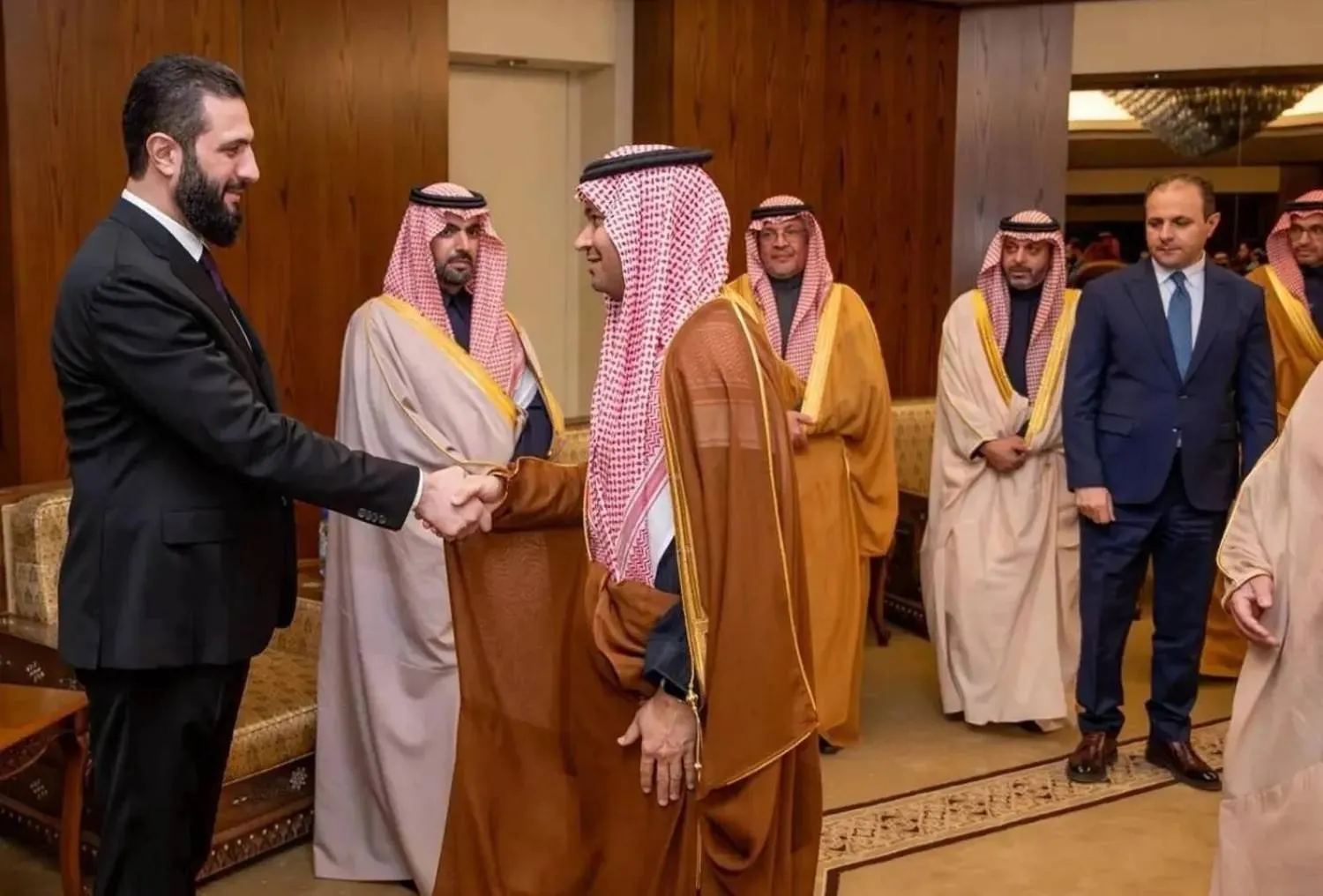
Syrian President al-Sharaa receives the Saudi minister of culture and the accompanying delegation at the Conference Palace in Damascus on Thursday. (SPA)
TT

Saudi Arabia, Syria Underline Depth of their Cultural Ties

Syrian President al-Sharaa receives the Saudi minister of culture and the accompanying delegation at the Conference Palace in Damascus on Thursday. (SPA)

Saudi Arabia and Syria underlined the strength of their cultural relationship during high-level meetings held in Damascus on Thursday, on the sidelines of the opening of the Damascus International Book Fair 2026, where the Kingdom is participating as guest of honor.

Syrian President Ahmad al-Sharaa received Saudi Minister of Culture Prince Badr bin Abdullah bin Farhan at the Conference Palace in the capital.

Earlier the same day, Prince Badr met with his Syrian counterpart, Minister of Culture Mohammad Yassin Saleh, during an official visit to attend the fair. T

he Saudi minister congratulated Syria on hosting the exhibition and expressed his wishes for continued prosperity, progress, and stability for the Syrian government and people.

Both meetings highlighted the depth of cultural relations between the two countries, the importance of expanding joint cultural cooperation across various fields, and the alignment of positions on issues of mutual interest in a way that serves both nations.

The Saudi delegation included senior officials and advisers, among them representatives from the Royal Court, the Ministry of Culture, and the King Abdulaziz Public Library, reflecting broad institutional engagement in the visit.

In the evening, Prince Badr attended the opening ceremony of the fair’s special session, held under the patronage and in the presence of al-Sharaa. The event drew wide official and cultural participation, including Arab ministers, political and intellectual figures, and a distinguished group of writers and cultural figures.

In a post on the X platform, Prince Badr thanked “our brothers in Syria for their generous hospitality and their efforts in organizing the Damascus International Book Fair.”

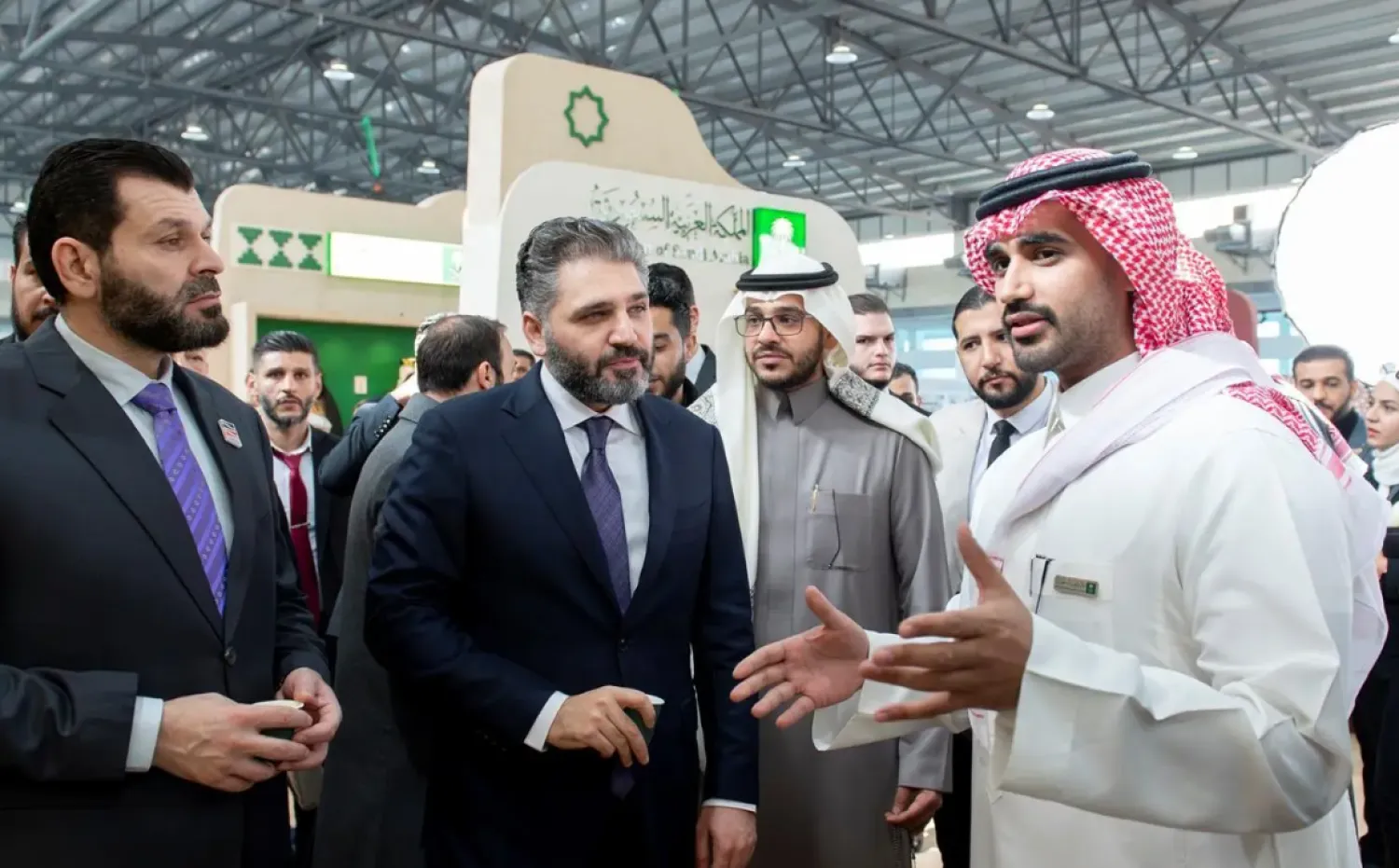
The minister also inaugurated the Kingdom’s pavilion at the fair in the presence of the Syrian minister of culture and the Qatari minister of culture.

Saudi Arabia’s guest-of-honor participation continues until Feb. 16 and reflects its growing prominence and leadership in the Arab and global cultural landscape.

This participation aligns with Saudi Vision 2030, which places culture at the heart of national development, viewing it as a space for dialogue, a bridge for civilizational communication, and a tool for strengthening ties among Arab peoples.

The Saudi Literature, Publishing and Translation Commission is leading the Kingdom’s participation, highlighting the development of the cultural sector and reaffirming the central role of books as carriers of knowledge and awareness.

The Saudi pavilion boasts a comprehensive cultural program featuring intellectual seminars, poetry evenings, a manuscript exhibition, traditional Saudi fashion displays, hospitality corners, archaeological replicas, and performing arts that express the depth of the Kingdom’s cultural heritage.

On the sidelines of the visit, Prince Badr, accompanied by Minister Saleh, toured the National Museum of Damascus, which houses rare artifacts spanning prehistoric eras, ancient Syrian civilizations, classical and Islamic periods, as well as traditional and modern art.


UNESCO Honors Al-Bisht Al-Hasawi as Thousands Flock to Al-Ahsa Festival

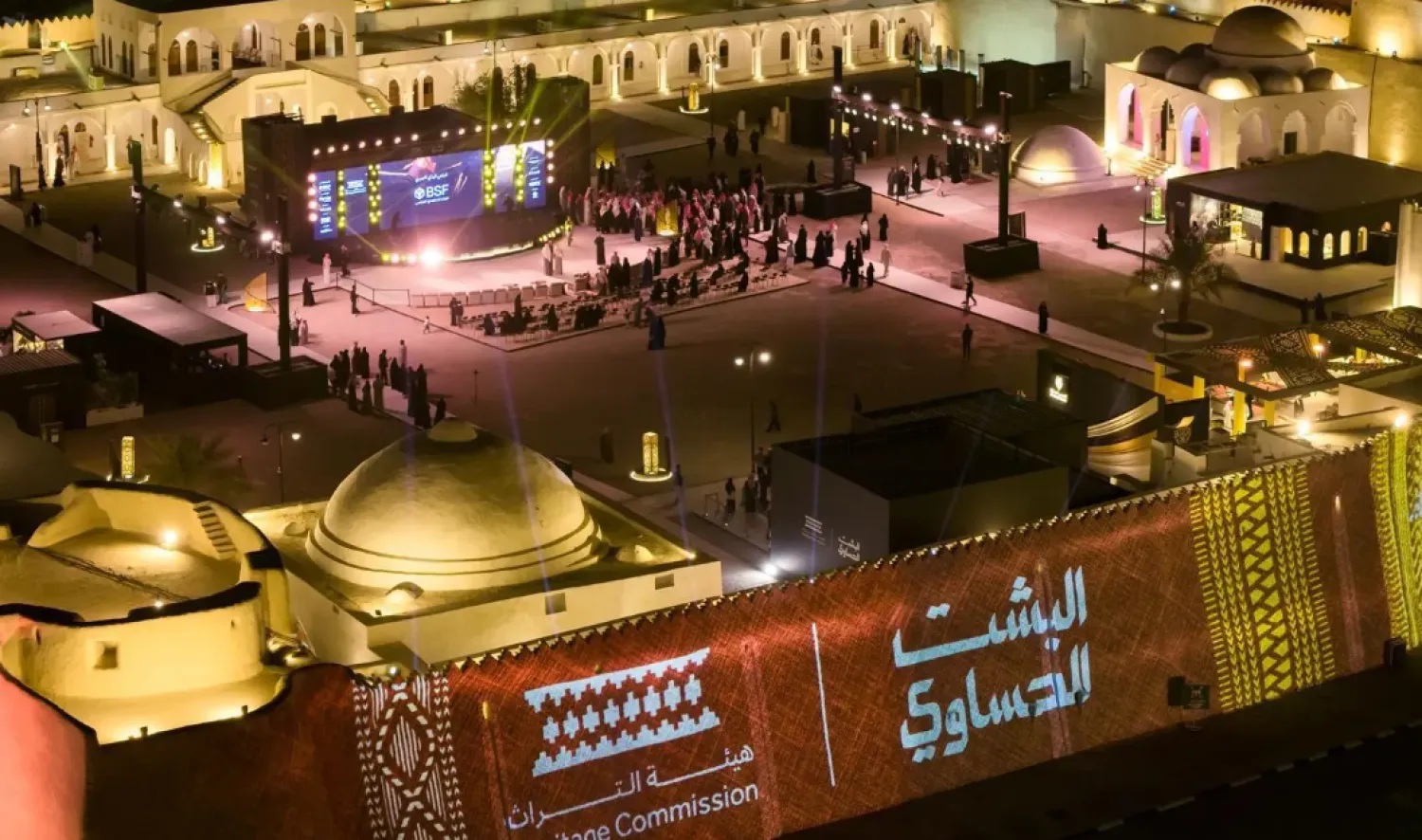
Visitors can explore interactive displays, participate in live workshops, and witness the meticulous process of tailoring this iconic symbol of prestige - SPA
TT

UNESCO Honors Al-Bisht Al-Hasawi as Thousands Flock to Al-Ahsa Festival

Visitors can explore interactive displays, participate in live workshops, and witness the meticulous process of tailoring this iconic symbol of prestige - SPA

The third edition of Al-Bisht Al-Hasawi Festival is drawing thousands of regional and international visitors to Ibrahim Palace in historic Al-Hofuf.

Organized by the Heritage Commission, this year’s festival celebrates the inscription of the Bisht on UNESCO’s Representative List of the Intangible Cultural Heritage of Humanity.

The event showcases Al-Ahsa’s centuries-old tradition of hand-weaving and gold embroidery, a craft passed down through generations of local families, SPA reported.

Visitors can explore interactive displays, participate in live workshops, and witness the meticulous process of tailoring this iconic symbol of prestige.

With UNESCO's participation and representatives from six countries, the festival has evolved into a global platform for cultural dialogue, cementing the Bisht’s status as a world-class cultural treasure.


Saudi, Syrian Culture Ministers Tour National Museum of Damascus

The ministers observed the museum’s extensive collections spanning prehistoric eras to modern art. SPA
TT

Saudi, Syrian Culture Ministers Tour National Museum of Damascus

The ministers observed the museum’s extensive collections spanning prehistoric eras to modern art. SPA

Saudi Minister of Culture Prince Badr bin Abdullah bin Farhan and his Syrian counterpart, Mohammed Yassin Saleh, have toured the National Museum of Damascus during the Kingdom’s participation as guest of honor at the 2026 Damascus International Book Fair.

The ministers observed on Thursday the museum’s extensive collections spanning prehistoric eras to modern art.

A particular focus was placed on the Arab-Islamic wing, featuring significant artifacts from the Umayyad period.

The Kingdom's participation as guest of honor at the 2026 Damascus International Book Fair, which runs until February 16, stems from the role culture plays within Saudi Vision 2030.