


Actor Julian Sands Died While Hiking on California Mountain, Authorities Confirm

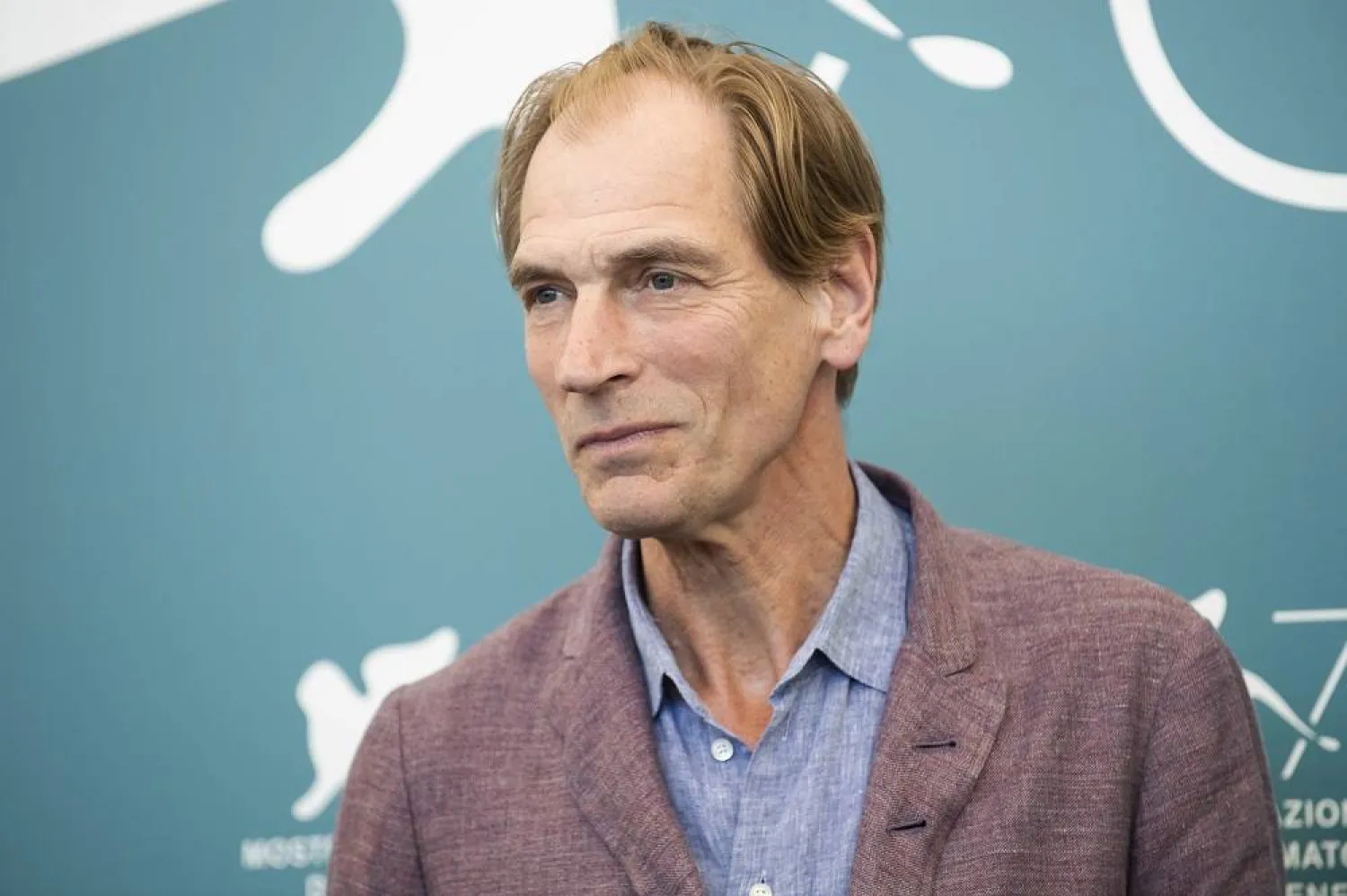
Actor Julian Sands poses for photographers at the Venice Film Festival in Venice, Italy, on Sept. 3, 2019. (AP)
TT

Actor Julian Sands Died While Hiking on California Mountain, Authorities Confirm

Actor Julian Sands poses for photographers at the Venice Film Festival in Venice, Italy, on Sept. 3, 2019. (AP)

Actor Julian Sands, who starred in several Oscar-nominated films in the late 1980s and ‘90s including “A Room With a View” and “Leaving Las Vegas,” was found dead on a Southern California mountain five months after he disappeared while hiking, authorities said Tuesday.

An investigation confirmed that it was Sands whose remains hikers found Saturday in wilderness near Mount Baldy, the San Bernardino County Sheriff’s Department said.

The 65-year-old actor was an avid and experienced hiker who lived in Los Angeles and was reported missing Jan. 13 after setting out on the peak that rises more than 10,000 feet (3,048 meters) east of the city.

Crews aided by drones and helicopters had searched for him several times, but, severely hampered by wintry conditions that lasted through spring, no sign of him was found until the civilian hikers came upon him.

The chances of Sands being discovered alive had long since diminished to nearly nothing, but the Sheriff’s Department, which conducted an official search the day before he was found, emphasized that the case remained active.

An autopsy has been conducted, but further test results are needed before the cause of death can be determined, authorities said.

Sands, who was born, raised and began acting in England, worked constantly in film and television, amassing more than 150 credits in a 40-year career. During a 10-year span from 1985 to 1995, he played major roles in a series of acclaimed films.

After studying at the Royal Central School of Speech and Drama in London, Sands embarked on a career in stage and film, playing small parts in films including “Oxford Blues” and “The Killing Fields.” He landed the starring role of George Emerson, who falls in love with Helena Bonham Carter’s Lucy Honeychurch while on holiday in Tuscany, in the 1985 British romance, “A Room With a View.”

The film from director James Ivory and producer Ismail Merchant won the British Academy of Film and Television Arts award for best film, and was nominated for eight Oscars, winning three.

In the wake of its success, Sands moved to the United States to pursue a career in Hollywood.

He played the title role in the 1989 horror fantasy “Warlock” and its sequel. In the 1990 horror comedy “Arachnophobia,” with Jeff Daniels and John Goodman, Sands played an entomologist specializing in spiders.

The following year he appeared in director David Cronenberg’s surreal adaptation of the William Burroughs novel “Naked Lunch” in 1991.

In 1993, Sands starred in the thriller “Boxing Helena,” a movie that drew major media attention during production when Madonna and Kim Basinger each accepted the title role before backing out. The part would go to “Twin Peaks” actor Sherilyn Fenn. The film flopped.

Author Anne Rice championed Sands to play the titular Lestat in the much-hyped 1994 Hollywood adaptation of her novel “Interview With the Vampire,” but the role would go to Tom Cruise.

In 1995’s “Leaving Las Vegas,” Sands played an abusive Latvian pimp alongside Nicolas Cage and Elisabeth Shue. The film was nominated for four Oscars, with Cage winning best actor.

Sands touted his love of the outdoors in a 2020 interview with the Guardian, saying he was happiest when “close to a mountain summit on a glorious cold morning” and that his biggest dream was scaling “a remote peak in the high Himalayas, such as Makalu.”

The actor said in the interview that in the early 1990s, he was caught in an “atrocious” storm in the Andes and was lucky to survive when three others near his party didn’t.

After “Leaving Las Vegas,” the quality of the films Sands was cast in, and the size of his roles, began declining. He worked steadily, appearing in director Wim Wenders’ “The Million Dollar Hotel” and director Dario Argento’s “The Phantom of the Opera.”

He also appeared as a guest star or in recurring roles on TV series including “24,” “Medici,” “Smallville,” “Dexter,” “Gotham” and “Elementary.” His final film was 2022’s “The Ghosts of Monday.”

Sands was born in Yorkshire, the middle child of five brothers raised by a single mother. He had three children of his own.

He had been married since 1990 to journalist Evgenia Citkowitz, with whom he had two adult daughters, Imogen Morley Sands and Natalya Morley Sands. His eldest child was son Henry Sands, whom he had with his first wife, journalist Sarah Harvey.

A few days before he was found, Sands’ family issued a statement saying, “We continue to hold Julian in our hearts with bright memories of him as a wonderful father, husband, explorer, lover of the natural world and the arts, and as an original and collaborative performer.”



Syria State Media Says Kurdish Force Shelling Kills One Person in Aleppo City

A view of Aleppo, Syria in February 2018. (AFP)
TT

Syria State Media Says Kurdish Force Shelling Kills One Person in Aleppo City

A view of Aleppo, Syria in February 2018. (AFP)

Syrian state media said Kurdish force shelling in Aleppo killed one person on Monday, after clashes with government forces erupted in Kurdish-majority neighborhoods of the city, with both sides trading blame over who started the violence. 

"A civilian was killed in SDF bombardment with mortar shelling and rocket launchers on a number of neighborhoods of Aleppo," state news agency SANA said, referring to the US-backed, Kurdish-led Syrian Democratic Forces. 

Syria's interior ministry had said Kurdish forces attacked government personnel at joint checkpoints in the Kurdish-majority Sheikh Maqsud and Ashrafiyeh neighborhoods of the northern city of Aleppo. 

Authorities had earlier reported two members of the government forces, three civil defense personnel and several civilians were wounded. 

The SDF instead accused "factions affiliated with the interim government" of carrying out an attack. 

It reported two Kurdish-led security personnel and five civilians wounded in an "ongoing attack" on Sheikh Maqsud and Ashrafiyeh involving "mortars and heavy weapons". 

In October, Syria announced a comprehensive ceasefire with Kurdish forces following deadly clashes in the districts, which have repeatedly witnessed heightened tensions. 

Aleppo has been governed by Syria's new authorities since the toppling of former leader Bashar al-Assad in December last year. 

But Sheikh Maqsud and Ashrafiyeh have remained under the control of Kurdish units linked to the SDF and the Kurds' Asayish domestic security forces, despite the SDF having officially withdrawn in April under a disengagement agreement reached with the government. 


Movie Review: An Electric Timothee Chalamet Is the Consummate Striver in Propulsive ‘Marty Supreme’

 Timothee Chalamet attends the premiere of "Marty Supreme" at Regal Times Square on Tuesday, Dec. 16, 2025, in New York. (AP)
Timothee Chalamet attends the premiere of "Marty Supreme" at Regal Times Square on Tuesday, Dec. 16, 2025, in New York. (AP)
TT

Movie Review: An Electric Timothee Chalamet Is the Consummate Striver in Propulsive ‘Marty Supreme’

 Timothee Chalamet attends the premiere of "Marty Supreme" at Regal Times Square on Tuesday, Dec. 16, 2025, in New York. (AP)
Timothee Chalamet attends the premiere of "Marty Supreme" at Regal Times Square on Tuesday, Dec. 16, 2025, in New York. (AP)

“Everybody wants to rule the world,” goes the Tears for Fears song we hear at a key point in “Marty Supreme,” Josh Safdie’s nerve-busting adrenaline jolt of a movie starring a never-better Timothee Chalamet.

But here’s the thing: everybody may want to rule the world, but not everybody truly believes they CAN. This, one could argue, is what separates the true strivers from the rest of us.

And Marty — played by Chalamet in a delicious synergy of actor, role and whatever fairy dust makes a performance feel both preordained and magically fresh — is a striver. With every fiber of his restless, wiry body. They should add him to the dictionary definition.

Needless to say, Marty is a New Yorker.

Also needless to say, Chalamet is a New Yorker.

And so is Safdie, a writer-director Chalamet has called “the street poet of New York.” So, where else could this story be set?

It’s 1952, on Manhattan’s Lower East Side. Marty Mauser is a salesman in his uncle’s shoe store, escaping to the storeroom for a hot tryst with his (married) girlfriend. This witty opening sequence won’t be the only thing recalling “Uncut Gems,” co-directed by Safdie with his brother Benny before the two split for solo projects. That film, which feels much like the precursor to “Marty Supreme,” began as a trip through the shiny innards of a rare opal, only to wind up inside Adam Sandler’s colon, mid-colonoscopy.

Sandler’s Howard Ratner was a New York striver, too, but sadder, and more troubled. Marty is young, determined, brash — with an eye always to the future. He’s a great salesman: “I could sell shoes to an amputee,” he boasts, crassly. But what he’s plotting to unveil to the world has nothing to do with shoes. It’s about table tennis.

How likely is it that this Jewish kid from the Lower East Side can become the very face of a sport in America, soon to be “staring at you from the cover of a Wheaties box?”

To Marty, perfectly likely. Still, he knows nobody in the US cares about table tennis. He’s so determined to prove everyone wrong, starting at the British Open in London, that when there’s a snag obtaining cash for his trip, he brandishes a gun at a colleague to get it.

Shaking off that sorta-armed robbery thing, Marty arrives in London, where he fast-talks his way into a suite at the Ritz. Here, he spies fellow guest Kay Stone (Gwyneth Paltrow, in a wise, stylish return to the screen), a former movie star married to an insufferable tycoon (“Shark Tank” personality Kevin O’Leary, one of many nonactors here.)

Kay’s skeptical, but Marty finds a way to woo her. Really, all he has to say is: “Come watch me.” Once she sees him play, she’s sneaking into his room in a lace corselet.

This would be a good time to stop and consider Chalamet’s subtly transformed appearance. He is stick-thin — duh, he never stops moving. His mustache is skimpy. His skin is acne-scarred — just enough to erase any movie-star sheen. Most strikingly, his eyes, behind the round spectacles, are beady — and smaller. Definitely not those movie-star eyes.

But then, nearly all the faces in “Marty Supreme” are extraordinary. In a movie with more than 100 characters, we have known actors (Fran Drescher, Abel Ferrara); nonacting personalities (O’Leary, and an excellent Tyler Okonma (Tyler, The Creator) as Marty’s friend Wally); and exciting newcomers like Odessa A’Zion as Marty’s feisty girlfriend Rachel.

There are also a slew of nonactors in small parts, plus cameos from the likes of David Mamet and even high wire artist Philippe Petit. The dizzying array makes one curious how it all came together — is casting director Jennifer Venditti taking interns? Production notes tell us that for one hustling scene at a bowling alley, young men were recruited from a sports trading-card convention.

Elsewhere on the creative team, composer Daniel Lopatin succeeds in channeling both Marty’s beating heart and the ricochet of pingpong balls in his propulsive score. The script by Safdie and cowriter Ronald Bronstein, loosely based on real-life table tennis hustler Marty Reisman, beats with its own, never-stopping pulse. The same breakneck aesthetic applies to camera work by Darius Khondji.

Back now to London, where Marty makes the finals against Japanese player Koto Endo (Koto Kawaguchi, like his character a deaf table tennis champion). “I’ll be dropping a third atom bomb on them,” he brags — not his only questionable World War II quip. But Endo, with his unorthodox paddle and grip, prevails.

After a stint as a side act with the Harlem Globetrotters, including pingpong games with a seal — you’ll have to take our word for this, folks, we’re running low on space — Marty returns home, determined to make the imminent world championships in Tokyo.

But he's in trouble — remember he took cash at gunpoint? Worse, he has no money.

So Marty’s on the run. And he’ll do anything, however messy or dangerous, to get to Japan. Even if he has to totally debase himself (mark our words), or endanger friends — or abandon loyal and brave Rachel.

Is there something else for Marty, besides his obsessive goal? If so, he doesn’t know it yet. But the lyrics of another song used in the film are instructive here: “Everybody’s got to learn sometime.”

So can a single-minded striver ultimately learn something new about his own life?

We'll have to see. As Marty might say: “Come watch me.”


Russia Pledges ‘Full Support’ for Venezuela Against US ‘Hostilities’

The US Navy replenishment oiler USNS Kanawha (T-AO-196) arrives at port in Ponce, Puerto Rico, amid ongoing military movements, December 21, 2025. (Reuters)
TT

Russia Pledges ‘Full Support’ for Venezuela Against US ‘Hostilities’

The US Navy replenishment oiler USNS Kanawha (T-AO-196) arrives at port in Ponce, Puerto Rico, amid ongoing military movements, December 21, 2025. (Reuters)

Russia on Monday expressed "full support" for Venezuela as the South American country confronts a blockade of sanctioned oil tankers by US forces deployed in the Caribbean, the two governments said.

In a phone call, the foreign ministers of the two allied countries blasted the US actions, which have included bombing alleged drug-trafficking boats and more recently the seizure of two tankers.

A third ship was being pursued, a US official told AFP Sunday.

"The ministers expressed their deep concern over the escalation of Washington's actions in the Caribbean Sea, which could have serious consequences for the region and threaten international shipping," the Russian foreign ministry said of the call between ministers Sergei Lavrov and Yvan Gil.

"The Russian side reaffirmed its full support for and solidarity with the Venezuelan leadership and people in the current context," it added.

"The ministers agreed to continue their close bilateral cooperation and to coordinate their actions on the international stage, particularly at the UN, in order to ensure respect for state sovereignty and non-interference in internal affairs."

The UN Security Council is to meet Tuesday to discuss the mounting crisis between Venezuela and the United States after a request from Caracas, backed by China and Russia.

On Telegram, Venezuela's Gil said he and Lavrov had discussed "the aggressions and flagrant violations of international law being perpetrated in the Caribbean: attacks on vessels, extrajudicial executions, and illicit acts of piracy carried out by the United States government."

US forces have since September launched strikes on boats Washington said, without providing evidence, were trafficking drugs in the Caribbean Sea and eastern Pacific Ocean.

More than 100 people have been killed, some of them fishermen, according to their families and governments.

US President Donald Trump on December 16 announced a blockade of "sanctioned oil vessels" sailing to and from Venezuela.

Trump has claimed Caracas under Maduro is using oil money to finance "drug terrorism, human trafficking, murder and kidnapping.

Gil said Lavrov had affirmed Moscow's "full support in the face of hostilities against our country."