


NATO Chief Convenes Talks in a Bid to Persuade Türkiye to Let Sweden Join the Military Alliance

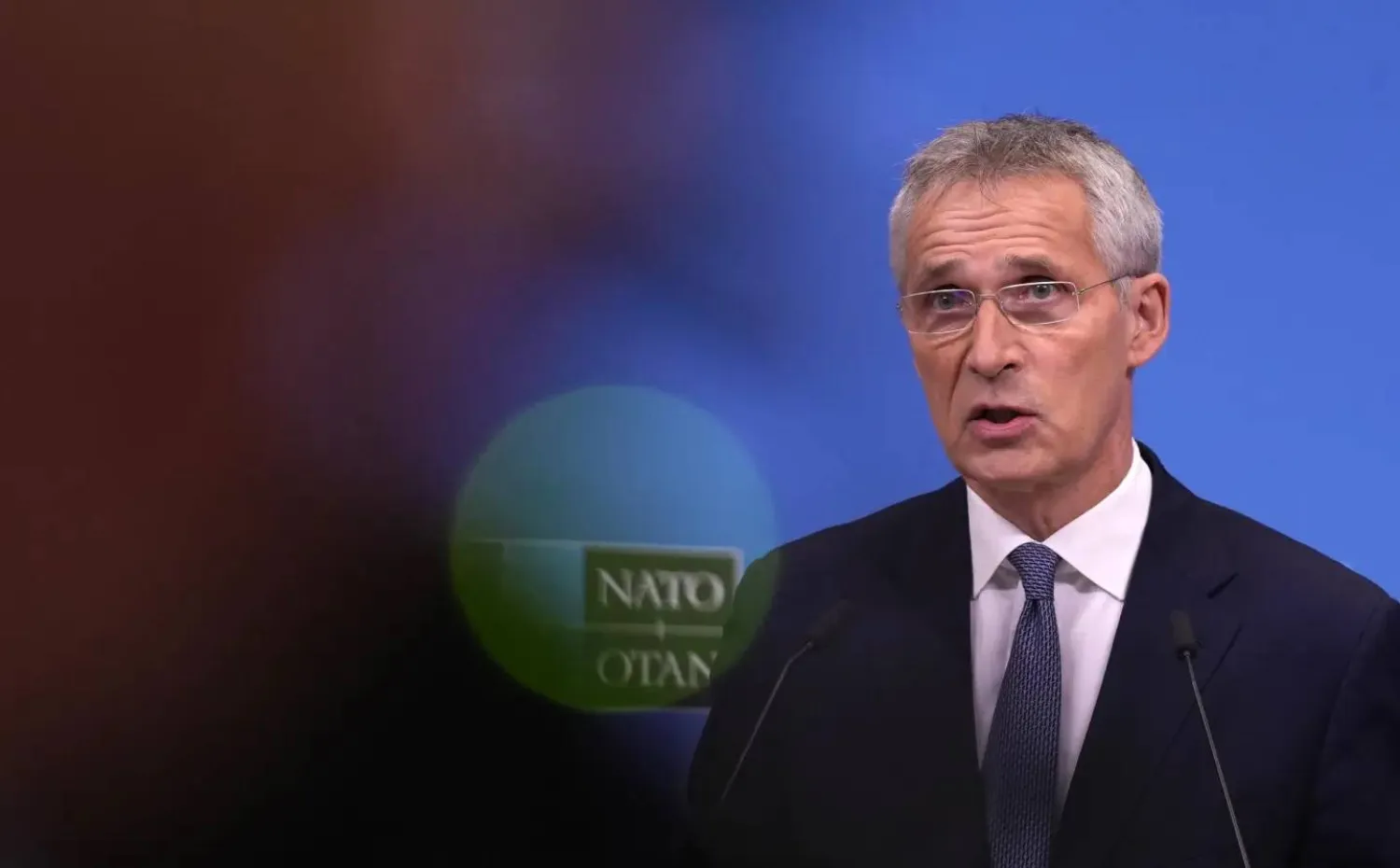
NATO Secretary General Jens Stoltenberg speaks during a media conference at NATO headquarters in Brussels, Wednesday, Oct. 20, 2021. (AP Photo/Virginia Mayo, File)
TT

NATO Chief Convenes Talks in a Bid to Persuade Türkiye to Let Sweden Join the Military Alliance

NATO Secretary General Jens Stoltenberg speaks during a media conference at NATO headquarters in Brussels, Wednesday, Oct. 20, 2021. (AP Photo/Virginia Mayo, File)

NATO Secretary-General Jens Stoltenberg said Wednesday he has called a meeting of senior officials from Türkiye, Sweden and Finland for July 6 to try to overcome Turkish objections to Sweden joining the military alliance.

The meeting is a last-ditch effort by Stoltenberg to deal with one of the final obstacles to Sweden's membership before a major summit the following week. Sweden's membership would be a highly symbolic moment and another indication of how Russia’s war in Ukraine is driving countries to join the Western alliance, The Associated Press said.

However, Hungary also has not yet ratified Sweden’s bid, and Hungarian lawmakers said a long-delayed parliamentary vote on ratifying Sweden’s NATO membership would not would not happen until the autumn legislative session. NATO requires the unanimous approval of all members to expand, so that almost certainly means the country will not get the green light in time for the July 11-12 summit in the Lithuanian capital, Vilnius.

“The time is now to welcome Sweden as a full member of NATO,” Stoltenberg told reporters. Foreign ministers, intelligence chiefs and security advisers from Türkiye, Sweden and Finland will be taking part in the talks in Brussels.

Sweden applied to join NATO last year after Russia invaded Ukraine amid widespread concern in Europe that President Vladimir Putin might broaden the war. It applied alongside Finland and they had hoped to join together, but Turkish objections to Sweden's membership meant that Finland eventually joined on its own in April.

Stockholm has changed its anti-terror laws and lifted an arms embargo on Türkiye to satisfy Ankara's demands. But Turkish President Recep Tayyip Erdogan said in a statement posted on his social media account that he spoke with German Chancellor Olaf Scholz earlier Wednesday by phone and again raised his concerns over Sweden’s NATO membership.

“President Erdogan stated that while taking steps in the right direction, especially the change in Sweden’s anti-terror legislation, supporters of the PKK/PYD/YPG in Sweden continue to freely organize demonstrations praising terrorism, recruiting people and providing financial resources to terrorist organizations, and that this situation is unacceptable for Türkiye.”

The Kurdistan Workers’ Party, or PKK, has waged a 38-year insurgency against Türkiye that has left tens of thousands dead. It is designated a terrorist organization by the U.S and the European Union.

Türkiye’s government accuses Sweden of being too lenient toward groups that Ankara says pose a security threat, including Kurdish groups and people associated with a 2016 coup attempt.

Sweden has a Kurdish diaspora of around 100,000 people.

Demonstrations by pro-Kurdish and anti-NATO groups in Sweden have frustrated Stockholm's efforts to show it is taking Türkiye’s security concerns seriously. Other protests by individual anti-Islam activists have complicated things further.

On Wednesday a man who identified himself in Swedish media as a refugee from Iraq burned a Quran outside a mosque in central Stockholm. Police authorized the protest, citing freedom of speech, after a previous decision to ban a similar protest was overturned by a Swedish court.

Turkish officials condemned the Quran-burning on the first day of the Eid al-Adha holiday.

"Defending hate crimes under the guise of freedom of expression is a violation of the rights of those who are the victims of these crimes and a real blow to freedom of expression," Vice President Cevdet Yilmaz said in a social media post.

Turkish Foreign Minister Hakan Fidan said it was "unacceptable to allow these anti-Islamic actions under the pretext of freedom of expression. To turn a blind eye to such atrocious acts is to be complicit.”

Hungary has never clearly stated publicly what its concerns are about Sweden's possible membership.

In a Facebook post, Agnes Vadai, a lawmaker with Hungary’s opposition Democratic Coalition party, wrote that Prime Minister Viktor Orban and his governing Fidesz party would not schedule a vote on Sweden’s accession during its final spring session next week.

The postponement is the latest in a long succession of delays that have gone on for a year, with high-ranking Hungarian officials saying they support Sweden’s membership while also making vague demands from Stockholm as a condition for approval.

NATO officials expect that Hungary will approve Sweden's membership once Türkiye lifts its objections.

French President Emmanuel Macron called on Türkiye and Hungary to quickly approve the accession.

“It’s now time ... to allow Sweden to attend the Vilnius summit as an ally,” Macron said in a joint declaration with Stoltenberg ahead of a working meeting Wednesday in Paris. “Now, more than ever, is the time to make decisions that will ensure the unity and stability of the continent.”



UN Nuclear Watchdog Chief Says Iran Inspection Accord ‘Terribly Difficult’

An Iranian woman walk past anti-US mural depicting Iran and US negotiation table, painted on the outer walls of the former US embassy, in Tehran on February 6, 2026. (AFP)
TT

UN Nuclear Watchdog Chief Says Iran Inspection Accord ‘Terribly Difficult’

An Iranian woman walk past anti-US mural depicting Iran and US negotiation table, painted on the outer walls of the former US embassy, in Tehran on February 6, 2026. (AFP)

The head of the UN nuclear watchdog Rafael Grossi said Friday that reaching an accord with Iran on inspections of its processing facilities was possible but "terribly difficult".

The International Atomic Energy Agency director general told the Munich Security Conference that inspectors had returned to Iran after attacks by Israeli and US forces last year but had not been able to visit any of the sites targeted.

The United States has positioned one aircraft carrier strike group in the Middle East, and US media say a second group could arrive within two weeks amid reports that US President Donald Trump is considering new military action.

Grossi said the dialogue with Iran since the inspectors' return last year had been "imperfect and complicated and extremely difficult, but it's there".

He said an accord with Iran on returning to the damaged sites was "absolutely possible" but would be "terribly difficult".

"The big question of the moment is how to define these steps for the future. And we know perfectly well what needs to be checked and how to check it."

The US has had contact with Iranians officials in recent weeks. But Iran has refused access to the key nuclear sites that came under attack when Israel launched a 12-day war last June, followed by the US attacks. It insisted in November that visits had to be part of a new accord.

Washington has said it wants to pursue talks with Iranian officials after a first meeting in Oman on February 6.


Israel’s Barak Says He Regrets Knowing Epstein After Documents Detail Their Long Friendship

Former Israeli Prime Minister Ehud Barak speaks at the Halifax International Security Forum, Saturday, Nov. 22, 2025. (The Canadian Press via AP, File)
TT

Israel’s Barak Says He Regrets Knowing Epstein After Documents Detail Their Long Friendship

Former Israeli Prime Minister Ehud Barak speaks at the Halifax International Security Forum, Saturday, Nov. 22, 2025. (The Canadian Press via AP, File)

Former Israeli Prime Minister Ehud Barak has apologized for his yearslong friendship with convicted sex offender Jeffrey Epstein that included regular correspondence, multiple visits to the disgraced financier's Manhattan apartment and one to his private island.

The former Israeli leader has not been implicated in Epstein's sexual abuse of underage girls and faces no accusations of wrongdoing. In an exclusive interview with Israel's Channel 12 on Thursday, he said he regretted having ever known Epstein and apologized to all those "who feel deeply uncomfortable.”

“I am responsible for all my actions and decisions, and there is definitely room to ask if there wasn’t room for more in-depth judgment on my part and a more thorough examination of what the details really are, what exactly happened there,” he said.

Barak appears in several documents

Barak is among several political, business and cultural elites found to have maintained long relationships with Epstein, even after his 2008 guilty plea for soliciting prostitution from an underage girl in Florida. Epstein died by suicide in detention in 2019 while awaiting trial on federal allegations of sexually abusing and trafficking dozens of girls.

Barak, who has previously distanced himself from Epstein, gave the latest interview after millions of pages of documents were released by the US Justice Department in connection with its investigations of Epstein.

Barak and his wife, Nili, have turned up frequently in the documents, showing they stayed in regular contact with Epstein for years, including after he cut a deal with prosecutors in 2008 that resulted in an 18-month prison sentence.

Barak has acknowledged visiting Epstein numerous times, flying on his private plane and staying at his New York apartment when he was out of public office. Barak said he and his wife and some security guards paid a three-hour visit to Epstein's home in the US Virgin Islands, but saw only Epstein and some maintenance workers there.

Barak said he never observed or took part in any inappropriate behavior. He said he was aware of the earlier Epstein case but assumed he had paid his debt to society.

“Only in 2019, when a reinvestigation of the whole story begins, does the breadth and depth of the man’s heinous crimes become apparent and I cut off relations with him, and everyone cuts off relations with him,” Barak said.

A Netanyahu rival

Barak served as prime minister from 1999 to 2001, when Israel and the Palestinians held high-level peace talks before the process collapsed and a Palestinian uprising broke out. He later served as defense minister.

His ties to Epstein came to light seven years ago after Barak announced a political comeback in an unsuccessful bid to topple Israeli Prime Minister Benjamin Netanyahu.

At the time, US tax records showed Barak received some $2 million in grants for unspecified “research” the previous decade from the Wexner Foundation — a philanthropic organization that supports Jewish causes. At the time, Epstein was a trustee of the foundation.

Barak downplayed those ties when they surfaced, saying Epstein “didn't support me or pay me.”

The new batch of released documents show regular correspondence among Barak, his wife and Epstein.

Some detail plans for a 2017 stay at Epstein's New York residence, while others discuss mundane logistics for other visits, meetings and phone calls. In June 2019, Barak's wife, Nili, emailed Epstein saying they delayed their flight to New York by roughly a week. In 2013, Epstein's assistant, Lesley Groff, emailed Epstein about dinner with Barak, his wife and several business people and celebrities, including Woody Allen.

In 2019 — about a week before Epstein was arrested — an exchange about Barak between Epstein and an unknown person shows Epstein saying he was “dealing with Ehud in Israel. Making me crazy.”

The documents show that Epstein connected Barak with US President Donald Trump's former adviser, Steve Bannon, who was seeking to become more involved in Israeli politics. Emails from Epstein to his staff and others in 2018 discussed setting up dinners or meetings between Barak and Bannon.

Bannon has not been implicated in any wrongdoing related to Epstein.

In Thursday's interview, Barak said it's likely more information will emerge from the documents in the weeks ahead, but he maintained that he had done nothing illegal or improper.

“I promise you that nothing will be discovered, because there is nothing,” he said.


Merz Eyes European Nuclear Shield in Call for Reset with US

 German Chancellor Friedrich Merz speaks during the Munich Security Conference (MSC) in Munich, Germany, February 13, 2026. (Reuters)
German Chancellor Friedrich Merz speaks during the Munich Security Conference (MSC) in Munich, Germany, February 13, 2026. (Reuters)
TT

Merz Eyes European Nuclear Shield in Call for Reset with US

 German Chancellor Friedrich Merz speaks during the Munich Security Conference (MSC) in Munich, Germany, February 13, 2026. (Reuters)
German Chancellor Friedrich Merz speaks during the Munich Security Conference (MSC) in Munich, Germany, February 13, 2026. (Reuters)

German Chancellor Friedrich Merz said on Friday that Berlin had begun confidential talks with France about a European nuclear deterrent, saying the region had to become stronger in order to reset its relationship with the United States.

In a speech to open the Munich Security Conference, Merz also called on Washington to "repair and revive trust" in a dangerous new era of great power politics, warning the US could not go it alone as the old global order crumbles.

The speech underscored how European leaders are increasingly looking to carve an independent path after a year of unprecedented upheaval in transatlantic ties, while also striving to maintain their alliance with Washington.

Europe faces myriad threats from Russia's war in Ukraine to massive ructions in global trade.

"I have begun confidential talks with the French President on European nuclear deterrence," Merz said. "We Germans are adhering to our legal obligations. We see this as strictly embedded within our nuclear sharing in NATO. And we will not allow zones of ‌differing security to ‌emerge in Europe."

FRANCE IS EU'S ONLY NUCLEAR POWER

French President Emmanuel Macron is due to make ‌a ⁠speech on the nuclear ⁠deterrent later this month. Officials have remained guarded on the issue given it is the president's prerogative.

European nations have long relied heavily on the United States, including its large nuclear arsenal, for their defense but have been increasing military spending, partly in response to sharp criticism from the Trump administration.

While Germany is currently banned from developing a nuclear weapon under international agreements, France is the European Union's only nuclear power following Britain's departure from the bloc and has the world's fourth-largest stockpile.

Taking his cue from those warning that the international rules-based order was about to be destroyed, Merz said: "I fear we must put it even more bluntly: This order, however imperfect it was even at its best, no longer exists in that form."

Switching to English ⁠at the end, Merz said: "In the era of great power rivalry, even the United States will ‌not be powerful enough to go it alone. Dear friends, being a part of ‌NATO is not only Europe’s competitive advantage. It is also the United States' competitive advantage."

"So let’s repair and revive transatlantic trust together," he added.

A YEAR AFTER ‌VANCE BLAST, RUBIO STRIKES WARMER TONE

US Secretary of State Marco Rubio had also said transatlantic ties faced a "defining moment" in a ‌rapidly changing world but struck a more conciliatory tone that contrasted with remarks by Vice President JD Vance in 2025.

At the same gathering of top security officials last year, Vance had attacked European allies in a speech that marked the start of a series of confrontations.

"I think it's at a defining moment ... the world is changing very fast right in front of us," Rubio said before departing for Munich.

"(The US is) deeply tied to Europe, and our ‌futures have always been linked and will continue to be," said Rubio, who is a potential rival to Vance for the 2028 US presidential race. "So we've just got to talk about what ⁠that future looks like."

Transatlantic ties ⁠have long been central to the Munich Security Conference, which began as a Cold War forum for Western defense debate. But the unquestioned assumption of cooperation that underpinned it has been upended.

Underscoring the damage, a YouGov poll on Friday of the six largest European countries showed favorability towards the US in Europe hitting its lowest since tracking began in 2016.

The latest figures are broadly comparable to – and in some cases higher than – the perceived threat from China, Iran or North Korea, although behind Russia, YouGov said.

US President Donald Trump has toppled Venezuela’s leader, threatened other Latin American countries with similar military action, imposed tariffs on friends and foes alike and talked openly about annexing Greenland from fellow NATO member Denmark - a move that could effectively end the alliance.

Last year's speech by Vance accused European leaders of censoring free speech and failing to control immigration, which Merz explicitly rejected.

"A rift has opened up between Europe and the United States. Vice President JD Vance said this very openly here in Munich a year ago," Merz said.

"He was right. The culture war of the MAGA movement is not ours. Freedom of speech ends here with us when that speech goes against human dignity and the constitution. We do not believe in tariffs and protectionism, but in free trade," he said, drawing applause.