


Gaza Power Shortages Worsened by Heatwave as Some Residents Call for Protests 

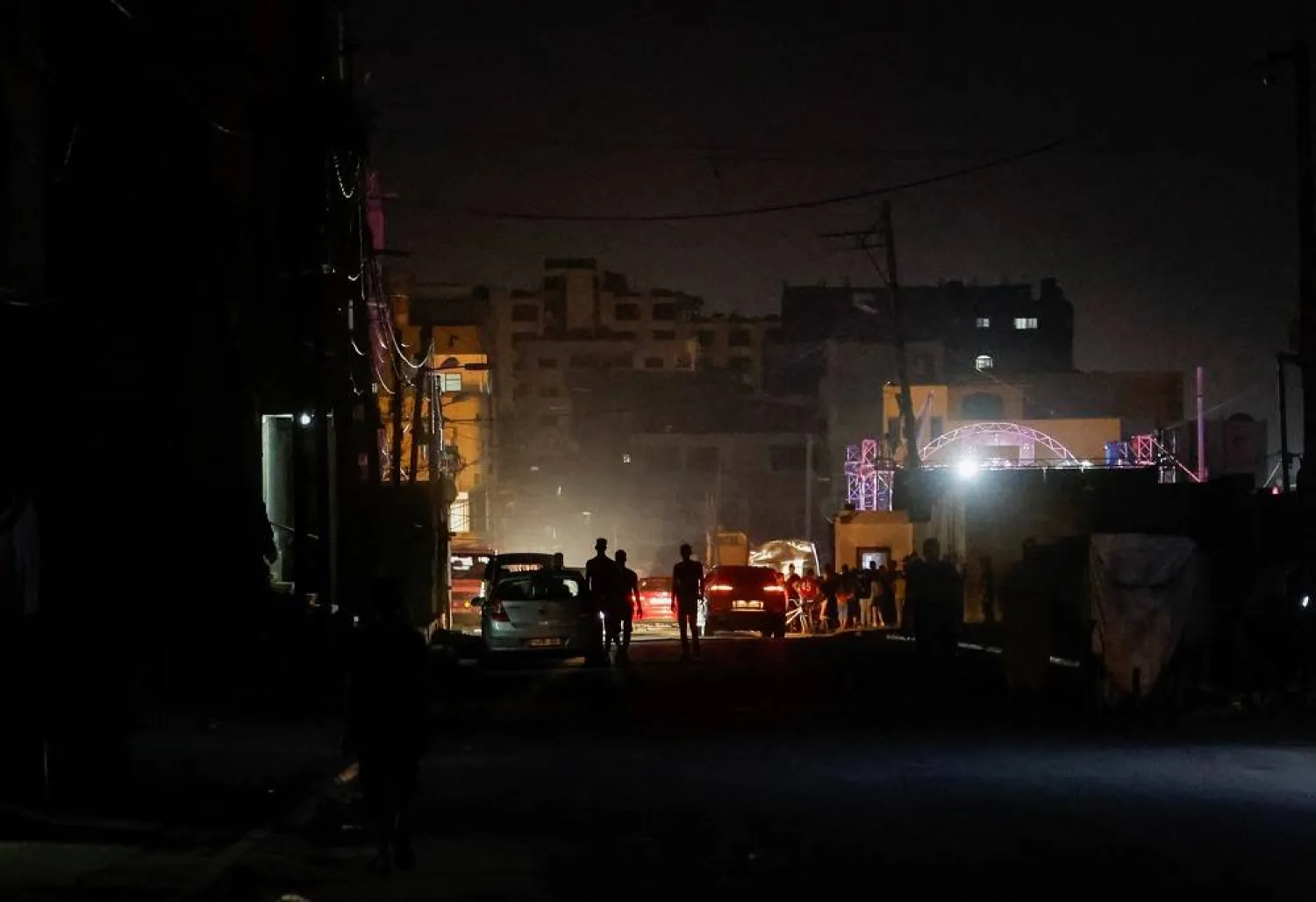
Palestinians walk in the street amid a heatwave and lengthy power cuts at Shati refugee camp in Gaza City, July 17, 2023. (Reuters)
TT

Gaza Power Shortages Worsened by Heatwave as Some Residents Call for Protests 

Palestinians walk in the street amid a heatwave and lengthy power cuts at Shati refugee camp in Gaza City, July 17, 2023. (Reuters)

A heatwave in the Gaza Strip that has sent temperatures over 38 degrees Celsius (104 Fahrenheit) worsened power shortages and sparked discontent among residents who expressed frustration with the ruling Hamas movement.

Hamas, which has run the territory since 2007 blames a 16-year-long Israeli blockade for devastating Gaza's economy and undermining development, including the power network.

More than 2.3 million people live in a narrow strip of land squeezed between Egypt and Israel, suffering power cuts for up to 12 hours a day. The area needs around 500 megawatts of power per day in summer, according to local officials. It receives 120 megawatts from Israel while the enclave's lone power plant supplies another 60 megawatts.

The crisis has provoked an unusual wave of social media protests. Abdel-Hamid Abdel-Ati, a local journalist said, "our dreams have shrunk from (achieving) the right of return and liberating the homeland to one extra hour of electricity," he told Reuters.

Gaza residents are calling for the local generator to produce more power by operating the plant at full capacity.

Many residents shared videos of darkness at night and of their children sleeping on the floor to cool themselves. While asserting Israel was primarily responsible for the Gaza problem, they demanded action from Hamas.

Some called for street protests.

Jalal Ismail, the Hamas-appointed chairman of the Gaza Energy Authority, said the current problem was driven by the soaring heatwave.

Resolving the problem was a political issue, he said, referring to current divisions with President Mahmoud Abbas's Fatah faction, which runs the Palestinian Authority.

The Palestinian Authority, which pays for the electricity feed from Israel, blames the crisis on Hamas, whom it said was responsible for collecting electricity revenues.

"We haven't witnessed such heat in years, and we get electricity for around six hours a day, so I can't fan my children, so I am using the plastic tray to fan them because of the severe heat," said Yasmin Fojo, a mother of five from Nahrelbared camp in southern Gaza Strip.

Around 20 children squeezed into a small plastic swimming pool in the middle of a dusty unpaved road. Thousands packed the beaches, escaping the heat and power cuts at home.

Some homes and businesses use generators or solar panels, to overcome the lengthy power cuts. Those that cannot afford expensive generators use humble battery-powered led lights.

"I don't have money to buy a fan and if I did they would cut off the power and I end up in the heat, therefore, I am using those plastic trays," said a 90-year-old woman, Um Khattab Dula.



China Says Israel Should Stop Its 'Forced Establishment' of West Bank Settlements

Cattle gather in an enclosure at a farm run by Israeli settlers near the Palestinian town of Duma in the Israeli-occupied West Bank, on October 13, 2026. (Photo by Ilia YEFIMOVICH / AFP)
TT

China Says Israel Should Stop Its 'Forced Establishment' of West Bank Settlements

Cattle gather in an enclosure at a farm run by Israeli settlers near the Palestinian town of Duma in the Israeli-occupied West Bank, on October 13, 2026. (Photo by Ilia YEFIMOVICH / AFP)

Chinese Foreign Minister Wang Yi told Israeli President Isaac Herzog that Israel should stop and reverse its "forced establishment" of West Bank settlements, China's foreign ministry said in a statement on Friday.

China has consistently held that the Palestinian question is the greatest historical injustice of this ‌century, Wang ‌told Herzog during a meeting ‌in ⁠Azerbaijan, the ministry ⁠added.

Wang had earlier said that promoting peace and reconciliation in the region is the "cornerstone" of China's Middle East policy

China believes that the "two-state solution" is the right path ⁠to a resolution and the ‌immediate priority ‌is to fully open access to the ‌Gaza Strip so a humanitarian "catastrophe" ‌is not allowed to spread, Wang added

At the same time, Israel should stop and reverse its forced establishment of ‌settlements in the West Bank, he said

China is ⁠willing ⁠to work with the international community to push all parties to return to dialogue and consultation as soon as possible and seek a political settlement of the conflict, Wang added

China has long been a supporter of the Palestinian cause and Beijing also has close ties with Israel's main regional foe, Iran.


Jbessa Gas Export Pipeline Targeted in Northeastern Syria, Fire Erupts, SANA Reports

File: Flames rise at Tishreen thermal power plant following an explosion, near Otaybah, Syria, September 30, 2026, in this screengrab from video obtained from social media. Social Media/via REUTERS
TT

Jbessa Gas Export Pipeline Targeted in Northeastern Syria, Fire Erupts, SANA Reports

File: Flames rise at Tishreen thermal power plant following an explosion, near Otaybah, Syria, September 30, 2026, in this screengrab from video obtained from social media. Social Media/via REUTERS

The Jbessa gas export pipeline in northeastern Syria was targeted in the al-Arabidi area, causing a fire, state news agency SANA reported on Thursday citing the director of the Syrian Petroleum Company's media office.

The company said in a statement that the 16-inch ‌pipeline exploded at ‌5.15 p.m. in an ‌area ⁠about 60 km ⁠from the city of Shaddadi. It did not specify the cause of the explosion, according to Reuters.

Technical teams isolated the damaged section by closing valves at the Jbessa gas plant and the ⁠Deir Ezzor gas station ‌in the al-Bughailiya area, ‌while firefighting and safety crews headed to ‌the site to secure the area, ‌the company said.

The extent of the damage and whether gas supplies had been disrupted were not immediately clear.

The explosion ‌followed a separate incident on Thursday morning in which the Baniyas-Homs ⁠oil ⁠products pipeline was damaged near the village of Hudeida in the western Homs countryside in what the company described as sabotage aimed at stealing fuel.

That incident caused a gasoline leak, the company said, adding that work was continuing to repair the damage and restore the line to service.


Netanyahu Says Spoke with Syria’s Sharaa on Sweida Unrest

People walk under a giant election billboard bearing a portrait of Israeli Prime Minister Benjamin Netanyahu's Likud party in Ramat Gan, on October 15, 2026. (AFP)
TT

Netanyahu Says Spoke with Syria’s Sharaa on Sweida Unrest

People walk under a giant election billboard bearing a portrait of Israeli Prime Minister Benjamin Netanyahu's Likud party in Ramat Gan, on October 15, 2026. (AFP)

Israeli Prime Minister Benjamin Netanyahu said on Thursday that he had previously spoken with Syrian President Ahmed al-Sharaa about violence towards the Druze community, in his first acknowledgement of direct contact.

Netanyahu did not say when exactly the call took place, but implied it had been during bloody clashes in southern Syria in July of 2025 involving Druze factions, Bedouin fighters and government security forces.

"I called al-Sharaa. It was a very short, very sharp conversation, and the slaughter stopped," Netanyahu said at an election rally with Israel's Druze community, according to footage aired by Israel's public broadcaster KAN.

The 2025 clashes erupted in Syria's Sweida province between armed Druze factions and Bedouin fighters, with government security forces and some tribal groups then intervening.

A committee set up by the Syrian government said it had documented 1,760 deaths.

Israel, which also has a Druze population, intervened militarily during the clashes, with strikes in Sweida and against government targets in Damascus, saying it was defending the minority community.

Government-aligned forces later withdrew from Sweida city, leaving a fragile ceasefire in place, and in July of this year Damascus said it had begun trying suspects over the violence.

A Syrian government source told the country's state news agency SANA on Thursday that Damascus "categorically rejects any attempt to politicize (Syria's Druze minority) or to involve it in Israeli propaganda and elections," without confirming nor denying whether the call between Netanyahu and Sharaa had taken place.

Since the December 2024 ousting of longtime Syrian ruler Bashar al-Assad, Israel has carried out hundreds of strikes in Syria and sent troops into a UN-patrolled buffer zone that had separated Israeli and Syrian forces in the Golan since 1974.

It has also carried out repeated incursions deeper into Syrian territory and has vowed to keep troops in a so-called "security zone" in southern Syria, where it seeks a broader demilitarized area.

Syria's new leaders have condemned Israeli military action in the country's south but have refrained from responding with force.

Despite the tensions, Syria and Israel have held several rounds of direct talks as they edge towards a security agreement.