Saudi Arabia Asserts Global Standing as Host of Gulf, Arab, Int’l Summitshttps://english.aawsat.com/features/4442821-saudi-arabia-asserts-global-standing-host-gulf-arab-int%E2%80%99l-summits
Saudi Arabia Asserts Global Standing as Host of Gulf, Arab, Int’l Summits
Saudi Crown Prince Mohammed bin Salman welcomes GCC leaders and representatives during the 18th consultative meeting of the leaders of the GCC & the Gulf summit with the central Asian countries C5, in Jeddah, Saudi Arabia, July 19, 2023. (SPA)
TT
TT
Saudi Arabia Asserts Global Standing as Host of Gulf, Arab, Int’l Summits
Saudi Crown Prince Mohammed bin Salman welcomes GCC leaders and representatives during the 18th consultative meeting of the leaders of the GCC & the Gulf summit with the central Asian countries C5, in Jeddah, Saudi Arabia, July 19, 2023. (SPA)
As the 18th Consultative Meeting of Gulf Cooperation Council (GCC) leaders and the Summit of the GCC and Central Asian States convened in Jeddah on Wednesday, Saudi Arabia logged another exceptional number to Gulf summits it has recently hosted.
This is in addition to the summits beyond the scope of the GCC, such as the Arab, Islamic, international, and emergency summits.
Since December 9, 2015, the Kingdom has hosted more than 15 Gulf summits, and today, with the convening of the 18th GCC Consultative Meeting and the Gulf-Central Asian Summit, the tally reaches an impressive 17.
These gatherings have varied in nature, ranging from regular summits to consultative meetings and emergency sessions.
Moreover, they have seen participation not only from GCC members but also from nations beyond the council’s borders.
Regardless of emergency summits or consultative meetings, Saudi Arabia has emerged as the leading Gulf nation in hosting regular Gulf summits, with a total of 43.
Out of these, Saudi Arabia has hosted 12, followed by Bahrain and Kuwait with seven each, Qatar and the UAE with six each and Oman with five..
In May 2017, the Saudi capital, Riyadh, hosted the “Arab-US Summit,” where leaders gathered to discuss efforts to combat terrorism and halt its funding and activities.
Following that historic event, the Kingdom went on to host five other notable Arab summits: the “Arab Dhahran Summit” in April 2018, the “Makkah Summit in Support of Jordan” in June 2018, the “Emergency Arab Makkah Summit” in May 2019, the “Arab-Chinese Summit” in December 2022, and the “Arab Jeddah Summit” in May of 2023.
Observers note that Saudi Arabia’s hosting of international and regional summits is not detached from the Kingdom’s drive to diversify its economy and engage with the world by hosting major events.
However, it also signifies the crucial strategic role the nation plays in its surroundings and the global arena.
Over the past decade, Saudi Arabia has actively taken on this role, partly through leading international and regional parties in finding solutions and discussing crises. Additionally, it has hosted events that involve active regional and international participants.
Can One Security Force Implement Resolution 1701 and the Framework Agreement in Southern Lebanon?https://english.aawsat.com/features/5340607-can-one-security-force-implement-resolution-1701-and-framework-agreement-southern
Can One Security Force Implement Resolution 1701 and the Framework Agreement in Southern Lebanon?
A UNIFIL military vehicle patrols the southern Lebanese town of Ibl al-Saqi (AFP)
Countries involved in Lebanon are considering a security force to replace the United Nations Interim Force in Lebanon (UNIFIL) when its mandate expires at year-end.
The force would support the Lebanese army in implementing agreements and international resolutions in southern Lebanon. But can a new force enforce both UN Security Council Resolution 1701 and the US-brokered framework agreement between Lebanon and Israel?
Talks have produced broad agreement on the need for such a force, but its composition, mandate, operating procedures and participating countries remain undecided.
The uncertainty was reflected in a statement by Group of Seven foreign ministers after their Nov. 9-10 meeting in Paris. They called for a robust, credible, and long-lasting security architecture in Lebanon to support the Lebanese Armed Forces, in line with Resolution 1701 and to advance implementation of the Trilateral Framework.
No further agreements were announced.
US envoy to visit Beirut
Attention now turns to a visit to Beirut on Monday by US Ambassador to the United Nations Mike Waltz, who is due to meet with President Joseph Aoun.
Recent media reports suggest Washington is moving to replace UNIFIL in southern Lebanon with a verification committee and substitute the framework agreement for Resolution 1701.
The resolution ended a 33-day war between Israel and Hezbollah in 2006. Its main provisions included an Israeli withdrawal from Lebanon and the deployment of additional UN troops to monitor the cessation of hostilities alongside the Lebanese army.
Lebanon, Israel and the United States signed the Trilateral Framework Agreement in Washington on June 26, setting out a phased process to end the conflict and restore Lebanese sovereignty over the country's entire territory.
Under the agreement, the Lebanese army would gradually assume security control of designated "pilot zones" as non-state armed groups are disarmed and their military infrastructure dismantled, paving the way for a phased Israeli withdrawal.
The agreement also calls for a US-backed military coordination group to oversee and verify implementation.
It remains unclear whether separate international forces would replace UNIFIL and oversee the framework agreement, whether the two mandates could be merged, or whether Resolution 1701 would be dropped in favor of the agreement, with a single force assigned to implement it.
'Complicated' transition
A diplomatic source described the situation as "complicated," saying the current transition differs from the circumstances surrounding Resolution 1701.
At the time, a new military and political reality had emerged that the parties sought to preserve, the source told Asharq Al-Awsat.
Today, the source said, the mandate, powers, composition and operating procedures of any force replacing UNIFIL remain unclear.
The framework agreement also presents a legal obstacle.
"It is an understanding between three parties and cannot be imposed on the international community or assumed to have its automatic endorsement," the source said.
Turning it into a Security Council resolution would be difficult, the source added, because some member states could object.
Israel's position
Israel appears reluctant to accept a new international force to replace UNIFIL, which it accuses of having allowed Hezbollah to expand toward its border.
According to details emerging from recent negotiations over the framework agreement's implementation, Israel wants direct oversight of efforts to verify that the pilot zones are free of Hezbollah weapons and military infrastructure.
It favors a mechanism giving it a continuing monitoring and operational role rather than relying on reports from an independent international body.
Fundamental differences
Military and strategic expert Brigadier General Khalil Helou said UNIFIL's departure would render Resolution 1701 meaningless, effectively allowing the framework agreement to take its place.
"Resolution 1701 contains clear provisions and has a legal dimension, unlike the US-sponsored framework agreement, which requires negotiations to implement each of its provisions," Helou told Asharq Al-Awsat.
Merging the two would therefore be difficult, he said.
The framework agreement also makes no provision for foreign forces to implement it. Instead, it outlines understandings between Lebanon and Israel, with a military annex setting out reciprocal steps, he added.
Legal obstacles
Legally, a single force could implement both Resolution 1701 and the framework agreement. But constitutional and legal expert Adel Yamin said the nature of its mandate would pose further obstacles.
"Verifying disarmament is more intrusive than providing conventional support to the army," Yamin told Asharq Al-Awsat.
Such a mission could require clearer rules of engagement, raising questions about the host state's consent, he said.
Yamin also cited reports that Israel opposed an international force including French troops and that Washington considered Resolution 1701 obsolete, favoring the framework agreement as a basis for direct communication between the Lebanese and Israeli militaries.
One option, he said, would be a UN force or mission to implement Resolution 1701 alongside a multinational mechanism to oversee the framework agreement.
But that would risk overlapping powers and conflicting reports.
UN umbrella for framework agreement
International efforts are also being discussed to bring the framework agreement under UN auspices, potentially superseding Resolution 1701.
Yamin outlined several legal routes.
One would be to register the agreement with the UN Secretariat under Article 102 of the UN Charter, provided it qualifies as a treaty.
Registration would not give the agreement effective UN backing but would allow it to be invoked before UN bodies, he said.
Another option would be for the parties to send identical letters seeking Security Council endorsement, followed by a presidential statement or resolution welcoming the agreement.
The council could also endorse the agreement and annex it to a resolution, or establish a new force or expand an existing mandate to implement it, following the model of the United Nations Disengagement Observer Force (UNDOF).
But Yamin warned that UN backing would be a double-edged sword.
It would internationalize Israel's withdrawal obligations rather than leave them dependent solely on US guarantees. At the same time, it would place Lebanon's commitments to bring weapons under exclusive state control under tighter international scrutiny.
Yamin also cautioned against incorporating into a UN resolution any provisions that could cast doubt on Israel's obligation to withdraw immediately from Lebanon.
Such provisions should not gain international legal cover, he said, arguing that any clause undermining Lebanon's sovereignty or territorial integrity would violate both the UN Charter and the Lebanese Constitution and would be automatically void.
Saudi Arabia in Times of Crisis: Three Centuries of Sovereignty and Independent Decision-Makinghttps://english.aawsat.com/features/5340532-saudi-arabia-times-crisis-three-centuries-sovereignty-and-independent-decision
Saudi Arabia in Times of Crisis: Three Centuries of Sovereignty and Independent Decision-Making
Custodian of the Two Holy Mosques King Salman bin Abdulaziz and Saudi Crown Prince and Prime Minister Mohammed bin Salman (SPA)
Anyone who traces the history of the modern Saudi state will recognize that the threats and challenges it faces today are not fundamentally new, even if their methods and circumstances have changed. For three centuries, Saudi Arabia has upheld its sovereignty and independence in decision-making.
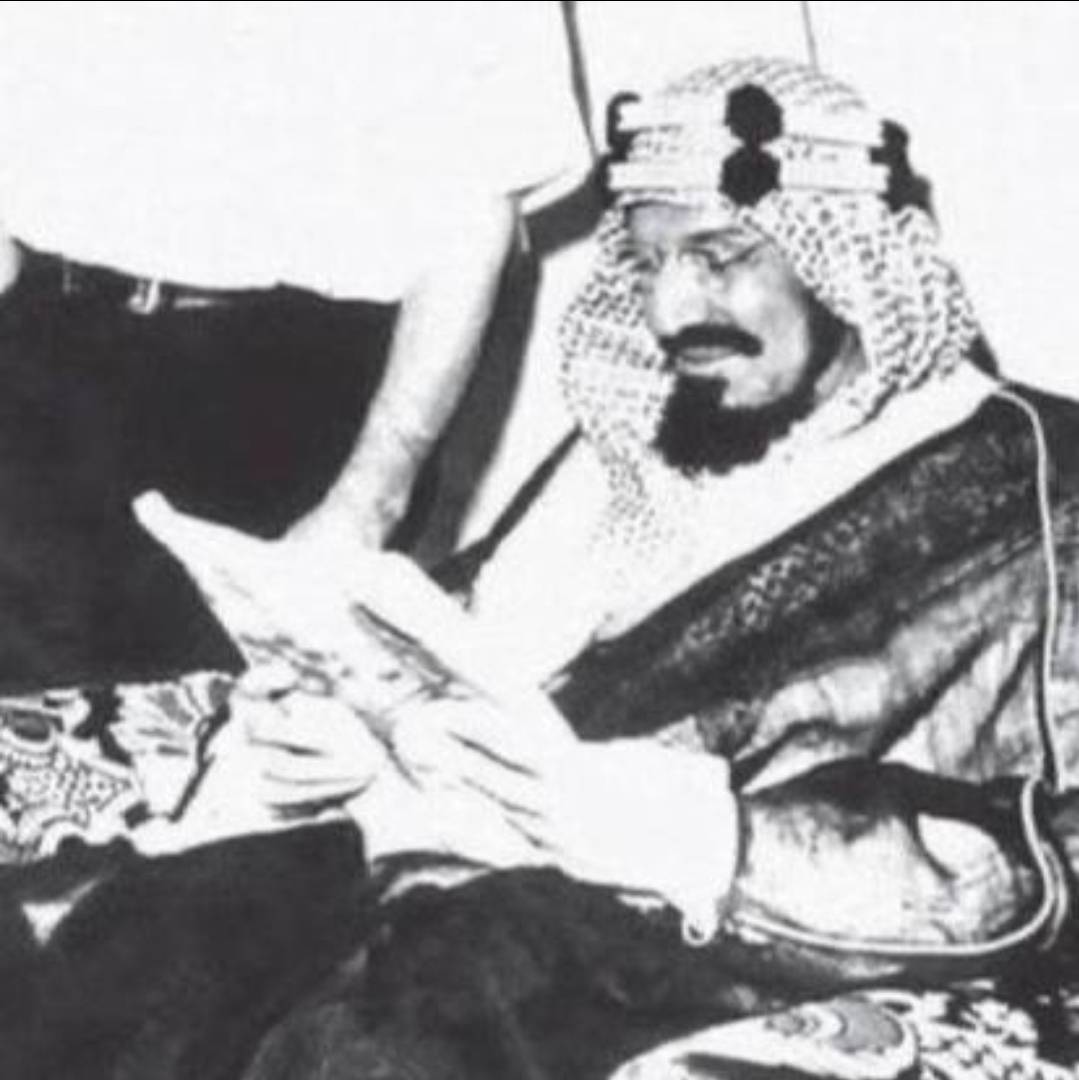
From the earliest stages of unification, King Abdulaziz bin Abdulrahman faced internal and external challenges as he built the state. Among the most dangerous were those that arose between 1927 and 1934, when domestic rebellions became intertwined with foreign threats, nearly plunging the country into crises on several fronts.
These included the rebellion of certain Ikhwan leaders who had previously been among the most prominent participants in the country's unification. Their disagreements with King Abdulaziz, rooted in their misguided interpretations of religious matters, the authority of the state, control over military raids and relations with neighboring countries, eventually escalated into armed confrontation. The conflict culminated in the Battle of Sabilla in 1929, before the rebellion was finally suppressed in 1930.
In the northern Hejaz, Hamid bin Rafadah led a rebellion in 1932 that was linked to opposition activities and backed by outside parties.
The south witnessed an Idrisi rebellion that same year, aimed at restoring the family's former influence. The rebels exploited border disputes with Yemen and received support from Imam Yahya, developments that later contributed to the Saudi-Yemeni War of 1934.
King Abdulaziz bin Abdulrahman (Asharq Al-Awsat)
Early Threats
The danger posed by these crises lay not only in their succession and occasional overlap, but also in their geographical reach, extending from the country's central and eastern regions to its northern and southern borders.
Tribal, political and religious motivations became entangled with the calculations of neighboring powers.
These events unfolded as Italy competed with Britain for influence in the Red Sea. Rome supported Imam Yahya's activities, opposed Saudi sovereignty over territories formerly controlled by the Idrisis and backed their rebellion, despite the signing of the Saudi-Italian Treaty of Friendship in February 1932.
King Abdulaziz, however, did not consider these developments sufficient grounds for severing relations.
While responding decisively with military force to the rebellion and Imam Yahya's actions once peaceful options had been exhausted, he also pursued diplomacy to neutralize external parties and subsequently settled disputes through treaties designed to preserve the state's stability.
He thus succeeded in overcoming one of the most complex periods in the Kingdom's formative history.
At the time, the emerging state faced the simultaneous challenges of consolidating its authority at home and securing recognition of its borders, sovereignty and independent decision-making abroad, while colonial powers competed for influence across the region.
King Abdulaziz confronted other challenges and crises in an exceptionally complicated regional and international environment.
What distinguished his political approach, however, was his ability to understand the balance of power and benefit from international relations without allowing those relationships to compromise his freedom of decision or undermine the state's fundamental interests.
These events illustrate a policy that distinguishes between managing disagreements and protecting national interests.
Differences with an international power need not result in severing relations, just as maintaining relations with that power does not require surrendering rights or sovereignty.
That approach continued under successive kings as state institutions developed and foreign relations expanded.
Over time, successive experiences helped build a body of expertise in crisis management that extended beyond wars and security threats to encompass economic disruptions, political transformations, waves of terrorism and other crises.
Each brought challenges that required the development of national institutions, systems and capabilities.
It is therefore nothing new for Saudi Arabia to face political and security threats involving overlapping regional and international interests, or challenges whose objectives and consequences extend beyond the immediate incidents through which they emerge.
Throughout the nearly three-century history of the Saudi state, it has experienced various forms of conflict and attempts to influence its decisions and positions.
The sources and methods of these threats have changed, but protecting national security and preserving independent decision-making have remained fundamental principles of Saudi policy.
The Current Attacks
The developments unfolding in the region today, including attacks against Saudi Arabia by the terrorist Houthi militia and other groups, together with the accompanying international positions and media commentary, require a broader understanding of the situation.
These incidents cannot be assessed solely through their immediate military consequences.
An attack on a civilian facility or critical infrastructure, however serious, may be one manifestation of a wider crisis involving several parties whose interests and objectives differ, even if their positions sometimes produce similar outcomes.
The attacks targeting Saudi cities in recent weeks offer an example of the nature of these challenges.
Threats have extended to airports and civilian and economic facilities, with consequences reaching beyond physical damage and defense costs.
They have also involved attempts to disrupt transportation, economic activity and the public's sense of security and stability.
Understanding these attacks therefore requires examining more than the weapons used. It also calls for assessing their political objectives and the potential pressure they seek to exert beyond the battlefield.
The broader political environment surrounding such incidents deserves close scrutiny, particularly when security threats form part of a wider situation involving economic interests, international alliances and political choices.
Historically, the challenges facing Saudi Arabia have not been exclusively military or political.
At various times, some parties have sought to exploit the Kingdom's religious standing and its responsibilities toward the Two Holy Mosques for political purposes, despite the principle that religious rituals and sacred sites should remain outside political conflicts.
Certain actors have attempted to undermine Saudi Arabia's standing and its service to the Two Holy Mosques by turning these responsibilities into instruments of political pressure.
Terrorist attacks against Saudi security can also be understood from this perspective, particularly when they involve areas or facilities connected to services for Hajj and Umrah pilgrims and other visitors.
Examples include missile attacks targeting the Makkah and Madinah regions and attacks on King Khalid International Airport.
Allies' Calculations
Setting aside the religious and moral dimensions, and recognizing these attacks as forms of military and security threats, the political and international developments surrounding them reveal another layer of complexity in the crises states confront.
Strategic relationships, however strong and deeply rooted, do not guarantee permanent alignment of interests and positions.
Partners may differ in their assessments of the nature of a threat, the appropriate means of confronting it or the extent of the support they are prepared to provide.
This does not diminish the importance of the alliances Saudi Arabia has built over many decades.
Those relationships have contributed to political, economic and defense cooperation and remain an important component of the Kingdom's foreign policy.
But partnership, in political terms, does not mean surrendering freedom of decision. Nor do differing calculations during a particular crisis eliminate the shared interests on which relations between states are founded.
Here lies one of the most complicated challenges.
A country may face a security threat that requires cooperation with its partners while simultaneously confronting political choices or arrangements whose consequences and duration extend far beyond addressing that immediate threat.
This dilemma may emerge in two directions.
An adversary may seek, by attacking civilian facilities, to push Riyadh toward settlements that do not serve its interests or to use Saudi Arabia as a means of relieving pressure on other parties.
Conversely, others may seek to draw the Kingdom into a broader regional conflict whose scope and conclusion it cannot determine on its own.
Independent decision-making means rejecting both possibilities.
Under such circumstances, preserving the freedom to make sovereign decisions becomes an essential part of crisis management.
The need to confront an immediate danger must not become a reason to accept strategic commitments that are not justified by national interests.
The point is that managing crises in a world of intertwined interests involves more than confronting adversaries.
It also requires managing differences with partners, maintaining a range of options and avoiding dependence on the calculations of any single party, regardless of the importance of that relationship.
Media Pressure
Alongside these developments, various analyses and arguments have emerged concerning the attacks and threats facing Saudi Arabia.
Some link them to the future of the Kingdom's economic and development projects, its ability to maintain stability and attract investment and tourism, or the implications for its international relationships and political choices.
It is natural for these issues to attract attention from the media and research centers.
Saudi Arabia's religious, political and economic significance, its extensive economic and development transformation, and the secure and stable environment required by its major projects make attacks on airports and critical infrastructure particularly newsworthy.
Yet some interpretations, especially in the media, tend to focus on the immediate scale of the threats before drawing conclusions about the Saudi government's ability to preserve its political and strategic choices.
Such assessments often fail to give sufficient weight to the historical experience of the Saudi state and its institutions, or to the resources, capabilities and international relationships at its disposal.
This tendency is evident in analyses that treat security attacks as a direct indication that the state's options are narrowing.
Others assume that escalating threats will inevitably compel Saudi Arabia to adjust its political positions according to what other parties consider appropriate responses to the crisis.
The problem is not in examining these possibilities, which is a legitimate part of analysis, but in treating them as inevitable outcomes.
It is equally problematic to measure a state's capacity to manage a crisis solely by the damage it sustains during a particular period.
Political history offers no basis for assuming that states necessarily change their strategic choices whenever they encounter military or economic challenges.
Likewise, maintaining a particular political position does not mean ignoring changing circumstances or refusing to reconsider the methods used to achieve national objectives.
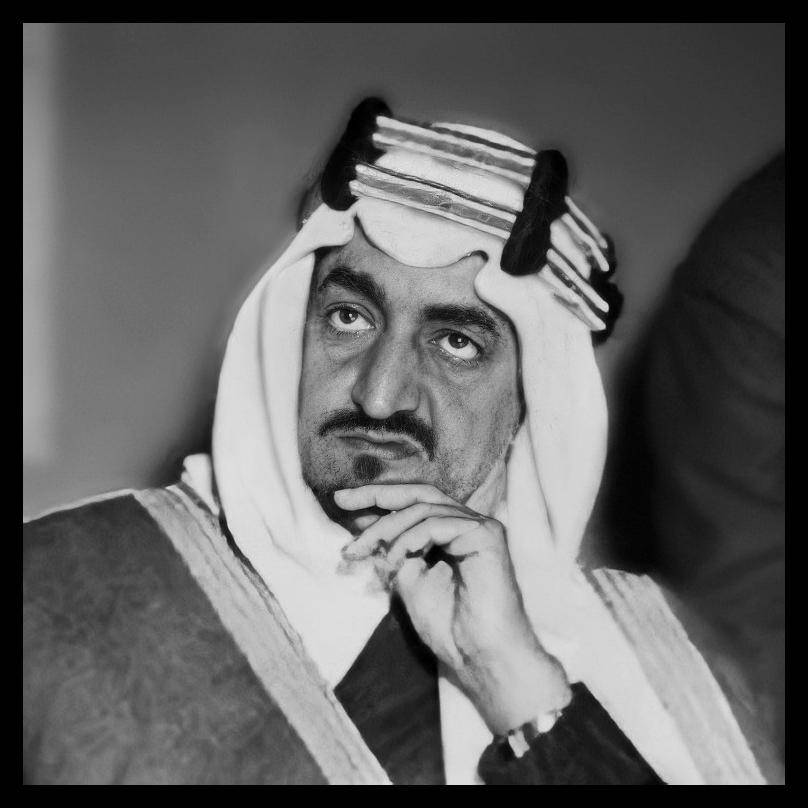
King Faisal bin Abdulaziz (Asharq Al-Awsat)
The Limits of Coercion
An important distinction must be drawn between the ability to inflict damage and the ability to dictate decisions.
An armed terrorist group may succeed in threatening critical infrastructure or disrupting certain activities, but that does not mean it has acquired the power to determine the political choices of the state it targets.
Nor does producing an economic or media impact necessarily amount to achieving strategic objectives.
One of the defining features of Saudi Arabia's experience is that crisis management is no longer confined to a limited set of options or temporary responses.
As state institutions have developed, crisis management has become a coordinated effort involving multiple agencies, each with its own responsibilities and areas of expertise.
This enables the state to address crises across their security, economic, social and political dimensions.
Elements of this accumulated expertise have been demonstrated throughout Saudi history.
The relevant question is not how many crises the Kingdom has faced, but how it has overcome them and continued its course while political systems elsewhere changed, balances of power shifted and the calculations of major powers proved mistaken.
Consider, for example, the 1960s, when Saudi Arabia confronted one of the most dangerous and perhaps most complicated crises in its modern history.
An internal struggle over the monarchy, which ended with King Faisal assuming power in 1964, coincided with the rise of Nasserism and the ideological conflict sweeping the Arab world.
The confrontation extended beyond media campaigns and political incitement.
The Kingdom experienced attacks along its borders, as well as a wave of bombings and sabotage targeting security, military and oil installations.
These included the Trans-Arabian Pipeline, known as Tapline, and sites in Riyadh, Dammam and Khamis Mushait.
There were also attempts to infiltrate the military establishment and plot coups.
Saudi leaders confronted these dangers while reorganizing the institutions of government and the state, building military and security capabilities, and continuing development projects.
They did so within international alliances that offered no absolute guarantees, and amid repeated political efforts to contain the war in Yemen that did not always succeed.
Throughout these challenges, independent Saudi decision-making remained a consistent policy.
An example of this approach to external pressure and security threats can be found in a US diplomatic document dated August 11, 1965.
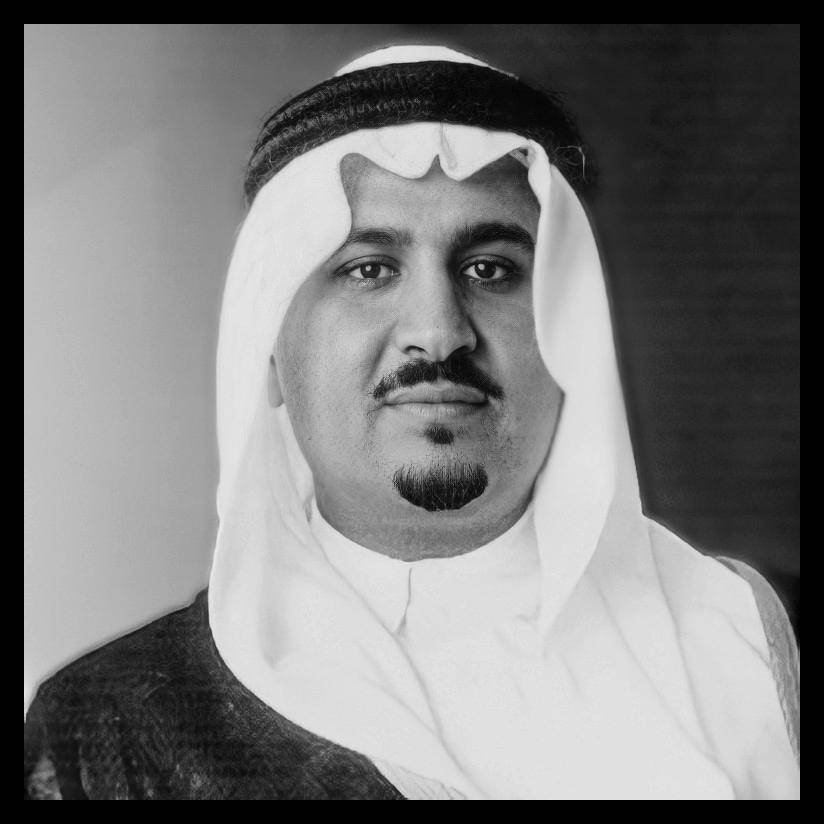
According to the document, Prince Sultan bin Abdulaziz, then Minister of Defense and Aviation, summoned Talcott W. Seelye, the US chargé d'affaires in Jeddah, to a meeting attended by Saudi Deputy Foreign Minister Mohammed Ibrahim Masoud.
Acting on King Faisal's instructions, Prince Sultan outlined the threats facing Saudi territory.
When the American side made the deployment of fighter aircraft to help deter attacks conditional on specific requirements, Prince Sultan responded decisively that Riyadh did not want American assistance if it came with such conditions.
This did not represent a rejection of cooperation with Washington.
Rather, it was a refusal to allow a request for military support to become a constraint on Saudi political decision-making, even in the face of direct threats to national security.
Prince Sultan bin Abdulaziz (Asharq Al-Awsat)
The Arab defeat in June 1967 subsequently transformed the regional balance of power.
Yet King Faisal did not treat the weakened position of his former adversaries as an opportunity to settle scores.
Instead, he moved beyond the dispute with Egypt and contributed to supporting it in the aftermath of the war.
This is what makes that period significant.
Saudi Arabia confronted threats to its security, borders, political stability and economic interests, but managed those challenges without allowing them to undermine the state's unity or stability.
Indeed, it emerged with greater strength and standing.
The crises of the 1970s followed, including the Iranian Revolution, the seizure of the Grand Mosque in Makkah and the Soviet invasion of Afghanistan.
These developments confronted the Kingdom with security and ideological challenges, as well as strategic transformations whose consequences would endure for decades.
They were followed by the Iran-Iraq War and the pressures of the 1980s, which tested the Saudi economy's ability to sustain development spending amid economic and security challenges.
Alliances Put to the Test
Iraq's invasion of Kuwait in 1990 posed an equally serious crisis.
Saudi Arabia faced a direct military threat to its borders and oil installations, ballistic missile attacks against cities and critical infrastructure, and an Iraqi incursion into the city of Khafji.
The Kingdom also encountered political pressure arising from divisions within the Arab world and the repercussions of bringing in international forces to liberate Kuwait.
Economically, the Saudi treasury bore the costs of the war, hosting military forces and supporting affected countries, with expenditures estimated at approximately $55 billion.
The budget deficit rose to 17% of gross domestic product in 1991.
The threats became severe enough to force the closure of several airports, including those in Riyadh and Dhahran, the suspension of civilian flights and the imposition of military restrictions on Saudi airspace.
These measures were not evidence that the state was incapable of protecting its skies.
They were responses to exceptional wartime circumstances, a distinction that must be remembered when assessing current threats.
This applies particularly to the suspension of operations at King Khalid International Airport, without confusing the existence of a threat with the ability to confront it.
The challenges did not end with Kuwait's liberation.
Security and financial commitments continued, while the consequences of the war placed pressure on government spending and development for years afterward.
Liberating Kuwait ended the occupation, but it did not eliminate the financial burdens borne by Riyadh or the political and security repercussions of the conflict.
The Kingdom was therefore confronting more than a war on its borders.
It faced a test of its ability to protect national security, manage alliances and shoulder the burdens of regional stability without losing its internal cohesion.
Confronting Terrorism
The September 11, 2001, attacks placed Riyadh in the midst of one of its most complicated political and media crises.
Its relationship with Washington faced an unprecedented test, accompanied by campaigns casting doubt on Saudi Arabia and pressure for reform and change.
These developments coincided with an international war on terrorism that soon reached Saudi territory through terrorist attacks targeting the state's security, facilities, citizens and residents.
The consequences of the US invasion of Iraq in 2003 were no less serious.
The regional balance of power was disrupted, creating greater opportunities for Iranian influence.
Amid these developments, concepts such as "creative chaos" and the "New Middle East" gained prominence, while maps emerged proposing the redrawing of regional borders, including the partition of Saudi Arabia itself.
Yet the state that confronted terrorism at home and political and media pressure abroad did not allow these crises to dictate its choices.
It preserved its stability and territorial integrity while the wider region continued for years to bear the costs of wars and attempts to reshape its political landscape.
Arab Transformations
The events of the so-called Arab Spring in 2011 brought a different set of challenges.
These were not merely protests that toppled Arab governments, but transformations that threatened regional balances, opened the door to internal conflicts and foreign interventions, and facilitated the rise of extremist organizations.
Saudi leaders faced unrest in Bahrain, a gradual political and security collapse in Yemen, political transformations in Egypt, and wars in Syria and Libya.
There were also attempts to exploit those events to foment unrest inside Saudi Arabia.
The Kingdom had to confront the consequences of these transformations, preserve its own security and stability, and support stability in other Arab countries while regional alliances and balances of power were being reshaped.
The striking aspect was not merely that Saudi Arabia weathered this wave of upheaval.
It also came to shoulder part of the political, security and economic burdens left by crises across its Arab neighborhood.
If Saudi Arabia, with fewer resources at its disposal, managed to overcome those challenges while preserving its stability and independent political decision-making, it is today better equipped to confront new threats under the leadership of Custodian of the Two Holy Mosques King Salman bin Abdulaziz and Crown Prince and Prime Minister Mohammed bin Salman.
The Kingdom now possesses greater capabilities, stronger institutions and extensive international alliances.
What some analyses overlook is that the existence of a threat does not necessarily indicate weakness on the part of the state.
Nor does the reluctance of some partners to become directly involved undermine this argument. On the contrary, it reinforces it.
Such reluctance offers practical evidence that a country's security cannot be left to the calculations of others, and that even the strongest partnerships remain subject to each partner's priorities and domestic considerations.
A state confident in its capabilities does not base its decisions on waiting for support that may arrive or be delayed.
It relies instead on its own resources and uses international relationships to expand its options, not as substitutes for them.
Recalling these historical experiences is not intended to equate different crises.
Each has its own characteristics and requires its own methods of response.
The point is to demonstrate that accumulated expertise in crisis management depends on understanding the various consequences of a crisis rather than addressing only one of its manifestations, while preserving the ability of the state and its institutions to fulfill their responsibilities.
This explains why current attacks must be addressed within a comprehensive strategy that is not confined to military retaliation.
Military action should instead form part of a coordinated set of political, diplomatic, economic and security measures serving national interests.
The Saudi state understands that it is not immune to challenges and that past achievements do not eliminate the need to prepare for the future.
It also bears responsibility for protecting its security, citizens and residents, and for assessing the consequences of its decisions.
This is particularly important when the region faces the possibility of a widening conflict involving multiple parties, with repercussions that could extend well beyond the immediate confrontation.
Perhaps the most important lesson of the Saudi experience is that independent decision-making cannot be secured merely by declaring it.
It requires the ability to choose, a range of alternatives, coordination among state institutions and balanced foreign relations, so that confronting one crisis does not create other, more complicated crises.
Here I emphasize once again that, amid the transformations taking place in the world today, the pressures facing states are no longer limited to direct military threats.
Economic, political and media considerations may become intertwined with those threats.
Managing relations with partners, maintaining confidence in the economy and protecting critical infrastructure have therefore become integral elements of national security.
Enduring Principles, Multiple Options
With its long history of navigating regional and international transformations, and the religious, political and economic responsibilities it carries, Riyadh understands that confronting challenges does not mean simply reacting to the accelerating pace of events.
It means retaining the ability to assess interests and risks and to choose the means of achieving national objectives without compromising the state's fundamental principles.
Over the decades, the sources of threats and methods of pressure have changed.
The interests of countries and alliances have shifted, and challenges unknown to previous generations have emerged.
Yet one principle has remained constant throughout the Saudi state's experience: its security, stability and independence in decision-making are responsibilities that cannot be left to the judgment of others, however important its relationships and shared interests with them may be.
Circumstances may change, methods of pressure may multiply, and the positions of adversaries and partners may diverge.
But sovereignty, at its core, remains a state's ability to preserve its freedom of decision and choose what it considers consistent with its interests and responsibilities, rather than what others seek to impose on it under the pressure of crises.
Where Does Eisenkot Stand Among Israel's Generals-Turned-Politicians?https://english.aawsat.com/features/5340507-where-does-eisenkot-stand-among-israels-generals-turned-politicians
A tank mounted on a military truck passes an election campaign poster featuring Gadi Eisenkot, leader of the centrist Yashar ("Straight") party, ahead of Israel's general election in Kiryat Shmona, near the border with Lebanon in northern Israel, Tuesday, Oct. 20, 2026. (AP Photo/Ariel Schalit)
Where Does Eisenkot Stand Among Israel's Generals-Turned-Politicians?
A tank mounted on a military truck passes an election campaign poster featuring Gadi Eisenkot, leader of the centrist Yashar ("Straight") party, ahead of Israel's general election in Kiryat Shmona, near the border with Lebanon in northern Israel, Tuesday, Oct. 20, 2026. (AP Photo/Ariel Schalit)
Of the 14 people who have served as Israel's prime minister since the country's establishment in 1948, five have been generals. Two of them, Yitzhak Rabin and Ehud Barak, were former military chiefs of staff. If Gadi Eisenkot succeeds in forming a government, he will become the third former chief of staff to lead the Israeli government.
As he prepares for his potential new role, people close to Eisenkot, 66, say he has closely studied the history of Israel's generals who entered politics and decided that the figure whose legacy he most hopes to emulate is Yitzhak Rabin (1922-1995).
But can he truly follow in Rabin's footsteps while navigating the hornet's nest of Israeli politics? Or will he become a prisoner of the constraints that bind political leaders and prevent them from seizing the historic opportunities now presenting themselves?
Israel's history has produced leaders who rose to power through profoundly contradictory ideologies and doctrines. They sought to establish a Jewish state in the Middle East and persuaded the West that it would become an "oasis of democracy," a "beacon of science and progress," and a "model of economic prosperity and technological superiority," or, in the Jewish expression, "a light unto the nations."
The Crisis of the Israeli Model
Yet the Israeli model, despite its considerable technological, industrial and scientific achievements, embraced an uncompromising and arrogant security doctrine that kept the country in a perpetual state of crisis and war, exhausting its resources and threatening the lives of its people.
Israel's leaders have all benefited from generous Western military, political and economic support, aligning themselves with Western interests under the banner of "shared civilizational values."
They convinced themselves and their people that this was the only way to ensure the survival of the state as "the world's only national home for the Jewish people," making military force a fundamental pillar of its existence.
But Israelis have repeatedly confronted a different reality, one demonstrating that even overwhelming military power has its limits. This became evident during the 1973 war, the First Lebanon War in 1982 and the first Palestinian intifada in 1987.
With some notable exceptions, certain Israeli leaders began searching for what might be described as a path toward peace. They were quickly confronted by extremist leaders who spread fear, warned of an "existential war" and insisted that the Arabs sought Israel's destruction.
Yitzhak Rabin was assassinated in 1995 for his efforts to reach a settlement with representatives of the Palestinian people. Ehud Olmert was forced from office and later imprisoned on corruption charges.
Even when all Arab states proposed a peace initiative in 2002 that took into account the Palestinian people's right to self-determination and the establishment of a peaceful, demilitarized state while guaranteeing Israel's security, Israeli leaders appeared alarmed by the proposal and sought to evade the obligations that accepting it would entail.
Nearly a quarter of a century later, Israel still refuses to engage with that initiative.
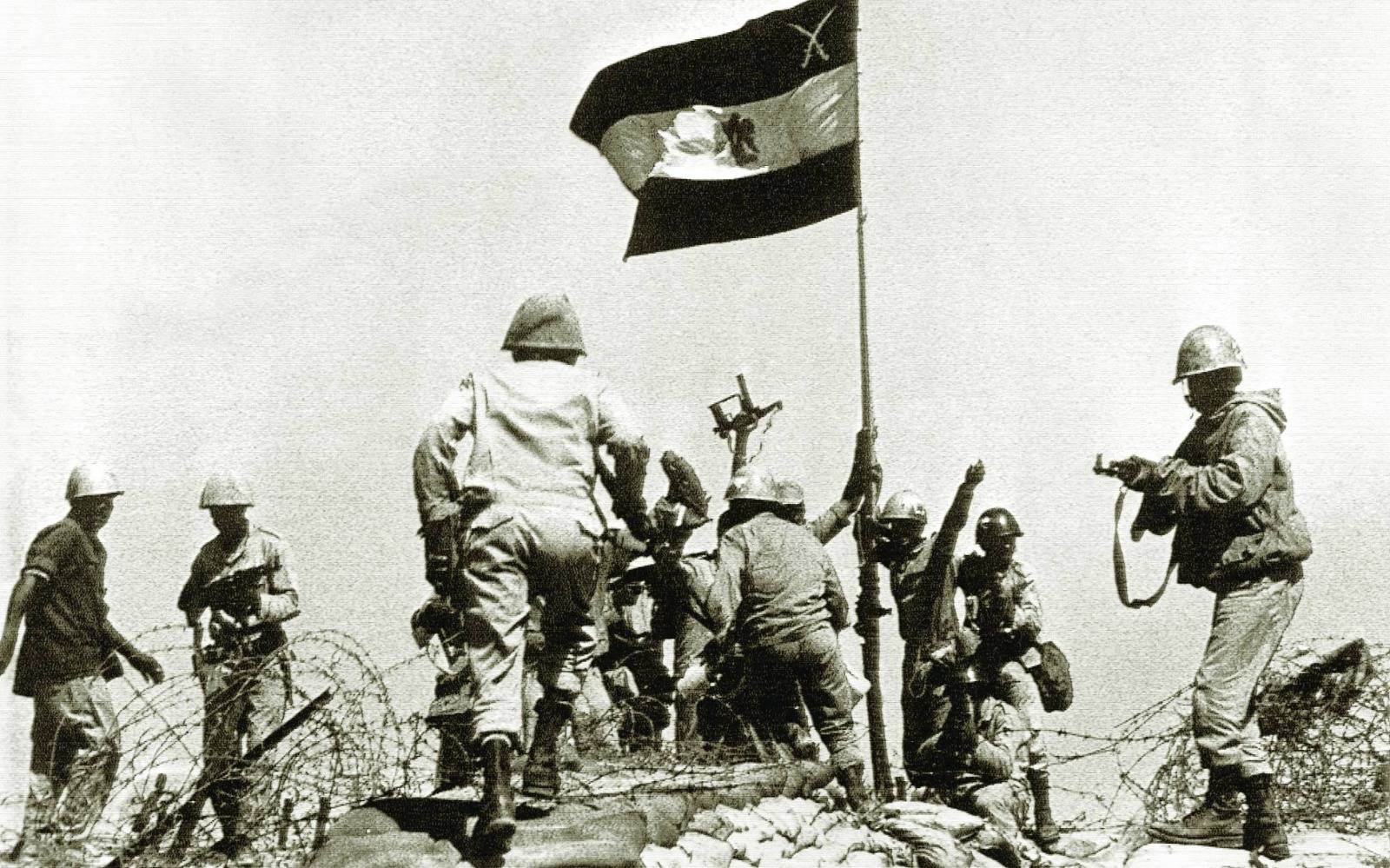
Egyptian soldiers raise the flag on the eastern bank of the Suez Canal during the October 1973 War (File photo, AP)
The Generals Who Entered Politics Before Eisenkot
At the forefront of Israel's generals-turned-politicians stands Yigal Allon, who commanded the Zionist paramilitary organization Palmach before Israel's establishment.
When the organization was dissolved, Allon and its fighters joined the Israeli army. He eventually left military service with the rank of major general.
Allon served as acting prime minister for just 19 days following the death of Prime Minister Levi Eshkol, until Golda Meir was chosen to succeed him.
Despite his brief tenure, Allon was an enormously influential figure in Israeli politics.
He devised the Allon Plan for resolving the Israeli-Palestinian conflict, which sought to impose Israeli sovereignty over Jerusalem, the Jordan Valley and the area extending from Hebron to Jerusalem. He also proposed establishing a small Druze state in the Syrian Golan Heights.
Yitzhak Rabin, who first became prime minister in 1974, can be credited with helping Israel regain its bearings after the setback it suffered in the October 1973 war.
He was nevertheless forced to resign after it emerged that his wife had failed to declare the full amount held in a US dollar bank account the couple maintained in the United States.
His resignation entered Israeli political history as an honorable act reflecting personal integrity and honesty.
Rabin sought to uphold that reputation during his second term as prime minister, from 1992 to 1995, and even his opponents acknowledged his integrity.
He did not shy away from pursuing peace with the Palestinians. Instead, he committed himself fully to the effort, even as Benjamin Netanyahu led the opposition with fierce rhetoric that went as far as accusing him of treason.
Rabin was a tough negotiator with the Palestinians and occasionally appeared to retreat from his positions. Nevertheless, Palestinian President Yasser Arafat praised him, saying that had Rabin not been assassinated, they could have reached a historic peace agreement.
Ehud Barak is regarded as one of Israel's most decorated military figures, having received more military honors than any other Israeli soldier.
It was Rabin who brought him into politics. Yet Barak was marked by an extraordinary degree of arrogance and became known for his impulsiveness.
When the Camp David negotiations between Barak and Arafat failed, Barak made his famous declaration that Israel had "no Palestinian partner for peace."
That assertion became a convenient argument for Israeli leaders seeking to undermine subsequent peace initiatives.
Although Barak has attempted to change course in recent years, he remains a discredited figure in the eyes of many Israelis.
Ariel Sharon, a general known for his thuggish approach, helped lead a campaign of pressure against Prime Minister Levi Eshkol to launch a war against Arab countries in 1967.
During the October 1973 war, Sharon defied orders when he crossed the Suez Canal. Prime Minister Yitzhak Shamir later regarded him as a dangerous rebel.
Yet when Sharon became prime minister, he withdrew Israeli forces from the Gaza Strip and dismantled the settlements there.
In his final years in politics, he even began speaking about a two-state solution.
Whose Example Will Eisenkot Follow?
Eisenkot is weighing the experiences of these four figures because he understands that Israeli public opinion is divided over its military leaders.
In the past, generals were regarded with something approaching reverence. Today, however, Israelis have concrete examples of military commanders who entered politics, and they subject their records to scrutiny, categorizing them as right-wing or left-wing.
The divide was also reflected in Netanyahu's election slogan, "Right or Palestine," which he adopted in the final stages of his campaign and which is said to have attracted hundreds of thousands of voters.
The first quality Eisenkot hopes to emulate from Rabin is personal integrity, a trait that even his political opponents acknowledge he possesses.
The second is perseverance: the ability to pursue a goal with patience and determination.
The third is boldness and courage in making decisions.
The time has not yet come to assess whether Eisenkot possesses that quality, although his associates claim he surpasses even Rabin in this respect.
Eisenkot also emphasizes that he places the interests of the state above all other considerations.
Yet the challenges ahead present him with a fundamental task: bringing Israel back to its senses after what he sees as the reckless policies pursued by Benjamin Netanyahu, which have seriously endangered Israeli interests.
This places him on a collision course with the far right, which has become a formidable force in Israel.
The far right's ideas now dominate much of Israeli society, while armed, unruly militias exert control over the streets, openly displaying racism and thuggish behavior.
These forces seek perpetual war. They imagine they can establish Israel as the region's dominant power and impose peace through force.
They seek to punish the entire Arab world for Hamas's October 7, 2023, attack by occupying territory not only in Palestine but also in Lebanon, Syria and elsewhere whenever possible.
They show little concern for Israel's international standing or for humanitarian principles, international law and international conventions.
How Does Eisenkot Differ From the Right?
The reality is that Eisenkot himself is not far removed from some of the Israeli right's positions.
He simply expresses them differently, speaking of "ensuring superiority over the countries of the region" and maintaining that "force is an essential element in achieving peace."
Nor is he prepared to abandon the pursuit of decisive military victories on the various fronts, particularly against Iran and its armed proxies.
However, Eisenkot also wants everything to be pursued in a spirit of partnership with the United States and "national unity."
His approach to regional and international relations differs from that of the far right, and he seeks to end wars through political agreements, particularly with Syria and Lebanon.
Although he has reservations about President Donald Trump's 20-point plan, which was subsequently adopted in a UN Security Council resolution, Eisenkot says he will abide by it because the Netanyahu-led government approved it and because he respects international agreements and treaties.
The legacy Eisenkot hopes to establish is that of a leader who halted the deterioration of Israel's regional and international standing, restored hope for progress and prosperity, and revived the political prestige of the country's generals.
His associates say he has carefully studied the experiences of generals who became prime ministers and understands which examples he should follow and which mistakes he must avoid.
But will he succeed in charting a course that makes him a bold, historic leader, or will he end up repeating their mistakes?
لم تشترك بعد
انشئ حساباً خاصاً بك لتحصل على أخبار مخصصة لك ولتتمتع بخاصية حفظ المقالات وتتلقى نشراتنا البريدية المتنوعة