Crown Prince Orders Formation of Board of Directors of King Saud Universityhttps://english.aawsat.com/gulf/4452961-crown-prince-orders-formation-board-directors-king-saud-university
Crown Prince Orders Formation of Board of Directors of King Saud University
Youssef bin Abdullah Al-Bunyan is briefed on the projects at the university during a visit to the institution earlier this year. (SPA)
TT
TT
Crown Prince Orders Formation of Board of Directors of King Saud University
Youssef bin Abdullah Al-Bunyan is briefed on the projects at the university during a visit to the institution earlier this year. (SPA)
Prince Mohammed bin Salman, Crown Prince and Prime Minister, issued on Tuesday a Supreme Order to form the Board of Directors of the King Saud University.
The move is in line with a Royal Order to transform the university into an independent non-profit academic institution under the auspices of the Royal Commission for Riyadh City (RCRC).
The Supreme Order named Youssef bin Abdullah Al-Bunyan as Chairman of the Board of Directors, with the Minister of Human Resources and Social Development serving as Vice Chairman.
Other members of the board include the Minister of Communications and Information Technology, the Minister of Transport and Logistics Services, the Minister of Industry and Mineral Resources, the President of King Saud University, the President of the Saudi Authority for Data and Artificial Intelligence (SDAIA), Fahd Bin Abdulmohsen Al-Rasheed, the CEO of King Faisal Specialist Hospital and Research Center, the Governor of the Small and Medium Enterprises General Authority (Monsha'at), the CEO of Riyadh Non-Profit Foundation, the President of King Abdullah University of Science and Technology (KAUST), the CEO of the Saudi Tourism Authority (STA), the Chairman of the Board of Directors of the Saudi Chambers of Commerce, the representative of the Public Investment Fund (PIF), Salman bin Mutaib Al-Sudairi, Tal bin Hisham Nazer, and Jomana bint Rashid Al-Rashid.
Al-Bunyan praised the Saudi leadership’s support to university education in the Kingdom.
He stressed the board’s keenness on achieving a qualitative shift at the university in terms of quality of education and research in line with the Kingdom’s Vision 2030.
RCRC CEO Ibrahim Al-Sultan praised the support shown by the Saudi leadership towards the education sector.
The transformation of the university into an independent non-profit academic institution will allow it to achieve its ambitious goals to become one of the world’s leading universities by 2030, he added.
The university aims to become a pioneering institution, regionally and globally, to help develop the national economy in line with development and growth process underway in the Kingdom.
Al-Jaber: Yemen Does Not Belong to the Houthis, Taiz Will Not Be Held Hostage to Their Projecthttps://english.aawsat.com/gulf/5331862-al-jaber-yemen-does-not-belong-houthis-taiz-will-not-be-held-hostage-their-project
Al-Jaber: Yemen Does Not Belong to the Houthis, Taiz Will Not Be Held Hostage to Their Project
Saudi Ambassador to Yemen Mohammed Al-Jaber. (Asharq Al-Awsat)
Saudi Ambassador to Yemen Mohammed Al-Jaber accused the Houthis on Tuesday of obstructing peace, exploiting Yemen’s resources to fund their military operations and prolonging the siege of Taiz.
“Yemen does not belong to the Houthis, and Taiz will not be held hostage to their agenda,” Al-Jaber declared in a post on X.
He expressed confidence that Yemen would prevail, saying its people deserved a stable state, functioning institutions, regular salaries, open roads and security forces capable of protecting their dignity.
In a post titled “If all you have is a hammer, everything looks like a nail,” the ambassador accused the terrorist Houthi militias of treating every crisis as an opportunity to escalate and every political commitment as an obstacle to its ambitions.
He maintained that the Houthis had abandoned the National Dialogue process and commitments under the peace roadmap, dragged Yemen into regional conflicts and then blamed others for blocking peace.
Al-Jaber challenged Houthi demands to reopen Sanaa airport, noting that flights had operated until the militia detained four Yemenia Airways aircraft in June 2024. The airport and the planes were subsequently destroyed in May 2025.
He added that proposals to resume services, including leasing aircraft under Yemenia’s supervision and a Jordanian initiative for flights between Amman and Sanaa, had been rejected or met with new conditions.
The ambassador also disputed Houthi claims of a blockade, pointing to daily shipments of food, medicine, fuel and commercial goods arriving at Hodeidah’s ports.
He accused the group of diverting port revenues, telecommunications income, taxes, customs duties and religious levies to finance attacks against Yemenis, Saudi Arabia and commercial shipping.
Meanwhile, he said, the Houthis refused to pay public sector salaries or provide basic services in areas under their control, using force against critics.
Citing the UN Panel of Experts on Yemen’s 2024 report, Al-Jaber said the group had exploited the telecommunications sector to finance drones and coastal forces through millions of text messages.
He cited figures of around 994 billion Yemeni rials collected in customs duties on fuel imports through Hodeidah between April 2022 and June 2024, alongside an estimated 1.34 trillion rials in telecommunications revenue and $2 billion annually from smuggled oil.
The envoy said the funds were being diverted to military purposes while ordinary Yemenis bore the cost.
Al-Jaber added: “The problem is that Houthi practices reveal a recurring pattern of utilizing crises as a tool for political pressure, only to later play the role of the victim while ignoring the responsibility of their decisions.”
“The result is an exhausted homeland and a people paying the price for a project that serves foreign agendas and endless extremist adventures,” he stressed.
Al-Jaber singled out Taiz, accusing the Houthis of besieging civilians, blocking roads and restricting access to food and medicine.
He questioned how the militia could claim to support peace while maintaining the siege, obstructing airport operations and involving Yemen in regional conflicts.
The ambassador reaffirmed Saudi Arabia’s “determination to protect its people, territory and vessels and to work with international partners to secure shipping routes through the Bab al-Mandeb Strait and the Red Sea.”
He pledged continued support for Yemen’s legitimate government and its people “in pursuit of peace, stability and economic recovery.”
Macron Concludes in Qatar Gulf Tour Focused on Regional Securityhttps://english.aawsat.com/gulf/5331840-macron-concludes-qatar-gulf-tour-focused-regional-security
Macron Concludes in Qatar Gulf Tour Focused on Regional Security
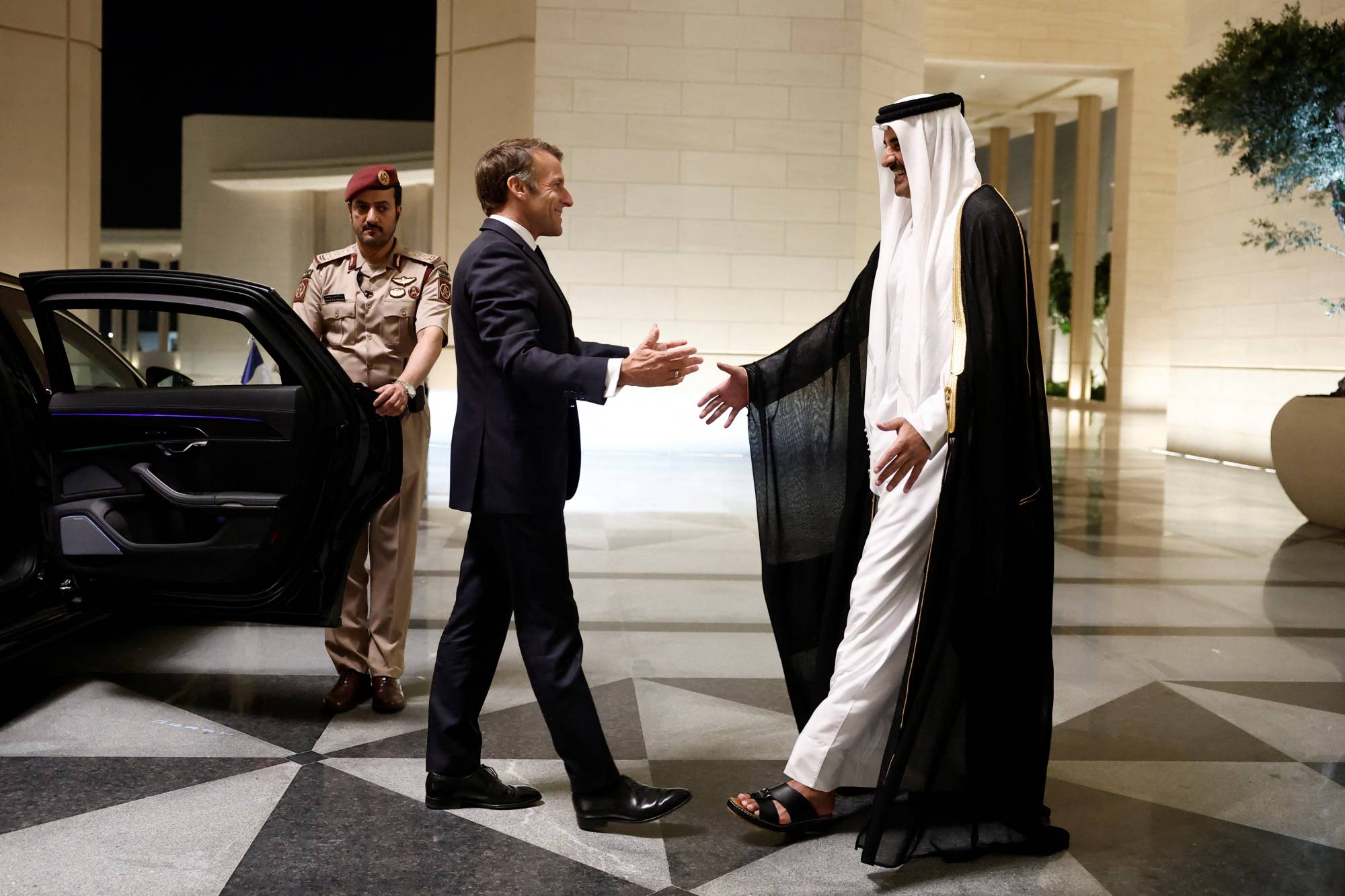
Emir of Qatar Sheikh Tamim bin Hamad Al Thani and French President Emmanuel Macron meet in Doha on Tuesday. (QNA)
French President Emmanuel Macron began a state visit to Doha on Tuesday, the final stop of his Gulf tour following visits to Kuwait, the United Arab Emirates, and Bahrain. The tour focused on regional security, energy supplies, and strengthening economic and defense partnerships.
Emir of Qatar Sheikh Tamim bin Hamad Al Thani received Macron at Lusail Palace on Tuesday, where an official reception ceremony was held to mark the first state visit by a French president to the country.
The leaders then held a bilateral meeting to review friendly relations and cooperation between both nations, as well as developments in the region.
They reviewed bilateral cooperation relations and the strategic partnership between the two countries, as well as ways to boost and develop them at various levels, particularly in the economic, investment, security, and defense sectors.
Sheikh Tamim expressed his deep pleasure with this historic visit and the profound depth of bilateral ties it reflects, looking forward to strengthening the solid strategic partnership and cooperation in various fields. For his part, Macron stressed his country's keenness to develop cooperative relations and push them toward broader horizons that meet the aspirations of both nations and their peoples.
Macron's Gulf tour came amid escalating regional tensions and threats facing maritime navigation and energy supplies, while Paris is seeking to enhance coordination with its Gulf partners in security of the Strait of Hormuz and the stability of energy markets.
Qatar's Ambassador to France Sheikh Ali bin Jassim Al Thani said the visit was an opportunity to expand cooperation in the fields of defense, security, energy, investment, technology, artificial intelligence, and cybersecurity, as well as to strengthen political coordination on regional and international crises.
Emir of Qatar Sheikh Tamim bin Hamad Al Thani (R) welcomes French President Emmanuel Macron (C) at the Lusail Palace in Lusail, north of Doha, Qatar, 20 October 2026. (EPA)
Boosting Bahraini-French cooperation
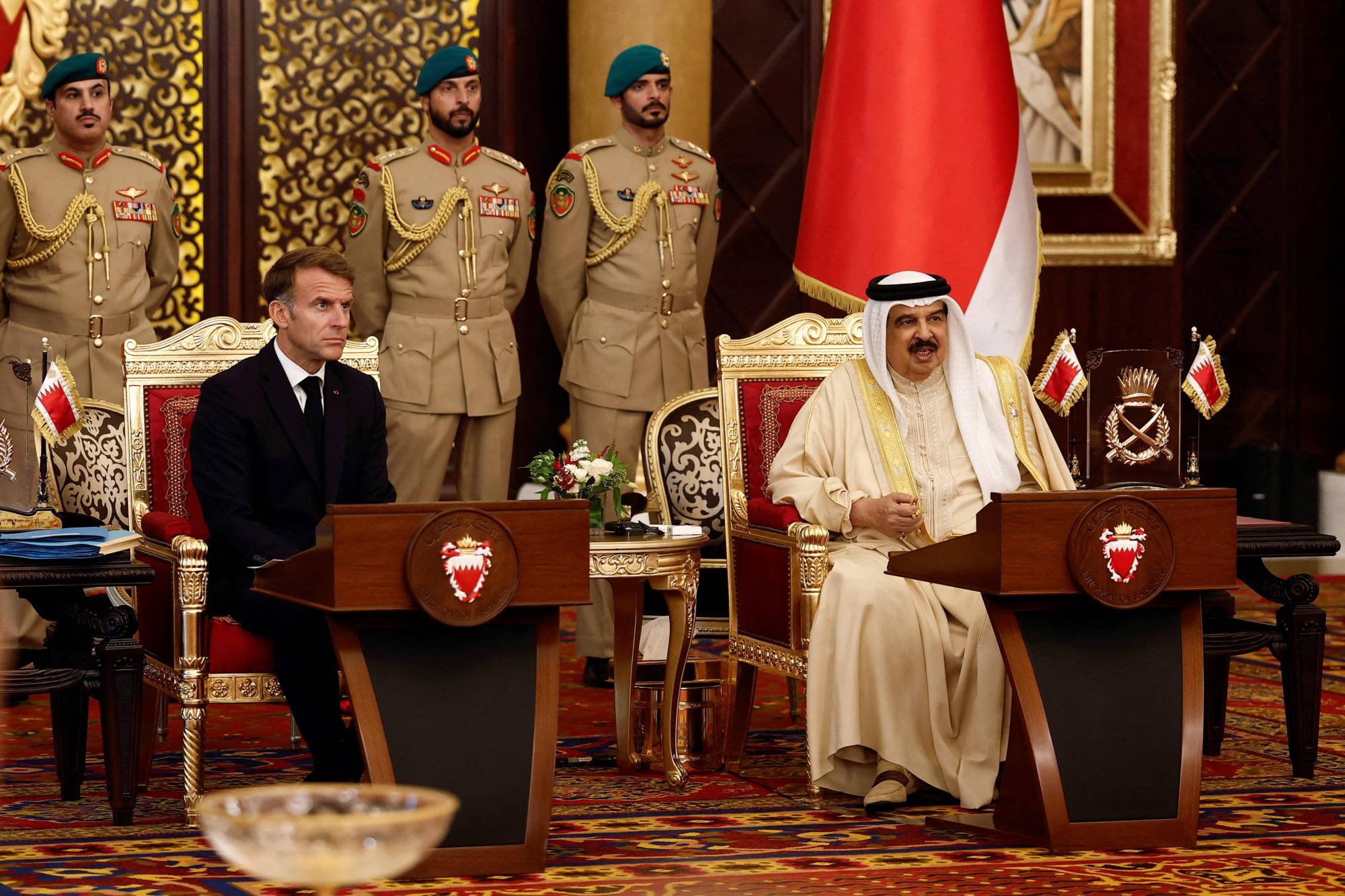
In Manama, Bahrain’s King Hamad bin Isa Al Khalifa and Macron discussed developments in the Middle East during official talks on Tuesday. They reviewed bolstering strategic cooperation between their countries, particularly in the fields of defense, security, economy, energy, and technology.
Macron underlined France's commitment to helping Bahrain protect its security and its readiness to provide support again in the event that it faces attacks, hoping to expand defense cooperation to include missile production and Manama's participation in manufacturing processes, alongside developing naval cooperation and drone systems.
King Hamad condemned the Houthi attacks on Saudi Arabia, stressing Manama's full solidarity with Riyadh and its support for measures to protect its security and sovereignty.
He underscored the importance of coordination with France in the UN Security Council regarding regional issues, including the Palestinian cause and the two-state solution.
Macron's visit to Manama witnessed the signing of a memorandum of understanding for cooperation in the peaceful uses of nuclear energy, aimed at developing the capabilities and skills necessary for a Bahraini civilian nuclear program through training and qualification programs.
King Hamad awarded Macron the Order of Sheikh Isa bin Salman Al Khalifa, First Class, in appreciation of his efforts to strengthen bilateral relations.
Bahrain's King Hamad bin Isa Al Khalifa (R) and French President Emmanuel Macron attend an agreement signing ceremony, at al-Sakhir Palace near Zallaq, on October 20, 2026. (AFP)
Emirati-French defense partnership
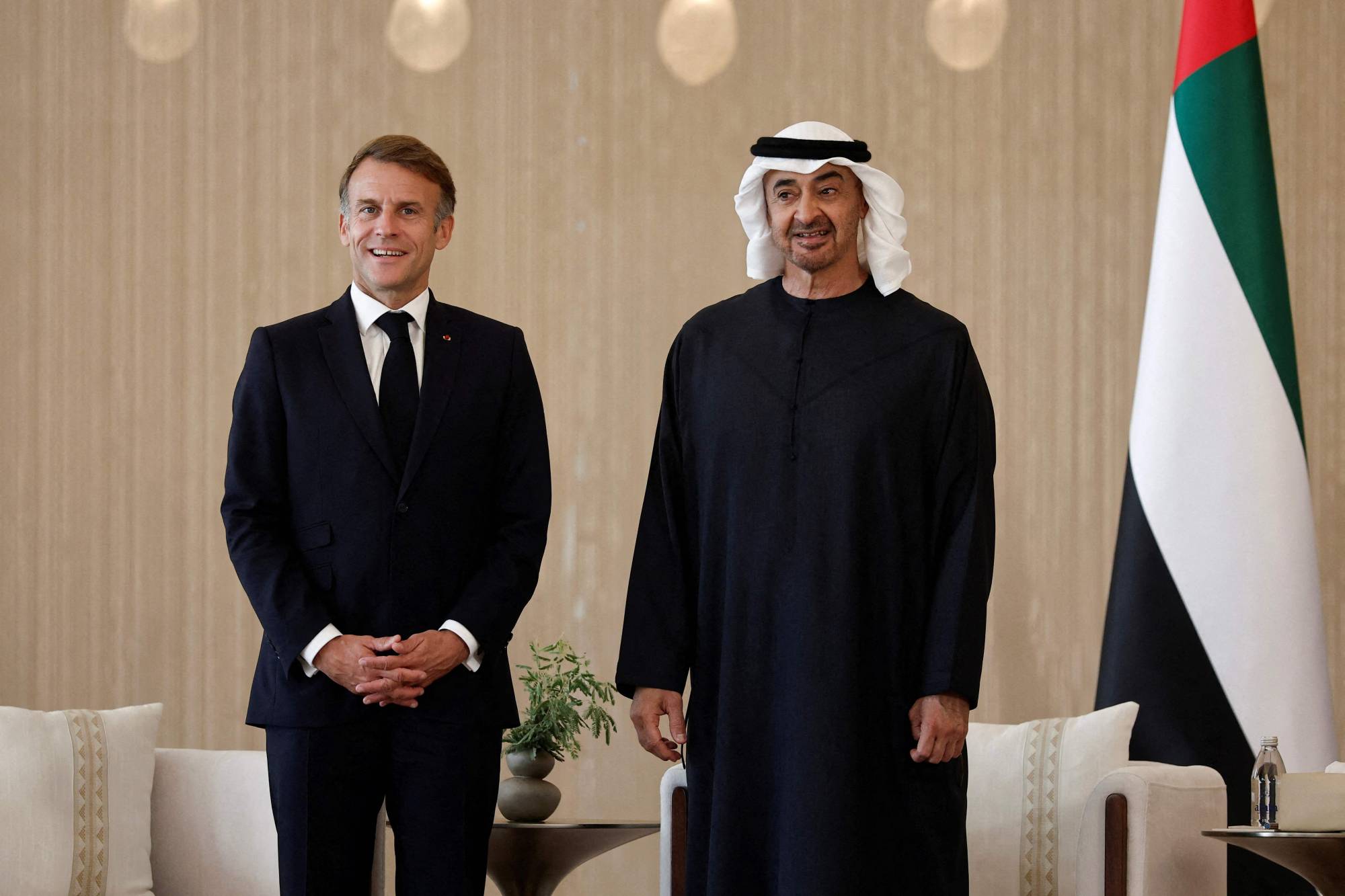
In Abu Dhabi, UAE President Sheikh Mohamed bin Zayed Al Nahyan and Macron witnessed on Tuesday the exchange of the strategic defense partnership framework between the two countries, as well as the executive arrangements regarding defense industries.
On Monday, the two leaders discussed ways to strengthen strategic relations between their countries and expand areas of economic and investment cooperation.
They underlined their commitment to further boosting cooperation in vital sectors and accelerating progress in executing joint projects, particularly in the fields of energy, advanced technologies, and artificial intelligence, which are major pillars in the strategic partnership between their nations.
On the regional level, the two presidents reviewed international issues and developments, foremost of which were the latest updates in the Middle East and efforts aimed at containing their repercussions, especially regarding the security of maritime corridors and the stability of energy supplies to global markets.
They stressed the importance of continued coordination and cooperation between Abu Dhabi and Paris to support regional security and stability, and to work toward bolstering opportunities for peace in a way that serves the interests of the region's countries and peoples.
France's President Emmanuel Macron (L) and UAE President Sheikh Mohamed bin Zayed Al Nahyan attend a signing ceremony for bilateral defense agreements at Zayed International Airport in Abu Dhabi on October 20, 2026. (AFP)
Macron secured the delivery of an additional 200,000 tons of diesel per month from the UAE and Bahrain during his Gulf tour, the French presidency said on Tuesday.
He obtained commitments for around 100,000 tons per month from the Emirates, while an additional 100,000 tons monthly will be secured during the stop in Bahrain, the Elysee Palace said.
With the addition of deliveries from Saudi Arabia, France has commitments for 295,000 tons per month, representing just over 10 percent of its consumption, the presidency added.
Kuwait has also given "very clear commitments" to deliver diesel and kerosene to the French overseas territories of Mayotte and Reunion in the Indian Ocean, the French presidency said.
Saudi Interior Minister Reviews Facilities Security Forces Operations in Riyadhhttps://english.aawsat.com/gulf/5331810-saudi-interior-minister-reviews-facilities-security-forces-operations-riyadh
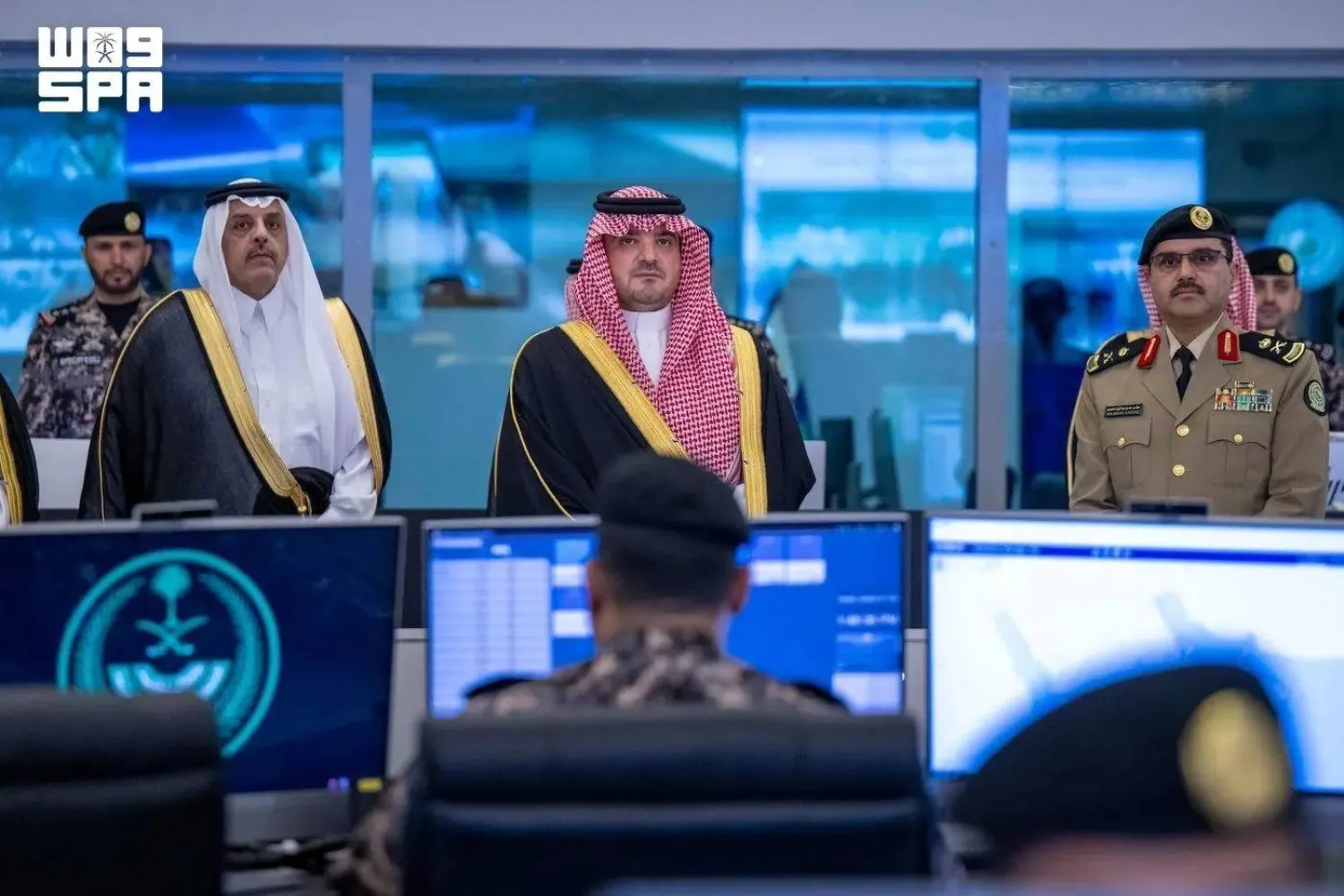
Saudi Minister of Interior Prince Abdulaziz bin Saud bin Naif bin Abdulaziz at the Facilities Security Forces Command in Riyadh on Tuesday. (SPA)
TT
TT
Saudi Interior Minister Reviews Facilities Security Forces Operations in Riyadh
Saudi Minister of Interior Prince Abdulaziz bin Saud bin Naif bin Abdulaziz at the Facilities Security Forces Command in Riyadh on Tuesday. (SPA)
Saudi Minister of Interior Prince Abdulaziz bin Saud bin Naif bin Abdulaziz reviewed on Tuesday operations at the Facilities Security Forces Command in Riyadh, inaugurating two centers for command and control and cybersecurity, as well as launching digital services for personnel.
The minister inaugurated the center for command and control and security UAV systems, which comprises seven specialized units and is linked to 13 command and control centers at the forces’ branches across Saudi Arabia.
The center uses an integrated system of advanced electronic systems and platforms to receive reports, manage and monitor field operations, and exchange security information, improving response times and security coordination in cooperation with the National Center for Security Operations.
The center also uses drones equipped with artificial intelligence technologies to support field surveillance and improve the efficiency of security operations within the forces’ areas of responsibility.
During the visit, the minister inaugurated the cybersecurity center, which is responsible for protecting data and information, securing networks and devices, monitoring systems to identify and address vulnerabilities, and detecting and countering cyber threats. These functions aim to protect technical infrastructure and support business continuity.
Prince Abdulaziz bin Saud also launched services for Facilities Security Forces personnel through the Absher Interior application. Developed in cooperation with the Ministry of Interior’s unified development center under its Technology Affairs sector, the services aim to simplify procedures and enable personnel to access services electronically.
The minister reviewed the forces’ upgraded digital services and electronic systems, including the integration of the Mawared system with the Absher platform and the National Unified Access platform (Nafath), as well as secure technical interfaces integrating related systems. These integrations aim to improve service efficiency and advance digital transformation.
لم تشترك بعد
انشئ حساباً خاصاً بك لتحصل على أخبار مخصصة لك ولتتمتع بخاصية حفظ المقالات وتتلقى نشراتنا البريدية المتنوعة