


Niger’s Junta Asks for Help from Russian Group Wagner as It Faces Military Intervention Threat

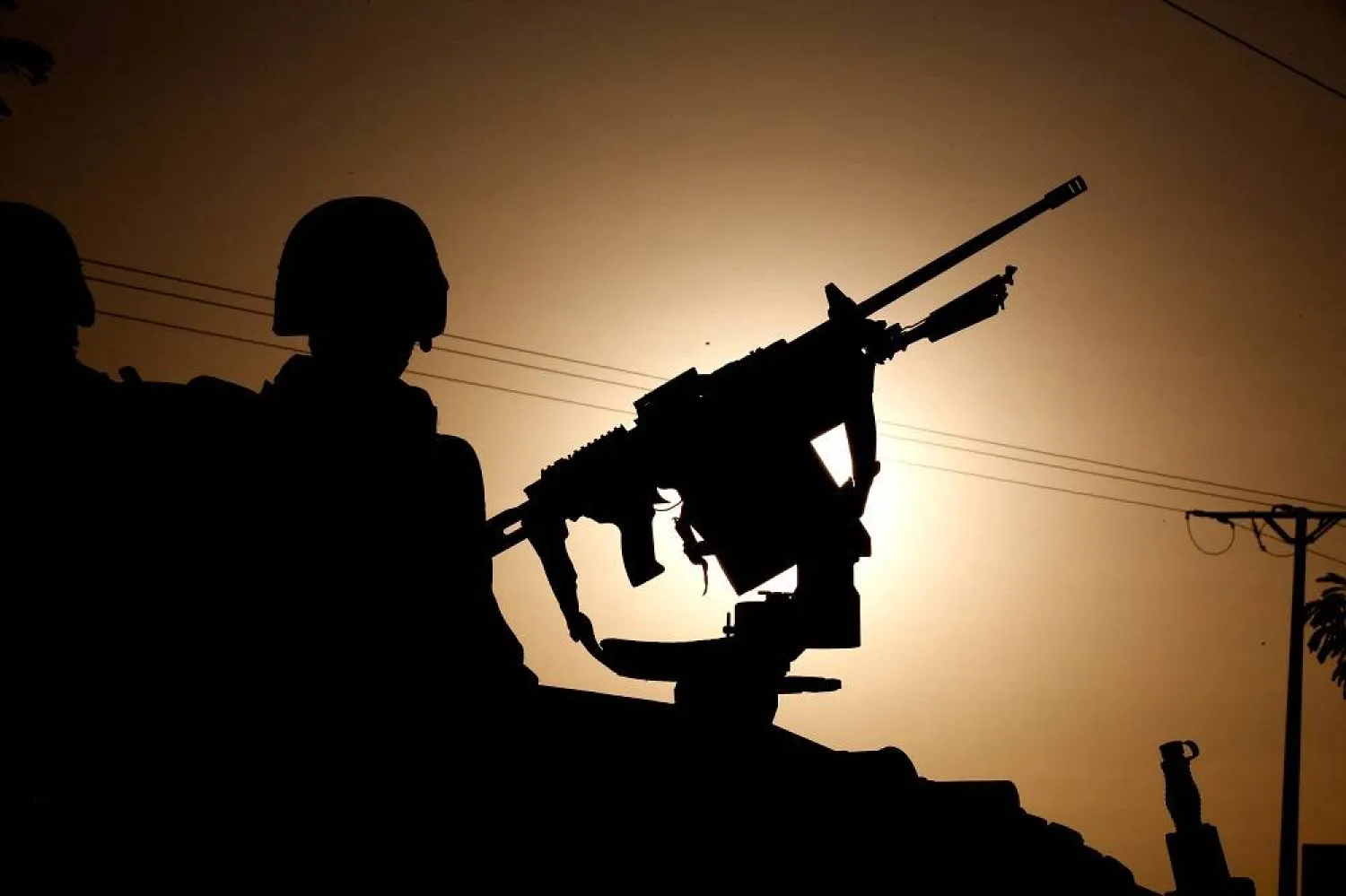
Silhouettes of members of the regional ECOWAS force are seen at the Denton Bridge check point in Banjul, Gambia January 22, 2017. (Reuters)
TT

Niger’s Junta Asks for Help from Russian Group Wagner as It Faces Military Intervention Threat

Silhouettes of members of the regional ECOWAS force are seen at the Denton Bridge check point in Banjul, Gambia January 22, 2017. (Reuters)

Niger’s new military junta has asked for help from the Russian mercenary group Wagner as the deadline nears for it to release the country’s ousted president or face possible military intervention by the West African regional bloc, according to an analyst.

The request came during a visit by a coup leader, Gen. Salifou Mody, to neighboring Mali, where he made contact with someone from Wagner, Wassim Nasr, a journalist and senior research fellow at the Soufan Center, told The Associated Press. He said three Malian sources and a French diplomat confirmed the meeting first reported by France 24.

“They need (Wagner) because they will become their guarantee to hold onto power,” he said, adding that the group is considering the request. A Western military official, speaking on condition of anonymity because they were not authorized to comment, told the AP they have also heard reports that the junta asked for help from Wagner in Mali.

Niger’s junta faces a Sunday deadline set by the regional bloc, known as ECOWAS, to release and reinstate the democratically elected President Mohamed Bazoum, who has described himself as a hostage.

Defense chiefs from ECOWAS member states finalized an intervention plan on Friday and urged militaries to prepare resources after a mediation team sent to Niger on Thursday wasn’t allowed to enter the capital or meet with junta leader Gen. Abdourahmane Tchiani.

On Saturday, Nigeria's Senate advised the nation’s president, the current ECOWAS chair, to further explore options other than the use of force to restore democracy in Niger, noting the “existing cordial relationship between Nigeriens and Nigerians.”

The legislators had deliberated on the president's request informing them of ECOWAS’ decisions and Nigeria’s involvement, as required by law.

Final decisions by ECOWAS, however, are taken by a consensus among its member countries.

After his visit to Mali, run by a sympathetic junta, Mody warned against a military intervention, vowing that Niger would do what it takes not to become “a new Libya,” Niger’s state television reported Friday.

Niger has been seen as the West’s last reliable counterterrorism partner in a region where coups have been common in recent years. Juntas have rejected former colonizer France and turned toward Russia. Wagner operates in a handful of African countries, including Mali, where human rights groups have accused its forces of deadly abuses.

It isn't possible to say Russia is directly involved in Niger's coup, but “clearly, there's an opportunistic attitude on the part of Russia, which tries to support destabilization efforts wherever it finds them,” French foreign affairs ministry spokeswoman Anne-Claire Legendre told broadcaster BFM on Friday. For days after Niger's junta seized power, residents waved Russian flags in the streets.

The spokeswoman described Wagner as a “recipe for chaos.”

Some residents rejected the junta's approach.

“It’s all a sham,” said Amad Hassane Boubacar, who teaches at the University of Niamey. “They oppose foreign interference to restore constitutional order and legality. But on the contrary, they are ready to make a pact with Wagner and Russia to undermine the constitutional order ... They are prepared for the country to go up in flames so that they can illegally maintain their position."

On Saturday, France’s foreign affairs minister, Catherine Colonna, said the regional threat of force was credible and warned the putschists to take it seriously. “Coups are no longer appropriate ... It’s time to put an end to it,” she said.

The ministry said France supported the ECOWAS efforts “with firmness and determination” and called for Bazoum and all members of his government to be freed.

But Algeria, which borders Niger to the north, told another visiting ECOWAS delegation that it opposed a military intervention, though it too wants a return to constitutional order.

Niger’s military leaders have been following the playbook of Mali and neighboring Burkina Faso, also run by a junta, but they're moving faster to consolidate power, Nasr said: “(Tchiani) chose his path, so he’s going full on it without wasting time because there’s international mobilization.”

One question is how the international community will react if Wagner comes in, he said. When Wagner came into Mali at the end of 2021, the French military was ousted soon afterward after years of partnership. Wagner was later designated a terrorist organization by the United States, and international partners might have a stronger reaction now, Nasr said.

And much more is at stake in Niger, where the US and other partners have poured hundreds of millions of dollars of military assistance to combat the region’s growing extremist threat. France has 1,500 soldiers in Niger, though coup leaders say they have severed security agreements with Paris. The US has 1,100 military personnel in the country.

It’s unclear what a regional intervention would look like, when it would begin or whether it would receive support from Western forces. Niger’s junta has called on the population to watch for spies, and self-organized defense groups have mobilized at night to monitor cars and patrol the capital.

“If the junta were to dig in its heels and rally the populace around the flag — possibly even arming civilian militias — the intervention could morph into a multifaceted counterinsurgency that ECOWAS would not be prepared to handle,” said a report by the Hudson Institute, a conservative US think tank.

While some in Niger are bracing for a fight, others are trying to cope with travel and economic sanctions imposed by ECOWAS. Land and air borders with ECOWAS countries have been closed, while commercial and financial transactions have been suspended.

Residents said the price of goods is rising and there’s limited access to cash.

“We are deeply concerned about the consequences of these sanctions, especially their impacts on the supply of essential food products, pharmaceuticals, medical equipment, petroleum products and electricity,” said Sita Adamou, president of Niger’s Association to Defend Human Rights.



Denmark Insists on Respect for Territorial Integrity After Trump Appoints Envoy to Greenland 

Louisiana Gov. Jeff Landry speaks to reporters at the Louisiana State Penitentiary in Angola, La., Sept. 3, 2025. (AP)
TT

Denmark Insists on Respect for Territorial Integrity After Trump Appoints Envoy to Greenland 

Louisiana Gov. Jeff Landry speaks to reporters at the Louisiana State Penitentiary in Angola, La., Sept. 3, 2025. (AP)

The Danish foreign minister said Monday his country insists that everyone, including the United States, must respect “the territorial integrity of the Kingdom of Denmark” after US President Donald Trump ‍ announced the appointment of Louisiana's governor as the US ‌special envoy to Greenland.

Trump called repeatedly during his presidential transition and the early months of his second term for US jurisdiction over Greenland, a vast, semi-autonomous territory of Denmark, and has not ruled out military force to take control of the mineral-rich, strategically located Arctic island.

In March, Vice President JD Vance visited a remote US military base in Greenland and accused Denmark of underinvesting there.

The issue gradually drifted out of the headlines but, in August, Danish officials summoned the US ambassador following a report that at least three people with connections to Trump had carried out covert influence operations in Greenland. Denmark is a NATO ally of the United States.

On Sunday, Trump announced the appointment of Louisiana Gov. Jeff Landry as ‌special envoy to Greenland.

He said that “Jeff understands how essential Greenland is to our National Security, and will strongly advance our Country’s Interests for the Safety, Security, and Survival of our Allies, and indeed, the World.”

Landry wrote in a post on X that “it’s an honor to serve you in this volunteer position to make Greenland a part of the US.”

Danish Foreign Minister Lars Løkke Rasmussen said in a brief statement emailed by his ministry that “the appointment confirms the continued American interest in Greenland.”

"However, we insist that everyone — including the US — must show respect for the territorial integrity of the Kingdom of Denmark,” he added.


Israeli FM Urges Jews to Move to Israel a Week After Sydney Attack 

10 July 2025, Austria, Vienna: Israel's Foreign Minister Gideon Saar takes part in a press conference at the Federal Ministry for European and International Affairs of the Republic of Austria. (dpa)
TT

Israeli FM Urges Jews to Move to Israel a Week After Sydney Attack 

10 July 2025, Austria, Vienna: Israel's Foreign Minister Gideon Saar takes part in a press conference at the Federal Ministry for European and International Affairs of the Republic of Austria. (dpa)

Israeli Foreign Minister Gideon Saar called on Sunday for Jews in Western countries to move to Israel to escape rising antisemitism, one week after 15 were shot dead at a Jewish event in Sydney.

"Jews have the right to live in safety everywhere. But we see and fully understand what is happening, and we have a certain historical experience. Today, Jews are being hunted across the world," Saar said at a public candle lighting marking the last day of the Jewish festival of Hanukkah.

"Today I call on Jews in England, Jews in France, Jews in Australia, Jews in Canada, Jews in Belgium: come to the Land of Israel! Come home!" Saar said at the ceremony, held with leaders of Jewish communities and organizations worldwide.

Since the outbreak of the war in Gaza, sparked by Hamas's unprecedented attack on Israel on October 7, 2023, Israeli leaders have repeatedly denounced a surge in antisemitism in Western countries and accused their governments of failing to curb it.

Australian authorities have said the December 14 attack on a Hanukkah event on Sydney's Bondi Beach was inspired by the ideology of the ISIS extremist group.

On Tuesday, Prime Minister Benjamin Netanyahu urged Western governments to better protect their Jewish citizens.

"I demand that Western governments do what is necessary to fight antisemitism and provide the required safety and security for Jewish communities worldwide," Netanyahu said in a video address.

In October, Saar accused British authorities of failing to take action to curb a "toxic wave of antisemitism" following an attack outside a Manchester synagogue on Yom Kippur, the holiest day in the Jewish calendar, in which two people were killed and four wounded.

According to Israel's 1950 "Law of Return", any Jewish person in the world is entitled to settle in Israel (a process known in Hebrew as aliyah, or "ascent") and acquire Israeli citizenship. The law also applies to individuals who have at least one Jewish grandparent.


Israel Says it Is Facing an ‘Existential Threat’ as Iran Builds up its Military Capacities  

Israeli defenses intercept Iranian missiles over Tel Aviv on June 22. (AFP)
TT

Israel Says it Is Facing an ‘Existential Threat’ as Iran Builds up its Military Capacities  

Israeli defenses intercept Iranian missiles over Tel Aviv on June 22. (AFP)

Iran is making “hysteric” efforts to produce up to 3,000 ballistic missiles per month, Israel's Maariv newspaper reported on Sunday.

“Although such missiles are considered old-fashioned, imprecise, and can be shot down before they reach their targets, the time they reach their targets is enough to cause serious damage,” the newspaper said quoting Israeli security sources.

In an article published in Maariv, writer Anna Persky said Iran is reviving its nuclear program and is resuming the production of ballistic missiles, but not yet its uranium enrichment.

Quoting Israeli security sources, she wrote: “There has been an ongoing movement in recent weeks around the nuclear reactors that were destroyed in the recent Israeli-US attacks on Iran.”

The sources stressed that the Israeli army’s new military doctrine is based on preemptive strikes to prevent threats before they materialize, but at the same time, they did not rule out a preemptive attack from Tehran.

Persky wrote that Iran is restoring facilities related to the production of ballistic missiles and nuclear facilities damaged by strikes during the 12-day war in June.

For Israel, Iran's nuclear program still remains a serious concern.

“Israeli Prime Minister Benjamin Netanyahu plans to present the Iranian threat during his scheduled meeting with US President Donald Trump” on December 29. “He will try to figure out if Trump is willing to participate in a new war against Iran,” she said.

Persky wrote that Netanyahu will present to the US President with a number of alternatives, including an independent Israeli attack with limited US assistance, a joint strike or a full-scale US operation.

“At the meeting, the main issue will not be what Israel wants to do, but what the United States is willing to offer,” she noted.

In Israel, the “inevitability of a war with Iran” was the headline of all Israeli newspapers over the weekend.

“Iran ramps up missile tests and military drills, renews threats toward Israel,” wrote Yedioth Ahronoth in its headline on Sunday.

It said amid recent reports that Tehran is producing ballistic missiles at a rapid pace and in large quantities, Iran has returned to threatening Israel and showcasing its military capabilities, much as it did before the June war.

But Maariv said the war initiative will rather come from Israel, which perceives Iran’s nuclear program as an existential threat.

Israel is worried about missing the current opportunity. “Today, Iran is still in the midst of reconstruction, but tomorrow it will be more protected, more distributed, and its offensive capability will be more expensive and more dangerous,” Persky wrote.