


Classic Cars Back on the Road - in Gaza City

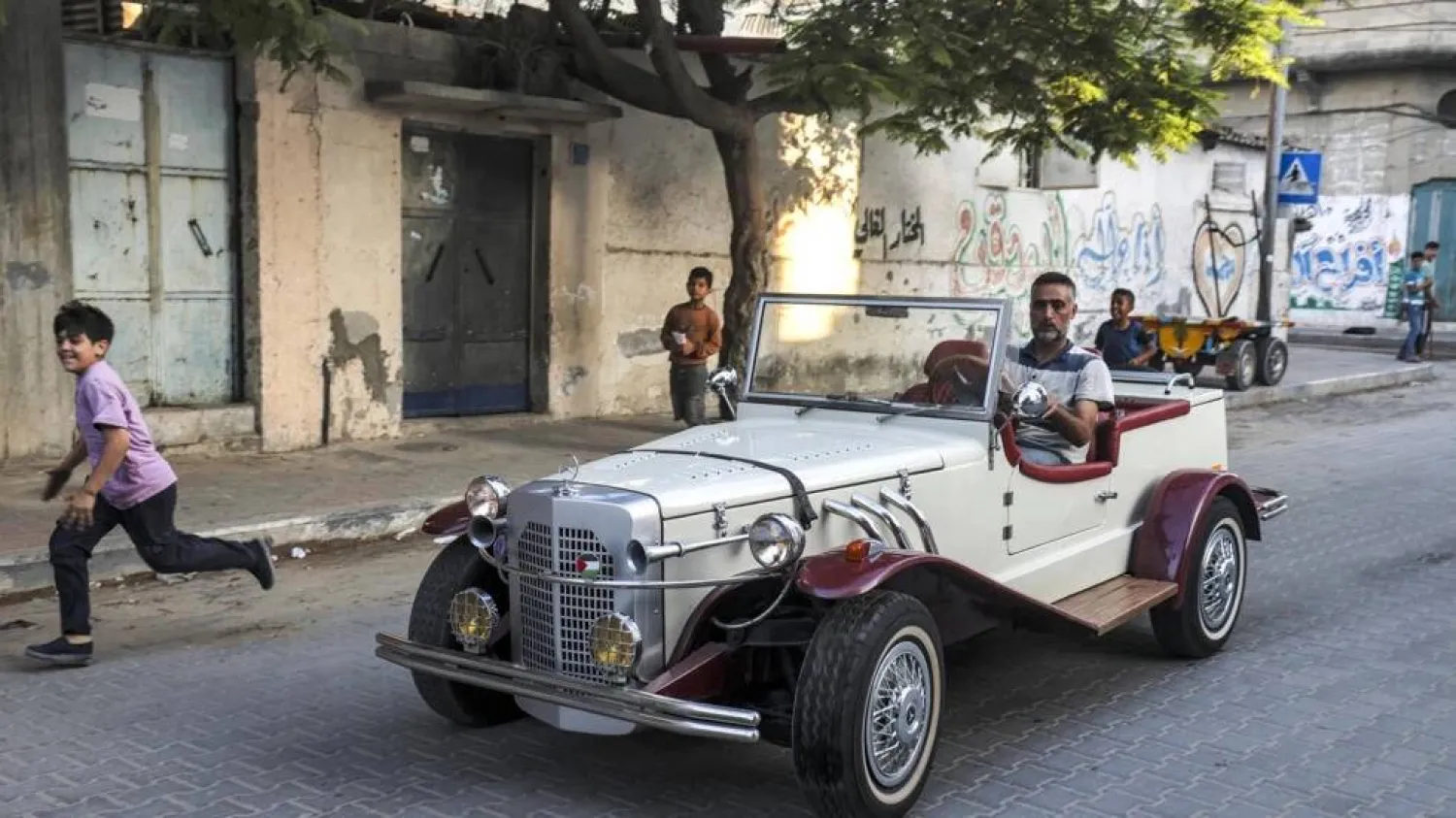
Munir al-Shandi drives his Gazelle down a Gaza street.  MOHAMMED ABED / AFP
Munir al-Shandi drives his Gazelle down a Gaza street. MOHAMMED ABED / AFP
TT

Classic Cars Back on the Road - in Gaza City

Munir al-Shandi drives his Gazelle down a Gaza street.  MOHAMMED ABED / AFP
Munir al-Shandi drives his Gazelle down a Gaza street. MOHAMMED ABED / AFP

The vintage beige Mercedes would be eye-catching anywhere in the world, but it is especially so on the streets of impoverished Gaza City.

Munir al-Shandi, 42, is among a handful of vintage car enthusiasts in the Gaza Strip, defying a punishing Israeli siege imposed on the Palestinian coastal enclave to pursue a passionate hobby.

As he drives a 1929 Mercedes-Benz Gazelle, which he restored, through Gaza's cratered roads, young children run after him in excitement, reaching out to touch the car's pristine bodywork.

"Everyone in the street is amazed and asks to take pictures," Shandi, a mechanic, told AFP as he showcased the replica of the vintage car he had assembled in his workshop.

"The restoration would have been faster and the quality and shape better if the materials had been available."

Around 2.3 million Palestinians live in the territory, which has been under a crippling Israeli blockade since the group Hamas seized power there in 2007.

There is a ban on importing a range of goods, including car parts, as Israel claims these may be used in producing explosives to be used against it.

Israel says that its land, air, and sea blockade of Gaza is necessary to protect it from rocket and other attacks from Hamas.

Sourcing spares
But such obstacles have not stopped Shandi, and the Gazelle is not the only vintage vehicle he has rebuilt.

He is also the proud owner of a 1946 Armstrong Siddeley Hurricane, which he has restored.

Shandi began work on the Gazelle in 2015 at his workshop in eastern Gaza City.

He used locally available items as much as possible, although he also had to rely on friends outside Gaza to procure some spare parts.

His friends brought the parts in through the Rafah crossing on Gaza's border with Egypt, he said.

"I brought in through friends of mine in the UAE some spare parts for the car, and they in turn imported them from America, but they took eight months to arrive," he said.

The restoration took a whole year.

Shandi said his passion developed as a child, and at 15 he began working in a garage.

He left Gaza in 2003 for the United Arab Emirates, where he worked with a company specializing in old and vintage cars that gave him a wealth of experience.

In 2009, he returned to the Gaza Strip, where he opened his workshop and poured any profits into his hobby -- restoring vintage cars.

'Not for sale'
With its red leather and wooden interior, Shandi's Mercedes has only fuelled his passion for classic cars of the past.

Two years ago, he found his next project -- the wreck of a British Armstrong Siddeley Hurricane, a luxury vehicle that was produced between 1946 and 1953.

"The car has its original engine. I tried to match it with its original shape by using certain parts from other cars or close to them, and I modified them," Shandi said.

In his workshop hang the frames of a 1960 German Audi and a 1951 American Ford, as well as a 1975 Swedish Saab.

He is determined to restore all three vehicles.

Shandi said a number of people have contacted him to offer vast sums for the restored cars, but he turned them down.

"This is a hobby," he said. "The cars are not for sale, although many people abroad have contacted me and asked to buy them."

Even if he did want to sell, "getting them out of the Strip would be impossible because of the blockade".

Several years ago, Shandi applied for a permit to work in Israel, but was denied. The increased income would have allowed him to restore more vehicles, he added.

His dream is to take part in an "international exhibition" for vintage cars, but that may have to wait.



Saudi Arabia Advances Global Environmental Leadership with IUCN Green List Milestone

Several of the Kingdom's reserves have earned certification on the International Union for Conservation of Nature (IUCN) Green list - SPA
TT

Saudi Arabia Advances Global Environmental Leadership with IUCN Green List Milestone

Several of the Kingdom's reserves have earned certification on the International Union for Conservation of Nature (IUCN) Green list - SPA

Saudi Arabia Advances Global Environmental Leadership with IUCN Green List MilestoneThe Kingdom of Saudi Arabia continues to strengthen its international standing in environmental protection and sustainability, underpinned by the wise leadership’s prioritization of environmental affairs within national development priorities, in line with Saudi Vision 2030, SPA reported.

These efforts are reinforced by the Saudi Green Initiative, which targets the protection of 30% of the Kingdom's terrestrial and marine areas by 2030.

In a milestone reflecting effective natural resource management, several of the Kingdom's reserves have earned certification on the International Union for Conservation of Nature (IUCN) Green List following a rigorous evaluation process, demonstrating the Kingdom's sound governance, effective management, and measurable conservation outcomes.

Saudi Arabia's environmental achievements represent a comprehensive institutional framework that has transformed natural reserves from restricted geographical zones into an integrated national system balancing environmental stewardship with development imperatives, serving as a model for future generations.


KFSH Performs World First Single-Port Robotic Living Donor Liver Resection

‏The achievement further reinforces KFSH’s position as a global leader in robotic surgery - SPA
TT

KFSH Performs World First Single-Port Robotic Living Donor Liver Resection

‏The achievement further reinforces KFSH’s position as a global leader in robotic surgery - SPA

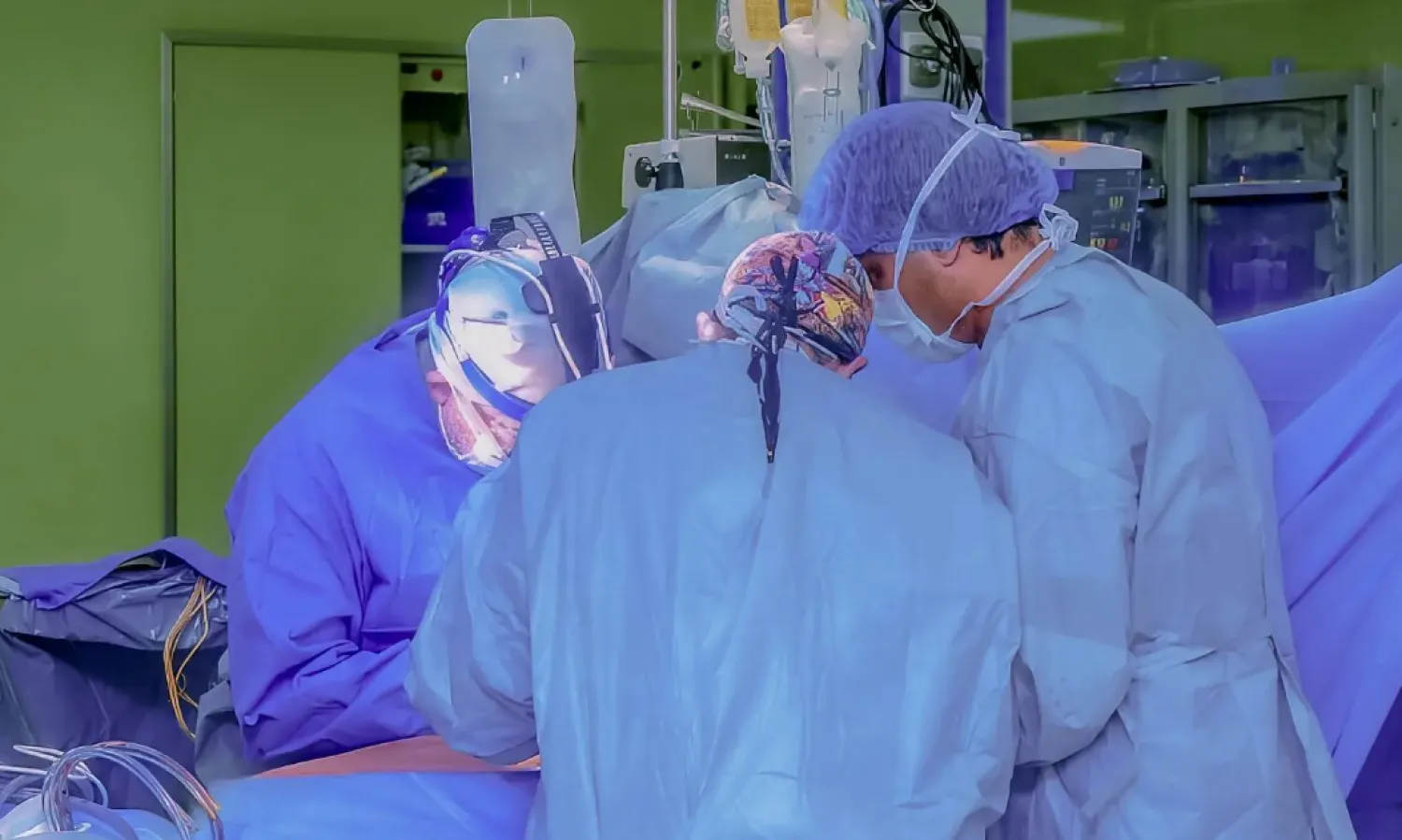
King Faisal Specialist Hospital and Research Center (KFSH) has performed the world’s first series of single-port robotic liver resections from living donors, marking a major advancement in organ transplantation.

The procedures were conducted through a single incision not exceeding 3.5 cm, replacing the multiple incisions required in conventional robotic surgery, reducing surgical pain and accelerating recovery while maintaining high safety standards, SPA reported.

‏The milestone, said a KFSH press release issued today, is particularly significant for donor safety, as living donors are healthy individuals undergoing surgery for the benefit of others. Procedures performed on six donors resulted in minimal blood loss without complications, with low pain levels and discharge within two to three days.

‏The approach also makes liver donation safer for pediatric recipients, as it typically involves the left lateral segment, which represents around 20% of total liver volume, making it well suited for single-port access while minimizing surgical burden on the donor.

Executive Director of the Organ Transplant Center of Excellence ‏Prof. Dieter Broering said the development reflects a structured expansion of robotic liver surgery built on extensive experience.


He noted that KFSH has performed more than 1,600 robotic living donor liver resections, the highest volume globally, supported by a progressive model integrating training, simulation, and phased clinical implementation.

‏The achievement, added the release, further reinforces KFSH’s position as a global leader in robotic surgery and organ transplantation, advancing care models that balance innovation with patient and donor safety, in line with the Health Sector Transformation Program and the hospital’s vision to deliver world-class specialized care.

‏King Faisal Specialist Hospital and Research Center ranks first in the Middle East and North Africa and 12th globally among the world’s top 250 Academic Medical Centers in 2026, and is the most valuable healthcare brand in Saudi Arabia and the Middle East according to Brand Finance 2025.


It is also listed by Newsweek among the World’s Best Hospitals 2026, World’s Best Smart Hospitals 2026, and World’s Best Specialized Hospitals 2026.


Saudi Arabia Launches ‘Shams,’ 1st Arab Satellite to Monitor Space Weather from Distant Orbit

The satellite represents a milestone in Saudi innovation (Saudi Space Agency)
TT

Saudi Arabia Launches ‘Shams,’ 1st Arab Satellite to Monitor Space Weather from Distant Orbit

The satellite represents a milestone in Saudi innovation (Saudi Space Agency)

The Saudi Space Agency announced the successful launch of its new satellite, Shams, and established contact with it as part of the Artemis II mission, marking the Kingdom’s emergence as both the leading Arab partner in the program and the first to deploy a dedicated national mission to study space weather.

The satellite represents a milestone in Saudi innovation. Developed domestically by Saudi engineers, Shams has evolved from a national ambition into a scientific platform designed to monitor solar activity and radiation and their effects on Earth, with implications for safeguarding global communications and navigation systems.

The Artemis program, led by NASA in partnership with dozens of countries, aims to return humans to lunar orbit for the first time in more than 50 years, paving the way for future missions to Mars. Saudi Arabia joined the Artemis Accords in 2022 alongside more than 60 nations to help establish a framework for space exploration and strengthen its role in the sector.

The Artemis II mission will carry four astronauts on the first crewed flight to orbit the Moon aboard the Orion spacecraft, launched by the Space Launch System (SLS), the most powerful rocket ever operated. Shams is included as one of the mission’s scientific payloads.

The satellite will operate in a highly elliptical orbit (HEO), ranging from approximately 500 km to 70,000 km above Earth. This trajectory enables broad monitoring of solar and radiation activity, advancing space weather research and supporting critical applications.

Space laboratory to tackle radiation and solar activity challenges

Shams is designed to study space weather through four scientific areas: space radiation, solar X-rays, Earth’s magnetic field and high-energy solar particles. It will also collect data to support the development of protection technologies for future human spaceflight and improve understanding of solar particle behavior and magnetic fields.

The mission is expected to enhance the reliability and sustainability of key sectors such as communications, aviation and navigation by providing data that improves operational readiness and strengthens the security of critical infrastructure.

The Saudi Space Agency said the project aims to boost scientific research, develop future solutions and support a knowledge-based economy through the localization of advanced technologies, in line with Saudi Vision 2030. It also seeks to reinforce Saudi Arabia’s global standing in the space sector and empower national talent in space science and technology.

Data from Shams is expected to improve early warning systems for solar storms that can disrupt internet services, telecommunications and navigation signals. The findings could also help protect power grids and energy infrastructure from severe solar activity that can cause outages or damage.

By improving monitoring of radiation and solar winds, the mission may contribute to safer air travel and future crewed missions to the Moon and Mars, while opening new avenues in medicine, energy and science.