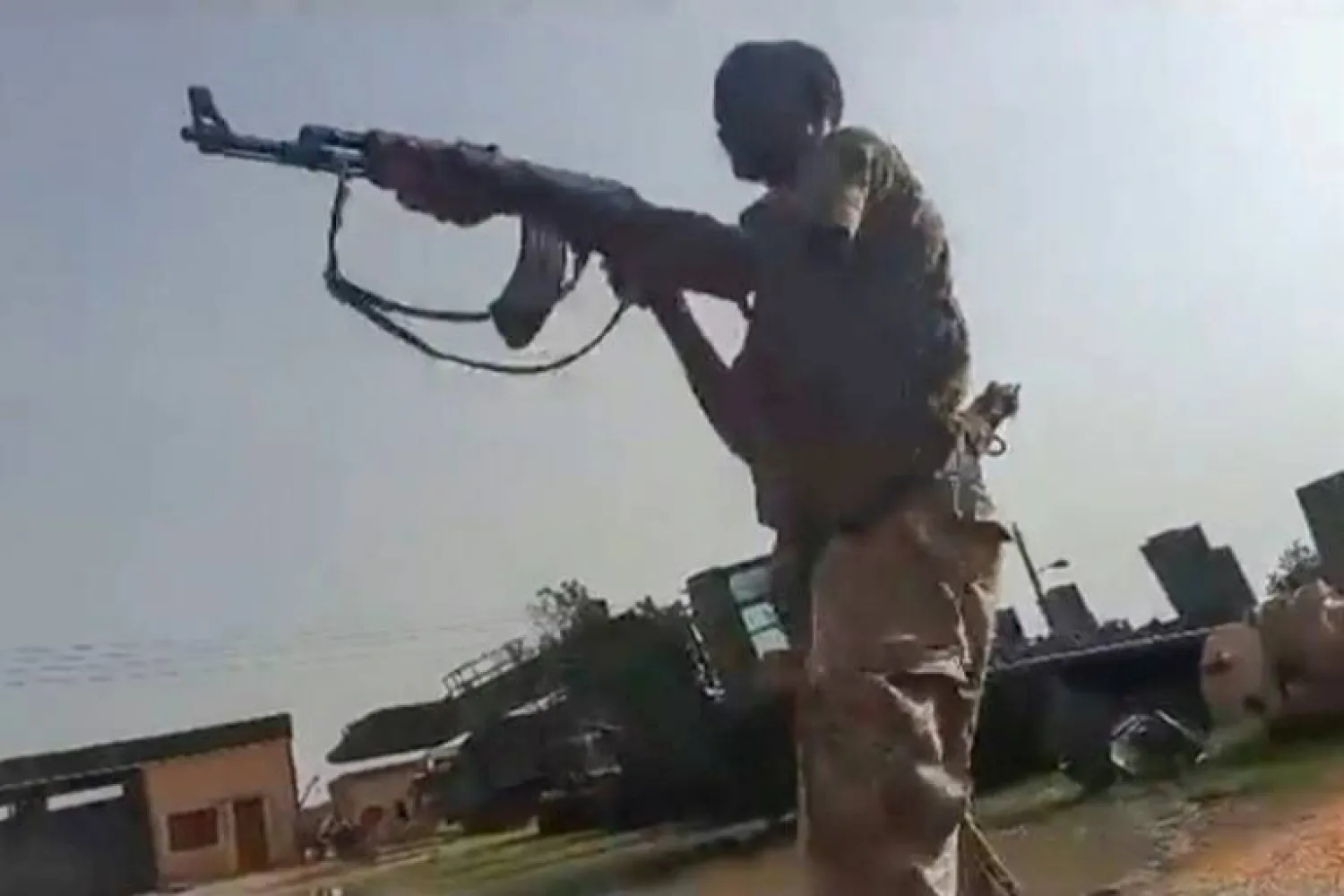
The Iran-aligned Houthi group has deployed its full weight in the southwestern countryside of Taiz to seize the main roads linking the city with its southern rural areas and cut lines of communication toward Lahj province and the city of Aden. Government forces, backed by popular resistance, are meanwhile engaged in fierce fighting to halt the advance, alongside airstrikes targeting the group's reinforcements and military capabilities.
The front has gained particular importance as the Houthis continue to push forces into new areas in southern Taiz. Reports said the group took control on Sunday of the areas of Al-Safiya and Al-Barkani and cut the road linking Al-Turbah, the administrative center of Al-Shamayatayn district in the south, with Taiz city to the north. This would isolate the latter from the liberated areas of Lahj and Aden.
The front nevertheless remains open to intense fighting, amid indications that the Houthis are determined to maintain pressure along this axis. Field sources warned of the risks posed by continued attacks and the need for immediate reinforcements for government forces in the area.
Alongside the fighting in the southwestern countryside, government forces and popular resistance had made gains on several Taiz fronts, regaining control of the areas of Al-Maqarm and Al-Zakira in Al-Shamayatayn district, south of the province, following fierce clashes with the Houthis. The Houthis subsequently regained control of the areas.
Government forces on the southeastern front, with support from fighters from Sama district, also took control of Sama Fort before advancing toward the strategic Jabal Al-Jaasha after securing Jabal Sama Fort.
Sources said the operations resulted in significant human and material losses among the Houthis, including dozens killed or wounded, while a number of the group's militants fled the areas of confrontation. Fighting also continued, according to the same sources, on the Jabal Habashi and Al-Kadaha fronts.
On the Jabal Han and Hadhran front, west of Taiz city, fierce clashes broke out and ended, according to the Taiz Military Axis, with the defeat of the attacking forces and the killing of the Houthi commander who led the attack on government positions at Jabal Han.
257 Operations in One Day
At the same time as the ground fighting, government forces intensified operations against Houthi positions and movements across several fronts.
Yemeni Armed Forces spokesman Colonel Majid Al-Nazili said the forces carried out 257 precision strikes against Houthi positions, movements, and military capabilities using fighter aircraft, drones, artillery, missiles, and rocket launchers.
He said the operations covered Sanaa, Midi in Hajjah, Baqim in Saada, and fronts in Al-Jawf, Marib, Al-Bayda, and Lahj, with the operational focus on the Taiz fronts. He said the targets included command and control centers, gatherings, mobilization sites, combat reserves, as well as weapons and ammunition depots and military supply lines and means of transport.
According to Al-Nazili, the operations resulted, based on preliminary field estimates, in at least 700 Houthi militants being put out of action and the destruction of 170 combat vehicles and military assets. He said this had a direct impact on the group's combat capabilities and limited its ability to continue attacks against civilians in their homes and villages.
The Yemeni Armed Forces had also announced, in a separate development, that they had carried out 97 precision strikes against Houthi military reinforcements on the Tor Al-Baha front and the Taiz axis.
Al-Nazili said the operations involved fighter aircraft, drones, artillery, missiles, and snipers, resulting in 260 group members being put out of action and 44 military vehicles and means of transport and supply being destroyed or disabled.
The air force also announced strikes against Houthi targets in Sanaa and Saada, while the armed forces had earlier announced an attack against Houthi military targets in the capital, Sanaa.
These figures bring Houthi losses to nearly 6,000 killed or wounded over the course of a week, according to successive statements by the Yemeni Armed Forces.
Mobilization and State of Alert
The developments on the ground in Taiz coincided with the government and armed forces moving to a higher level of military mobilization and preparedness.
The Ministry of Defense and the General Staff launched a general mobilization and public call to arms, in implementation of directives from Presidential Leadership Council Chairman Rashad Al-Alimi.
The announcement came during an expanded meeting chaired by Defense Minister Lieutenant General Taher Al-Aqili in Aden. General Staff Chief and Joint Operations Commander Lieutenant General Sagheer bin Aziz participated by video link from Marib, alongside the deputy defense minister, the deputy chief of staff, and heads of military departments and directorates.
Al-Aqili said the ministry had taken practical measures to implement the general mobilization and public call to arms, activate human resources and reserve mobilization channels, organize reception centers, and task the relevant authorities with beginning their assigned duties.
The Yemeni defense minister affirmed that the armed forces were carrying out their duty to defend the country and its sovereignty, defeat the Houthis, and restore state institutions, stressing military discipline and command, the mobilization of resources, and the integration of efforts.
For his part, bin Aziz said the declaration of general mobilization represented a national decision requiring an organized transition to the highest levels of preparedness, the unification of efforts and capabilities, improving the efficiency of the armed forces, and strengthening their ability to carry out their duties.
He stressed the need to complete the inventory of personnel, equipment, and requirements, organize call-up and reinforcement operations, raise levels of discipline and readiness, strengthen training and qualification, and work to build an integrated military and community effort.
Amid the intensifying fighting, the chief of staff held calls with military and field commanders in Taiz, including Major General Yousef Al-Sharaji, a member of the Supreme Military Committee and commander of the Taiz front; Major General Khaled Fadel, commander of the Taiz Military Axis; Major General Abdulaziz Al-Majidi, chief of staff of the axis; and Taiz Resistance Commander Rashid Shamsan.
Bin Aziz received briefings on the course of operations and the field situation across the province's various fronts. He praised the people of Taiz for their support for the armed forces and their initiative to participate in the fighting.
He affirmed that the armed forces across the various fronts and sectors stood alongside the forces fighting in Taiz, praising what he described as the fighters' efficiency and combat capabilities, as well as the performance of the fighter aircraft and drones.