


Palestinian-Americans Accuse Israel of Bias At Borders

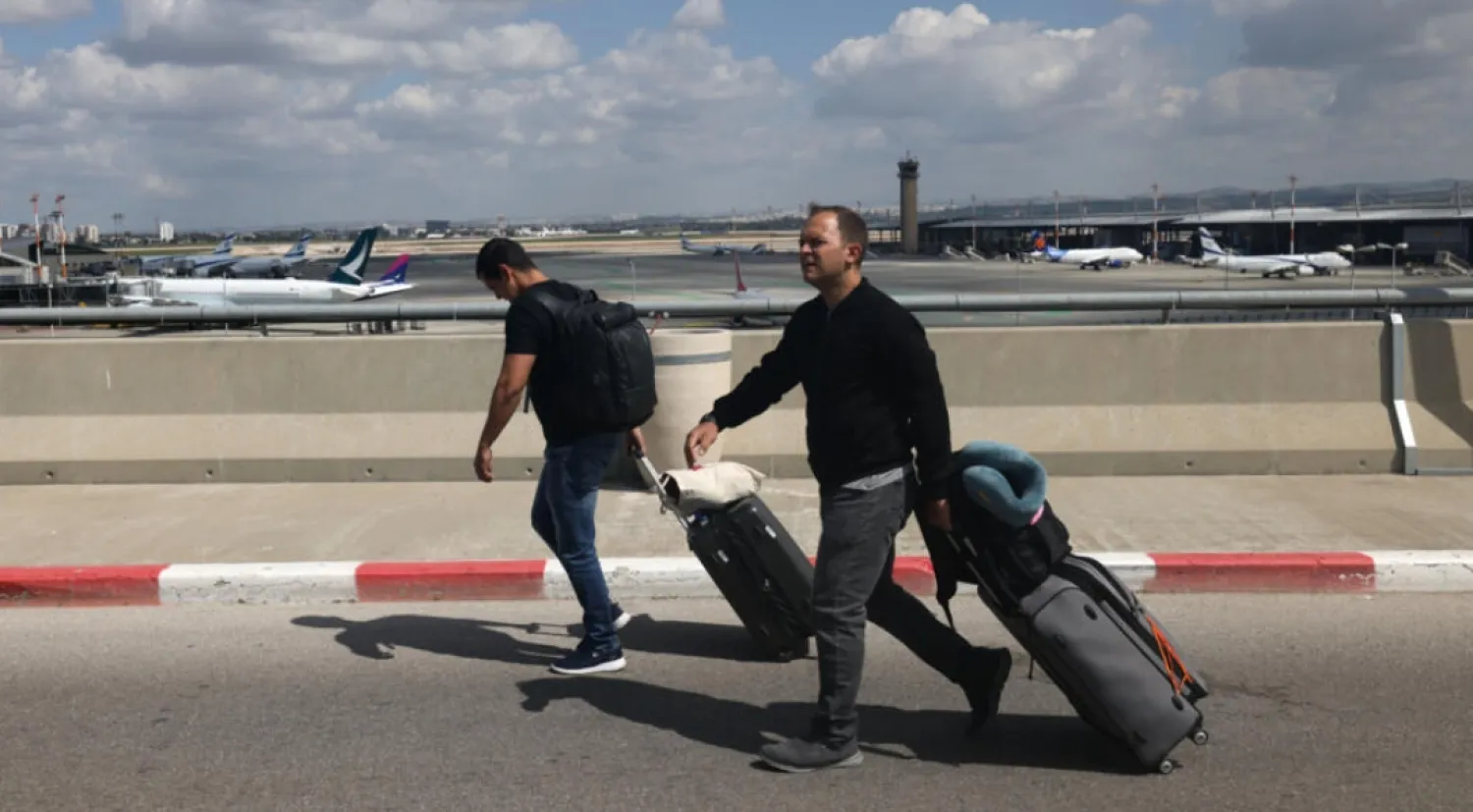
A visa-free travel agreement paved the way for some Palestinian-Americans to land at Israel's Ben Gurion international airport © AHMAD GHARABLI / AFP/File
TT

Palestinian-Americans Accuse Israel of Bias At Borders

A visa-free travel agreement paved the way for some Palestinian-Americans to land at Israel's Ben Gurion international airport © AHMAD GHARABLI / AFP/File

A visa-free travel deal between Israel and the United States has raised hopes of easier journeys for Palestinian-Americans, but many still complain of discrimination by Israeli authorities.

The aim of the reciprocal agreement reached in July was for all Americans "to be recognized by Israel as US citizens and receive equal treatment" regardless of their origins, the US State Department said.

It paved the way for some Palestinian-Americans to finally land at Israel's Ben Gurion international airport -- which has been off limits to most of them for years -- rather than travel overland from Jordan.

However, despite progress on paper, Palestinian-Americans have complained of unequal treatment in a series of interviews AFP conducted in the United States and the Palestinian territories.

Hanna Hanania, a board member of the US Palestinian Council advocacy group, described the change at arrivals in Ben Gurion airport as an "improvement for everybody".

But, as he headed back to the US state of Virginia, he said he faced "total profiling" by Israeli officials who searched his car and insisted on seeing his Palestinian passport.

Jerusalem-born Hanania said he was also directed to a queue for additional security checks where he charged that "discrimination (was) very clear".

"Almost everybody in line one was speaking Arabic," he told AFP. "You can very clearly tell that it's mainly Palestinians or Arabs."

Israel's immigration authority did not immediately respond to a request to comment on the complaints.

More than 5,400 Palestinian-Americans have arrived in Israel since July 20, according to the Population and Immigration Authority.

Washington is now contemplating whether to admit Israel into its coveted visa waiver programme, with a decision due by September 30.

New York police officer Haidar Darwish, 38, landed in mid-August and said he was denied a three-month visa without a reason, instead being granted a month-long stay.

"This is not fair," Darwish said from the West Bank city of Ramallah.

"If they want to proceed with this visa (waiver programme), they need to treat us exactly the way they get treated when they get to the US."

Several Palestinian-Americans said they had complained about mistreatment to the US embassy in Jerusalem, which declined an AFP interview request.

In the West Bank village of Turmus Ayya, known for its sizeable American population, Abed Ijbar has sought advice from his neighbours before he returns to Tennessee later this month.

"(It's) the checkpoints from the West Bank to the airport that are driving them crazy," the 50-year-old said.

Neighbours warned Ijbar to leave hours early, recounting that they had been directed through multiple checkpoints before being searched and finally allowed to cross.

COGAT, the Israeli defense ministry body responsible for civil affairs in the occupied West Bank, said security checks are conducted at crossings and anyone with a tourist visa can pass.

The visa waiver program has so far focused on those with ties to the West Bank but was on Monday extended to the Israeli-blockaded Gaza Strip.

Palestinian-Americans travelling to Gaza face more restrictions than those in the West Bank, under the rules announced by the US embassy.

There has been disappointment among Gazans living in the United States, who from Monday can fly to Tel Aviv but not travel onwards to the coastal territory.

Lara Abu Hamda, 18, tried unsuccessfully in July to cross from Jordan to Israel for the onward land journey to Gaza.

"I don't get it," she said. "I am American. Even though I was born in Gaza and I have a Gaza ID, why would it matter?"

Israel's immigration authority said entry has been denied to 10 Gazan-Americans, who were not yet included in the scheme, as well as three US citizens from the West Bank.

A Gazan artist living in Chicago, who requested anonymity due to security concerns, said he was held at a detention facility outside Tel Aviv airport.

He ultimately underwent thorough security checks, before being escorted to a flight without any belongings except his credit cards.

In his 30s, the artist said he was still trying to "detox from all the stress and anxiety that I've gathered in those 48 hours, being treated like a suspect".

For those living in Gaza, obtaining permission to leave through Israel is incredibly difficult.

As a result, most make the arduous and costly journey across Egypt's Sinai Peninsula.

Now, another way has potentially opened for those with US citizenship.

In Gaza City, Saeed Araf Shaath said his family is "very, very excited" at the prospect of finally being able to enter Israel through the Erez crossing as Palestinian-Americans, and fly out from Ben Gurion airport.

Americans living in Gaza must still apply for a travel permit, which COGAT said allows them to travel onwards through "any international border crossing".

Shaath's 23-year-old daughter Zainah described why she wants to be able to cross through Erez and board a plane in Ben Gurion: "We need our own freedom, and to have a normal life."



Hamas Members Struggle to Spend Cash Salaries

A Palestinian gives a child a sip of water from a bag bought for one shekel amid extreme heat in Gaza City in August 2025 (AP) 
TT

Hamas Members Struggle to Spend Cash Salaries

A Palestinian gives a child a sip of water from a bag bought for one shekel amid extreme heat in Gaza City in August 2025 (AP) 

Until three weeks ago, merchants in the Gaza Strip were still accepting cash from residents, even though much of it consisted of worn-out banknotes. But they began gradually refusing cash more than 10 days ago, hardening their stance over the past four days and turning instead to banking apps and electronic wallets.

The shift has coincided with intensified Israeli targeting and killing of Hamas financial officials in recent weeks, including some involved in delivering salaries to the group’s members.

Hamas employees told Asharq Al-Awsat that most government workers and members of its military wing, the Al-Qassam Brigades, receive their salaries in cash.

Several Hamas sources said government employees receive part of their salaries roughly every 100 days, amounting to only about 1,000 shekels ($328), often in worn banknotes. Al-Qassam members, meanwhile, are paid every 40 to 50 days, receiving up to around 60 percent of their salaries and no less than approximately 1,200 shekels, generally in banknotes in good condition.

People dealing with Gaza’s markets told Asharq Al-Awsat that some merchants had recently begun accepting cash from individuals and transferring the equivalent electronically through apps and e-wallets in exchange for commissions of up to 10 percent.

The crisis marks a reversal from the peak years of the war that began in October 2023, when Gazans struggled to convert money held in electronic wallets into cash. Commissions started at 10 percent and at times reached 60 percent before electronic transactions became more widespread.

In August, an Israeli military spokeswoman warned Palestinians in Gaza against using a category of old shekel banknotes marked with the letter “B,” in a move aimed at economically squeezing Hamas.

What Do We Do With Worn Banknotes?

Ahmed al-Najjar, 39, an employee of the Hamas-run government in Gaza, angrily questioned what employees were supposed to do with the worn banknotes they received.

“How long will things remain this way?” he told Asharq Al-Awsat. “We are the ones paying the price with our lives, and we find no one standing with us — neither officials nor merchants — while others fight us in different ways to make huge profits and gains.”

Israel has barred cash from entering Gaza since Oct. 7, 2023, while banks suffered major thefts during the war. Israeli security authorities also sought to impose conditions on Gaza merchants after periodically allowing goods into the enclave, requiring payments through electronic applications in a move aimed at restricting Hamas.

Under the new circumstances, Hamas appears to be facing a serious cash shortage affecting its members and employees, coinciding with repeated Israeli killings of funding sources, money changers and prominent figures in its financial apparatus.

Hamas Warns Merchants

The Hamas-run police in Gaza issued a general directive warning shopkeepers and others against refusing cash. It stressed that they must accept different types of banknotes, old and new, provided they are not damaged, and threatened violators with strict legal measures.

A Hamas police official told Asharq Al-Awsat that the issue did not affect only government employees or Hamas members, but also families of orphans, war victims, wounded Palestinians and prisoners who receive financial assistance from various relief organizations but cannot find merchants willing to accept their cash.

Hamas-affiliated media in Gaza have also launched a campaign against banks operating under the Palestinian Monetary Authority in Ramallah, accusing them of encouraging merchants to switch exclusively to electronic payments and of closing hundreds of residents’ bank accounts. Some banks have repeatedly denied the allegations, reiterating days ago that no decisions had been made to close accounts.

The dispute has fueled an unprecedented social media campaign warning people against giving up cash in favor of banking apps and other electronic wallets. The campaign has included warnings that a new war between Iran and the United States could soon engulf the entire region again, potentially causing people to lose money held electronically.

An official banking source rejected those claims, telling Asharq Al-Awsat that funds held in banks would remain secure and that a shift toward electronic transactions was underway.

The source said banks were routinely updating customer information and identifying account holders’ activities amid concerns that some funds could be linked to money laundering. Banks, the source added, had instructions to facilitate Palestinians’ access to accounts as part of financial inclusion efforts taking place in both Gaza and the West Bank.

Israel recently killed Jabr Moqbel, the owner of a currency-exchange shop and a prominent Al-Qassam Brigades member in Gaza City, in a strike on a vehicle in Deir al-Balah. Mohammed Abu Alwan, a Hamas financial official, was killed in a strike in Khan Younis. A Palestinian Islamic Jihad financial official was seriously wounded Sunday in an attempted assassination west of Gaza City.

The Israeli military said in a recent statement that throughout the war it had killed 16 prominent financial operatives involved in transferring funds and financing Hamas’ military activities. It said the operatives had managed transfers worth more than $1 billion through a network of dozens of money changers in Türkiye and Gaza.

The military said it and the Shin Bet were focusing their efforts on damaging Hamas’ financing capabilities and preventing the rebuilding of its infrastructure and military capabilities.


Yemen: Taiz Fronts Drain Houthis, Target Reinforcements

The Houthis suffer heavy losses during attacks on Yemeni government forces (AFP)
TT

Yemen: Taiz Fronts Drain Houthis, Target Reinforcements

The Houthis suffer heavy losses during attacks on Yemeni government forces (AFP)

Yemeni government forces have intensified air and artillery strikes against the Houthis in Taiz governorate as fighting continues along the province’s western, southern and eastern fronts, with no major change in territorial control reported in recent hours, according to military sources and government media.

Government warplanes on Sunday targeted Houthi positions, gatherings and reinforcements across Taiz. Forces involved in the fighting said they had thwarted Houthi infiltration attempts on several fronts, while strikes extended to other positions in Lahj near Bab al-Mandab.

Military and local sources reported that airstrikes hit Houthi positions and gatherings east of Taiz city after the group brought in personnel and military reinforcements. The raids also targeted a Houthi camp and vehicles at Mawiyah Junction, positions on the Al-Akboush front to the southeast, and a reinforcement convoy on 60th Street north of Taiz.

Government forces had earlier announced strikes on a supply convoy on 60th Street, reinforcements in the Hanna area of Al-Wazi’iyah district west of the governorate, and positions and weapons, ammunition and missile depots at the Mawiyah and Al-Dhikra junctions to the east. A Houthi gathering in Al-Suwayda in Hayfan district to the south was also targeted.

Military sources said the raids destroyed vehicles and killed and wounded Houthi fighters, including field commanders, but provided no independently verifiable figures for the losses.

Government forces also used drones to target Houthi positions, vehicles and gatherings on several fronts, indicating an intensified use of airstrikes to counter the group’s military movements and reinforcements.

Infiltration Attempts

On the ground, the Taiz Military Axis command reported that government forces thwarted a Houthi infiltration attempt on the Al-Ahtoub front in Jabal Habashi district west of Taiz and targeted Houthi fighters as they tried to approach government positions in the Hazran area.

Government forces also struck a Houthi vehicle with a mortar round on the Al-Kaddahah front and targeted gatherings on the Al-Aqroudh front southeast of the city.

The developments came as the Taiz, Lahj and Bab al-Mandab fronts remained on high alert, with attacks and counterattacks continuing around high ground and forward positions, particularly along the Jabal Numan, Kahbub, Al-Alaqma and Rasin axes.

Available battlefield information showed no signs of a new Houthi advance. Fighting remained concentrated in forward areas and on the high ground surrounding Jabal Numan, while the Houthis continued attempts to retake parts of positions they had lost along that axis.

At Kahbub, on the road leading to Bab al-Mandab, the Southern Giants Brigades said they targeted Houthi gatherings and vehicles and destroyed an armored vehicle, killing those aboard. Fighting continued on the Al-Wazi’iyah and Al-Mudaraba fronts.

Fighting Expands

The pattern of strikes over the past two days shows the fighting extending from front lines to supply positions, gathering points, camps and weapons depots as Yemeni government forces seek to limit the Houthis’ ability to send fresh reinforcements to the Taiz and Lahj fronts.

Targets have included Mawiyah and Al-Dhikra junctions east of Taiz, Al-Hawban, 60th Street north of the city, Hayfan to the south and Al-Wazi’iyah to the west, as well as positions in neighboring Ibb governorate.

The fighting is therefore no longer confined to direct clashes over high ground, with Houthi supply lines and military movements repeatedly targeted by airstrikes.

The Houthis, meanwhile, continued attempts to pressure several fronts, particularly the western axes, which are important because of their proximity to the road leading to coastal areas and Bab al-Mandab, where they are seeking to secure their gains.

The intensified military operations come amid indications of rising Houthi casualties. The group acknowledged the death of Majd al-Din Hamid al-Hamzi, whom military sources said was head of operations for the Third Missile Brigade, along with several of his escorts following fighting on the western coast fronts.

Yemeni monitoring data indicated that Houthi media outlets and affiliated platforms announced funerals for 422 members of the group in September, including officers and military commanders.

Sources that compiled the figures said the number did not represent the Houthis’ total losses because the group does not regularly announce all its dead. Some funerals are delayed, while others are buried without media coverage, and bodies remaining in hospitals or combat zones are not included in the tally.

The sources reported that 60 Houthi fighters were buried last Friday alone after being killed on various fronts. Losses were particularly concentrated on the Taiz and Lahj fronts, according to local reports.

The fighting was also accompanied by reports of fighters’ bodies remaining in some combat areas, prompting local appeals for the Red Cross and Red Crescent to retrieve them amid fears of humanitarian and environmental consequences.


Dutch FM Regrets Israel's Decision to Revoke Diplomats' Accreditation

Dutch Minister of Foreign Affairs Tom Berendsen arrives for a Council of Ministers meeting at the Ministry of General Affairs in The Hague, the Netherlands, 18 September 2026.  EPA/KOEN VAN WEEL
Dutch Minister of Foreign Affairs Tom Berendsen arrives for a Council of Ministers meeting at the Ministry of General Affairs in The Hague, the Netherlands, 18 September 2026. EPA/KOEN VAN WEEL
TT

Dutch FM Regrets Israel's Decision to Revoke Diplomats' Accreditation

Dutch Minister of Foreign Affairs Tom Berendsen arrives for a Council of Ministers meeting at the Ministry of General Affairs in The Hague, the Netherlands, 18 September 2026.  EPA/KOEN VAN WEEL
Dutch Minister of Foreign Affairs Tom Berendsen arrives for a Council of Ministers meeting at the Ministry of General Affairs in The Hague, the Netherlands, 18 September 2026. EPA/KOEN VAN WEEL

The Netherlands said Monday it regretted Israel's decision to revoke the diplomatic accreditation of Dutch officials based in the West Bank over the country's sanctions on goods from Israeli settlements.

"I deeply regret this unnecessary decision," Foreign Minister Tom Berendsen said, adding that the decision by The Hague to suspend imports from the occupied territories in the West Bank was "not directed against Israel.”

Israel earlier this month ordered the closure of the British Consulate in East Jerusalem, which is Britain's representative with the Palestinian Authority, after London announced similar sanctions banning the import of goods from settlements.

Israeli Foreign Minister Gideon Saar said on X that Dutch diplomats operating in Ramallah ⁠must return their ⁠Israeli-issued diplomatic documentation within seven days, when their diplomatic privileges and immunities are due to expire.

"Any country that acts in a hostile and unilateral manner against Israel will lose influence and relevance in the region," Saar said.