


Fragile Truce in Gaza Is Back on Track after Hourslong Delay in 2nd Hostage-for-Prisoner Swap

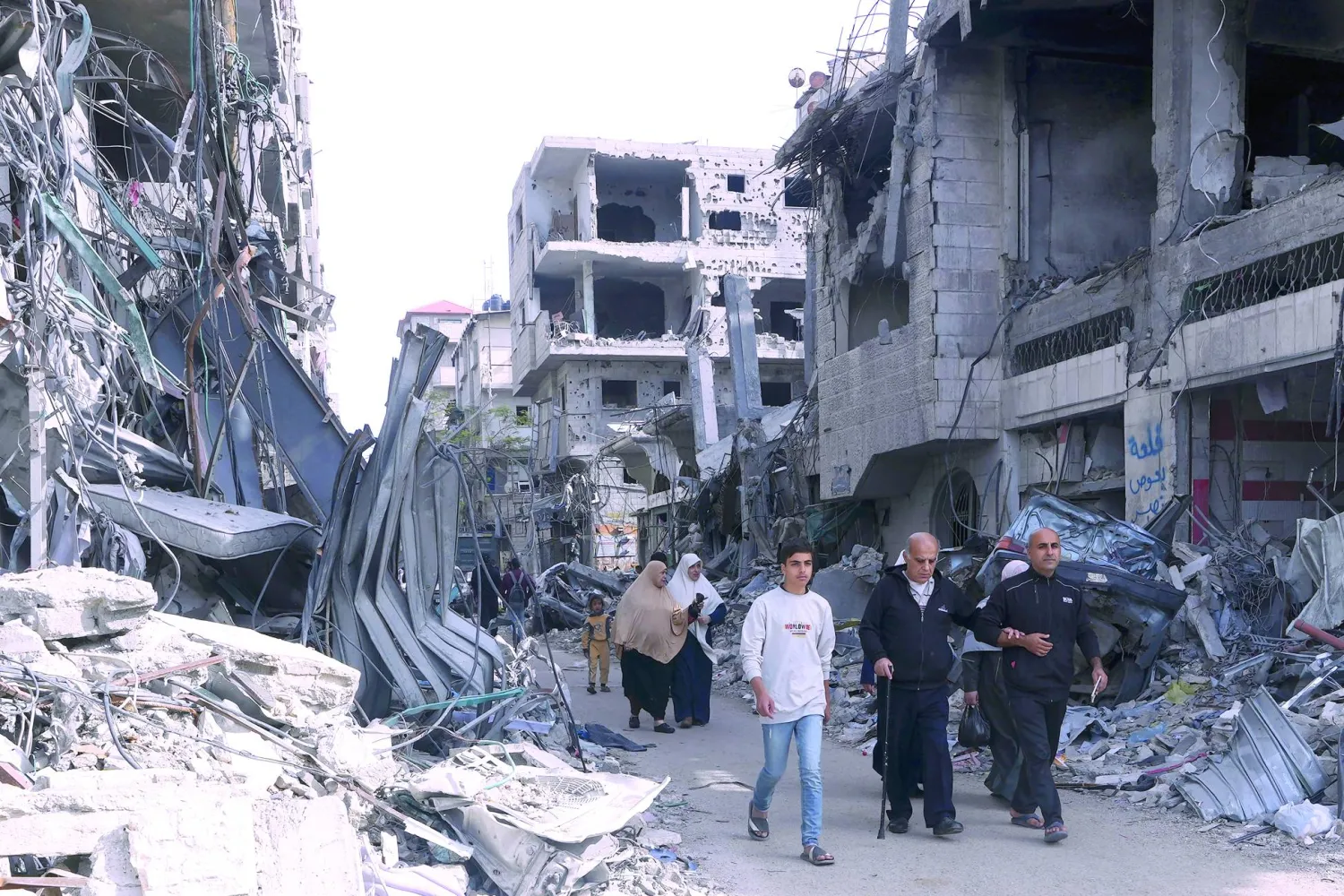
Palestinians walk by buildings destroyed in the Israeli bombardment of the Gaza Strip in Nusseirat refugee camp, central Gaza Strip, Saturday, Nov. 25, 2023. (AP Photo/Adel Hana)
TT

Fragile Truce in Gaza Is Back on Track after Hourslong Delay in 2nd Hostage-for-Prisoner Swap

Palestinians walk by buildings destroyed in the Israeli bombardment of the Gaza Strip in Nusseirat refugee camp, central Gaza Strip, Saturday, Nov. 25, 2023. (AP Photo/Adel Hana)

The tense ceasefire between Israel and Hamas appeared to be back on track early Sunday after the release of a second group of militant-held hostages and Palestinians from Israeli prisons, but the swap followed an hourslong delay that underscored the truce's fragility.

The exchange was delayed Saturday evening after Hamas accused Israel of violating the agreement, which has brought the first significant pause in seven weeks of war marked by the deadliest Israeli-Palestinian violence in decades, vast destruction and displacement across the Gaza Strip, and a hostage crisis that has shaken Israel.

The deal seemed at risk of unraveling until Qatar and Egypt, which mediate with Hamas, announced late Saturday that the obstacles to the exchange had been overcome. The militants released 17 hostages, including 13 Israelis, while Israel freed 39 Palestinian prisoners.

Thousands of people gathered in central Tel Aviv late Saturday to call for the release of all the estimated 240 people captured by Hamas in its Oct. 7 rampage across southern Israel, which ignited the war. They accused Prime Minister Benjamin Netanyahu of not doing enough to bring them back.

Pressure from the hostages' families and lingering anger over Israel's failure to prevent the attack have sharpened the dilemma facing the country's leaders who seek to eliminate Hamas as a military and governing power while bringing all the captives back safely.

The war has already claimed the lives of more than 1,200 Israelis, mostly civilians killed by Hamas in the initial attack. More than 13,300 Palestinians have been killed, roughly two thirds of them women and minors, according to the Health Ministry in Hamas-ruled Gaza.

Hamas announced Sunday that one of its top commanders, Ahmed al-Ghandour, had been killed, without providing further details.  

He was in charge of northern Gaza and is the highest-ranking militant known to have been killed in the fighting. He had survived at least three Israeli attempts to kill him, going back to 2002, according to the Counter Extremism Project, an advocacy group based in Washington.

The four-day ceasefire, which began Friday, was brokered by Qatar, Egypt and the United States. Hamas is to release at least 50 Israeli hostages, and Israel 150 Palestinian prisoners. All are women and minors.

Israel has said the truce can be extended by an extra day for every additional 10 hostages freed, but has vowed to quickly resume its offensive once it ends. Israel said early Sunday that it had received a new list of hostages slated to be released later in the day, in the third of four scheduled swaps.

AID AND RESPITE IN GAZA The pause has given Gaza's 2.3 million people, still reeling from relentless Israeli bombardment that has driven three-quarters of the population from their homes and leveled residential areas, a few days of calm. Rocket fire from Gaza militants into Israel also went silent.

War-weary Palestinians in northern Gaza, where the offensive has focused, returned to the streets to survey the damage Entire city blocks in and around Gaza City have been gutted by airstrikes that hollowed out buildings and left drifts of rubble in the street.

In southern Gaza, where hundreds of thousands of people from the north have sought refuge, residents lined up outside gas stations for a second day, hoping to stock up on fuel. Palestinians who have tried to return to the north to see if their homes are still intact have been turned back by Israeli troops.

“Many are desperate to return to their homes, but they open fire on anyone approaching from the south,” said Rami Hazarein, who fled from Gaza City last month.

The United Nations said the truce has made it possible to scale up the delivery of food, water, and medicine to the largest volume since the start of the war. It was also able to deliver 129,000 liters (about 35,000 gallons) of fuel, just over 10% of daily pre-war volume, as well as cooking gas, a first since the war began. Aid also reached northern Gaza, for the first time in a month.

In holding up the hostage release on Saturday, Hamas alleged that aid deliveries fell short of what was expected and that not enough was reaching the north. It also said Israel was not releasing enough long-serving prisoners. Many Palestinians view prisoners held by Israel, including those implicated in deadly attacks, as heroes resisting occupation.

A BITTERSWEET MOMENT FOR HOSTAGE FAMILIES Shortly before midnight, Hamas released the second group of hostages, 13 Israelis and four Thais. They were turned over to Egypt and then transferred to Israel, where they were taken to hospitals.

Hamas released a video showing the hostages appearing shaken but mostly in good physical condition as masked militants led them to Red Cross vehicles. Some of the hostages waved goodbye to the militants. One girl was on crutches and wore a cast on her left foot.

The Israeli hostages freed on Saturday included seven children and six women, Netanyahu’s office announced. Most were from Kibbutz Be’eri, a community Hamas militants ravaged during their Oct. 7 cross-border attack. The children ranged in age from 3 to 16, and the women ranged from 18 to 67.

It was a bittersweet moment for the residents of Be’eri, who have been living in a Dead Sea hotel since their community was overrun. A kibbutz spokesperson said all the released hostages either had a family member killed in the Oct. 7 rampage or a loved one still in captivity in Gaza.

A HERO'S WELCOME IN WEST BANK Some of the Palestinian prisoners were released in east Jerusalem, while the bulk returned home to a hero’s welcome in the occupied West Bank.

Among those released was Nurhan Awad, who was 17 in 2016 when she was sentenced to 13 1/2 years in jail for attempting to stab an Israeli soldier with a pair of scissors. Israa Jaabis had been imprisoned since 2015 after being convicted of a bomb attack that wounded an Israeli police officer and left Jaabis with severe burns on her face and hands.

In the West Bank town of Al-Bireh, newly released teenage boys were paraded through the main square where they waved Palestinian flags as well as green banners of Hamas and yellow banners of the rival Fatah party of President Mahmoud Abbas.

According to the Palestinian Prisoners’ Club, an advocacy group, Israel is holding 7,200 Palestinians, including about 2,000 arrested since the start of the war.

The war in Gaza has been accompanied by a surge in violence in the Israeli-occupied West Bank. Palestinian health authorities said early Sunday that five Palestinians were killed in an Israeli military raid in the northern West Bank city of Jenin that began the day before.

The military said it had arrested a suspect in the killing of an Israeli father and son at a car wash in the West Bank earlier this year. The army has conducted frequent military raids and arrested hundreds of Palestinians since the start of the war, mostly people it suspects of being Hamas members.



Macron Arrives in Kenya Ahead of Africa Summit

French President Emmanuel Macron (L) shakes hands with Kenyan President William Ruto (R) during a reception at State House ahead of the Africa Forward: Africa- France Partnerships for Innovation and Growth Summit in Nairobi, on May 10, 2026. (AFP)
TT

Macron Arrives in Kenya Ahead of Africa Summit

French President Emmanuel Macron (L) shakes hands with Kenyan President William Ruto (R) during a reception at State House ahead of the Africa Forward: Africa- France Partnerships for Innovation and Growth Summit in Nairobi, on May 10, 2026. (AFP)

President Emmanuel Macron on Sunday met with his Kenyan counterpart William Ruto in Nairobi as part of an African visit aimed at renewing France's engagement with the continent after years of strained ties with former colonies.

Macron is to co-host a two-day summit starting on Monday, bringing together African leaders and business executives, as he seeks to cement his legacy one year before the end of his term.

The meeting will focus on economic development and cross-border investment, among other themes, the French presidency said, stressing that it will be the first such forum held in an English-speaking country.

Macron hopes to highlight France's renewed relationship with the continent as a "report card on his Africa policy", said one diplomat.

Anti-French sentiment runs high in some former African colonies as the continent becomes a renewed diplomatic battleground, with Russian and Chinese influence growing.

Once master of vast expanses of northern, central and western Africa, France has played a crucial role in the continent's post-colonial history, repeatedly intervening militarily since the early 1960s.

France has vowed to abandon the so-called "Francafrique" strategy, under which Paris sought to keep francophone Africa under its thumb through political collusion, exclusive access for French businesses and oblique financial deals, including graft.

Macron arrived in English-speaking Kenya from Egypt and is also due to travel to Ethiopia as part of his Africa tour.


China, US to Hold Trade Talks in South Korea Next Week

 Treasury Secretary Scott Bessent listens as President Donald Trump speaks at a charter school in The Villages, Fla., Friday, May 1, 2026. (AP)
Treasury Secretary Scott Bessent listens as President Donald Trump speaks at a charter school in The Villages, Fla., Friday, May 1, 2026. (AP)
TT

China, US to Hold Trade Talks in South Korea Next Week

 Treasury Secretary Scott Bessent listens as President Donald Trump speaks at a charter school in The Villages, Fla., Friday, May 1, 2026. (AP)
Treasury Secretary Scott Bessent listens as President Donald Trump speaks at a charter school in The Villages, Fla., Friday, May 1, 2026. (AP)

Senior Chinese and US officials will hold talks in South Korea next week, Beijing's commerce ministry and Washington's Treasury secretary said Sunday, ahead of an expected summit between leaders Xi Jinping and Donald Trump.

The Chinese commerce ministry said in a statement that Vice Premier He Lifeng, Beijing's top economic official, will attend "consultations on mutual economic and trade issues" on Tuesday and Wednesday.

US Treasury Secretary Scott Bessent said in a post on X: "On Wednesday, I will stop in Seoul for a discussion with Vice Premier He Lifeng of China, before continuing on to Beijing for the Leaders' Summit between President Trump and President Xi."

Trump is set to visit China for a high-stakes summit with Xi, with the two leaders expected to focus on easing tensions over trade and Taiwan, with the war in the Middle East looming large over talks.

While Washington and Beijing slapped tit-for-tat tariffs on each other's exports a year ago, Trump and Xi agreed on a year-long trade truce at their October meeting in South Korea.


Syria Court Charges Former Security Official with Acts Amounting to ‘War Crimes’

 Former head of political security in south Syria's Daraa province, Atef Najib attends the first trial session at the Palace of Justice, in Damascus last month. (AFP)
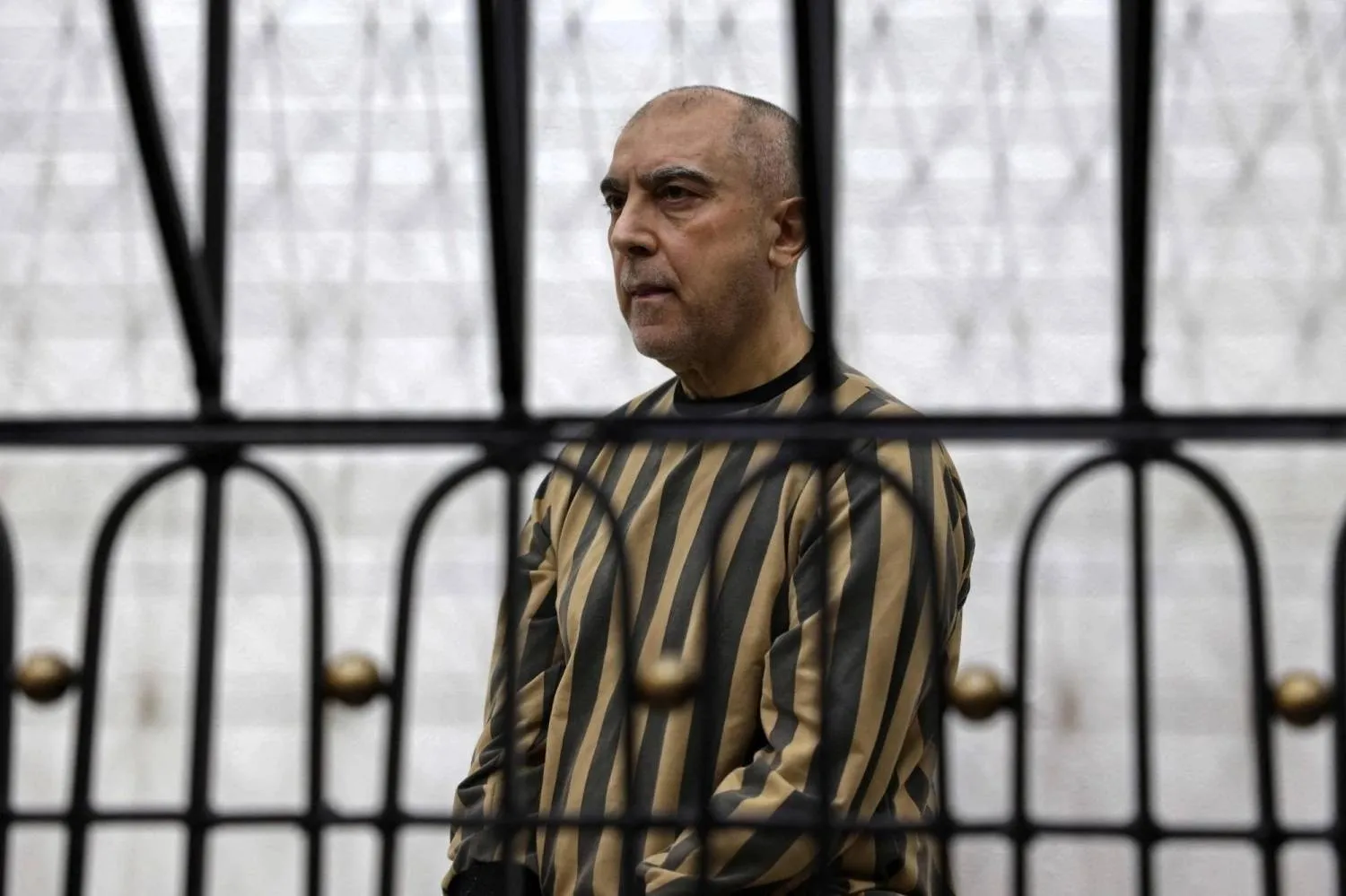
Former head of political security in south Syria's Daraa province, Atef Najib attends the first trial session at the Palace of Justice, in Damascus last month. (AFP)
TT

Syria Court Charges Former Security Official with Acts Amounting to ‘War Crimes’

 Former head of political security in south Syria's Daraa province, Atef Najib attends the first trial session at the Palace of Justice, in Damascus last month. (AFP)
Former head of political security in south Syria's Daraa province, Atef Najib attends the first trial session at the Palace of Justice, in Damascus last month. (AFP)

Syria's judiciary brought charges on Sunday against former security official Atef Najib for acts "amounting to war crimes" in 2011 against peaceful protesters in Daraa province, the cradle of the country's uprising.

Najib was the former head of political security in the south Syrian province and is accused of orchestrating a crackdown there. Washington sanctioned him for human rights abuses in April 2011, one month after the uprising erupted.

He appeared in a Damascus criminal court again on Sunday after the opening session last month in the trials of former senior figures, most prominently longtime president Bashar al-Assad and his brother Maher al-Assad, who are both being tried in absentia.

Judge Fakhr al-Din al-Aryan read out the charges at Sunday's session, part of which was broadcast on state television, as Najib stood in the docks.

"The accusations against you relate to events in Daraa province in early 2011, when the peaceful (protest) movement was met with an excessive use of force," Aryan said.

"As head of the political security branch then, you held direct and joint leadership responsibility for systematic acts that targeted civilians including killing, torture and arbitrary detention," he added.

He said abuses attributed to Najib, some of them deadly, include the arrest and torture of children due to "political writings on walls", involvement in "suppressing protests with excessive force" and "opening direct fire" on a peaceful sit-in at Daraa's Al-Omari mosque.

They also include "torture leading to death" in his branch's detention centers.

"You were the ultimate authority in Daraa province and hold direct responsibility for issuing orders to kill, arrest and torture... and for participating with political, security and military leaders in an organized hierarchical structure in committing these grave violations," the judge said.

The actions attributed to Najib and others not present "amount to war crimes... and crimes against humanity", he added.

The court heard statements from Najib and witnesses, state media said, after the judge halted media coverage.

Syria's more than 13-year civil war killed more than half a million people and displaced millions of others. Tens of thousands of people disappeared, some into the country's brutal prison system.

The uprising began in Daraa on March 15, 2011, after 15 students were arrested for allegedly writing anti-government slogans on the city's walls.

Residents said the children were tortured, leading to a protest to demand their release that ended in bloodshed.

Security personnel suppressed peaceful demonstrations with force and fired live ammunition to disperse sit-ins at several locations.

Najib was dismissed after the crackdown, as the protests spread to other provinces.

He was among the first Assad-era officials arrested by the new authorities after the December 2024 ousting of the longtime ruler.