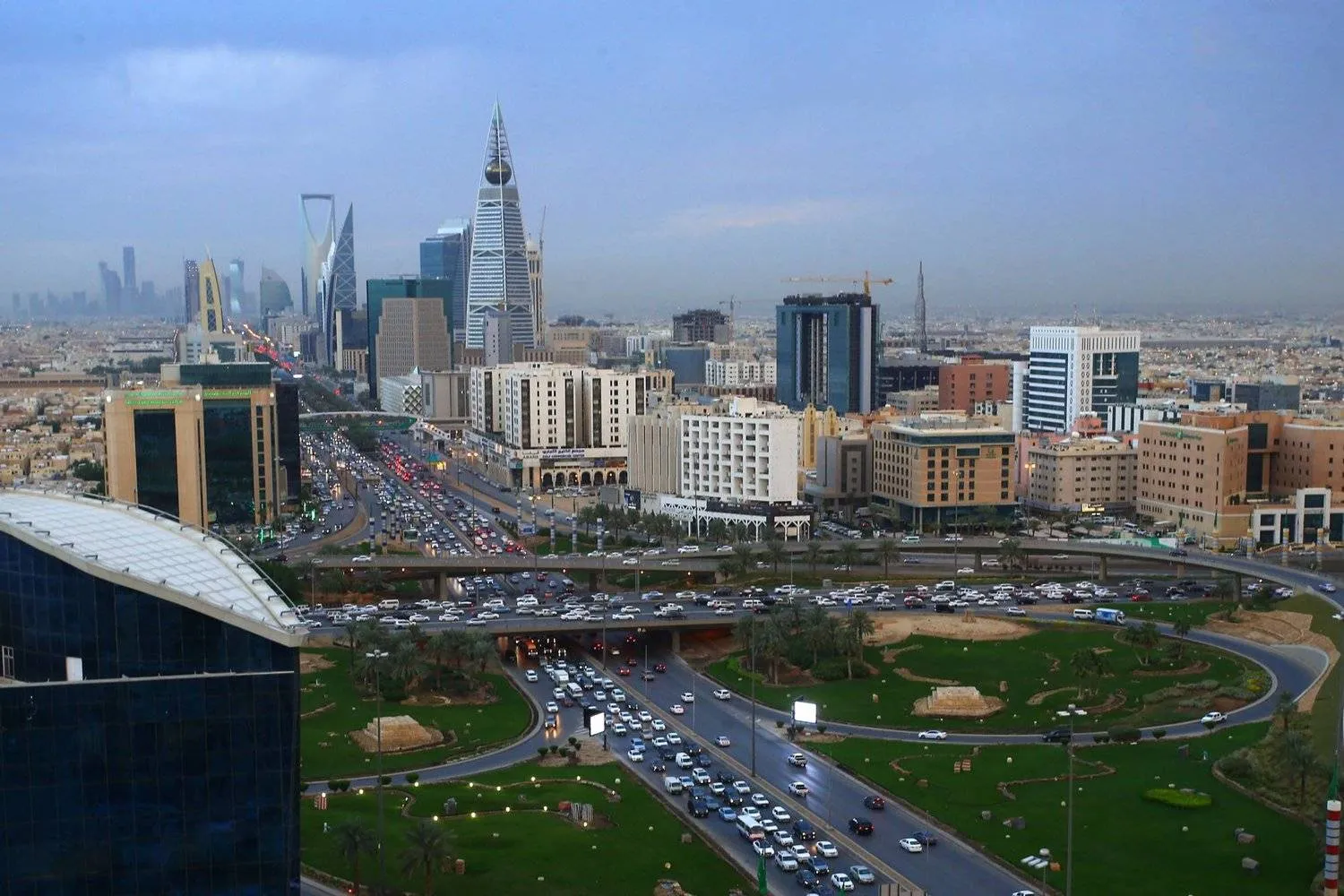
Global Financial Company Northern Trust Moves its Regional Headquarters to Riyadh

The regional headquarters program has so far attracted 200 foreign companies. (Asharq Al-Awsat)
TT

Global Financial Company Northern Trust Moves its Regional Headquarters to Riyadh

The regional headquarters program has so far attracted 200 foreign companies. (Asharq Al-Awsat)

Northern Trust Corp. has become one of the first major global financial institutions to establish its regional headquarters in Riyadh, which strengthens the Saudi government’s efforts to have international companies manage their operations in the Middle East from the Kingdom.
The American financial services company, which manages assets worth $1.3 trillion, obtained a license from the Saudi Ministry of Investment to establish its Middle Eastern base in Riyadh.
Speaking to Bloomberg, a company spokesman said that Northern Trust continues to achieve “significant growth” throughout the region through its offices in Abu Dhabi and Riyadh, explaining that the establishment of the regional headquarters for the Middle East and North Africa region in Saudi Arabia reflects the continued investment in infrastructure, capabilities and expertise in the region.
The Kingdom announced on Tuesday that it would provide a new tax incentive package for a period of 30 years to foreign companies whose regional headquarters are located in the Kingdom, including exemption from income tax.
The Saudi News Agency (SPA) said that the Ministry of Investment - in coordination with the Ministry of Finance and the country’s Zakat, Tax and Customs Authority - announced “the provision of a new tax incentive package, for a period of 30 years, to support the program to attract the regional headquarters of international companies.”
This step comes to “encourage and facilitate the procedures for international companies to open their regional headquarters in the Kingdom of Saudi Arabia,” the agency added.
The Regional Headquarters Program was launched in 2021, which is a joint initiative between the Ministry of Investment and the Royal Commission for the City of Riyadh, which calls on international companies to move their regional headquarters to Saudi Arabia, to transform the country into a leading regional hub for multinational companies.


Saudi TAQA Expands Int’l Reach From Azerbaijan, Kazakhstan to Syria

A technician monitors TAQA’s field operations. (Company handout)
TT

Saudi TAQA Expands Int’l Reach From Azerbaijan, Kazakhstan to Syria

A technician monitors TAQA’s field operations. (Company handout)

Saudi Arabia’s Industrialization and Energy Services Company (TAQA) is expanding in Azerbaijan, Kazakhstan and Syria as it develops the well solutions and specialized technologies driving its growth.

The company, 54% owned by the Public Investment Fund, uses Saudi Arabia as its main operating hub and launchpad for international expansion.

Chief Executive Adel Al-Ghadhban told Asharq Al-Awsat in exclusive comments during the World Petroleum Congress that TAQA was building its presence in Azerbaijan and Kazakhstan and establishing operations in Syria.

It has set up a legal entity in Azerbaijan and qualified as a supplier to state-owned SOCAR. In Kazakhstan, registration and qualification procedures have begun with several customers.

Cooperation with SOCAR covers opportunities in oil and gas field operations and services, as well as 'well services and technologies,' Al-Ghadhban said.

TAQA has moved into practical steps to establish itself in Azerbaijan, completing incorporation procedures and registering as a qualified supplier.

Asked about project budgets and timelines, he said the memorandum of understanding set a framework for cooperation, separate from any contracts or projects that might follow. TAQA prefers to announce each project once its scope is finalized and commercial arrangements are approved.

The Caspian region and Central Asia offer significant growth opportunities, he said. TAQA’s international strategy targets markets where it can add value and build sustainable businesses, rather than expand for geographic reach alone.

Well solutions drive growth

Well solutions are TAQA’s main growth engine, Al-Ghadhban said. They span drilling, well completion and intervention, well testing, wireline services, cementing, stimulation and early production facilities.

The company performed strongly in 2025 in areas including well testing, completion and wireline services. It also advanced the development and commercialization of drilling, completion and well intervention technologies.

TAQA is integrating its services and technologies to cover multiple stages of a well’s life cycle. The focus is on directing investment toward higher-value services, bringing technologies to market faster and expanding selectively into markets offering profitable, sustainable growth.

Digitalization and innovation

TAQA sees innovation and advanced technologies as pillars of growth, supported by its innovation center in Dhahran Techno Valley and specialized centers developing drilling, completion and well intervention products.

Development starts with identifying customers’ challenges, Al-Ghadhban said. The company then develops, tests and qualifies solutions in the field before turning them into products and technologies that can be scaled commercially.

Its digitalization efforts focus on data, artificial intelligence and automation in research and development projects, working with customers, industry partners and academic institutions.

Technology investments aim to make operations more efficient, improve well performance and reduce time, total costs and operational risks for customers.

TAQA prefers to withhold specific figures for future investment until plans and budgets are approved, he said.

Supply chain resilience

Geopolitical challenges have sharpened TAQA’s focus on resilience, operational discipline and cost competitiveness as it faces pressures on operating costs and supply chains, Al-Ghadhban said.

The company has updated its operating model to clarify responsibilities, speed up decisions and simplify processes. It has also improved the use of assets and resources and strengthened supplier partnerships.

For some product lines, TAQA has diversified its sources of production and research and development to strengthen supply chain resilience and manufacturing efficiency.

Efficiency means more than cutting expenses, Al-Ghadhban said. It also requires improving how work is carried out and capital is allocated, while balancing competitiveness and service continuity with safety, quality and reliability.

About TAQA

Founded in 2003 and headquartered in Dhahran, TAQA provides integrated oil and gas well solutions. Its services include drilling, well completion and intervention, well testing, wireline logging, cementing, hydraulic fracturing and well integrity.

The company operates in more than 20 countries and employs more than 5,500 people. Its portfolio spans drilling, geophysical services and surveying, with companies including Arabian Drilling, the Arabian Geophysical and Surveying Company (ARGAS).



Saudi Arabia Issues 438 Industrial Licenses Worth $1.28 Billion in July

File photo of the Saudi capital Riyadh - File/AAWSAT
TT

Saudi Arabia Issues 438 Industrial Licenses Worth $1.28 Billion in July

File photo of the Saudi capital Riyadh - File/AAWSAT

Saudi Arabia's Ministry of Industry and Mineral Resources issued 438 new industrial licenses in July 2026, representing investments of approximately SAR 4.82 billion ($1.28 billion), while 189 factories began actual production during the same month, with investments totaling SAR 1.95 billion ($520 million), according to data from the ministry's National Industrial and Mining Information Center.

Ministry spokesperson Jarrah Al-Jarrah said the new industrial licenses are expected to create more than 3,708 jobs across various regions of the Kingdom.

He added that the factories that began production in July created 2,807 new jobs, reflecting the continued expansion of Saudi Arabia's industrial base and the growing number of factories entering operation.

The Ministry of Industry and Mineral Resources publishes monthly industrial activity indicators through the National Industrial and Mining Information Center to track new licenses, investment volumes and factories beginning production, as well as developments in the Kingdom's industrial sector.


GCC Chief Emphasizes Gulf Integration, Diversified Partnerships at IMF MENAP Meeting

Gulf Cooperation Council (GCC) Secretary-General Jasem Albudaiwi - SPA
TT

GCC Chief Emphasizes Gulf Integration, Diversified Partnerships at IMF MENAP Meeting

Gulf Cooperation Council (GCC) Secretary-General Jasem Albudaiwi - SPA

Gulf Cooperation Council (GCC) Secretary-General Jasem Albudaiwi underscored that GCC economies have demonstrated strong resilience against global economic shocks and geopolitical shifts, supported by solid fundamentals, substantial financial reserves, robust banking sectors, and prudent fiscal management.

Albudaiwi delivered his remarks during a meeting of the finance ministers and central bank governors of the Middle East, North Africa, Afghanistan, and Pakistan (MENAP) region with International Monetary Fund (IMF) Managing Director Kristalina Georgieva, held on the sidelines of the 2026 IMF and World Bank Group Annual Meetings in Bangkok, SPA reported.

Albudaiwi pointed out that recent geopolitical developments have impacted global energy production, maritime shipping, and trade flows, demonstrating the close link between Gulf stability and broader global economic security. He noted that disruptions along key energy corridors and trade routes inevitably reverberate across international markets.

Albudaiwi affirmed that the GCC economies possess the capacity to sustain recovery and growth through 2027 and beyond, propelled by strategic investments and non-oil diversification. He emphasized the necessity of balancing short-term economic responses with long-term fiscal sustainability, maintaining adequate buffers to mitigate future market volatility.

Highlighting future growth sectors, the secretary-general cited advanced industries, digital infrastructure, artificial intelligence, and human capital development, alongside empowering the private sector to expand its role in global value chains.

Concluding his address, Albudaiwi stressed that long-term resilience requires advancing Gulf economic integration, upgrading logistical corridors, and diversifying international partnerships to transform ongoing global challenges into sustainable economic opportunities.