


MET to Return 16 Artifacts to Cambodia, Thailand

This image released by the US Attorney’s Office for the Southern District of New York on December 15, 2023, shows a 10th century goddess sandstone statue from Koh Ker, Cambodia. (Photo by Handout / US Attorney’s Office Southern District of New York / AFP)
TT

MET to Return 16 Artifacts to Cambodia, Thailand

This image released by the US Attorney’s Office for the Southern District of New York on December 15, 2023, shows a 10th century goddess sandstone statue from Koh Ker, Cambodia. (Photo by Handout / US Attorney’s Office Southern District of New York / AFP)

The Metropolitan Museum of Art has begun the repatriation process for 16 sculptures previously held in its permanent collection, returning 14 to Cambodia and two to Thailand, according to the Art Newspaper.

The artifacts, date back between the ninth and fourteenth centuries, have been under scrutiny from the Attorney General of the Southern District of New York for their connection to dealer Douglas Latchford, who was indicted in the US for illegal sales of antiquities in 2019 and died in 2020, before he could stand trial on those charges.

The Met has undergone an intensive investigation into the provenance of its objects this year, hiring a research team following spring seizures of illegally obtained works.

Claims from the Cambodian government regarding Khmer works in the Met’s collection extend back significantly further.

Investigators had tracked a large number of antiquities believed to have been looted and smuggled to a single gallery of the museum, almost entirely sourced Latchford. When initial requests for information and repatriation by Cambodia went unfulfilled, the country enlisted the aid of the US Justice Department, as well as a former looter capable of providing evidence of the illegal removal and sale of antiquities from protected sites.

Toek Tik, provided additional links between Latchford and the illegal trade, claiming that the dealer used intermediaries to move objects out of Cambodia. The Met’s relationship with Latchford began during institutional leaders’ push to grow their collection of Southeast Asian art in the 1970s, and the museum partnered with the dealer to acquire high-quality works of Khmer sculpture through purchase and donation.

After Latchford’s death in 2020, investigators were left to parse a trove of documents and records relating to his business.In its announcement about the repatriations, the Met said that following the indictment, it “proactively reached out to the US Attorney’s Office for the Southern District of New York and to Cambodian officials, and through this cooperative partnership, the museum received new information about the sculptures that made it clear that the works should be transferred”.

The 16 works scheduled for return will remain on view in the Met until repatriation arrangements are made, with new wall texts noting their upcoming removal from the museum.

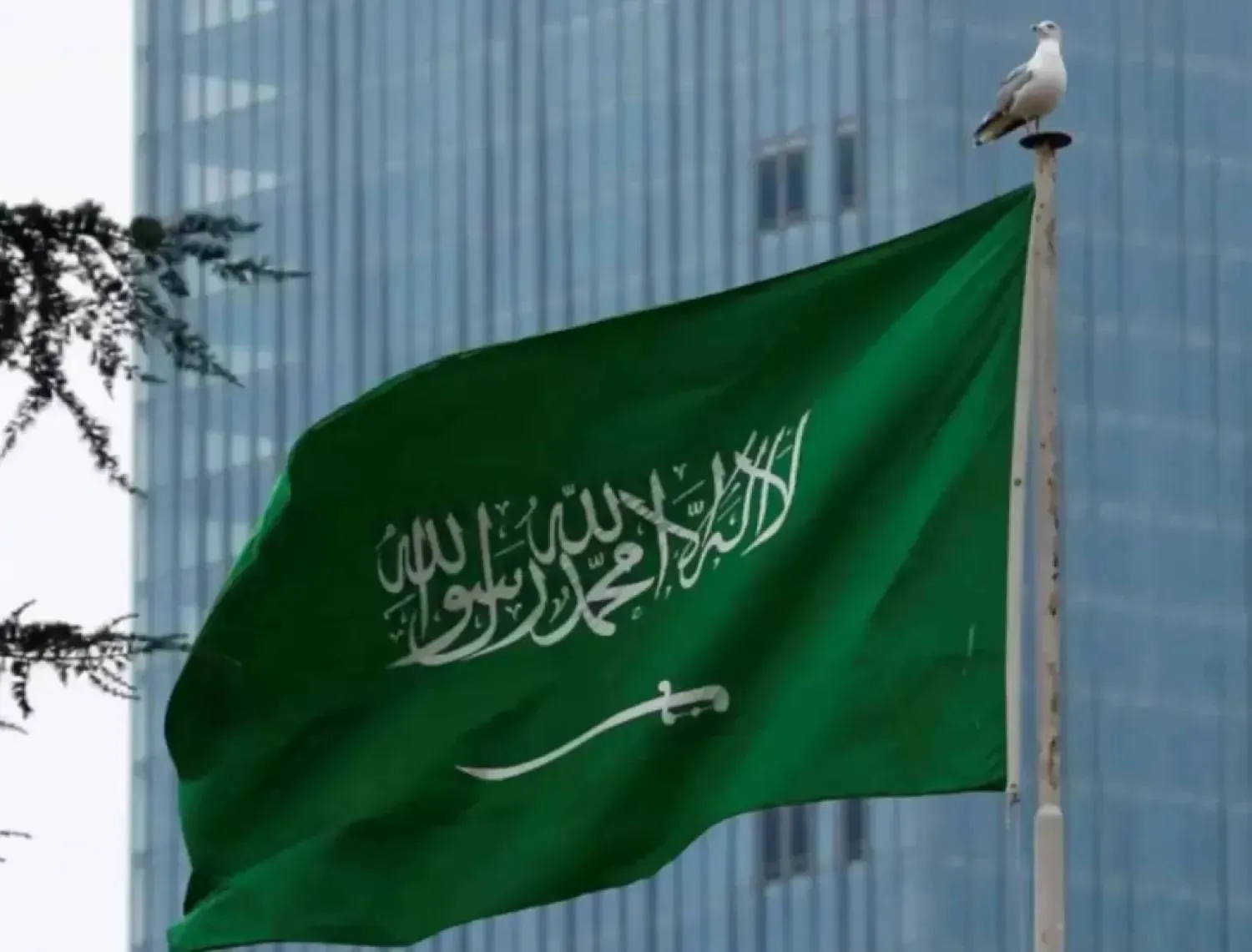


Eight Saudi Cities in IMD Smart City Index 2026; Riyadh Advances to 24th Globally

Riyadh, Saudi Arabia
TT

Eight Saudi Cities in IMD Smart City Index 2026; Riyadh Advances to 24th Globally

Riyadh, Saudi Arabia

Eight Saudi cities made a notable showing in the IMD Smart City Index 2026, published by the International Institute for Management Development (IMD), the Saudi Press Agency said on Friday.

The result reflects faster development and improving quality of life across the Kingdom’s cities, in line with Saudi Vision 2030, the Saudi Press Agency said on Friday.

Riyadh advanced to 24th globally from 27th. Makkah ranked 50th, Jeddah 55th, Madinah 67th, and Al-Khobar 64th.

AlUla recorded a significant leap, climbing from 112th to 85th. The result points to the rapid progress of its development and tourism projects.

The index also listed Hail and Hafar Al-Batin Governorate for the first time. Hail ranked 33rd, while Hafar Al-Batin placed 100th among 148 cities worldwide.

The IMD Smart City Index is a global benchmark that measures how far cities have advanced in adopting modern technologies. It does so by assessing residents’ views of service quality, digital infrastructure, and their impact on daily life.

This strong progress underscores the Kingdom’s continued efforts to upgrade urban services and build smart, sustainable cities that improve quality of life and strengthen global competitiveness, as Saudi Arabia marks 2026 as the Year of Artificial Intelligence.


Armenia's Underground Salt Clinic at Center of Alternative Medicine Debate

Speleotherapy has been practiced for decades in parts of Eastern Europe and the former Soviet Union © KAREN MINASYAN / AFP
TT

Armenia's Underground Salt Clinic at Center of Alternative Medicine Debate

Speleotherapy has been practiced for decades in parts of Eastern Europe and the former Soviet Union © KAREN MINASYAN / AFP

A mining cage drops deep beneath the Armenian capital, carrying asthma patients in helmets down into a salt cave clinic -- an alternative treatment center whose future is now at risk.

State funding for the speleotherapy center in the Avan salt mine was recently cut as the small Caucasus nation rolls out a new universal healthcare system that does not cover alternative medicine.

The fate of the facility is a snapshot of a global debate over the effectiveness and role of alternative treatments in modern healthcare, a particularly pressing issue in developing countries, AFP said.

Speleotherapy -- where patients spend several hours a day in caves breathing mineral-rich underground air believed to reduce respiratory irritation -- has been practiced for decades in parts of Eastern Europe and the former Soviet Union.

At the bottom of the Avan salt mine, a dim tunnel carved from grey rock salt leads to the Soviet-era center.

"We are 235 meters (770 feet) underground, and yet this is a hospital," doctor Anush Voskanyan said as she guided visitors into a vast chamber illuminated by rows of electric lamps.

Opened in 1987 inside a former mine, the center spans about 4,000 square meters of tunnels converted into treatment and recreation areas. For decades, patients received therapy for free under the state's healthcare program.

But in 2019, Armenia's health ministry stopped financing the clinic, arguing that speleotherapy does not meet evidence-based medical standards required for public funding.

Annual patient numbers dropped from more than 300 to around 50.

"We struggle to pay salaries and cannot renew equipment that has not been replaced since opening," clinic director Gurgen Hakobyan told AFP, saying its future was "uncertain."

- Global strategy -

Globally, supporters of traditional or complementary remedies say they have been overlooked by Western medicine.

The World Health Organization's members have called for a global effort to build a solid evidence base, regulate practitioners and integrate treatments that are proven safe and effective.

Supporters of speleotherapy say the cave environment, free from dust and allergens and with a constant temperature of around 19-20C, helps ease symptoms of asthma and allergies.

Voskanyan, the doctor, said she had seen children make full recoveries after treatment.

But the scientific evidence remains limited.

"Since 1985, only two dissertations have been written on the subject," said Lamara Manukyan, chair of the Armenian Association of Internal Medicine.

"We lack statistics and large-scale research."

She said speleotherapy "helps conventional medicine ease a patient's condition" and should be considered a "complementary therapy rather than a standalone treatment."

- 'Salvation' -

Armenia's health ministry said its decision to stop the clinic's funding reflects broader healthcare priorities as the country transitions toward universal medical insurance.

"At this stage, priority is given to diseases with high mortality rates such as cancer and cardiovascular illnesses," ministry spokeswoman Mariam Tsatryan told AFP.

"Alternative and wellness treatments cannot be included in insurance coverage."

Many of the centers's patients -- and its doctors -- lament the decision to strip funding.

Armen Stepanyan, a 63-year-old engineer from Russia's Siberian city of Kemerovo, has travelled to Yerevan annually for more than a decade after developing severe asthma.

"I tried everything -- sanatoriums, treatments -- nothing helped," he said. "Here I felt improvement after the first course."

Supporters argue the center's significance extends beyond medicine.

Manukyan, the chair of the internal medicine association, described it as part of Armenia's tradition of natural therapies, including mineral springs and spa resorts.

"There is no reason to dismantle an existing structure and lose a valuable tradition."

The government, which holds a stake in the center, is trying to privatize its shares, raising hopes that private investment could preserve or repurpose it as a research or medical tourism center.

"It would be really sad if the clinic had to shut down because it simply ran out of funding," said Stepanyan, the patient.

"I realized this was my salvation. This is the only place where I see real results."


Hiker's Dog Lost in New Zealand Forest Rescued by Helicopter after Strangers Fund Search

In this photo released by Precision Helicopters Ltd, Molly peers out of the door of a helicopter after her rescue from a waterfall on the Arahura River on the West Coast of the South Island of New Zealand, Tuesday, March 31, 2026. (Precision Helicopters Ltd via AP)
TT

Hiker's Dog Lost in New Zealand Forest Rescued by Helicopter after Strangers Fund Search

In this photo released by Precision Helicopters Ltd, Molly peers out of the door of a helicopter after her rescue from a waterfall on the Arahura River on the West Coast of the South Island of New Zealand, Tuesday, March 31, 2026. (Precision Helicopters Ltd via AP)

When a hiker fell from a 55-meter (180-foot) waterfall in wild New Zealand bush, rescuers were forced to evacuate the badly hurt woman without her dog, which couldn't be found.

After strangers raised thousands of dollars for a search, border collie Molly was flown to safety by a helicopter pilot who was determined to reunite pet and owner.

A week earlier, an emergency rescue helicopter found the woman with bruises and lacerations after a fall at a rocky spot at the waterfall on the South Island’s West Coast. She was airlifted on March 24 but they were forced to leave without her pet, The Associated Press reported.

Molly was bedraggled and hungry when she was found Tuesday, just a few meters from the spot where the hiker had been lucky to survive.

“I contacted her in hospital and said I’d go for a look for it,” said Matt Newton, the owner-operator of Precision Helicopters New Zealand, which is based at Hokitika Gorge near the Arahura River where Molly went missing. “I went and looked for the dog several times and no avail.”

Unwilling to give up, Newton and his family launched a fundraiser to pay for more flying hours and advanced search gear. Offers of help and donations poured in, with strangers pledging more than 11,000 New Zealand dollars ($6,300) for a search.

It was enough to fund three more hours in a helicopter using thermal imaging equipment. On Tuesday, Newton took to the skies with a veterinary nurse, volunteer searchers and a dog named Bingo in a renewed search for Molly.

“We struck jackpot within about an hour,” he said. “As we made our way up the river, we could see the dog in the thermal and then we could visually see it.”

There had been no sign of Molly at the waterfall when Newton previously searched the spot, he said. It wasn’t clear if the dog had also fallen from the waterfall or if she had eventually made her way to the spot where her injured owner landed.

The helicopter dropped low enough for a volunteer to disembark with the rescue dog Bingo to help coax Molly to safety and keep her calm.

Newton thought the dog had survived by eating feral animals during her week in the wilderness.

“She knew what we were up to, I think,” he said. “She behaved real well. She didn’t run away and she was pleased to be rescued.”

The dog was in “surprisingly good condition,” the pilot said. He sent word back to the helicopter base, where other volunteers waited to take turns in the search. “Instead we just had a big barbecue and all had a cuddle with Molly."

Hours after the dog’s rescue, her owner, still battered from her fall, arrived for a tearful reunion.

“I think that’ll speed up her healing process somewhat,” Newton said. “Having your dog back, that’s for sure.”