United Nations Special Envoy for Yemen Hans Grundberg outlined the roadmap for peace in the war-torn country.
The roadmap is effectively formed of commitments by the legitimate government and Iran-backed Houthi militias.
In an interview to Asharq Al-Awsat, he explained that they cover a number of issues, including a ceasefire and the withdrawal of non-Yemeni forces from the country.
Western and Yemeni sources told Asharq Al-Awsat that the withdrawal will be connected to completing the first phase of the roadmap, which should take up around six months.
"Non-Yemeni forces" encompasses the Arab Coalition, forces of the Quds Force, which oversees foreign operations of the Iranian Revolutionary Guards Corps, and the Lebanese Hezbollah party and its members.
These commitments will be implemented in phases, said Grundberg.
They will be carried out as soon as the parties agree on the UN-sponsored roadmap.
Baraa Shiban, of the Royal United Services Institute, told Asharq Al-Awsat that the UN envoy needs to rearrange his priorities so that they align with the needs of the Yemenis in bolstering state authority and rebuilding state institutions that have collapsed during the war.
Meanwhile, Houthi spokesman Mohammed Abdulsalam spoke of the impact the operations targeting marine navigation in the southern Red Sea are having on Yemen.
"We believe that the situation in Yemen is not being affected by the developments in the Red and Arabian Seas. The limited operations are only aimed against Israel," he explained.
Grunberg took up his post 28 months ago, saying that he was not under any illusions about how difficult his mission was going to be and that gains will not be easy to come by.
After nearly two-and-a-half years, he has managed to garner commitments that will shape the roadmap for peace in Yemen. It will start with a ceasefire and then a mechanism to consolidate it. This will then be followed by a comprehensive political process, which would demand the withdrawal of non-Yemeni forces from Yemen.
Speaking to Asharq Al-Awsat, Grundberg said he was aware of the lack of trust between the warring parties, so he will seek to rebuild it.
"The goal of UN mediation is a serious political dialogue that clearly gears towards ending the conflict and provides for sustainable peace and delivers the future that Yemenis aspire for, a future of accountable governance, economic development, and equal citizenship," he added.
"The parties have already committed to working with us to achieve this goal. And we are keen to ensure that the roadmap articulates the parties’ clear commitment to tangible steps towards resuming an inclusive political process that is Yemeni-owned under UN auspices."
"The parties’ commitments include, among other things, a nationwide ceasefire, opening roads in Taiz and elsewhere in Yemen, the payment of public sector salaries in Yemen, resuming the exportation of oil, further easing of restrictions on Sanaa airport and the Hodeidah port, the release of conflict related detainees, and commencing preparations for an inclusive, Yemeni-owned political process under UN auspices," he went on to say.
"The parties have also committed to the departure of non-Yemeni forces, to reconstruction, and to engage in an inclusive political process to reach a comprehensive and lasting political solution. These are commitments that the parties have made not just to each other, but also to the Yemeni people."
Asked by Asharq Al-Awsat to clarify what was agreed upon, he replied: "Discussions over the past months have resulted in the parties’ agreement on a set of commitments. I am grateful to the role both the Kingdom of Saudi Arabia and the Sultanate of Oman played to reach this point. The regional and international support over the past period aimed at bringing the parties closer to convening under UN auspices towards advancing an inclusive, sustainable political settlement."
"The parties have also agreed that I and my Office will work with them to operationalize these commitments through a UN roadmap. The roadmap is intended as an agreement to operationalize the commitments the parties already agreed to through outlining the implementation mechanisms necessary for their fulfilment. It will chart next steps, including preparations for an inclusive, Yemeni-owned political process under UN auspices," Grundberg said.
"My team and I will hold discussions with the parties around the elements of the UN roadmap in the coming days to operationalize the commitments they made. In this regard, we will be focusing on building consensus around implementation mechanisms and ways to build on the parties’ commitments to resume the political process."
"A considerable part of our focus in the current phase in the context of building consensus around the roadmap is on securing the parties’ participation in dialogue structures on the political, economic, and military tracks to support the implementation of measures that are agreed to improve the living conditions in Yemen in the short-term, and to initiate discussions on the long-term issues that guarantee the sustainability of these measures and pave the way for an inclusive political settlement," revealed the envoy.
"We have worked on activating these dialogue platforms since the truce. The first of these structures was the Military Coordination Committee which brought together representatives of the parties who worked together during the months of the truce on de-escalating tensions and quickly addressing violations to avoid a downward spiral."
"Our work with the members of the Military Coordination Committee (MCC) has continued even after the expiration of the truce to ensure that de-escalation continues, and to discuss the parameters of the anticipated ceasefire agreement, and the way forward towards responsible and viable transitional security arrangements. We are now working to build consensus around establishing a mechanism led by the parties and facilitated by the UN to manage the anticipated ceasefire based on the experience of the MCC."
"We continue to push for bringing the parties together in similar structures on the political and economic tracks as initial milestones on the path of a comprehensive solution," he continued. "This is supported by regional and international actors as part of their support to UN mediation efforts. We are confident that the sustainability of dialogue is the principal guarantee for continued forward movement towards a political solution, and against reneging on obligations. The parties have a responsibility and an obligation to continue working constructively with us, and with each other, to ensure that momentum and progress are maintained."
Red Sea attacks
Efforts to achieve peace in Yemen made strides in 2023. Iran sought to reestablish relations with Saudi Arabia and so the Beijing agreement was struck with China’s sponsorship. A Saudi delegation visited Sanaa and delegation from Sanaa visited Riyadh. The Yemenis enjoyed the longest period of calm since the Houthis’ 2014 coup. Calm first started to prevail in spring 2022, but de-escalation was truly palpable in 2023.
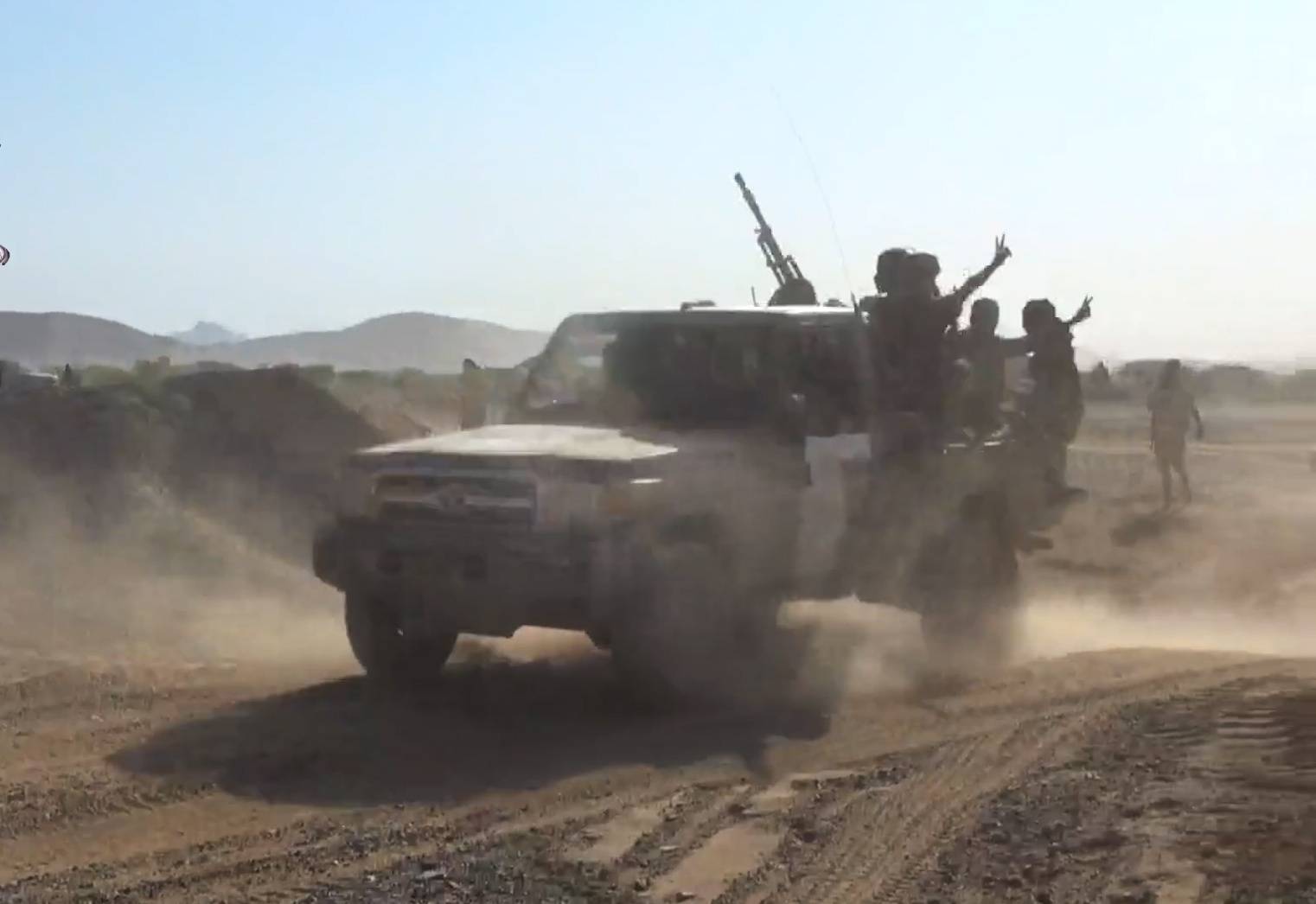
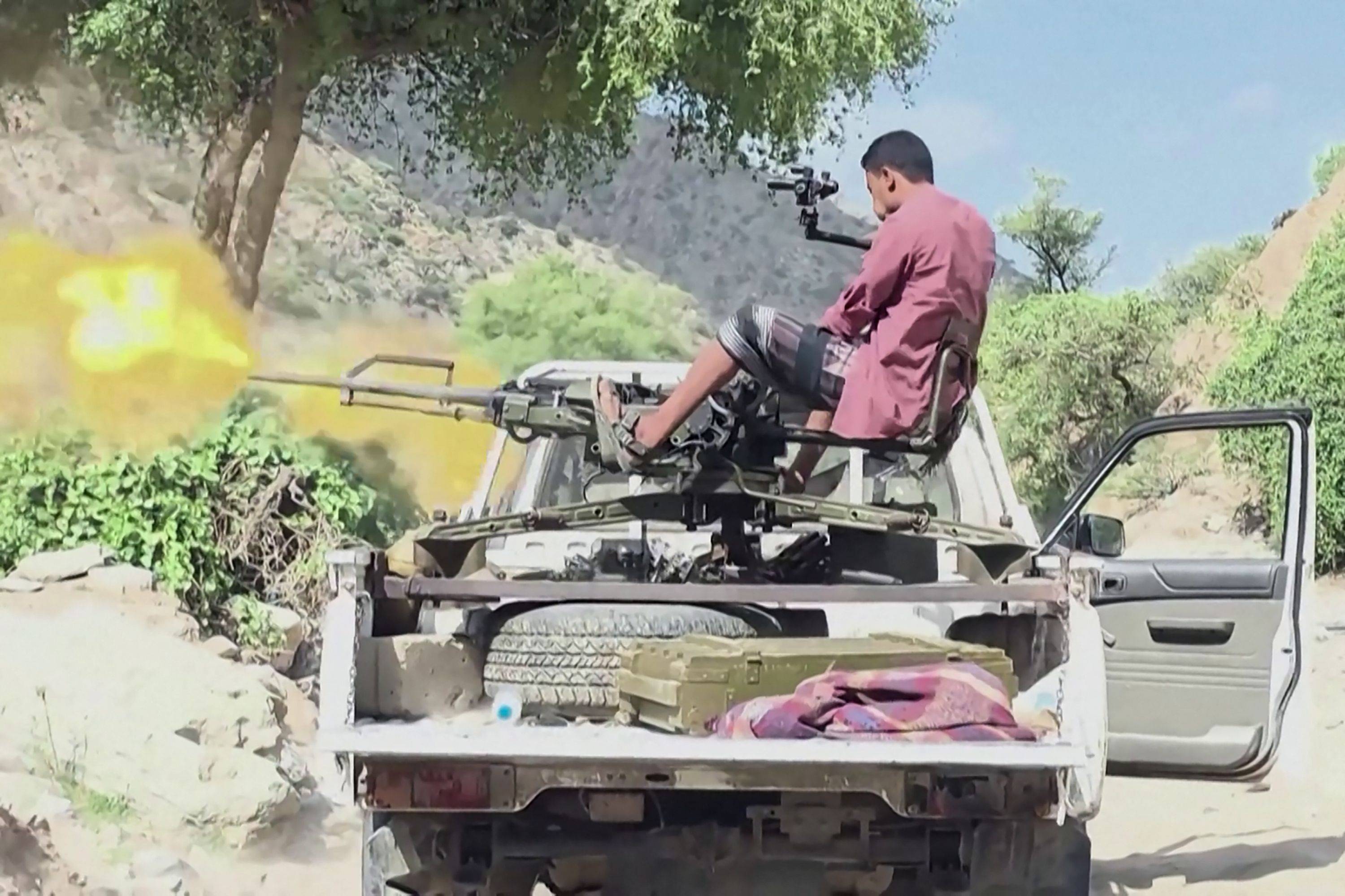
However, the year ended with the Houthis launching a series of attacks against ships in the Red Sea, threatening the security of international marine navigation. They have so far launched dozens of attacks using armed drones and missiles and even resorting to piracy.
In retaliation, Washington launched Operation Prosperity Guardian, which is a naval coalition – comprised of 22 countries so far – to deter the Houthi attacks.
Asharq Al-Awsat asked Houthi spokesman Abdulsalam about whether the Red Sea attacks would undermine peace efforts in Yemen. He said that he believes that they will not, stressing that the attacks are aimed against Israel.
The developments in the Red and Arabian Seas have nothing to do with Yemen and the peace efforts underway, he added. The attacks are a show of support to the Palestinians and are aimed at easing the siege against them.
"The attacks are solely aimed against Israel, not any other country," he declared. "These are the rules of engagement that Israel has imposed through its siege on Gaza and its barbaric killing of women and children."
Commenting on the attacks, Shiban warned of a new situation emerging in Yemen, which he compared to "the Hezbollah problem and its relationship to the Lebanese state."
He explained that the Houthis believe they can take decisions related to Red Sea security and Yemen’s foreign policy without the agreement of other Yemeni parties.
Foreign policy is determined by the state, not one party, he stressed. Policy must enjoy national consensus and be in line with Yemen’s regional and international commitments.
For his part, Grundberg said: "The Secretary-General and competent United Nations entities are closely following the reports regarding attacks against vessels in the Red Sea and Bab al-Mandab Strait. The United Nations has repeatedly stressed the importance of ensuring respect to international law in full regarding maritime navigation and emphasized the need to guarantee freedom of navigation."
"The Secretary-General additionally warned against the risk of the spillover of the violence in the occupied territories and stressed the urgent need for an immediate humanitarian ceasefire to end the unfolding tragedy in Gaza. Here I would also like to join the voice of the Secretary-General in sounding the alarm regarding the risk of an expansion of the violence and threatening the safety and security of the region," the envoy told Asharq Al-Awsat.
"My focus remains on Yemen and Yemen deserves a chance at peace. However, in order to achieve this, we will need an environment that remains conducive for sustaining constructive dialogue around the future of Yemen."
Southern issue
Turning to southern Yemen, Grundberg said: "The question of the south is a central issue. And I stress the need to reach consensus around it through peaceful dialogue within a political process that includes the plurality of southern voices and provides support to all Yemenis to come to an agreement around the future of Yemen in a participatory way."
"Mediation is often about utilizing available entry points that are agreed by the parties. Our efforts throughout the past months were mainly focused on ensuring that the parties’ commitments included a commitment to resume an inclusive political process. Entry points vary, but our primary objective remains unchanged. The truce, for us, was an entry point. The agreement of the parties on this set of commitments now is another entry point. In the United Nations, we will use any available point of entry to reach a sustainable political solution that meets the aspirations of Yemeni men and women, which needs to address the question of the south."
"In this context, we will work with the parties to establish a roadmap that operationalizes the commitments that they had already agreed on. This is the entry point that the parties themselves consented to. Our work is now focused on supporting the operationalization of their agreed commitments through a UN roadmap, facilitating the subsequent implementation of these commitments, and progressing towards a political process," he went on to say.
"The roadmap is a step on the path towards lasting peace, not a comprehensive peace agreement. It will kickstart preparations for the political process. This preparatory phase is meant to be as open and inclusive as possible. And the political process will be the forum to address longer term political issues aimed at sustainably resolving the conflict," he added.
Social fabric
Asharq Al-Awsat asked the envoy why youths aren’t represented in the government and different political entities. He replied: "This is a good question for the government and those political entities. The political participation of young men and women is a fundamental value and principle in the normative order of the United Nations and has been the focus of many Security Council resolutions."
"But, in addition to the normative framework, let’s think about it logically. The youth of Yemen are its future. The women of Yemen are half of its people. Excluding women and youth from decision making circles is excluding half of Yemen and the entirety of its future."
"The meaningful participation of youth and women is more complicated than mere representation, but representation remains a crucial part of the equation. We constantly call on the parties to include women and youth in their engagements with the United Nations, in their negotiations’ delegations, and in decision making circles," he underlined.
"My Office has already started the work of expanding the scope of consultations around the anticipated political process in Yemen. In the past months, we have conducted several consultations with peace activists and experts, women and men, in Amman, Aden, and Cairo. My team also consulted diverse groups of media professionals and civil society actors in Aden, Marib and Hadhramout. This is in addition to periodic consultations with representatives from local authorities as well as security actors, political parties and local mediators on the ground," he revealed.
"We are also working to expand our direct engagement with the Yemeni communities to inform the UN mediation efforts with the perspectives, priorities, and interests of diverse Yemenis and to formulate a participatory and inclusive design for the aspired political process in Yemen."
Turning to the social fabric of Yemen, Asharq Al-Awsat asked: "How can Yemenis preserve the social fabric, amid a major conflict and the many other conflicts that are no less significant that erupted from the original conflict, such as problems of north vs. south, ideological conflicts, and accusations against nationalist racist movements that are emerging."
"As long as the conflict continues and is more prolonged, the conditions conducive to polarization and fragmentation will continue," replied Grundberg.
"The road of reconciliation and peaceful coexistence is a hard and long one, that begins, not ends, with a political settlement. I repeat again that sustaining inclusive dialogue on all levels, national and local, is the way regardless of the magnitude of the differences to reach consensual understandings and participatory formulas and to bridge gaps in perspectives and ideas."
"But, despite the long years of war and the complications of the political scene and the polarization that came with all this, there remains a noticeable level of solidarity in Yemeni communities, and efforts by civil society organizations and the Yemeni private sector to compensate for gaps in the provision of basic services, and to support humanitarian assistance. The resilience of Yemenis and the relentless work by Yemeni civil society to confront sectarian and geographical polarization despite all challenges is commendable and inspiring," he remarked.
Economy
Asharq Al-Awsat asked how the roadmap will tackle the economic files, to which the envoy replied: "Economic deterioration and fragmentation are principal causes of suffering in Yemen; and the economy has been a major site of escalation as of late. Weaponizing the economy this way is too costly for civilians and must stop."
"The parties have already reached several commitments on the economic front including, but not limited to, the payment of public sector salaries and resuming oil exports. The UN roadmap will launch a joint economic committee facilitated by the UN to support the implementation of commitments made and to provide space for dialogue in the event of disputes during the implementation, and to build confidence, and initiate discussions on long-term economic priorities."
"The economic track cannot be separated from the political track, however. The past months revealed the magnitude of the suffering caused by the war which has become glaringly visible. And it confirms beyond doubt that partial and temporary solutions are not enough, and that a comprehensive political process is the only way to sustainably address issues related to economic and humanitarian recovery."
"Addressing the immediate symptoms caused by pending political issues is important to alleviate the humanitarian suffering of Yemeni men and women and this is what we are working on now. But solutions will not be sufficient or sustainable if not tethered to meaningful progress on the political track," he said.