

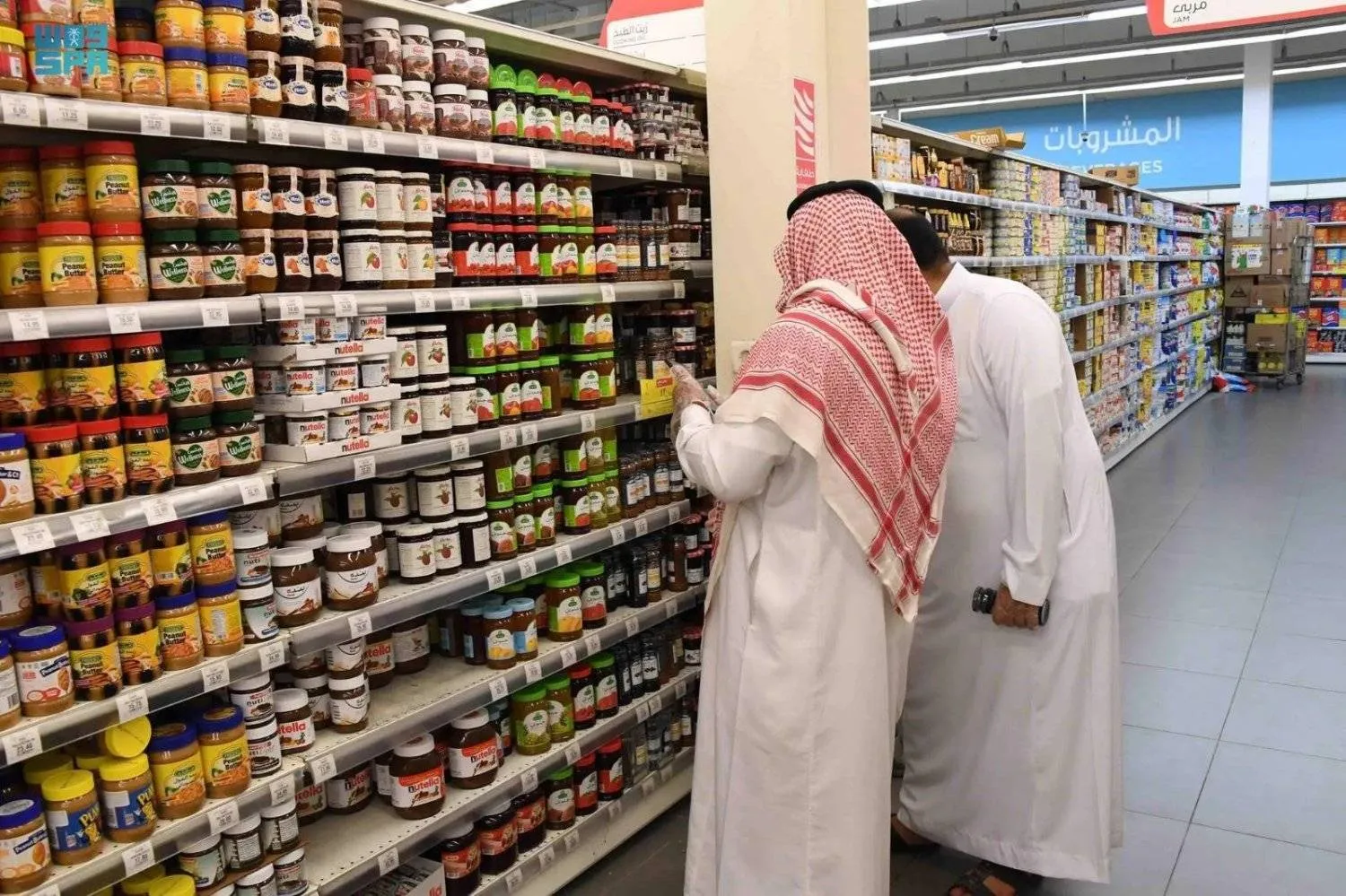

Saudi Inflation Hits Two-Year Low in December

The Saudi government is working to provide strategic reserves for essential goods (SPA)
TT

Saudi Inflation Hits Two-Year Low in December

The Saudi government is working to provide strategic reserves for essential goods (SPA)

Saudi Arabia’s inflation slowed to 1.5 percent in December 2023, compared to 1.7 percent in the previous month, official data showed.

This places the Kingdom second among G20 nations for the lowest inflation rates, following the Netherlands at 1.2%.

According to the latest report from the General Authority for Statistics, the average inflation for all of 2023 was 2.3%, down from 2.5% in 2022.

This falls below the Ministry of Finance’s prediction of 2.6% for 2023, as outlined in the 2024 budget statement.

The report also highlighted a 9% increase in actual housing rents in December (down from 9.4% in November), driven by a 12.1% surge in apartment rental prices.

This category heavily influenced the December 2023 annual inflation rate, given its substantial 21% weight in the index.

Food and beverage prices also increased by 1.2%, affected by the increase in the prices of milk, dairy products, and eggs by 4.1 percent.

The restaurants and hotels segment also recorded an increase of 2.5%, affected by the increase in the prices of catering services by 2.2%.

The entertainment and culture sector recorded an increase of 1.0%, affected by the increase in the prices of holiday and tourism offers by 7.1%, and the education segment also recorded an increase of 0.8%, affected by the increase in middle and secondary education fees by 3.1%.

The Authority said that the prices of the home furnishings and equipment recorded a decrease of 3.2%, affected by a decrease in the prices of furniture, carpets and floor coverings by 4.9% and the prices of the clothing and shoes also decreased by 4.2%.

This was affected by a decrease in the prices of ready-made clothing by 6.6% and prices of the transport decreased by 1.3 %, affected by the decrease in vehicle purchase prices by 2.5 %.



US Reaches Trade Deal to Lower Taiwan's Tariff Barriers

Containers stacked at the port of Keelung in northern Taiwan (Reuters file photo)
TT

US Reaches Trade Deal to Lower Taiwan's Tariff Barriers

Containers stacked at the port of Keelung in northern Taiwan (Reuters file photo)

The Trump administration reached a trade deal with Taiwan on Thursday, with Taiwan agreeing to remove or reduce 99% of its tariff barriers, the office of the US Trade Representative said.

The agreement comes as the US remains reliant on Taiwan for its production of computer chips, the exporting of which contributed to a trade imbalance of nearly $127 billion during the first 11 months of 2025, according to the Census Bureau.

Most of Taiwan’s exports to the US will be taxed at a 15% rate, the USTR's office said. The 15% rate is the same as that levied on other US trading partners in the Asia-Pacific region, such as Japan and South Korea.

Trade Representative Jamieson Greer and Commerce Secretary Howard Lutnick attended the signing of the reciprocal agreement, which occurred under the auspices of the American Institute in Taiwan and the Taipei Economic and Cultural Representative Office in the United States. Taiwan’s Vice Premier Li-chiun Cheng and its government minister Jen-ni Yang also attended the signing.

“President Trump’s leadership in the Asia-Pacific region continues to generate prosperous trade ties for the United States with important partners across Asia, while further advancing the economic and national security interests of the American people,” The Associated Press quoted Greer as saying in a statement.

The Taiwanese government said in a statement that the tariff rate set in the agreement allows its companies to compete on a level field with Japan, South Korea and the European Union. It also said the agreement “eliminated” the disadvantage from a lack of a free trade agreement between Taiwan and the US.

The deal comes ahead of President Donald Trump’s planned visit to China in April and suggests a deepening economic relationship between the US and Taiwan.

Cheng said Taiwan hopes the agreement will make it a strategic partner with the US “so as to jointly consolidate the democratic camp’s leading position in high technology.”

The agreement would make it easier for the US to sell autos, pharmaceutical drugs and food products in Taiwan. But the critical component might be that Taiwanese companies would invest in the production of computer chips in the US, possibly helping to ease the trade imbalance.

In a separate but related deal, Taiwan will make investments of $250 billion in US industries, such as computer chips, artificial intelligence applications and energy. The Taiwanese government says it will provide up to an additional $250 billion in credit guarantees to help smaller businesses invest in the US.

The investments helped enable the US to reduce its planned tariffs from as much as 32% initially to 15%.

Taiwan's government said it will submit the reciprocal trade deal and investment plans to its legislature for approval.

In Taipei, President Lai Ching-te told reporters that Taiwan had agreed to reduce tariffs on imports from the US but stressed that the rate on 93 items would remain unchanged to protect important agriculture and industrial sectors such as rice farming.

The US side said the deal with Taiwan would help create several “world-class” industrial parks in America in order to help build up domestic manufacturing of advanced technologies such as chips. The Commerce Department in January described it as “a historic trade deal that will drive a massive reshoring of America’s semiconductor sector.”

In return, the US would give preferential treatment to Taiwan regarding the possible tariffs stemming from a Section 232 investigation of the importing of computer chips and semiconductor manufacturing equipment.


Saudi Industry Minister Discusses Localization of Medical Device Manufacturing with Global Firms in Belgium

Saudi Minister of Industry and Mineral Resources Bandar Alkhorayef  (center) during one of his meetings in Brussels on Thursday. (SPA)
Saudi Minister of Industry and Mineral Resources Bandar Alkhorayef (center) during one of his meetings in Brussels on Thursday. (SPA)
TT

Saudi Industry Minister Discusses Localization of Medical Device Manufacturing with Global Firms in Belgium

Saudi Minister of Industry and Mineral Resources Bandar Alkhorayef  (center) during one of his meetings in Brussels on Thursday. (SPA)
Saudi Minister of Industry and Mineral Resources Bandar Alkhorayef (center) during one of his meetings in Brussels on Thursday. (SPA)

Saudi Minister of Industry and Mineral Resources Bandar Alkhorayef held talks in Brussels on Thursday with Pfizer Global President of Emerging Markets Nick Lagunowich and a number of the company’s leaders to discuss ways to boost industrial cooperation and explore opportunities to localize pharmaceutical and vaccine manufacturing in Saudi Arabia.

The meeting addressed areas of cooperation, the exchange of expertise, and the transfer of advanced technologies for the manufacturing of vaccines and biopharmaceuticals to the Kingdom, as well as boosting integration into pharmaceutical supply chains and developing joint investments in high-quality projects that support the Kingdom’s drug security objectives.

Alkhorayef toured Pfizer’s manufacturing units in Brussels, where he was briefed on the company’s operations, key investments, and operational tracks in the pharmaceutical and vaccine industry. Factory officials highlighted its pivotal role in producing vaccines and biopharmaceuticals globally and stressed their interest in transferring similar technologies to the planned factory in the Kingdom.

Alkhorayef also met with the president of Agfa HealthCare to discuss opportunities for cooperation in the manufacturing of medical devices and advanced industrial solutions.

He toured the company’s industrial facilities, reviewing its efforts to develop medical device solutions, digital health data management systems, and the latest radiology technologies, as well as its capabilities in producing specialty chemicals and green hydrogen membranes.

These meetings and field visits are part of the Alkhorayef’s official visit to Belgium and aim to bolster economic partnerships, attract high-quality investments, and transfer advanced technologies in the pharmaceutical and medical industries in line with the objectives of the National Industrial Strategy and Saudi Vision 2030.


Saudi General Authority of Civil Aviation to Hold 4th Future Aviation Forum 2026 in April 

General view of Riyadh city during the early hour of evening at Riyadh, Saudi Arabia, May 28, 2025. (Reuters)
TT

Saudi General Authority of Civil Aviation to Hold 4th Future Aviation Forum 2026 in April 

General view of Riyadh city during the early hour of evening at Riyadh, Saudi Arabia, May 28, 2025. (Reuters)

Under the patronage of Custodian of the Two Holy Mosques King Salman bin Abdulaziz Al Saud, the General Authority of Civil Aviation (GACA) will organize the fourth annual Future Aviation Forum in Riyadh from April 20 to 22.

Minister of Transport and Logistic Services and GACA Board Chairman Saleh Al-Jasser expressed his gratitude to King Salman and Prince Mohammed bin Salman bin Abdulaziz Al Saud, Crown Prince and Prime Minister, for the unlimited support extended to the transport and logistics sector.

He said that holding the forum under King Salman's patronage reflects the leadership’s commitment to boosting the Kingdom’s position as a global logistics hub linking three continents, in line with the objectives of the National Transport and Logistics Strategy.

The forum offers an international platform for exchanging innovative solutions that boost efficiency and sustainability in the aviation sector, he added according to the Saudi Press Agency.

More than 120 countries and over 11,000 aviation industry experts will take part in the event. The forum will discuss global aviation sector issues, environmental sustainability development, and the enablement of advanced air mobility.

It will also focus on advancing the objectives of the Aviation Program aimed at transforming the Kingdom into a leading logistics hub in the Middle East and providing an attractive investment environment.