What Does Red Sea Disruption Mean for Europe’s Economy? 

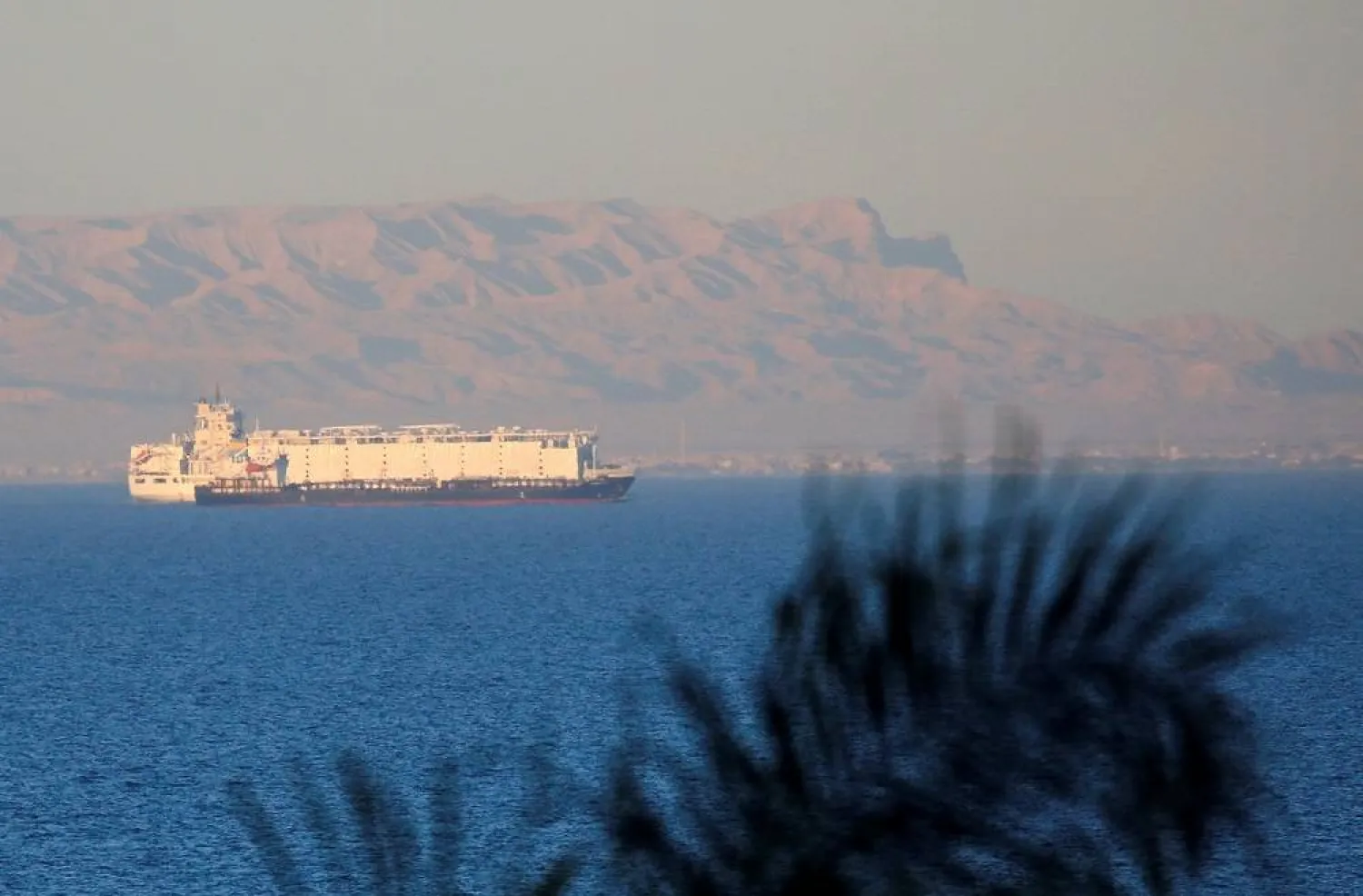
Container ships sail across the Gulf of Suez towards the Red Sea before entering the Suez Canal, in El Ain El Sokhna in Suez, east of Cairo, Egypt, March 17, 2018. Picture taken March 17, 2018. (Reuters)
TT

What Does Red Sea Disruption Mean for Europe’s Economy? 

Container ships sail across the Gulf of Suez towards the Red Sea before entering the Suez Canal, in El Ain El Sokhna in Suez, east of Cairo, Egypt, March 17, 2018. Picture taken March 17, 2018. (Reuters)

Weeks of attacks by the Iranian-backed Houthi militias on vessels in the Red Sea have disrupted shipping in the Suez Canal, the fastest sea route between Asia and Europe carrying 12% of global container traffic.

For the European economy, already skirting a mild recession as it tries to shake off high inflation, prolonged disruption would be a new risk to its outlook and could derail plans by central banks to start cutting interest rates this year.

Here are some factors that policymakers are considering as they assess the situation and its implications:

WHAT HAS BEEN THE IMPACT ON THE EUROPEAN ECONOMY SO FAR?

In macroeconomic terms, small to negligible. While Germany's Economy Ministry stressed it was monitoring the situation, it said this week that the only noticeable impact on output so far had been a few cases of stretched delivery times.

Bank of England chief Andrew Bailey concurred, telling a parliamentary hearing it "hasn't actually had the effect that I sort of feared it might", while acknowledging the uncertainties remained real.

No impact from the attacks has yet turned up in Europe's main economic indicators - including December inflation numbers, which ticked up slightly across the region on a mix of largely expected statistical effects, some one-offs and some pressure on prices for services.

That might change - watch next Wednesday's preliminary PMI readings for activity in European economies in January, and Feb. 1's first estimate of euro zone inflation for the same month. ECB President Christine Lagarde may well broach the subject in her news conference after next Thursday's rate-setting meeting.

BUT WHY ISN'T IT FEEDING THROUGH TO THE ECONOMY YET?

The main reason is probably that the global economy as a whole is still performing below par, which means there is plenty of slack in the system.

Take oil prices, the most obvious channel through which Middle East troubles could hit economies in Europe and beyond.

They haven't taken off yet because, as International Energy Agency executive director Fatih Birol told Reuters this week, supplies are solid and demand growth is slowing.

"I don't expect a major change in the oil price because we have an ample amount of oil coming in the market," he said.

German logistics giant DHL said it still had available air freight capacity - not an option for everyone - because the global economy was "not really pumping yet"

This subdued economic picture also makes it harder for companies to pass onto consumers any increases in costs they are encountering, for example by having to re-route around Africa. Many of them have rebuilt margins in the past year and accept they might simply have to suck this one up.

"Our best forecast at the minute is we're able to absorb the incremental cost that we estimate will come through and still achieve ... gross margin improvement," Poundland owner Pepco Group's executive chairman Andy Bond told Reuters.

Furniture retailer IKEA even said it would stick to planned price cuts and had the stocks to absorb any supply chain shocks. As long as that remains the case for enough companies, the disruption will not move the dial on consumer price inflation.

SO, CAN EUROPEAN POLICYMAKERS SIMPLY LOOK THROUGH THIS?

No - because the longer the disruption goes on for, the more likely it is to take a toll on the wider economic picture, even if gradually.

Using an IMF estimate of the impact of freight cost rises, Oxford Economics in a Jan. 4 note estimated gains in container transport prices would add 0.6 percentage points to inflation in a year's time. The ECB is expecting euro zone inflation to fall from 5.4% in 2023 to 2.7% this year.

"While this suggests that a sustained closure of the Red Sea wouldn't prevent inflation from falling, it would slow the speed at which it returns to normal," Oxford Economics concluded. It did not see this preventing an expected pivot to lower interest rates, however.

At the margins, the Houthi attacks and wider troubles in the Middle East represent one of the "geopolitical risks" that get referred to in the minutes of central bankers' monetary policy discussions. The fear is of escalation - and that fear itself may feed into the decisions that emerge.

Finally - and we may still be some way off this - there is the possibility the situation will encourage companies to advance plans drawn up after the COVID-19 pandemic disrupted trade for alternative, more predictable supply routes.

That could involve longer but more secure trade paths and "near-shoring" or "re-shoring" to bring production closer to key markets. But whatever options are explored, the likelihood is that they all have one thing in common - higher costs.


World Food Prices Dip in October, but Remain Higher Than a Year Ago

A worker carries loaves of bread for sale at a bakery in the capital city of Cairo, Egypt November 4, 2026. (Reuters)
TT

World Food Prices Dip in October, but Remain Higher Than a Year Ago

A worker carries loaves of bread for sale at a bakery in the capital city of Cairo, Egypt November 4, 2026. (Reuters)

World food prices edged lower in October as weaker import demand contributed to monthly declines in cereal, dairy and meat prices, but were still nearly 6% higher than a year earlier, the United Nations' Food and Agriculture Organization said on Friday.

The FAO Food Price Index, which tracks monthly changes in international prices for a basket of food commodities, ‌averaged 133.9 points ‌in October, down from a revised ‌135.6 ⁠in September.

The index ⁠was 5.9% higher than a year earlier, but remained 16.4% below its March 2022 peak.

FAO's cereal price index fell 4.5% from September and was 12.6% lower than a year ago, as wheat and maize quotations declined. Wheat prices eased on weak import demand ⁠and improved production prospects, especially in Argentina.

"Expectations of ‌easing constraints on Black ‌Sea export flows added to the downward pressure on prices, ‌although continued disruptions to Black Sea logistics limited the decline," ‌FAO said in a statement.

Maize prices also eased after reaching a three-year high in September, pressured by the US harvest, expectations of ample supplies in South America and renewed ‌prospects of easing tensions in the Black Sea region.

Vegetable oil prices edged up 0.3%, ⁠as ⁠higher soybean and sunflower oil prices more than offset a fall in rapeseed oil prices.

Sugar prices rose 6.6%, their fourth straight monthly increase, to the highest level since December 2024, after rainfall disrupted harvesting in Brazil. They were now 28.8% above a year ago.

The dairy index fell 1.1%, as lower butter and cheese prices linked to ample supplies and subdued demand outweighed gains in milk powder.

The meat index declined 1.2%, while still slightly above its year-earlier level, as ovine and bovine meat prices fell.


Copper Falls, Set for Worst Week Since March on AI Rout

Copper at the Aurubis copper smelting and refining plant in Hamburg, Germany. (Reuters)
TT

Copper Falls, Set for Worst Week Since March on AI Rout

Copper at the Aurubis copper smelting and refining plant in Hamburg, Germany. (Reuters)

Copper dropped on Friday and was set for its biggest weekly drop in London since March, as a rout in technology stocks battered markets.

Benchmark three-month copper on the London Metal Exchange was down 1.3% at $13,663 a metric ton by 0700 GMT. That placed it on track to fall 3.44% in the week, Reuters said.

The most-traded copper contract on the Shanghai Futures Exchange fell 1.08% to 106,830 yuan ($16,018.17) a ton.

The weakness reflects worries over AI investment, ‌with copper increasingly ‌influenced by "sentiment towards data center expansion," said ‌Craig ⁠Lang, principal analyst ⁠at CRU.

Technology shares were battered after Democratic wins in the US midterms fueled concerns that new regulatory oversight could cap the AI buildout.

On the other hand, supply constraints cushioned copper's decline.

"I would be cautious about calling this a sustained correction, given ongoing mine supply challenges and exceptionally tight ⁠metal availability outside the US," Lang said.

Copper stocks ‌in SHFE-monitored warehouses <CU-STX-SGH> fell by ‌over 24% this week to just 33,848 tons — the lowest ‌in almost three years. The closely watched Yangshan copper ‌premium <SMM-CUYP-CN>, a gauge of appetite for imports into key consumer China, increased to $210 a ton on Thursday, matching its record high.

Smelters in the country are facing a double squeeze of negative treatment ‌charges and lower sulfuric acid prices.

Meanwhile, warehouse inventories outside the US have been drawn ⁠down as ⁠material was pulled into the country ahead of a potential tariff on imports of refined copper.

"These physical constraints should provide some support against weaker investor sentiment," Lang said.

Among LME metals, aluminium lost 0.54%, zinc lost 1.42%, lead lost 0.45%, nickel dipped 0.23% and tin gained 0.83%.

On the SHFE, aluminium nudged down only 0.04%, zinc lost 1.35%, lead was little changed, down only 0.03%, nickel rose 2.14% and tin dropped 3.45%.

SHFE inventories were down across the board this week, led by sharp drops in aluminium <AL-STX-SGH> and lead <PB-STX-SGH>.


Emerging Economies Set to Match Advanced Nations’ Renewable Capacity Additions, IEA Says

Workers walk at Kalyon Karapinar solar power plant in Karapinar, Konya province, Türkiye, Oct. 14, 2026. (AP)
TT

Emerging Economies Set to Match Advanced Nations’ Renewable Capacity Additions, IEA Says

Workers walk at Kalyon Karapinar solar power plant in Karapinar, Konya province, Türkiye, Oct. 14, 2026. (AP)

Emerging ‌and developing economies outside China are expected to add as much new renewable energy capacity as advanced economies for the first time over the next five years, driven by the current energy crisis, the International Energy Agency said on Friday.

Gas and oil prices have soared this year as the US-Iran war disrupts traffic through the Strait of Hormuz, a key route for global oil and gas trade.

Global renewable energy ‌capacity is forecast ‌to increase by almost 4,800 gigawatts ‌between ⁠2026 and 2031, ⁠the IEA said in its annual outlook.

Emerging and developing economies are expected to add about 1,100 GW, roughly the same as advanced economies, with China adding around 2,550 GW, the agency said.

Capacity growth in Southeast Asia, Africa and the Middle East is ⁠expected to triple over the period, ‌led mainly by solar installations, ‌the IEA said.

China will remain the biggest contributor to ‌global renewable energy growth, although its share is ‌forecast to fall to 53% by 2031 from 60% in 2025.

India is emerging as the world's second-fastest deployer of renewables and is expected to more than double its contribution ‌to global growth by 2031 to nearly 8.5%.

Grid connection delays remain ⁠a major ⁠challenge, with projects awaiting connections worldwide rising 60% over the past year, equivalent to four times the wind and solar capacity connected to grids during the same period.

Grid constraints are expected to slow growth in advanced economies, with annual additions in Europe through 2031 forecast to remain broadly in line with 2025 levels.

Renewable energy is expected to meet 6% of global transport energy demand by 2031, while higher fuel-blending mandates prompted the IEA to raise its biofuels forecast by 40% from last year's report.