AlUla Arts Festival Kicks Off With Participation of International Artists

The third annual AlUla Arts Festival will take place across 22 days in the stunning landscape of the ancient oasis of AlUla.
TT

AlUla Arts Festival Kicks Off With Participation of International Artists

The third annual AlUla Arts Festival will take place across 22 days in the stunning landscape of the ancient oasis of AlUla.

The third annual AlUla Arts Festival, under its new banner of Art Unframed, with an expansive program of events, exhibitions, and creative initiatives, will take place across 22 days in the stunning landscape of the ancient oasis of AlUla, SPA said on Saturday.
Inaugurated in 2022, and part of the annual AlUla Moments calendar of events, the AlUla Arts Festival features an exciting mix of creativity, including local, regional, and international artists, performers, curators, collectors, and more.
The winner of the largest art prize in the Middle East and North Africa (MENA), Obaid Alsafi, unveils his winning artwork, Palms in Eternal Embrace. The sixth annual prize run by the King Abdulaziz Center for World Culture (Ithra) is the first in collaboration with Arts AlUla, as part of a wider partnership between both organizations to combine their respective efforts to support creativity.
Wadi Al Fann presents Manal Al Dowayan, one of Saudi Arabia's most significant contemporary artists, in the lead-up to her new land-art commission, Oasis of Stories, a large-scale labyrinthine installation inspired by AlUla Old Town, which will be permanently placed in AlUla’s monumental desert landscape in 2026.
During the AlUla Arts Festival, two adjacent exhibitions -- featuring drawing, ceramic, soft sculpture, painting and weaving -- take place in AlJadidah Arts District, at the heart of AlUla’s community.
The first exhibition marks a milestone in the development of Oasis of Stories: on display are hundreds of drawings gathered from the artist’s participatory workshops with communities across AlUla. These drawings and stories will eventually be inscribed into the walls of Oasis of Stories, enabling AlUla’s residents to leave their permanent trace in Wadi Al Fann.
A parallel exhibition presented in collaboration with Sabrina Amrani Gallery, titled, “Their Love Is Like All Loves, Their Death Is Like All Deaths,” delves further into AlDowayan’s practice, with works including: soft sculptures made of tussar silk printed with images related to AlUla’s heritage; labyrinth-like drawings inspired by AlUla Old Town; engraved clay works made of mud gathered from across Saudi Arabia; and wall pieces featuring Sadu textile weaving, a technique traditionally used by Bedouin women.
AlUla presents two Artist Residency exhibitions, the Visual Art Residency exhibition “The Shadow Over Everything,” and the Design Residency exhibition “Unguessed Kinships,” which will run until April 30, emphasizing AlUla's emerging role as a focal point for cultural exchange and artistic innovation in the region.
Images by artist Hassan Hajja,j renowned for work that merges contemporary art, fashion and cultural identity, will be featured. He photographed local people and residents in February 2023 in an outdoor studio at Madrasat Addeera.
AlUla presents an exhibition of contemporary works by Saudi artists on loan from collectors in Saudi Arabia, hosted at Maraya. Curated by Dr. Effat Abdullah Fadag, the exhibition will re-canonize the history of the contemporary art movements in Saudi Arabia, documenting the story of artists and the role of collectors in the development of the art scene. The exhibition will run from February 9 to April 27 and is part of the pre-opening program for the future contemporary art museum in AlUla.
Following two exhibitions since 2020, the international open-air art exhibition Desert X AlUla returns for its third edition from 9 February 9 to March 23, placing visionary contemporary artworks by Saudi and international artists amidst the extraordinary desert landscape of AlUla.


Pakistan's Last Antique Restorers Give Old Treasures New Life

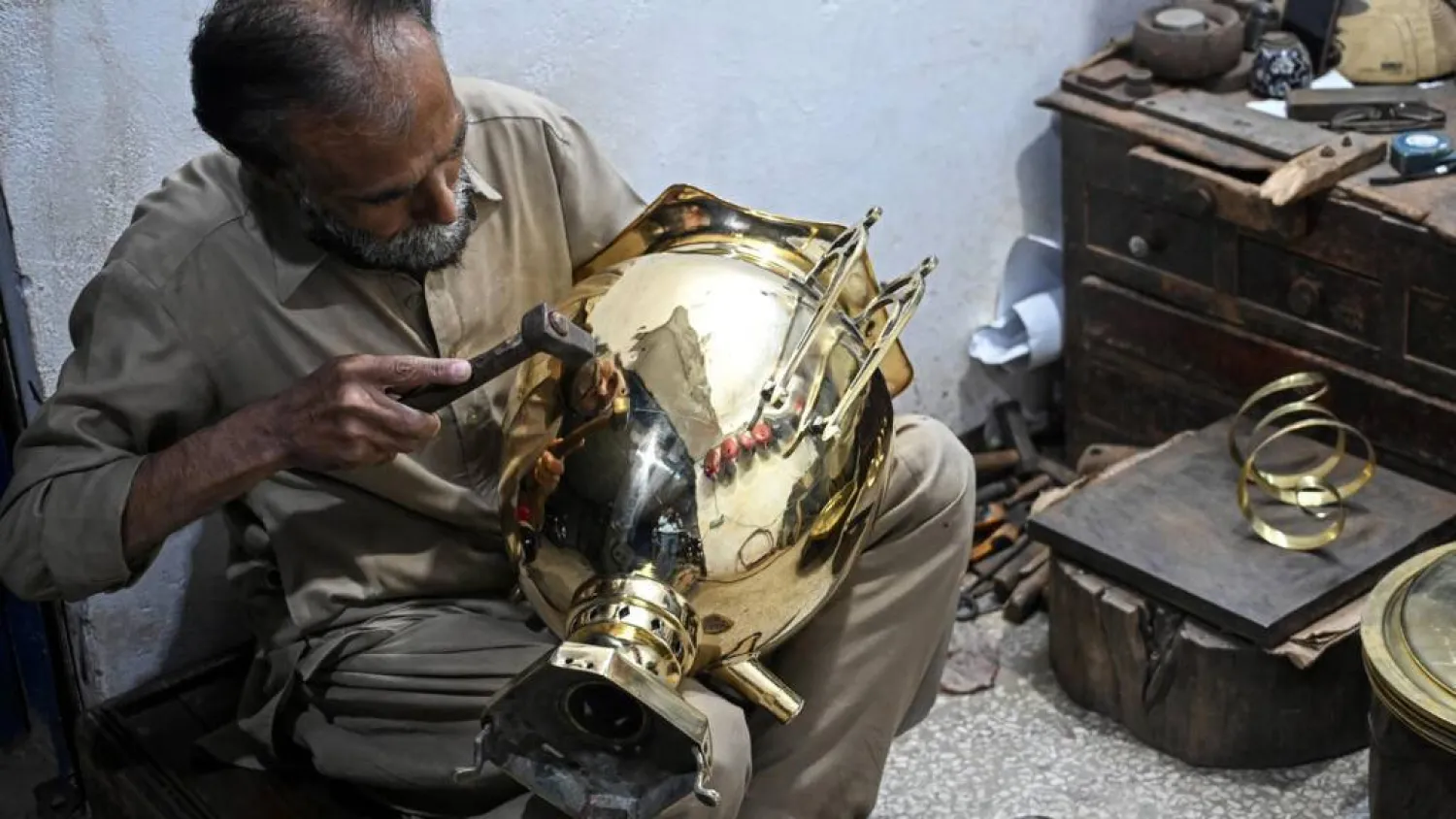
Restorer Shakeel Ahmed works on an antique at his workshop in Rawalpindi. Farooq NAEEM / AFP
TT

Pakistan's Last Antique Restorers Give Old Treasures New Life

Restorer Shakeel Ahmed works on an antique at his workshop in Rawalpindi. Farooq NAEEM / AFP

Sitting outside his small shop in a warren of alleyways in the ancient Pakistani city of Rawalpindi, Ahsan Shakeel buffed an antique brass pot to a high shine, pressing it against a mechanized wheel.

"We've removed all the dents, but it still needs polishing," the 72-year-old restorer, among the last still practising his craft, told AFP as the spinning buffer sent fine metal dust into the air.

Quitting a job as a hotel cook, Shakeel followed in his father's footsteps to become an antiques restorer, opening his workshop in the Bhabra Bazaar market in densely populated Rawalpindi in 1980.

Today, he is one of the last master restorers preserving antique metalware in Pakistan.

Rawalpindi's roots stretch back to prehistoric human settlements and over centuries the garrison city evolved into a major commercial hub where metalcraft from the Mughal and British colonial periods converged.

Moving inside his shop, Shakeel navigated wall-to-wall shelves stacked with centuries-old ewer jugs, samovars for boiling, dishes, jars and teapots, most of which were made of copper or brass.

He took down various items and enthusiastically explained to AFP their materials and origins.

The vintage items are now increasingly rare in the modern era in which they have been replaced by stainless steel and plastic kitchenware.

"I used to travel everywhere, Lahore, Gujranwala, Karachi, back and forth (to purchase antiques)," he said.

- 'Life back into the dead' -

Shakeel procures the items he restores mostly from scrap yards, ports, or household clearances.

"Often, the condition of the items is so bad that no one would buy them," he said.

The shop owner and his colleague Shakeel Ahmed restore the battered items by hammering out dents, re-tinning the interiors over coal fires, and polishing the metal. A badly damaged item could take a few days to fix.

After restoration, a piece can sell between $100 and $1,000. Shakeel's customers are mostly collectors or antique enthusiasts, including foreigners.

Today, he mostly relies on online platforms and messaging applications to buy and sell antiques.

"I don't have the same health anymore, so I travel less," he said.

Prices for antiques are on the increase but the number of customers has fallen over time, Shakeel said.

"The money doesn't turn over quickly in this business. It's a very slow trade," he said.

"Customers who still exist, they are not many. They collect these things because they understand these items. Those who don't understand them would think it's all useless," Shakeel added.

Ahmed said he enjoyed restoring worn and damaged objects because they carry stories within them from different communities in the past or historical periods.

"This is a very old thing," the 56-year-old man said at his own dimly lit workshop, as he gently used a small hammer to smooth out little dents on a large brass hookah pipe for smoking tobacco.

"What we do is like putting life back into the dead," Ahmed said.


Qassim Artisans Repurpose Date Pits into Value-Added Prayer Beads

Qassim Region are converting discarded date pits into handcrafted prayer beads (subha)
TT

Qassim Artisans Repurpose Date Pits into Value-Added Prayer Beads

Qassim Region are converting discarded date pits into handcrafted prayer beads (subha)

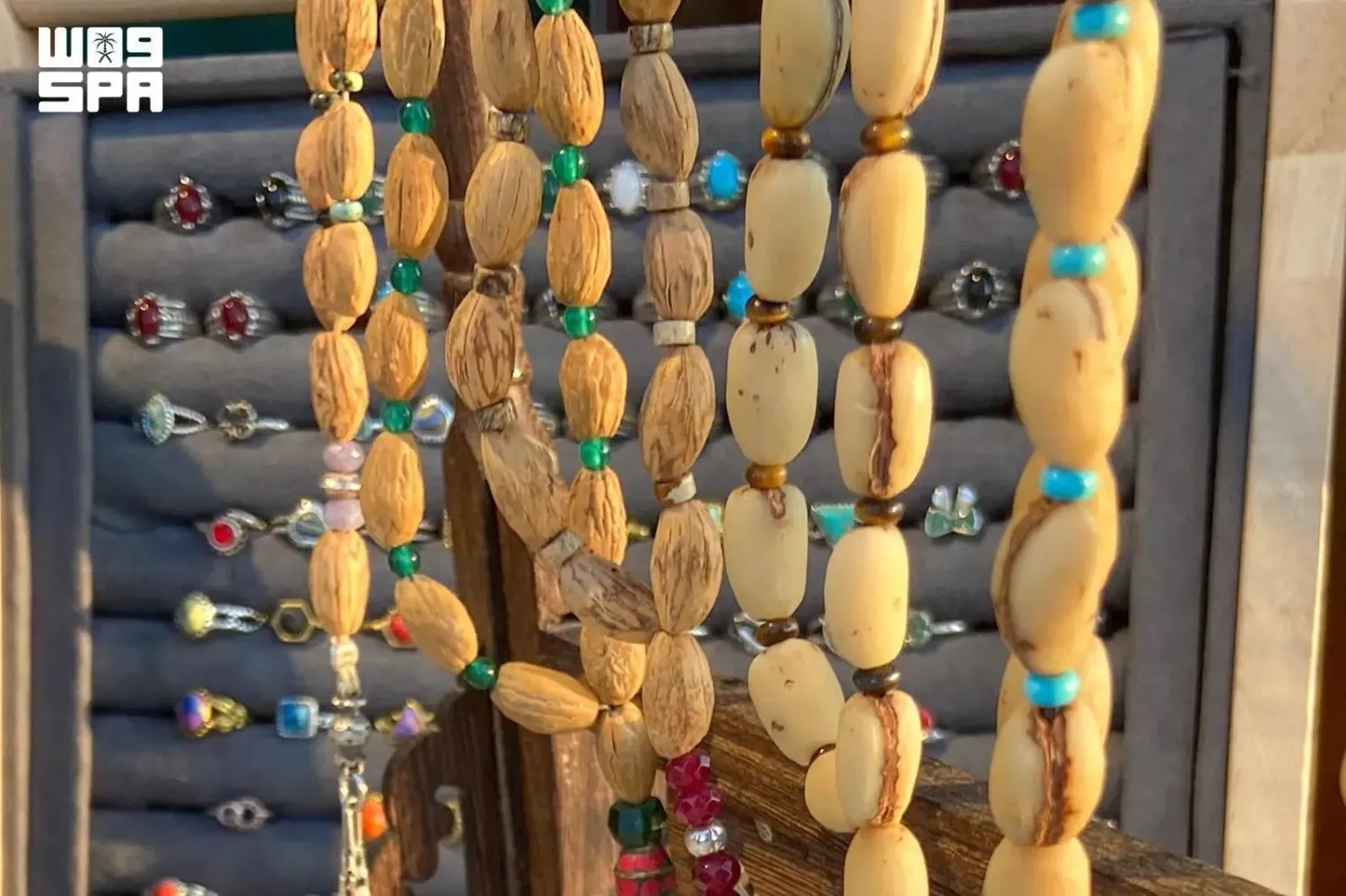
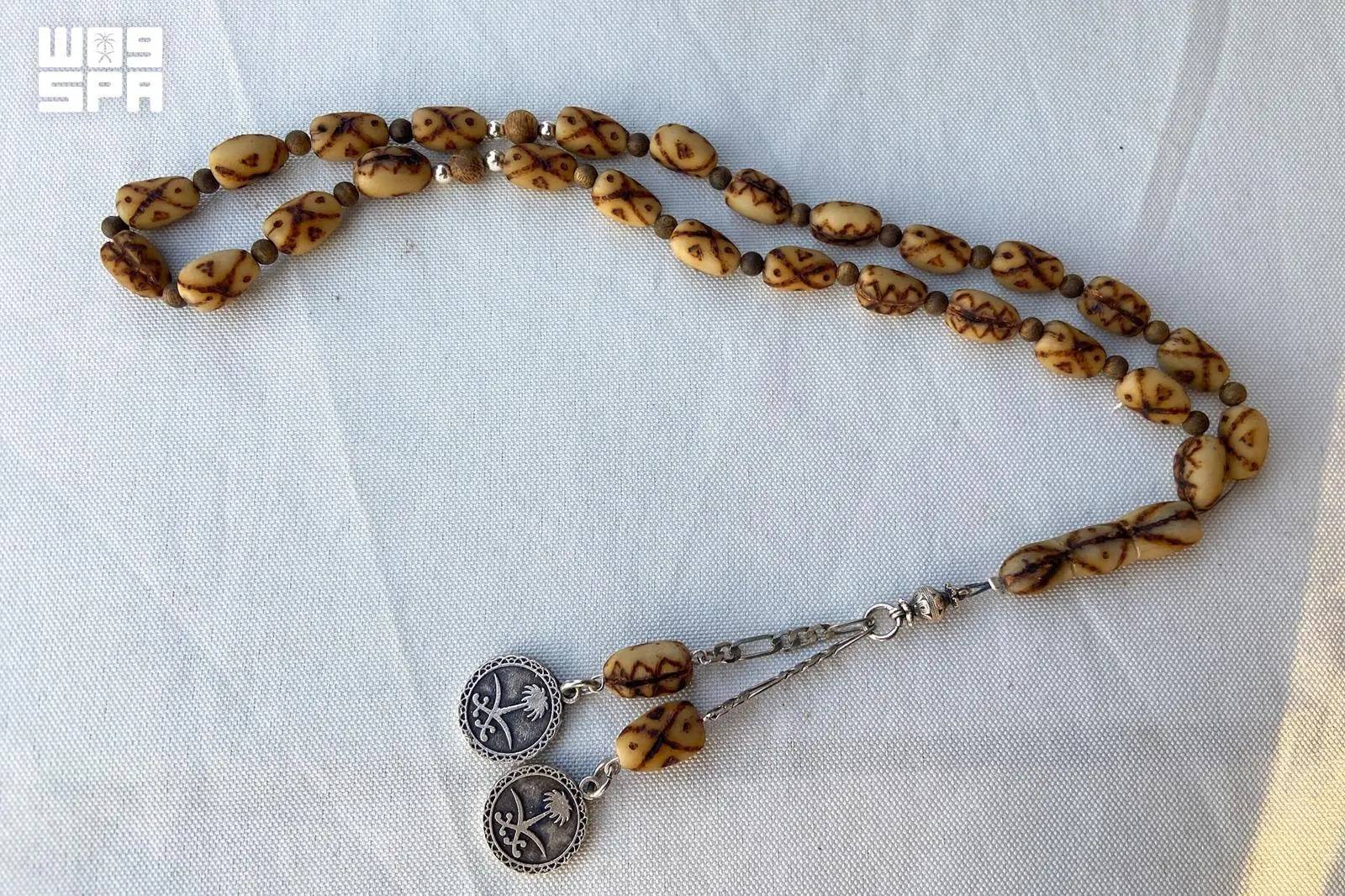
In a creative convergence of traditional heritage, sustainable manufacturing, and resource efficiency, artisans in Qassim Region are converting discarded date pits into handcrafted prayer beads (subha), transforming an agricultural by-product into a high-value consumer item, the Saudi Press Agency reported.

The production journey involves a multi-stage process encompassing sorting, cleaning, drying, precise drilling, sanding, polishing, stringing, and final packaging. The resulting product retains the natural texture, color variations, and contours of the palm seed, reflecting the Kingdom's broader drive to foster innovative secondary industries across the date value chain.

The production journey involves a multi-stage process encompassing sorting, cleaning, drying, precise drilling, sanding, polishing, stringing, and final packaging.

Speaking to the Saudi Press Agency, artisan Noura Al-Harbi explained that the craft requires meticulous manual skill. She stated that after selecting pits of comparable size, artisans drill them for threading, buff rough contours, and polish the surfaces to showcase their organic aesthetic before assembling them with regional decorative motifs. Because no two date pits are identical, each finished rosary possesses a distinct texture and individuality.

Al-Harbi emphasized that the market value of date-pit rosaries is elevated by their symbolic connection to the date palm, a central fixture of Saudi agricultural and cultural identity. This narrative creates strong commercial potential within cultural tourism, corporate gifts, and keepsake sectors, allowing visitors to acquire a product directly tied to local heritage.

The enterprise embodies principles of the circular economy by repurposing agricultural waste from farms and processing plants into marketable craft products. Al-Harbi noted that integrating semi-automated tools for drilling and cutting with manual finishing could scale production volumes while maintaining artisanal quality.

Bridging agriculture, creative entrepreneurship, and tourism, the craft highlights how supporting local artisans and modernizing packaging can expand the economic footprint of the Kingdom's date sector beyond food consumption, creating new avenues for sustainable cottage industries.


Riyadh Art Brings Monumental Works by Saudi Artist Mohammed Al Saleem to its Permanent Collection of Public Art

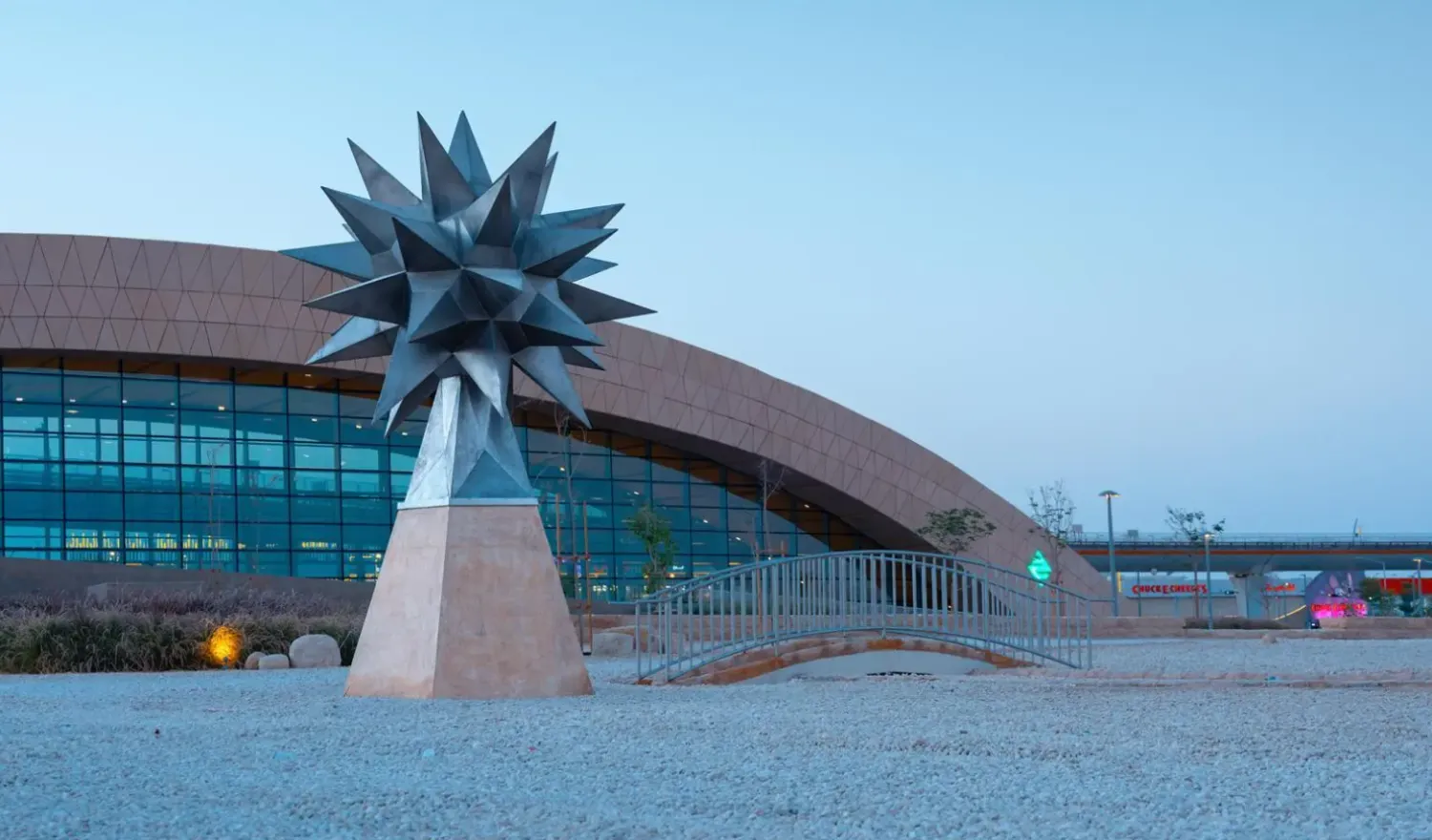
Created by Saudi-based architecture and engineering consultancy Omrania, the Western Metro Station reinterprets desert sand dunes through earth-colored forms that define entrances - SPA
TT

Riyadh Art Brings Monumental Works by Saudi Artist Mohammed Al Saleem to its Permanent Collection of Public Art

Created by Saudi-based architecture and engineering consultancy Omrania, the Western Metro Station reinterprets desert sand dunes through earth-colored forms that define entrances - SPA

Riyadh Art announced the addition of seven monumental sculptures by pioneering Saudi artist Mohammed Al Saleem to the Riyadh Art permanent collection. Six works have been installed at Western Metro Station on Line 3 (Orange Line) in Riyadh, with the seventh scheduled for installation at a later date.

The sculptures bring an important part of Al Saleem's artistic practice into the city for which they were originally conceived.

Created in 1985 for a Riyadh Municipality public art competition but never installed, the seven works remained in Al Saleem's workshop for decades. In 2022, the Royal Commission for Riyadh City acquired the sculptures and undertook their restoration and conservation, supervised by his daughter, Najla Mohammed Al Saleem, and Al Saleem's foundation, Dar Al-Funoon Al-Sa'udiyyah, to preserve the artist's original vision, SPA reported.

The seven works are Al Showkah Al Khumasiyah (The Pentagon Thorn), Shurfa (Parapet Merlon), Al Kurah (The Ball), Al Mouthalathat (The Triangles), Bur'aum Al Zahrah (The Flower Bud), and Al Ahilla (The Crescents), all installed this August, with Al Nafourah Al Halazouniyah (The Spiral Fountain) due to be installed at a later date. Drawing on desert landscapes, Najdi architecture, geometric forms, and celestial references, the sculptures reflect Al Saleem's distinctive approach to abstraction and the influence of Riyadh and Najd on his practice.

Created by Saudi-based architecture and engineering consultancy Omrania, the Western Metro Station reinterprets desert sand dunes through earth-colored forms that define entrances, allow natural light, and provide shade for pedestrians. Located within Western Station's outdoor plaza, the works bring these references into a contemporary public setting shaped by movement and connection.

"Mohammed Al Saleem holds an important place in the history of modern Saudi art, and his work is deeply connected to Riyadh and the landscape and architecture of Najd," said Senior Director of Riyadh Art Bader AlShenaifi. "Bringing these works into the Riyadh Art permanent collection preserves an important part of Saudi Arabia's artistic heritage while giving Al Saleem's work a lasting presence in the public life of the city that inspired so much of his practice."

The works join the Riyadh Art permanent collection, a citywide collection of public artworks installed across neighborhoods, public spaces, and major transport corridors throughout the capital. The Riyadh Art permanent collection now comprises 82 artworks across the capital.