
Israel Stages Airstrikes across Gaza, Makes Up to 100 Arrests at Nasser Hospital

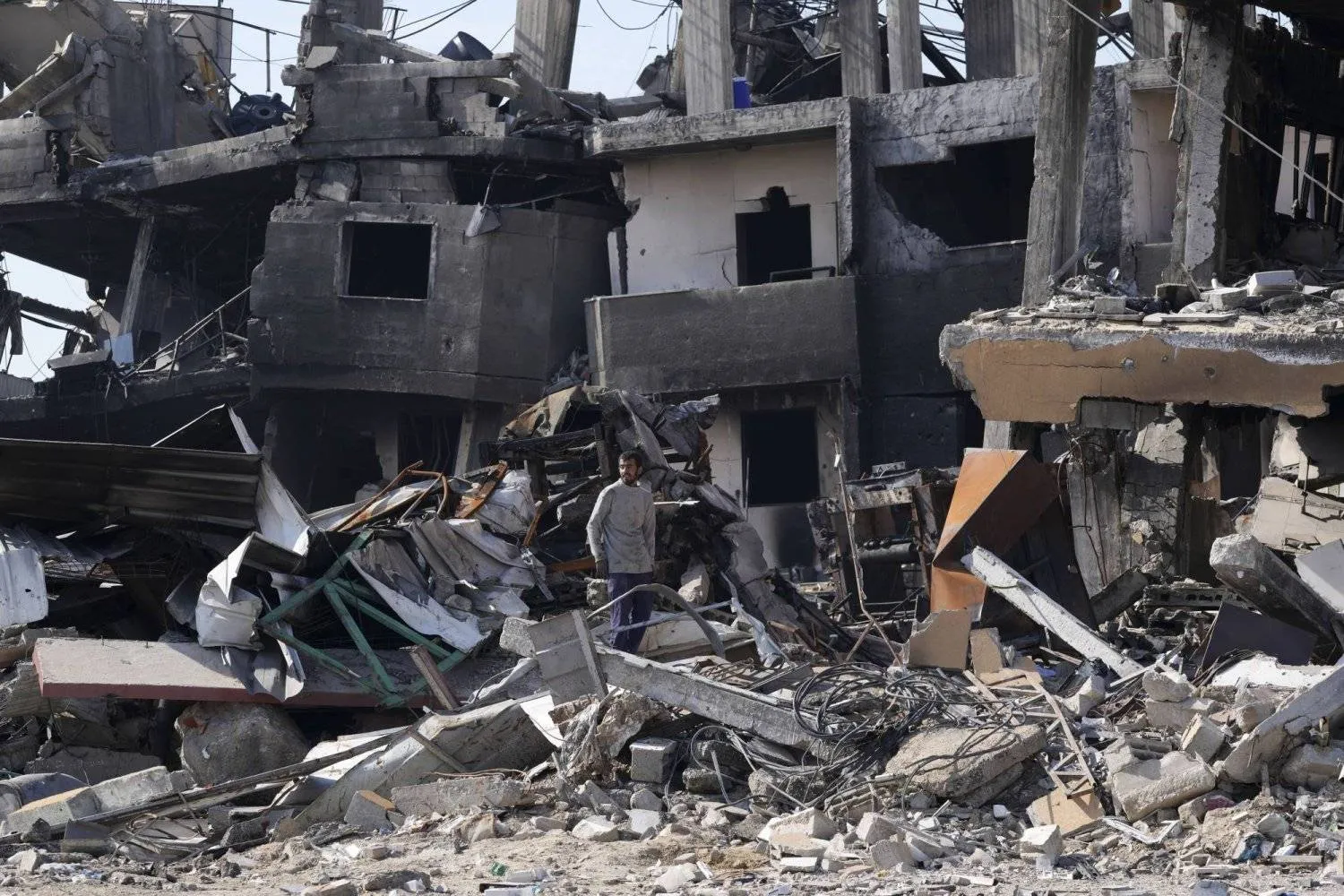
A Palestinian looks at the devastation caused by the Israeli bombing in the Maghazi refugee camp in the central Gaza Strip (AP)
TT

Israel Stages Airstrikes across Gaza, Makes Up to 100 Arrests at Nasser Hospital

A Palestinian looks at the devastation caused by the Israeli bombing in the Maghazi refugee camp in the central Gaza Strip (AP)

Israeli forces carried out arrests in Gaza's largest functioning hospital, health officials and the military said on Saturday, as airstrikes hit across the enclave and rain battered Palestinians taking shelter in Rafah.

Israeli forces raided the Nasser Hospital in Khan Younis on Thursday as they pressed their war on Hamas, the Palestinian Islamist group that rules the enclave.

"Occupation forces detained a large number of medical staff members inside Nasser Medical Complex, which they (Israel) turned into a military base," said Gaza Health Ministry spokesman Ashraf al-Qidra, Reuters reported.

The Israeli military said it was hunting for militants in Nasser and had so far arrested 100 suspects on the premises, killed gunmen near the hospital and found weapons inside it.

Hamas has denied allegations that its fighters use medical facilities for cover. At least two released Israeli hostages have said they were held in Nasser.

The Israeli incursion into the hospital has raised alarm about patients, medical workers and displaced Palestinians sheltering there.

About 10,000 people were seeking shelter at the hospital earlier this week, but many left either in anticipation of the Israeli raid or because of Israeli orders to evacuate, the Gaza Health Ministry said.

Further south in Rafah, where more than half of Gaza's 2.3 million population are sheltering, the winter cold added to already dire conditions when wind blew away some tents of the displaced and rain flooded others.

Israeli plans to storm Rafah have prompted international concern that such action would sharply worsen the humanitarian crisis in Gaza.

Also, Hamas chief Ismail Haniyeh blamed Israel for a lack of progress in achieving a ceasefire deal in Gaza, the group said in a statement on Saturday.

Haniyeh added that Hamas would not accept anything less than a complete cessation of hostilities, Israeli withdrawal from Gaza, and "lifting of the unjust siege," as well as a release of Palestinian prisoners serving long sentences in Israeli jails.

Israeli Prime Minister Benjamin Netanyahu has vowed "complete victory" over Hamas but added on Wednesday that flexibility in the group's position could move forward negotiations for a deal that would see hostages released.

Israel's air and ground offensive has devastated much of Gaza and forced nearly all of its inhabitants from their homes. Palestinian health authorities say 28,858 people, mostly civilians, have been killed.

The war began when Hamas sent fighters into Israel on Oct. 7, killing 1,200 people, mostly civilians, and seizing 253 hostages, according to Israeli tallies.

At least 83 people were killed in airstrikes across the Gaza Strip since Friday, health officials said, including one person on Saturday in Rafah, an area that borders Egypt and which Israel says is Hamas' last bastion.

Across the border, air raid sirens warning of incoming rockets sounded in the southern Israeli city of Ashkelon on Saturday.



War crimes committed in Sudan's El-Fasher: UN report

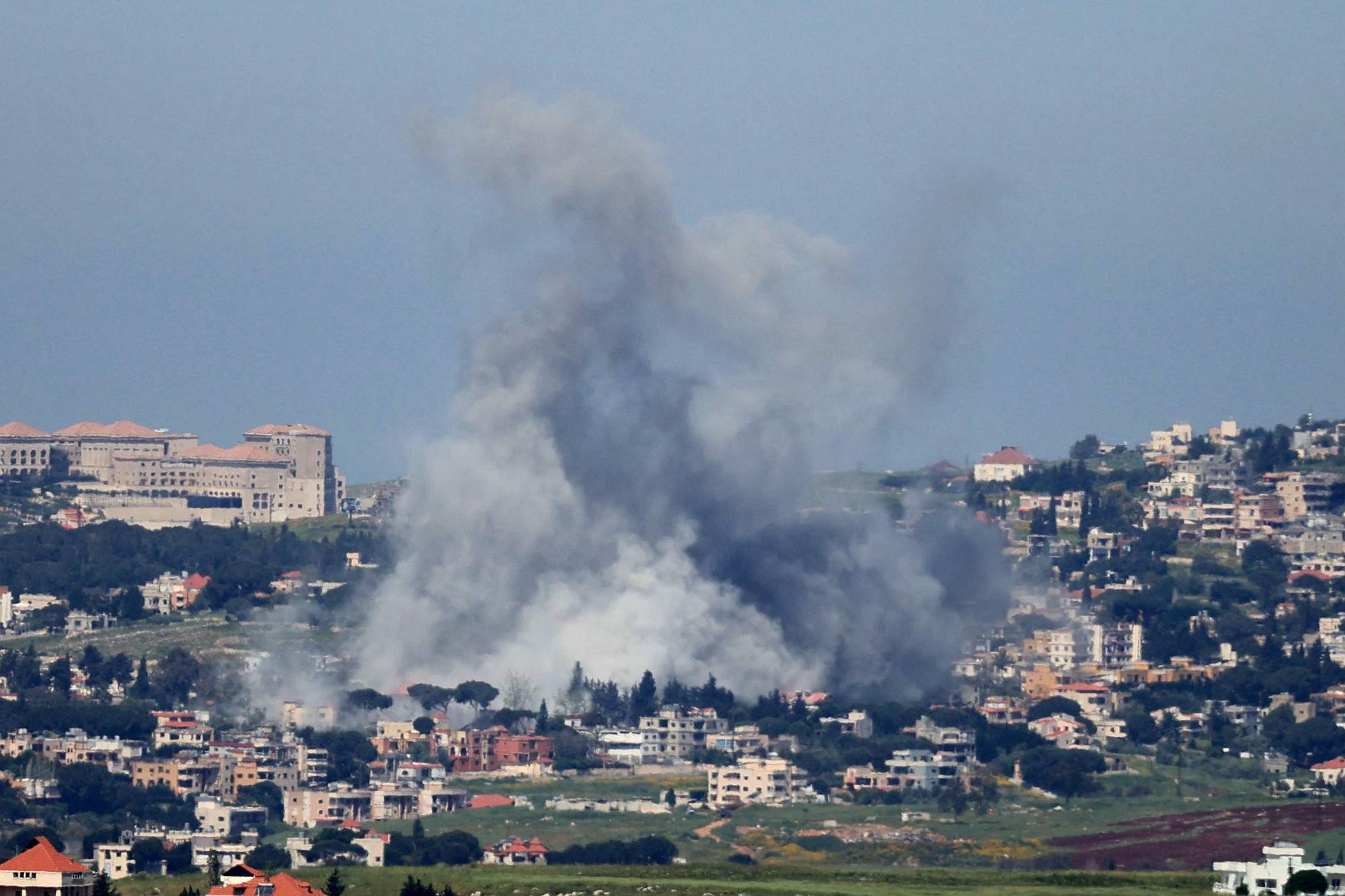
Remnants of a shell that targeted the refugee center, in El Fasher, Sudan, October 7, 2025. REUTERS/Mohyaldeen M Abdallah
TT

War crimes committed in Sudan's El-Fasher: UN report

Remnants of a shell that targeted the refugee center, in El Fasher, Sudan, October 7, 2025. REUTERS/Mohyaldeen M Abdallah

The UN rights office on Friday accused Sudan's Rapid Support Forces of war crimes and possible crimes against humanity during the capture of El-Fasher, saying some 6,000 were killed in just three days.

Since April 2023, the conflict between Sudan's army and the RSF has killed tens of thousands, displaced 11 million and triggered what the UN calls one of the world's worst humanitarian crises.

During its final offensive in October, the RSF unleashed "a wave of intense violence... shocking in its scale and brutality" and amounting to war crimes and possible crimes against humanity, said a report from the UN Human Rights Office, AFP reported.

The report said the RSF and allied Arab militia carried out widespread attacks, including mass killings and summary executions, sexual violence, abductions for ransom, torture and ill-treatment, detention, disappearances, pillage and the use of children in hostilities.

In many cases, these were directed against civilians and people outside combat based on their ethnicity or perceived affiliation, it said.

Based on interviews with over 140 victims and witnesses conducted in Sudan and eastern Chad in late 2025, the Human Rights Office said it documented more than 6,000 killings in the first three days of the RSF offensive.

It said that of those, at least 4,400 people were killed within El-Fasher and over 1,600 others were killed as they fled along exit routes.

"The actual scale of the death toll during the week-long offensive is undoubtedly significantly higher," the office said.

The report voiced serious concerns over the fate of thousands of missing people.

"The unprecedented scale and brutality of the violence meted out during the offensive deeply compounded the horrific violations the residents of El-Fasher had already been subjected to during the long months of siege, constant hostilities and bombardment," said UN rights chief Volker Turk.

He said persistent impunity was fuelling the violence.

"There must be credible and impartial investigations to establish criminal responsibility, including of commanders and other superiors," Turk said.

"These must lead to meaningful accountability for perpetrators of exceptionally serious crimes, through all available means."


US Military Completes Transfer of 5,700 ISIS Detainees from Syria to Iraq

US military vehicles move ahead of buses transporting ISIS detainees from Syria to Iraq, according to a security source from the Syrian Democratic Forces, in Qamishli, Syria. REUTERS/Orhan Qereman
TT

US Military Completes Transfer of 5,700 ISIS Detainees from Syria to Iraq

US military vehicles move ahead of buses transporting ISIS detainees from Syria to Iraq, according to a security source from the Syrian Democratic Forces, in Qamishli, Syria. REUTERS/Orhan Qereman

The US military has completed the transfer of thousands of ISIS group detainees from Syria to Iraq, where they are expected to stand trial in the future, the US Central Command said Friday. 

CENTCOM said that the transfer that began on Jan. 21 saw US forces transporting more than 5,700 adult male ISIS suspects from detention facilities in Syria to Iraqi custody. 

The prisoners were transferred to Iraq at the request of Baghdad — a move welcomed by the US-led coalition that had for years fought against ISIS. 

“We appreciate Iraq’s leadership and recognition that transferring the detainees is essential to regional security,” said Adm. Brad Cooper, CENTCOM commander. 

Iraq's National Center for International Judicial Cooperation said a total of 5,704 suspects from 61 countries who were affiliated with ISIS were transferred from prisons in Syria. 

The Center said most of the suspects were Syrian or Iraqi, though there were other foreign nationals from Europe as well as Australia, Canada and the United States, among other countries. 

Over the past three weeks, the US military escorted the detainees from prisons in northeastern Syria run by the US-backed and Kurdish-led Syrian Democratic Forces, to Baghdad. 

The transfers have helped calm fears that the recent rounds of fighting in Syria between government forces and the SDF would allow the ISIS prisoners to flee from detention camps there and join militant sleeper cells that are still carrying out attacks in both Iraq and Syria. 

Iraq is looking to put on trial some of the thousands of the ISIS detainees who were held for years in Syria without charges or access to the judicial system. 

When ISIS declared a self-proclaimed territory in large parts of Syria and Iraq that the militant group seized in 2014, it attracted extremists from around the world. 

From the caliphate, the extremists plotted attacks around the world that left hundreds dead from Europe to Arab countries and Asia. 

“The successful execution of this orderly and secure transfer operation will help prevent an ISIS resurgence in Syria,” said US Army Maj. Gen. Kevin Lambert, commander of the Combined Joint Task Force – Operation Inherent Resolve, that led the mission planning, coordination, and execution. 

Iraq is in talks with other countries including Arab and Muslim states to repatriate ISIS prisoners, its foreign minister said. 

Speaking in an interview with Reuters on the sidelines of the Munich Security Conference, Fuad Hussein said Baghdad would need financial aid to deal with the influx and was worried about a rise in ISIS activity just over the border in Syria. 


Floods Wreak Havoc in Morocco Farmlands after Severe Drought

Farmers in the North African kingdom have for the past few years endured severe drought © - / AFP
TT

Floods Wreak Havoc in Morocco Farmlands after Severe Drought

Farmers in the North African kingdom have for the past few years endured severe drought © - / AFP

In the Moroccan village of Ouled Salama, 63-year-old farmer Mohamed Reouani waded through his crops, now submerged by floodwaters after days of heavy downpours.

Farmers in the North African kingdom have for the past few years endured severe drought.

But floods have now swamped more than 100,000 hectares of land, wiping out key crops and forcing farmers in the country's northwest to flee with their livestock, AFP reported.

"I have about four or five hectares" of crops, Reouani said. "All of it is gone now."

"Still, praise be to God for this blessing," he added while looking around at the water.

Morocco, where agriculture employs about a third of the working-age population, has seen seven consecutive years of drought.

As of December, its dams were only around 30 percent full on average, and farmers have largely relied on rainwater for irrigation.

Now their average filling rate stands at nearly 70 percent after they received about 8.8 billion cubic metres of water in the last month -- compared to just 9 billion over the previous two years combined.

- 'Took everything' -

Many like Reouani had at first rejoiced at the downpours.

But the rain eventually swelled into a heavy storm that displaced over 180,000 people as of Wednesday and killed four so far.

In his village, the water level climbed nearly two metres, Reouani said. Some homes still stand isolated by floodwater.

Elsewhere, residents were seen stranded on rooftops before being rescued in small boats.

Others were taken away by helicopter as roads were cut off by flooding.

Authorities have set up camps of small tents, including near the city of Kenitra, to shelter evacuees and their livestock.

"We have no grain left" to feed the animals, one evacuee, Ibrahim Bernous, 32, told AFP at a camp. "The water took everything."

Bernous, like many, now depends on animal feed distributed by the authorities, according to Mustapha Ait Bella, an official at the agriculture ministry.

At the camps, displaced families make do with little while waiting to return home.

"The problem is what happens after we return," said Chergui al-Alja, 42. "We have no grain left to feed our livestock, and they are our main source of income."

- Five percent growth -

On Thursday, the government announced a relief plan of some $330 million to provide aid to the hardest-hit regions.

A tenth of that sum was earmarked for farmers and livestock breeders.

Rachid Benali, head of the Moroccan Confederation of Agriculture and Rural Development, told AFP farming was "among the sectors most affected by the floods".

But he said "a more accurate damage assessment was pending once waters recede".

Benali added that sugar beet, citrus and vegetable farms had also been devastated by flooding.

Agriculture accounts for about 12 percent of Morocco's overall economy.

The International Monetary Fund anticipates that the massive rainfall will help the economy grow by nearly five percent.

Authorities are betting on expanded irrigation and seawater desalination to help the sector withstand increasingly volatile climate swings.

While Morocco is no stranger to extreme weather events, scientists say climate change driven by human activity has made phenomena like droughts and floods more frequent and intense.

Last December, flash floods killed 37 people in Safi, in Morocco's deadliest weather-related disaster in the past decade.

Neighbouring Algeria and Tunisia have also experienced severe weather and deadly flooding in recent weeks.

Further north, Portugal and Spain have faced fresh storms and torrential rain.