A Money Laundering Watchdog Removes UAE from a Watchlist

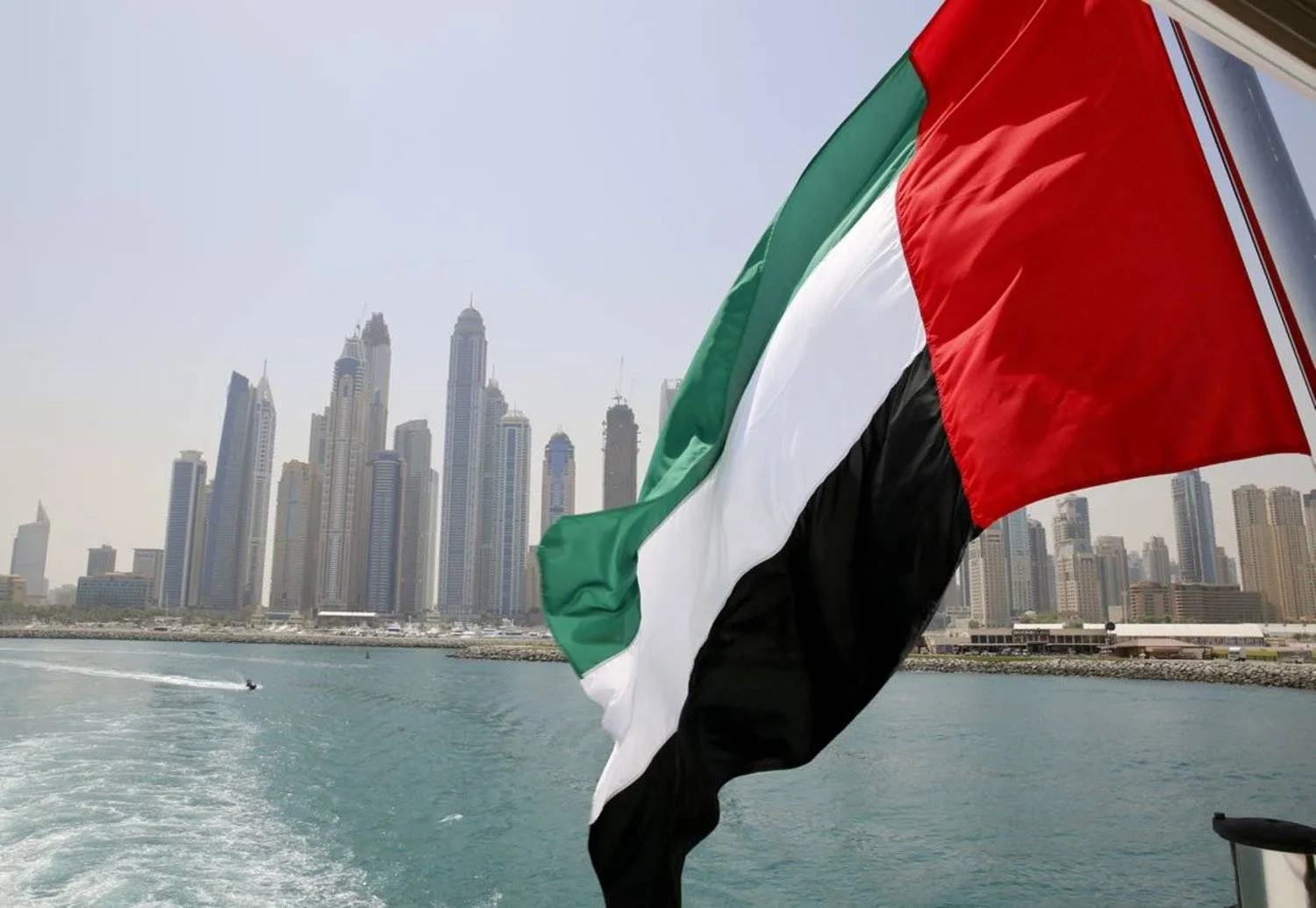
A UAE flag flies over a boat at Dubai Marina, Dubai, United Arab Emirates May 22, 2015. (Reuters)
TT

A Money Laundering Watchdog Removes UAE from a Watchlist

A UAE flag flies over a boat at Dubai Marina, Dubai, United Arab Emirates May 22, 2015. (Reuters)

An international watchdog said Friday that it was removing the United Arab Emirates from its so-called gray list of countries that don't take full measures to combat money laundering and terrorism financing.
The announcement was made by the Paris-based Financial Action Task Force following its meeting in the French capital. The FATF welcomed the UAE's "significant progress in improving” its anti-money laundering and counterterrorism financing policies.

UAE Minister of Foreign Affairs, Chairman of the Higher Committee Overseeing the National Strategy on Anti-Money Laundering and Countering the Financing of Terrorism, Sheikh Abdullah bin Zayed Al Nahyan, said the achievement is the result of efforts made by the relevant ministries and federal and local government agencies to accelerate the pace of the national action plan, and embody the directives and aspirations of the leadership in strengthening competitiveness and consolidating the UAE as a global economic, commercial and investment center.
He stressed that the UAE, in a concerted and complementary manner with international partners, will continue to strengthen its position in the financial system by keeping pace with developments in this sector, developing legislation, strengthening the legal and supervisory base, and activating collective efforts on an international scale to combat financial crime.
Barbados, Gibraltar and Uganda will also be removed from the FATF's gray list, the watchdog said in a statement Friday following its plenary meetings.
They "will no longer be subject to the FATF’s increased monitoring process,” the watchdog said in a statement.
Being on the watchdog’s gray list can scare away investors and creditors, hurting exports, output and consumption. It also can make global banks wary of doing business with a country.


Gold Holds Nearly Steady with Focus on US-Iran Tensions

Gold jewelry in a Korean gold exchange store in Seoul (AFP)
TT

Gold Holds Nearly Steady with Focus on US-Iran Tensions

Gold jewelry in a Korean gold exchange store in Seoul (AFP)

Gold prices were nearly steady on Monday, as market participants stayed cautious and awaited further signals on the evolving US-Iran situation and its impact on global interest rates.

Spot gold was little changed at $4,669.13 per ounce by 9:26 a.m. ET (1326 GMT) after falling 1% earlier in the session. US gold futures rose 0.3% to $4,694.20 per ounce, Reuters reported.

On the eve of a US deadline, the United States and Iran were weighing the framework of a plan to end their five-week-old conflict, even as Tehran pushed back against pressure to swiftly reopen the Strait of Hormuz. President Donald Trump has threatened to rain "hell" on Tehran if it did not make a deal by the end of Tuesday.

"Focus is likely to remain on the war and interest rates. If the conflict drags on, oil will grind higher amid tightening supply conditions, adding to inflationary pressures," said Bart Melek, global head of commodity strategy at TD Securities.

"That leaves central banks, particularly the Federal Reserve, with less room to ease policy and could even revive discussions about higher rates if energy prices rise further, which is negative for gold."

Oil prices fell in choppy trading on Monday, though they have risen sharply since the conflict began.

Gold is widely regarded as a hedge against geopolitical risks and inflation, but because it yields no interest, it tends to be less attractive when interest rates are high. Other items on investors’ radar include minutes of the Fed’s March policy meeting due on Wednesday, US Personal Consumption Expenditures (PCE) data due on Thursday, and the Consumer Price Index (CPI) on Friday.

The US central bank held rates steady last month and a majority of traders now see no chance of the Fed cutting interest rates this year, according to CME’s FedWatch tool. Among other metals, spot silver fell 0.4% to $72.67 per ounce, platinum lost 1% to $1,969.81, and palladium was down 1% at $1,488.58.


Morocco Launches Financial Futures Trading with Contract on MASI 20 Index  

File photo of a police officer standing near a Moroccan national flag near the main stadium during preparations for the FIFA Club World Cup in Agadir, December 10, 2013. REUTERS/Amr Abdallah Dalsh
TT

Morocco Launches Financial Futures Trading with Contract on MASI 20 Index  

File photo of a police officer standing near a Moroccan national flag near the main stadium during preparations for the FIFA Club World Cup in Agadir, December 10, 2013. REUTERS/Amr Abdallah Dalsh

Morocco on Monday began futures trading in financial instruments with its first listing of a standard futures contract on the MASI 20 equity index, the central bank and the AMMC - the capital markets regulator - said.

The contract, called the "MASI 20 Future," is based on an index that tracks the 20 largest and most liquid stocks listed on the Casablanca Stock Exchange, they said in a joint statement, AFP reported.

The contract's launch coincided with the unveiling of an institutional website by the Futures Market Coordination Body, a joint authority established to coordinate oversight of the futures market between the central bank and the AMMC.

The introduction of a futures contract represents the first step under Morocco's regulatory framework for derivatives trading, which will also allow for the development of other instruments such as options and swaps.


Oil Prices Fall on US-Iran Receiving Peace Proposal

FILE PHOTO: A dog looks out of a car window next to signs on empty fuel dispensers at a Shell petrol station that ran out of fuel, in Sydney, Australia, March 30, 2026. REUTERS/Hollie Adams/File Photo
TT

Oil Prices Fall on US-Iran Receiving Peace Proposal

FILE PHOTO: A dog looks out of a car window next to signs on empty fuel dispensers at a Shell petrol station that ran out of fuel, in Sydney, Australia, March 30, 2026. REUTERS/Hollie Adams/File Photo

Oil prices fell more than $2 in choppy trade on Monday, as investors awaited clarity on the status of talks between the US and Iran and remained wary about sustained supply losses due to shipping disruptions.

Brent crude futures fell $1.92, or 1.76%, to $107.11 a barrel at 1037 GMT. US West Texas Intermediate crude futures were trading down 1.82%, or $2.03, at $109.50 per barrel.

The pricing moves in Asia trading on Monday were dwarfed by an 11% surge for WTI and an 8% rise for Brent during the previous trading session on Thursday, the biggest absolute price increase since 2020.

The US and Iran received the framework of a plan to end hostilities, but Iran rejected immediately reopening the Strait of Hormuz, after President Donald Trump threatened to rain "hell" ⁠on Tehran if ⁠it did not make a deal by the end of Tuesday.

Iran also said it has formulated its positions and demands in response to recent ceasefire proposals conveyed via intermediaries.

The Strait of Hormuz, which carries oil and petroleum products from Iraq, Saudi Arabia, Qatar, Kuwait and the United Arab Emirates, remains largely closed due to Iranian attacks on shipping after the war began on February 28.

"Not being able to open the Strait of Hormuz is becoming more a question of political victory," said Mukesh Sahdev, founder and CEO at consultancy ⁠XAnalysts.

Because of the Middle East supply disruptions, refiners are seeking alternative sources for crude, particularly for physical cargoes in the US and Britain's North Sea. Some vessels, however, including an Omani-operated tanker, a French-owned container ship and a Japanese-owned gas carrier, have passed through the Strait of Hormuz since Thursday, shipping data showed, reflecting Iran's policy to allow passage for vessels from countries it deems more friendly.

Additionally, spot premiums for US West Texas Intermediate crude have jumped to all-time highs as competition between Asian and European refiners for supply heats up to replace Middle Eastern oil flows disrupted by the war, industry sources told Reuters.

The war threatens to linger on as Iran has officially told mediators it is not prepared to meet with US officials in Islamabad in the coming days and efforts to produce a ceasefire have reached a dead ⁠end, The Wall Street ⁠Journal reported on Friday.

On Sunday, OPEC+, consisting of some members of the Organization of the Petroleum Exporting Countries and allies such as Russia, agreed to a modest rise of 206,000 barrels per day for May.

However, that decision will largely exist on paper as several of the group's key producers are unable to raise output due to the war.

Meanwhile, Russian supply has been disrupted recently by Ukrainian drone attacks on its Baltic Sea export terminals. Media reports on Sunday said its Ust-Luga terminal resumed loadings on Saturday after days of disruptions.

Exports from the Black Sea port of Tuapse are set to rise to 794,000 metric tons in April, up 8.7% on a daily basis from 755,000 metric tons planned for March, according to two traders and Reuters calculations.