


How a Wandering White Shark’s Epic Journey Could Provide Clues for Protecting Them 

In this photo provided by Chip Michalove, LeeBeth, a white shark, is tagged on Dec. 8, 2023, off Hilton Head Island, (Chip Michalove via AP)
TT

How a Wandering White Shark’s Epic Journey Could Provide Clues for Protecting Them 

In this photo provided by Chip Michalove, LeeBeth, a white shark, is tagged on Dec. 8, 2023, off Hilton Head Island, (Chip Michalove via AP)

As sharks go, LeeBeth is something like a long-haul trucker with gills and giant teeth.

Swimmers at the beach might not be excited to see the 14-foot (4.3-meter) white shark, but scientists following LeeBeth's movements are thrilled that the big fish's epic journey could provide valuable clues to help the species. And they're curious where she'll go next.

White sharks, often referred to as great whites, were made famous by the 1970s hit movie “Jaws.” They roam the ocean searching for their favorite food, marine mammals, and were once hunted without discrimination. Some scientists believe growing populations of seals in parts of the Atlantic Ocean are helping the sharks, which were designated a protected species in 1997.

Since getting her tracking device near South Carolina in December, LeeBeth has traveled more than 2,000 miles (3,200 kilometers) south and into the Gulf of Mexico, the scientists monitoring her every move said Monday. They watched as she made history in late February by traveling further into the Gulf than any previously tracked white shark. A signal showed her off the coast near Matamoros, Mexico, just across the US border from South Padre Island, Texas.

The shark's presence so far west indicates that this part of the Gulf of Mexico could also be important to other white sharks, said Megan Winton, a senior scientist with the Atlantic White Shark Conservancy, based in Chatham, Massachusetts. International cooperation is important to protect the sharks, whose worldwide populations are recovering from decades of overfishing, she said.

“We don't know how many white sharks travel that far west, but it's a good indication they do,” Winton said. “There are only a handful of sharks that have been tracked west of the Mississippi.”

The Atlantic White Shark Conservancy collaborates with Massachusetts state government to tag white sharks, with more than 300 tagged so far. Thousands more have been tagged by other organizations worldwide, Winton said.

The conservancy paired up with fishing charter Outcast Sport Fishing of Hilton Head, South Carolina, to tag LeeBeth.

Chip Michalove, who owns Outcast, said LeeBeth turned out to be an advantageous shark to tag, as she had sent more signals back from the tracking device than most. The tracker sends a signal whenever the shark breaks the surface of the water.

“Not only one of the biggest sharks we've caught, but she's the best-pinging shark as well,” Michalove said. “We definitely hit a home run with LeeBeth.”

The last time LeeBeth checked in was on March 7, when tracking data showed the great white to be about 100 miles (160 kilometers) off the coast of Galveston, Texas.


Kyiv Botanical Garden's Plants Wither Due to Frost, Power Cuts

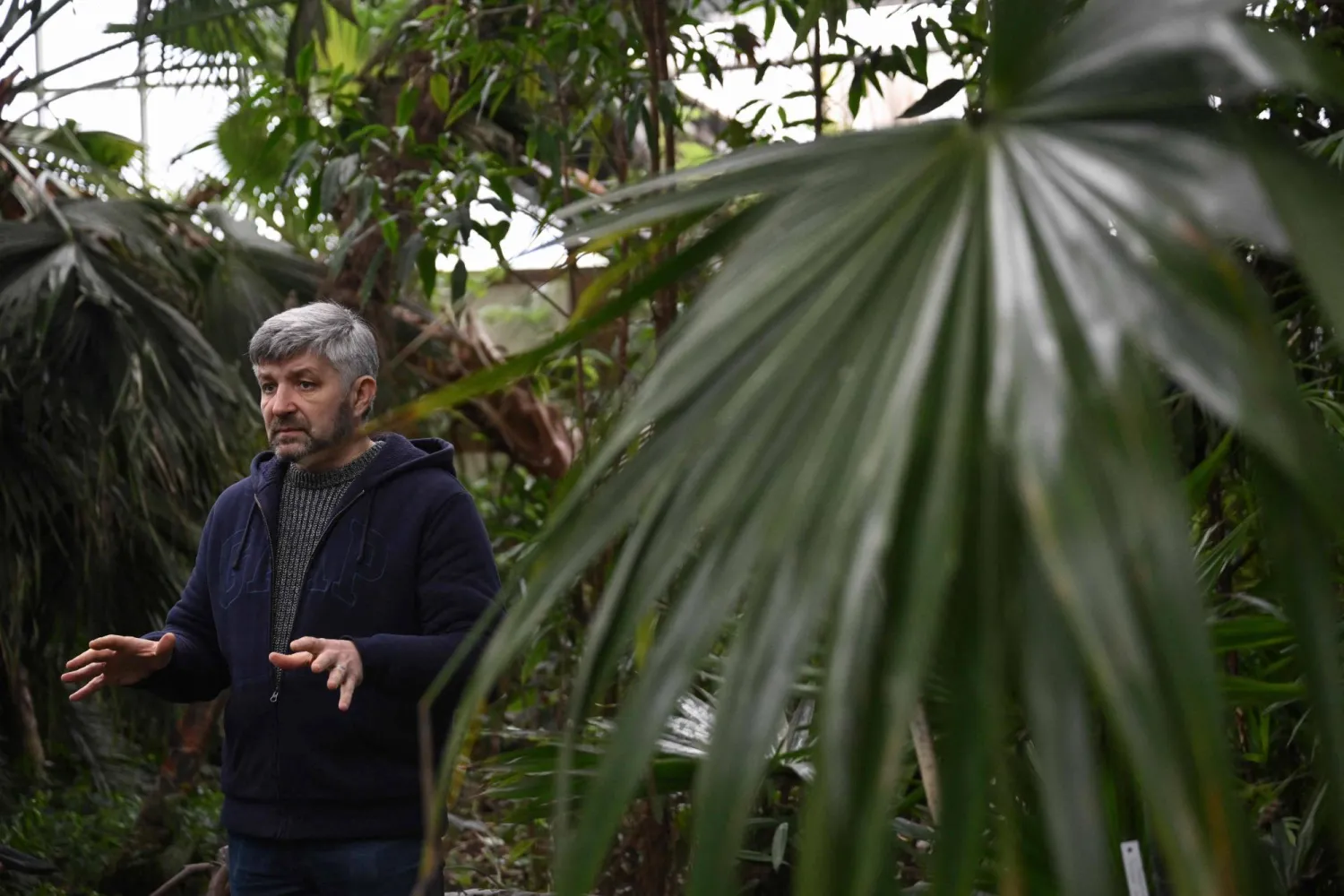
Doctor of Biological Sciences Roman Ivannikov, Head of the Department of Tropical and Subtropical Plants of the Gryshko National Botanical Garden of the National Academy of Sciences of Ukraine, speaks during an AFP interview in the garden's main greenhouse in Kyiv on February 11, 2026. (Photo by Genya SAVILOV / AFP)
TT

Kyiv Botanical Garden's Plants Wither Due to Frost, Power Cuts

Doctor of Biological Sciences Roman Ivannikov, Head of the Department of Tropical and Subtropical Plants of the Gryshko National Botanical Garden of the National Academy of Sciences of Ukraine, speaks during an AFP interview in the garden's main greenhouse in Kyiv on February 11, 2026. (Photo by Genya SAVILOV / AFP)

Roman Ivannikov has spent around 30 years pampering orchids, azaleas and figs at Ukraine's National Botanical Garden, but power cuts triggered by Russian strikes are threatening to freeze his cherished collection of tropical plants.

Moscow has been pummeling Ukrainian energy sites with drones and missiles, plunging thousands of households into darkness during the harshest winter since it started its invasion four years ago.

The almost-daily barrages, paired with the cold snap, have put lives at risk and created an unprecedented threat for Ivannikov's pride and joy: a collection of almost 4,000 species.

"Our children grew up on the paths of this garden. We have poured our lives into this," Ivannikov, 51, told AFP, struggling to fight back tears.

The temperature in the garden's main greenhouse was 12C.

"It's not even the lower bound of normal," Ivannikov said.

The temperature dipped even lower on four nights over recent weeks, when the heating cut off entirely.

Wearing a thick navy jacket over a wool sweater, Ivannikov, the head of the department of tropical and subtropical plants, picked up a leaf that had just come rustling down.

"You can see how many fallen leaves there are... Perfectly healthy leaves that could have kept feeding the plant and functioning for months are falling down," he said.

The plant, he explained, was optimizing energy needs and shedding part of its leaves in the lower tiers so it can keep the leaves at the top and "survive in these conditions".

He, fellow staff and scores of volunteers were shuffling between tasks like firing up stoves and spreading protective covers on a collection of smaller plants, like orchids.

Volodymyr Vynogradov, 66, has signed up to help cut firewood used to heat the greenhouses.

"There needs to be heating for the azaleas," he told AFP, his cheeks rosy from cold and a pile of split logs scattered around.

"Physically, it's a little bit of a warm-up... That's why I decided to help somehow. For myself and for the sake of flowers."

The garden's collection has been laboriously reassembled after it had perished during World War II -- through decades of purchases, exchanges and numerous scientific missions that took Ivannikov's senior colleagues across several continents.

They "used to go to places and bring back plants from areas where those forests are no longer there", making those replanted at the Kyiv garden susceptible to "irrecoverable losses".

"Those plants have been preserved with us, and that underscores their uniqueness: if we lose them, we won't be able to restore them," Ivannikov said.

Individual specimens have already wilted, but the scale of damage is impossible to assess -- the destructive impact of the cold could only start to show in weeks or even months to come.

"Flowering intervals will change, plants will bloom but won't be able to set seed for a year or two. Or, for example, they'll set seed, but it won't be viable -- it will be dead," Ivannikov, who is trying to stay hopeful, said.

"We just have to hold on until summer, until spring -- make it through however many days are needed."

His dream, he said, is to create a "large national bonsai collection", something he had already begun laying the groundwork for.

The institution meanwhile offers organized tours and works with military servicemen and displaced Ukrainians who find solace in gardening work.

"They feel alive and want to see what comes next. They see a future, they want to keep living -- and that's our mission."


Sunbed Ads Spreading Harmful Misinformation

Cancer charities and doctors say sunbeds are linked to higher rates of melanoma and other skin cancers (Getty images) 
TT

Sunbed Ads Spreading Harmful Misinformation

Cancer charities and doctors say sunbeds are linked to higher rates of melanoma and other skin cancers (Getty images) 

Harmful misinformation claiming sunbeds offer health benefits in winter is being spread by tanning companies on social media, the BBC has found.

BBC identified hundreds of adverts on TikTok, Instagram and Facebook saying sunbeds can boost energy and treat skin conditions or mental health problems.

One suggested that going on a sunbed for “eight minutes” could prevent colds and flu, while another claimed that UV rays could “stimulate the thyroid gland” to help someone lose weight.

Claims like these are “irresponsible” and “potentially dangerous,” the government told BBC - while an NHS dermatologist described the amount of sunbed misinformation on social media as “genuinely terrifying.”

The findings come after the Advertising Standards Authority (ASA) banned six tanning adverts for making irresponsible health claims or suggesting sunbeds were safe.

Cancer charities and doctors are clear about the risks of using sunbeds - and say the machines are linked to higher rates of melanoma and other skin cancers.

Using a bed before the age of 35 increases the risk of melanoma by 59% later in life, according to the World Health Organization (WHO).

The Sunbed Association, which represents half the UK's tanning shops, says the ASA and WHO are using “outdated data,” but encourages its members not to use medical claims in advertising.

Young people are by far the biggest sunbed users in the UK - about one in seven 18-to-24-year-olds say they used one in the past year, double the average for all age groups, according to a 2025 YouGov survey.

Other data suggests nearly a quarter of under-25s wrongly believe sunbeds actually reduce the risk of getting skin cancer.


Rain Further Batters Storm-Hit Portugal, Thousands Evacuated

 A flooded area in Ceira, Coimbra, Portugal, February 11, 2026. (Reuters)
A flooded area in Ceira, Coimbra, Portugal, February 11, 2026. (Reuters)
TT

Rain Further Batters Storm-Hit Portugal, Thousands Evacuated

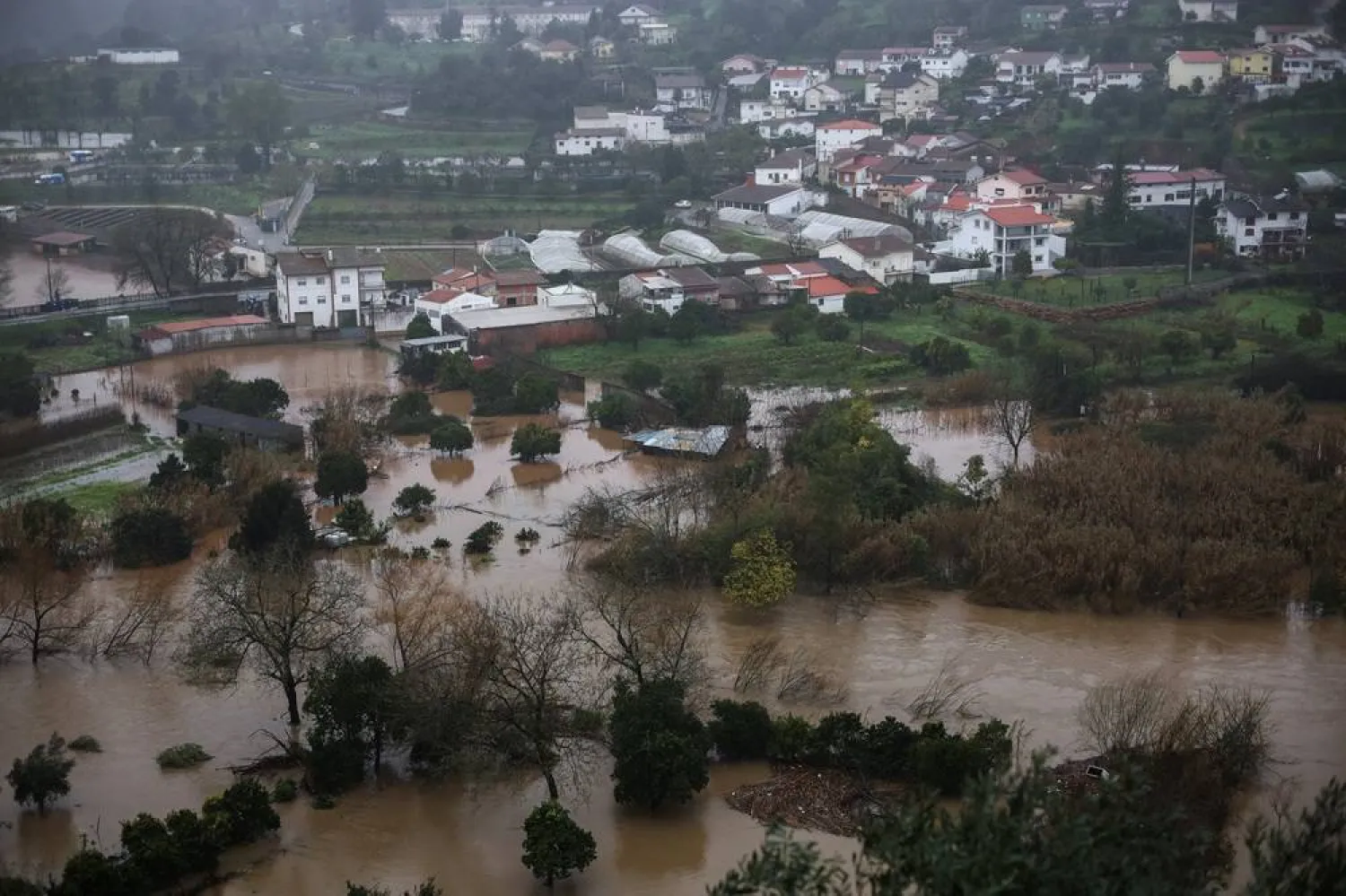
 A flooded area in Ceira, Coimbra, Portugal, February 11, 2026. (Reuters)
A flooded area in Ceira, Coimbra, Portugal, February 11, 2026. (Reuters)

More ‌heavy rain flooded several rural areas in the north of storm-battered Portugal on Wednesday, leaving levees at risk of bursting around the medieval city of Coimbra and forcing authorities to evacuate about 3,000 residents as a precaution.

A succession of deadly storms has hammered mostly central and southern parts of the country since late January, blowing roofs off houses, flooding several towns and leaving hundreds of thousands without electricity for days. At least 15 people have died as a consequence of the storms, including indirect ‌victims.

As the ‌storms let up this week, a weather ‌phenomenon ⁠known as an "atmospheric river" - ⁠a wide corridor of concentrated water vapor carrying massive amounts of moisture from the tropics - brought new downpours, affecting the north to a greater extent.

RISK OF DAM OVERFLOWING

Municipal authorities in Coimbra ordered the precautionary evacuation late on Tuesday of around 3,000 people most at risk from the River Mondego bursting its banks, ⁠and the operation was still under way on ‌Wednesday, with police making door-to-door checks ‌and bussing residents to shelters.

Regional Civil Protection official Carlos Tavares ‌said on Wednesday the situation could worsen between late Wednesday ‌and midday Thursday, as the rain could cause the Aguieira dam, 35 km northeast of Coimbra, "to overflow, sweep away levees and trigger further flooding".

Part of Coimbra's ancient city wall, on a hillside in one ‌of Europe's oldest university towns and a UNESCO World Heritage site, collapsed, shutting the road below ⁠and forcing ⁠the closure of the municipal market, the city hall said.

Prime Minister Luis Montenegro was due in Coimbra to oversee the emergency response after Interior Minister Maria Lucia Amaral resigned following criticism from opposition parties and local communities over what they described as the authorities' slow and failed response to devastating Storm Kristin two weeks ago.

In central Portugal, just across the River Tagus from Lisbon, authorities evacuated the village of Porto Brandao due to the risk of landslides, and around 30 people were removed from their homes after a landslide in the neighboring beachside area of Caparica.