KSrelief Distributes More than 1,000 Food Baskets in Sudan

KSrelief food aid in Sudan - SPA
TT

KSrelief Distributes More than 1,000 Food Baskets in Sudan

KSrelief food aid in Sudan - SPA

The King Salman Humanitarian Aid and Relief Center (KSrelief) distributed 1,424 food baskets to the neediest and displaced families in Sudan.

At the River Nile State up to 750 were distributed, benefiting 4,500 individuals.

Also in Dongola locality in Sudan's Northern State, 674 were distributed to help 3,941 individuals, SPA reported.

The aid comes as part of the relief and humanitarian projects implemented by the Kingdom of Saudi Arabia through KSrelief to help needy people worldwide.


What to Know about the Terrifying FlyDubai Flight Bound for Israel

A plane, carrying passengers who were on the FlyDubai aircraft bound for Israel from the United Arab Emirates, which was diverted to Saudi Arabia following an emergency signal, arrives at the Ben Gurion International Airport, in Lod, near Tel Aviv, Israel, September 30, 2026. REUTERS/Ammar Awad
TT

What to Know about the Terrifying FlyDubai Flight Bound for Israel

A plane, carrying passengers who were on the FlyDubai aircraft bound for Israel from the United Arab Emirates, which was diverted to Saudi Arabia following an emergency signal, arrives at the Ben Gurion International Airport, in Lod, near Tel Aviv, Israel, September 30, 2026. REUTERS/Ammar Awad

One pilot stabbed another and attempted to crash a flight from the United Arab Emirates to Israel.

Passengers, many of them Israelis, feared for their lives as the FlyDubai aircraft lost half its altitude in about a minute.

As Israel scrambled fighter jets out of concern for a possible hijacking, a passenger and crew member burst into the cockpit to subdue the attacker, enabling other crew members to gain control of the aircraft, which landed safely in Saudi Arabia.

It was not clear what motivated Wednesday's attack.

The terrifying flight occurred just days before the anniversary of the Oct. 7, 2023, attack on Israel that launched the war in Gaza. It has rekindled anxieties about airline security and focused attention on an unsettling question: Are pilots a significant threat to the flying public's safety?

Here’s what we know — and don’t know — about what happened on FlyDubai flight FZ1073:

A fight, an alert and a rapid descent

The distress call came at 8:44 a.m. local time, about two and a half hours after the flight with about 170 passengers left Dubai and headed to Tel Aviv.

The captain and first officer had been fighting in the cockpit after one stabbed the other and tried to crash the aircraft, according to Israeli Prime Minister Benjamin Netanyahu.

The aircraft swiftly lost altitude — dropping from 33,000 feet to 17,000 feet (around 10,000 meters to 5,100 meters) in the span of about a minute. It then circled close to the Jordanian border before landing in Tabuk, Saudi Arabia, about an hour later.

Aviation experts said they were surprised that the plane did not crash after a descent so extreme that most of the rudder was ripped off the tail.

Both pilots suffered injuries that required hospital treatment, according to a statement from Tabuk's Prince Sultan bin Abdulaziz International Airport.

A plane carrying passengers from the flight landed Wednesday evening in Israel.

Passengers and crew wrest control

A passenger and a crew member managed to enter the cockpit, enabling other crew members to fly the plane to a safe landing, according to Netanyahu, who cited a passenger he had spoken to.

The cockpit door on all aircraft is locked during flight for security reasons — a measure that became the industry standard after the Sept. 11, 2001 attacks, in which hijackers broke into the cockpits of four domestic flights in the United States.

Netanyahu said on X that the pilot who had been stabbed opened the cockpit door, which "enabled passengers and crew to overpower the attacker — preventing a catastrophic midair disaster.”

What security checks do pilots undergo? One question surrounding this incident is how anyone on the aircraft — especially a pilot — was able to get a knife onboard. It's unclear how big the knife was that was used in the attack or if it was a knife.

In an interview with Fox News Channel’s Sean Hannity that aired Wednesday night, Netanyahu said the attacker might have hit the captain with an axe. Airlines are generally required to carry crash axes in the cockpit for use in an emergency to break open a window to escape or break open a panel to access a fire.

Pilots undergo rigorous screening, including passing through metal detectors, at checkpoints at all airports. It's also standard for airlines to vet their pilots' background for criminal and employment history, their physical and mental health, as well as having them undergo intelligence and security screening.

Israel has some of the most stringent airline security measures worldwide. Passengers on Israel-bound flights regularly are taken aside for questioning and baggage searches after passing through normal airport security.

There have been extremely rare occasions when airline security protocols fail. In 2015, the co-pilot of Germanwings Flight 9525 locked the captain out of the cockpit and deliberately set the plane on a collision course with a mountainside, killing all 150 people aboard.

Cockpit struggles have been blamed in past crashes

On Oct. 31, 1999, EgyptAir Flight 990 went down off the Massachusetts island of Nantucket killing 217 aboard, and investigators at the time said the evidence pointed to it being intentionally crashed into the ocean by its co-pilot after a struggle in the cockpit.

In its final report adopted in 2002, the National Transportation Safety Board said the co-pilot was heard on the cockpit voice recorder saying “I rely on God” as the plane was going down, while the captain repeatedly urged him to “pull up with me.”

The evidence led the NTSB to conclude that the crash was not the result of a mechanical failure but was “the result of pilot inputs, including opposing pilot inputs where the relief first officer was commanding nose-down and the captain was commanding nose-up movement.”



Egypt-Gulf Talks Seek to Reduce Regional Tensions

Egypt-Gulf Talks Seek to Reduce Regional Tensions
TT

Egypt-Gulf Talks Seek to Reduce Regional Tensions

Egypt-Gulf Talks Seek to Reduce Regional Tensions

Egyptian-Gulf consultations are ongoing to ease tensions across the region, with Cairo stressing the importance of coordinated efforts and unified action to prevent the conflict from widening.

Egyptian Foreign Minister Badr Abdelatty held a phone call with his Saudi counterpart, Prince Faisal bin Farhan, as part of ongoing communication between the two nations to consult and coordinate on issues of mutual concern.

According to a statement issued by Egypt's Foreign Ministry on Wednesday, the two ministers discussed the fraternal and strategic relationship between Egypt and Saudi Arabia and reaffirmed their commitment to advancing joint cooperation mechanisms across various sectors.

Foreign Ministry spokesman Nader Zaki said the ministers reviewed regional developments, including the situations in Yemen, Iran, and the Red Sea region, and agreed on the need to preserve freedom of navigation in the Red Sea and the Bab al-Mandab Strait.

Abdelatty stressed Egypt's full support for Saudi Arabia's security and stability, reiterating Cairo's firm rejection of any attacks on Saudi territory or attempts to undermine its safety. He also affirmed Egypt's solidarity with all measures taken by the Kingdom to safeguard its sovereignty and security.

In a separate call with Qatari Prime Minister and Foreign Minister Sheikh Mohammed bin Abdulrahman Al Thani, Abdelatty discussed developments related to the crisis with Iran and the recent escalation in the region.

He underscored the importance of supporting political and diplomatic pathways to resolve the current crisis in a manner that enhances regional security and stability.

The Egyptian minister also outlined Cairo's position on the regional crises under discussion, including developments in Yemen, Iran, and the Red Sea region. He stressed the need to maintain freedom of navigation in the Red Sea and the Bab al-Mandab Strait and rejected the use of strategic waterways and maritime passages as tools of pressure or bargaining in regional disputes.

Abdelatty also held a phone conversation with UAE Deputy Prime Minister and Foreign Minister Sheikh Abdullah bin Zayed Al Nahyan.

According to the Foreign Ministry spokesman, the call focused on ways to further strengthen the fraternal and strategic ties between Egypt and the United Arab Emirates across various fields.

The discussion also addressed the latest regional developments, with Abdelatty emphasizing the importance of intensifying efforts to de-escalate tensions, contain crises, and support political and diplomatic solutions to ongoing conflicts.

On Wednesday, Abdelatty also spoke with Massad Boulos, Senior Adviser to the US President for Arab and African Affairs, to discuss a number of regional and international issues of mutual interest.

Egypt's Foreign Ministry said the conversation addressed the strategic partnership between Cairo and Washington as well as developments across the region, particularly in Sudan.

Abdelatty reiterated Cairo's position on the importance of preserving the unity and sovereignty of states and protecting their legitimate national institutions in order to safeguard the interests of the Sudanese people.

On Tuesday evening, Abdelatty convened a meeting with Foreign Ministry officials responsible for regional portfolios as part of efforts to implement President Abdel Fattah al-Sisi's directives to strengthen Egypt's diplomatic engagement with regional issues, continue de-escalation efforts, support security and stability, and enhance coordination with regional and international partners.

Zaki said the meeting included a comprehensive review of the latest developments and of Egypt's efforts to resolve conflicts through peaceful means and create conditions conducive to restoring stability.

Abdelatty stressed the importance of maintaining active diplomatic engagement in line with presidential directives and building on ongoing contacts with the various parties concerned in order to contain crises and prevent their expansion. He also reaffirmed Egypt's longstanding position in support of the unity, sovereignty, and territorial integrity of states.


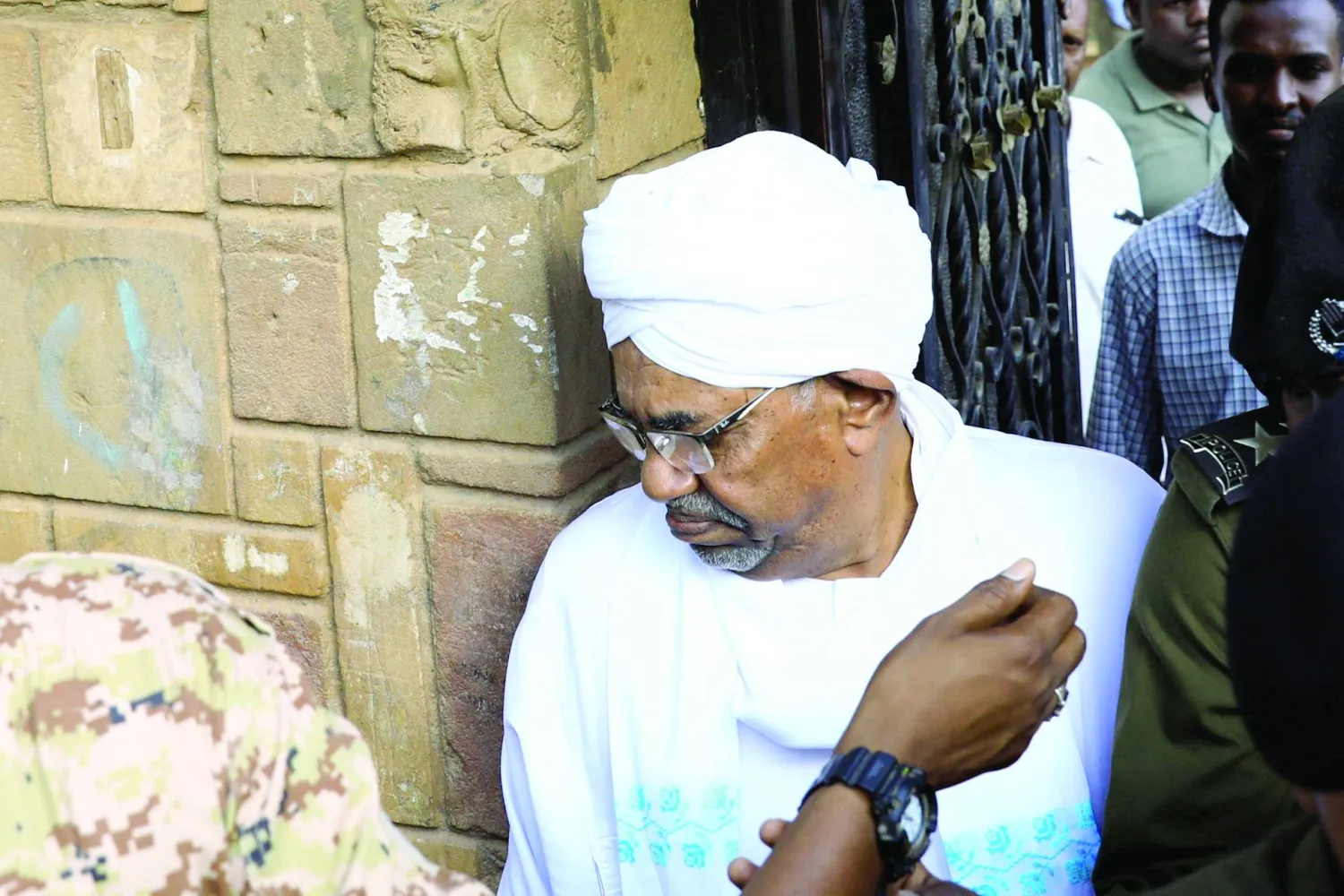
Bashir Moved to Khartoum Hospital amid Reports He Will Be Flown Abroad

Sudan's ex-president Omar al-Bashir leaves the office of the anti-corruption prosecutor in Khartoum, Sudan, June 16, 2019. (Reuters)
TT

Bashir Moved to Khartoum Hospital amid Reports He Will Be Flown Abroad

Sudan's ex-president Omar al-Bashir leaves the office of the anti-corruption prosecutor in Khartoum, Sudan, June 16, 2019. (Reuters)

Sudanese former President Omar al-Bashir, 80, has been transferred from the northern city of Merowe to a hospital in the capital Khartoum for continued treatment and tests after he developed symptoms of an “unknown” medical case.

His lawyer, Mohamed El-Hassan El-Amin told Asharq Al-Awsat on Wednesday that his client was transferred to Khartoum two weeks ago for routine medical examinations, confirming that "there is no change in his health status."

However, he noted the emergence of certain symptoms of "unknown cause," which may require travel abroad to undergo testing using advanced medical equipment.

El-Amin declined to provide further details about Bashir’s condition.

However, he noted that the former president suffers from recurrent low blood pressure and infections, adding: "This is all we can disclose at this stage."

On reports about the Sudanese authorities approving Bashir's travel abroad, El-Amin stated: "There is no official decision so far."

However, he revealed that certain government officials expressed no objection.

"This request was raised more than a year ago, but no progress has been made in its implementation," he added.

Bashir's lawyer Mohamed El-Hassan El-Amin. (Asharq Al-Awsat)

El-Amin confirmed that the same official authorities facilitated the travel of the former Vice President, Bakri Hassan Saleh, to the Turkish capital, Ankara, for medical treatment, revealing for the first time his presence outside the country.

The International Criminal Court has accused Bashir of committing war crimes and crimes against humanity in the Darfur region during his rule. He was also convicted on charges of corruption and illicit financing and faced other trials before the outbreak of the war in April 2023. At that time, he was held at a military base in Omdurman, prior to his transfer to Merowe in northern Sudan.

Sudanese media reports had said that the former president's health had deteriorated significantly over the past few days, necessitating his transfer to Khartoum.

However, high-level sources refuted to Asharq Al-Awsat claims regarding the deterioration of his health, saying that recent measures aim to pave the way for his travel abroad in anticipation of domestic political shifts or regional developments.

The sources said Islamists are seeking to preempt potential rapid shifts in the political landscape that could place the authorities, led by the President of the Sovereignty Council, Abdel Fattah al-Burhan, in extreme embarrassment before the International Criminal Court if Bashir remains in the country.

According to the sources, who preferred to remain anonymous, prominent Islamist leaders in the ousted National Congress Party had previously made contacts to arrange Bashir's transfer abroad, after obtaining approval to host him.

The sources added that the ousted president had previously been offered a transfer to Eritrea but refused, despite Eritrean President Isaias Afwerki having expressed his willingness to host him.