Oil Rises on Signs of Strong Demand, Rate Cut Hopes

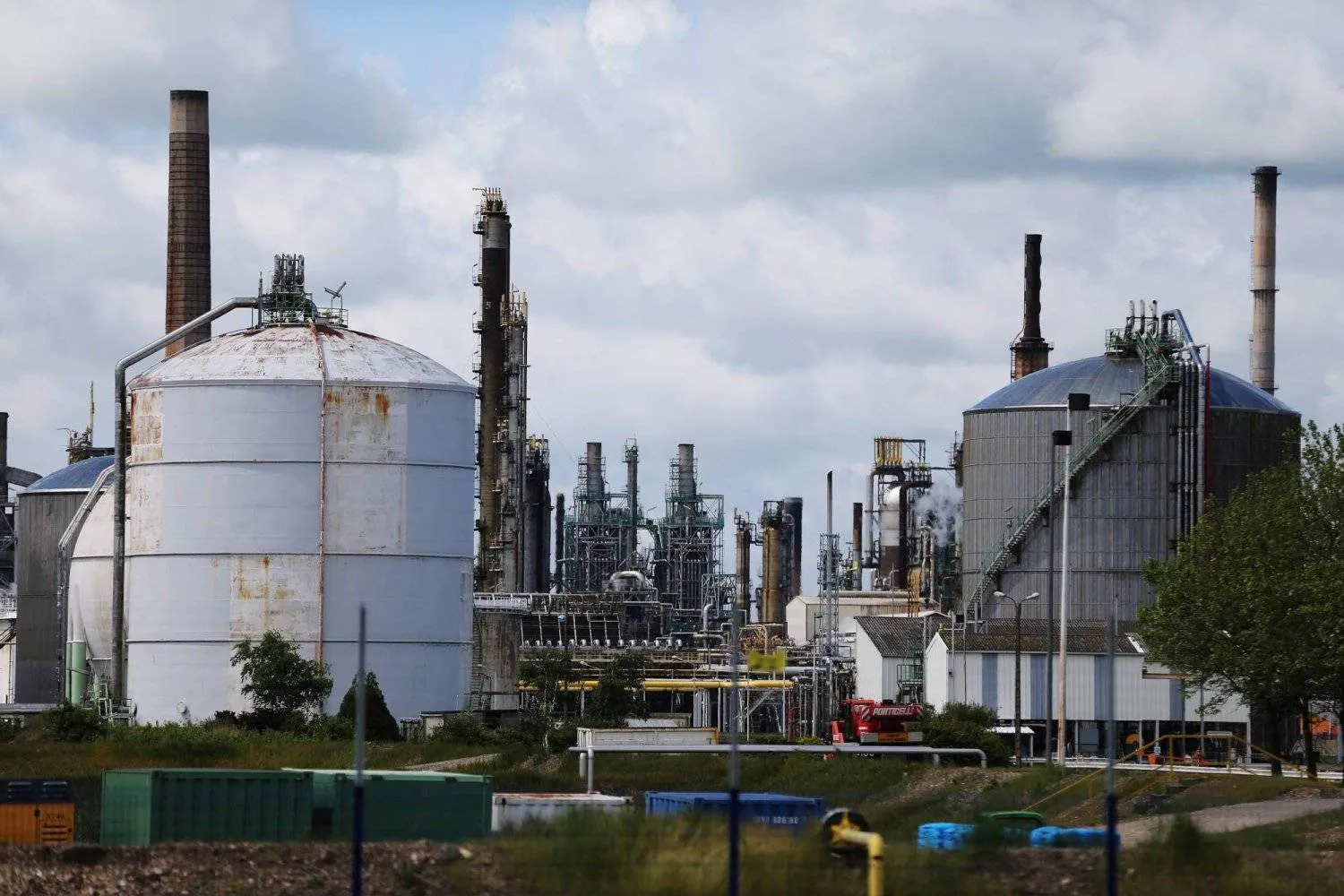
(FILES) A picture taken on May 23, 2016 shows the ExxonMobil refinery in Notre-Dame-de-Gravenchon, northwestern France, on March 11, 2024. (Photo by CHARLY TRIBALLEAU / AFP)
TT

Oil Rises on Signs of Strong Demand, Rate Cut Hopes

(FILES) A picture taken on May 23, 2016 shows the ExxonMobil refinery in Notre-Dame-de-Gravenchon, northwestern France, on March 11, 2024. (Photo by CHARLY TRIBALLEAU / AFP)

Oil rose on Wednesday, supported by signs of strong global demand including from top consumer the United States while hopes that the Federal Reserve might start cutting rates soon also buoyed sentiment despite somewhat sticky US inflation.

In an indication of healthy demand, US crude oil and fuel inventories fell last week, according to market sources citing American Petroleum Institute figures ahead of Wednesday's official US inventory report.

Brent futures for May rose 83 cents, or 1%, to $82.75 a barrel by 0922 GMT. US West Texas Intermediate crude for April gained 59 cents, or 0.8%, to $78.15.

"With envisaged global stock draws in the second quarter and possibly beyond, heightened geopolitical tension with palpable impact on supply and the approaching rate cuts that will make borrowing and even oil trading cheaper, it is almost beyond comprehension as to why the market is reluctant to break higher," Reuters quoted Tamas Varga of oil broker PVM saying.

Oil had fallen on Tuesday after a higher than expected forecast for US crude oil production and bearish economic data, but persistent geopolitical tensions limited declines.

In an earlier sign of strong demand, the Organization of the Petroleum Exporting Countries on Tuesday stuck to its forecast for oil demand growth of 2.25 million barrels per day (bpd) in 2024, higher than many other forecasts.

The International Energy Agency, which expects demand growth to be much lower, updates its forecasts on Thursday.

Oil and the wider financial markets also found support from sentiment that slightly hotter than expected US inflation will not derail interest rate cuts by the middle of the year. Lower rates support oil demand.

"The risk environment has largely stayed unfazed, riding on the firm belief that current market pricing for a rate cut only in June will do the job," said IG market strategist Yeap Jun Rong.

The unexpected slide in US crude inventories and strong growth forecasts by OPEC also supported prices, said Yeap.

In a note to clients, Capital Economics analysts said they still forecast the Fed to start easing policy "around June".


TotalEnergies, Iraq Agree to Start Talks on Energy Projects

TotalEnergies, Iraq Agree to Start Talks on Energy Projects
TT

TotalEnergies, Iraq Agree to Start Talks on Energy Projects

TotalEnergies, Iraq Agree to Start Talks on Energy Projects

TotalEnergies and the Iraqi government have agreed to start discussions on energy projects in the country, while France and Iraq have also agreed on a roadmap regarding future acquisitions ‌of weapons ‌from French companies ‌by the ⁠Iraqi military, according ⁠to a joint French-Iraqi statement on Monday.

TotalEnergies' projects would involve large-scale investments and would be aimed at boosting ⁠Iraqi oil production while contributing ‌to ‌improving energy sovereignty and ‌the country's energy transition, the ‌statement said.

France and Iraq "applauded the signature of a declaration of intent regarding autonomous ‌air defense systems between the French company Harmattan ⁠AI ⁠and the Iraqi defense minister," the statement said.

It also said that Iraq's prime minister had announced his intent to encourage talks involving other French firms and the defense minister regarding various weaponry systems.


Saudi Arabia Outlines 3 Pathways to Explore Uranium Resources Locally

Saudi Minister of Energy, Minister of Industry and Mineral Resources Prince Abdulaziz bin Salman bin Abdulaziz speaks at the IAEA conference in Vienna on Monday. (SPA)
TT

Saudi Arabia Outlines 3 Pathways to Explore Uranium Resources Locally

Saudi Minister of Energy, Minister of Industry and Mineral Resources Prince Abdulaziz bin Salman bin Abdulaziz speaks at the IAEA conference in Vienna on Monday. (SPA)

Saudi Arabia is moving forward with integrating nuclear energy into its national mix while developing its domestic uranium resources and building an integrated mineral value chain.

This chain spans from exploration and mining to processing, separation, refining, and the production of yellowcake, in an approach aimed at maximizing the economic value of its natural resources and boosting security of supply.

Speaking at the 70th General Conference of the International Atomic Energy Agency (IAEA) in Vienna, Saudi Minister of Energy, Minister of Industry and Mineral Resources Prince Abdulaziz bin Salman bin Abdulaziz said: “Over the decades, the Kingdom has established its position as a reliable energy supplier and an active partner in the stability of global energy markets.”

“Along with this role, the Kingdom is moving forward with developing a national energy mix from different energy sources that is more diverse and sustainable, based on integrated economic and development considerations,” he added.

“This includes introducing nuclear energy into this mix, within a well-established regulatory framework and in accordance with the Kingdom's international obligations,” he stressed.

“Our meeting today comes at a time when the world is witnessing rapid growth in energy demand, driven by economic, technological and industrial expansion. Amid these developments, diversifying energy sources and enhancing their reliability and sustainability have become essential to supporting economic growth and ensuring security of supply,” he said.

Prince Abdulaziz bin Salman said that the National Atomic Energy Project is advancing a program to explore uranium resources and assess opportunities for their economic utilization through several interconnected tracks.

The first involves recovering uranium associated with phosphoric acid produced in phosphate fertilizer operations in the north of the Kingdom, taking into account Saudi Arabia's position as the world's second-largest exporter of phosphate fertilizers.

He noted that pilot work carried out in cooperation with the French company Orano has yielded promising economic indicators for uranium recovery from these operations. This cooperation culminated in the signing of a memorandum of understanding during the visit of Prince Mohammed bin Salman, Crown Prince and Prime Minister, to France in August.

“Exploration and geological studies at the Jabal Sayid project in Madinah Region have identified estimated resources of around 114 million tons of ore containing high concentrations of rare earth elements, particularly heavy rare earth elements, alongside promising concentrations of uranium,” revealed Prince Abdulaziz bin Salman.

“This places the project among the most significant rare earth resource sites currently under development globally. This direction gained further momentum during the visit of the Crown Prince to the United States in November 2025, when the two countries signed a framework for cooperation on critical minerals and securing supply chains,” he went on to say.

This was followed by a partnership between the Saudi Arabian Mining Company, Ma'aden, and the American company MP Materials to develop capabilities for the processing and separation of rare earth elements and the production of associated uranium.

Prince Abdulaziz bin Salman stated that the Kingdom is continuing its efforts, through the Sedimentary Cover Survey Initiative, to explore additional uranium ores from conventional sources.

He added that these resources take on particular significance when viewed in the context of the Kingdom's broader advantages. The Kingdom combines promising mineral resources, competitive energy supplies, advanced infrastructure, growing industrial and investment capabilities, a strategic location, and effective international partnerships.

The Kingdom's ambition does not stop at producing raw materials or exporting concentrates, rather it extends to building an integrated economic and industrial value chain for all these minerals, he said.

This begins with exploration and mining and progressing through processing, separation and refining; the production of rare earth oxides; the recovery and purification of associated uranium; and the production of yellowcake and the development of its value chain, subject to economic feasibility, in accordance with the highest standards of transparency and within the framework of the Kingdom's international obligations, he noted.

Prince Abdulaziz bin Salman stressed that the Kingdom's exercise of its choices regarding the peaceful uses of nuclear energy goes hand in hand with the highest levels of responsibility and transparency.

This is consistent with the inherent right of States Parties to the Treaty on the Non-Proliferation of Nuclear Weapons to develop and use nuclear energy for peaceful purposes without discrimination.

He noted that, in exercising these rights, the Kingdom follows a clear approach founded on transparency, openness and international cooperation. It does not seek to develop its peaceful nuclear program in isolation from the international community, nor through activities conducted in secrecy or facilities concealed deep within mountains.

Rather, the Kingdom is developing its capabilities through trusted international partnerships that strengthen confidence and support the nuclear non-proliferation ecosystem, said the minister.

The Kingdom continues to strengthen its national framework and regulatory ecosystems governing nuclear energy and its applications, based on its conviction that confidence rests on strong national institutions, well-established regulatory frameworks and national capabilities said Prince Abdulaziz bin Salman.

The Kingdom also continues to boost its preparedness for nuclear and radiological emergencies, reinforce a culture of nuclear safety and security, and strengthen technical cooperation with the agency and international partners, he stressed.

He reaffirmed the Kingdom's full support for the IAEA and its commitment to continuing constructive cooperation with the agency and its member states in a manner that strengthens international confidence and contributes to a more secure, sustainable and prosperous future for all.

Prince Abdulaziz bin Salman later met IAEA Director General Rafael Mariano Grossi on the sidelines of the conference. 

They discussed cooperation between Saudi Arabia and the IAEA, as well as other issues of mutual interest. 


Chevron Eyes Argentina, Mediterranean for Global LNG Growth, Deal with India

Freeman Shaheen, the president of Chevron Global Gas, participates in a discussion at the Gastech conference in Houston, Texas, US, September 18, 2024. REUTERS/Callaghan O'Hare
TT

Chevron Eyes Argentina, Mediterranean for Global LNG Growth, Deal with India

Freeman Shaheen, the president of Chevron Global Gas, participates in a discussion at the Gastech conference in Houston, Texas, US, September 18, 2024. REUTERS/Callaghan O'Hare

Chevron is looking to expand its global gas portfolio from Argentina to the Mediterranean to meet growing demand from buyers concerned about energy security due to the crisis in the Middle East, President of Global Gas Freeman Shaheen said.

Global gas markets have experienced two major disruptions in the past four years as the Ukraine war in 2022 and the Iran conflict this year cut off supplies from top producers Russia and Qatar and drove liquefied natural gas prices higher.

"What we're seeing from this crisis is that it just reinforces the need for diversity — diversity of supply and diversity of different contracting structures," Shaheen said, adding, "and not leaving yourselves susceptible to a spot market that's not really as liquid ⁠as crude and ⁠products."

Chevron will have about 20 million metric tons per annum of LNG supply capacity comprising 16 million tons of net gas production from its projects and 4 million tons contracted from the US Gulf Coast that commenced in February this year and will ramp up over the next few years in line with agreements.

"We're looking to continue to expand that portfolio," Shaheen said in an interview on the sidelines of the Gastech conference in Bangkok.

"There's great prospects out of ⁠Argentina with the development of crude and gas in that marketplace. The East Mediterranean is a very exciting area for us as well."

He also sees further opportunities in Australia and Africa, provided the projects offer the right capital, fiscal and regulatory terms, adding that the US-Iran war has reinforced the need for a diversified gas portfolio.

Shaheen did not elaborate on where in Africa, Australia or the eastern Mediterranean the company might expand. In June, Chevron won approval to become operator and lead gas exploration in an offshore block off Greece, expanding its presence there.

However, these opportunities have to be weighed against Venezuela, where Chevron and its partners would invest more than $7 billion to more than double oil output by 2031.

"I've been hearing that ⁠Venezuela has a lot ⁠of capital that's going to have to go that way coming up," Shaheen told Reuters.

"Everything is going to get analyzed in our project queue and it gets ranked."

Chevron already has significant operations in Australia, running the country's largest LNG project, Gorgon, and the Wheatstone project. A large portion of its Australian supply goes to Japan.

"Japan continues to be our home base, and we have nice structural opportunities into Singapore," Shaheen said, adding that China and Korea remain attractive markets.

In Singapore, Chevron inked a deal in 2024 to supply Sembcorp Industries up to 0.6 million tons per annum of LNG from 2028.

LNG buyers are also changing the way they secure supply, he said, with state-backed importers increasingly willing to sign contracts with portfolio suppliers rather than relying on government-to-government arrangements.

"I'd love to have a deal in India. It's just they're very, very headline-price driven," Shaheen said. "I think India is still evolving. There's going to be great opportunities over time."