


House Passes a Bill That Could Lead to a TikTok Ban If Chinese Owner Refuses to Sell

Members of the news media gather outside the House of Representatives following the passage of H.R. 7521 - Protecting Americans from Foreign Adversary Controlled Applications Act at the US Capitol in Washington, DC, USA, 13 March 2024. (EPA)
TT

House Passes a Bill That Could Lead to a TikTok Ban If Chinese Owner Refuses to Sell

Members of the news media gather outside the House of Representatives following the passage of H.R. 7521 - Protecting Americans from Foreign Adversary Controlled Applications Act at the US Capitol in Washington, DC, USA, 13 March 2024. (EPA)

The House on Wednesday passed a bill that would lead to a nationwide ban of the popular video app TikTok if its China-based owner doesn't sell its stake, as lawmakers acted on concerns that the company's current ownership structure is a national security threat.

The bill, passed by a vote of 352-65, now goes to the Senate, where its prospects are unclear.

TikTok, which has more than 150 million American users, is a wholly owned subsidiary of Chinese technology firm ByteDance Ltd.

The lawmakers contend that ByteDance is beholden to the Chinese government, which could demand access to the data of TikTok’s consumers in the US any time it wants. The worry stems from a set of Chinese national security laws that compel organizations to assist with intelligence gathering.

“We have given TikTok a clear choice,” said Rep. Cathy McMorris Rodgers, R-Wash. “Separate from your parent company ByteDance, which is beholden to the CCP (the Chinese Communist Party), and remain operational in the United States, or side with the CCP and face the consequences. The choice is TikTok's.”

House passage of the bill is only the first step. The Senate would also need to pass the measure for it to become law, and lawmakers in that chamber indicated it would undergo a thorough review. Senate Majority Leader Chuck Schumer, D-N.Y., said he'll have to consult with relevant committee chairs to determine the bill's path.

President Joe Biden has said if Congress passes the measure, he will sign it.

The House vote is the latest example of increased tensions between China and the US. By targeting TikTok, lawmakers are tackling what they see as a grave threat to America's national security — but also singling out a platform popular with millions of people, many of whom skew younger, just months before an election.

A TikTok spokesperson, Alex Haurek, said in a statement after the vote that the bill was jammed through as part of a secretive process.

"We are hopeful that the Senate will consider the facts, listen to their constituents, and realize the impact on the economy, 7 million small businesses, and the 170 million Americans who use our service,” Haurek said.

In anticipation of the vote, a Chinese foreign ministry spokesman, Wang Wenbin, accused Washington of resorting to political tools when US businesses fail to compete. He said the effort would disrupt normal business operations and undermine investor confidence "and will eventually backfire on the US itself.”

Overall, 197 Republican lawmakers voted for the measure and 15 against. On the Democratic side, 155 voted for the bill and 50 against.

Some Republican opponents of the bill said the US should warn consumers if there are data privacy and propaganda concerns, but the final choice should be left with consumers.

“The answer to authoritarianism is not more authoritarianism,” said Rep. Tom McClintock, R-Calif. “The answer to CCP-style propaganda is not CCP-style oppression. Let us slow down before we blunder down this very steep and slippery slope.”

Democrats also warned of the impact a ban would have on users in the US, including entrepreneurs and business owners. One of the no votes came from Rep. Jim Himes, the ranking Democratic member of the House Intelligence Committee.

“One of the key differences between us and those adversaries is the fact that they shut down newspapers, broadcast stations, and social media platforms. We do not,” Himes said. “We trust our citizens to be worthy of their democracy. We do not trust our government to decide what information they may or may not see.”

The day before the House vote, top national security officials in the Biden administration held a closed-door briefing with lawmakers to discuss TikTok and the national security implications. Lawmakers are balancing those security concerns against a desire not to limit free speech online.

“What we've tried to do here is be very thoughtful and deliberate about the need to force a divestiture of TikTok without granting any authority to the executive branch to regulate content or go after any American company,” said Rep. Mike Gallagher, the bill's author, as he emerged from the briefing.

TikTok has long denied that it could be used as a tool of the Chinese government. The company has said it has never shared US user data with Chinese authorities and won’t do so if it is asked. To date, the US government also has not provided evidence that shows TikTok shared such information with Chinese authorities.

Republican leaders moved quickly to bring up the bill after its introduction last week by Gallagher and Rep. Raja Krishnamoorthi, D-Ill. A House committee approved the legislation unanimously, on a 50-0 vote, even after their offices were inundated with calls from TikTok users demanding they drop the effort. Some offices even shut off their phones because of the onslaught. Supporters of the bill said the effort backfired.

“(It) provided members a preview of how the platform could be weaponized to inject disinformation into our system,” Gallagher said.

Lawmakers in both parties are anxious to confront China on a range of issues. The House formed a special committee to focus on China-related issues. And Schumer directed committee chairs to begin working with Republicans on a bipartisan China competition bill.

Schumer is likely to feel some pressure from within his own party to move on the TikTok legislation. Senate Intelligence Committee Chairman Mark Warner announced after the House vote that he will work to “get this bill passed through the Senate and signed into law.”

In a joint statement with Sen. Marco Rubio of Florida, the top Republican on the intelligence panel, Warner said that “we are united in our concern about the national security threat posed by TikTok — a platform with enormous power to influence and divide Americans whose parent company ByteDance remains legally required to do the bidding of the Chinese Communist Party”

Roughly 30 TikTok influencers and others who traveled with them spoke out against the bill on Capitol Hill on Wednesday. They chanted phrases like “Keep TikTok” ahead of the vote. They also held signs that read “TikTok changed my life for the better” and “TikTok helped me grow my business.”

Dan Salinger, a Sacramento, California-based TikTok creator in attendance, said he started creating content on the app during the COVID-19 pandemic purely out of boredom. But since then, his account, which features videos about his life and his father, who suffers from dementia, has grown in popularity. Today, he has 2 million followers on the app.

“I’m actually appalled for many reasons,” Salinger said. “The speed with which they’re pushing this bill through does not give enough time for Americans to voice their concerns and opinions.”

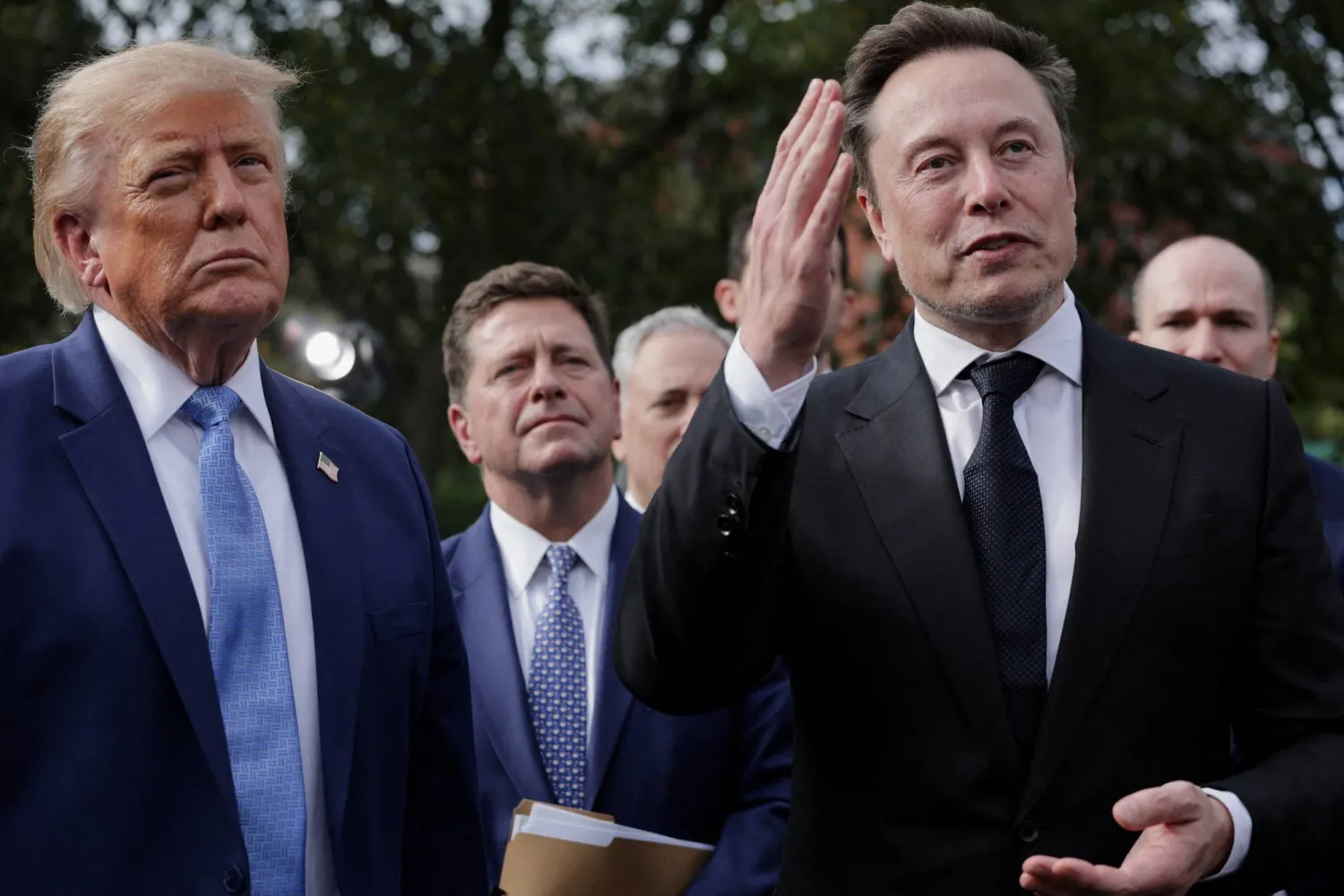
Former President Donald Trump has spoken out against the House effort, but his vice president, Mike Pence, is urging Schumer to bring the House bill to a vote.

“There can be no doubt that this app is Chinese spyware and that a sale to a non-foreign adversary company is in the best interests of the American people,” Pence said in a letter to Schumer.



Russia Confirms Ban on WhatsApp, Says No Plans to Block Google

Men pose with smartphones in front of displayed Whatsapp logo in this illustration September 14, 2017. REUTERS/Dado Ruvic/File Photo
TT

Russia Confirms Ban on WhatsApp, Says No Plans to Block Google

Men pose with smartphones in front of displayed Whatsapp logo in this illustration September 14, 2017. REUTERS/Dado Ruvic/File Photo

Russia has blocked the popular messaging service WhatsApp over its failure to comply with local legislation, the Kremlin said Thursday, urging its 100 million Russian users to switch to a domestic alternative.

Moscow has for months been trying to shift Russian users onto Max, a domestic messaging service that lacks end-to-end encryption and that activists have called a potential tool for surveillance.

"As for the blocking of WhatsApp ... such a decision was indeed made and implemented," Kremlin spokesman Dmitry Peskov told reporters.

Peskov said the decision was due to WhatsApp's "reluctance to comply with the norms and letter of Russian law".

"Max is an accessible alternative, a developing messenger, a national messenger. And it is an alternative available on the market for citizens," he said.

Anton Gorelkin, a member of the Russian parliament and vice chair of its IT committee, said on Thursday that there were no plans to block Google in Russia.

WhatsApp, owned by US social media giant Meta, said Wednesday that it believed Russia was attempting to fully block the service in a bid to force users onto Max.

"We continue to do everything we can to keep users connected," it said.


Samsung Starts Mass Production of Next-gen AI Memory Chip

A man walks past the logo of Samsung Electronics displayed on a glass door at the company's Seocho building in Seoul on January 29, 2026. (Photo by Jung Yeon-je / AFP)
TT

Samsung Starts Mass Production of Next-gen AI Memory Chip

A man walks past the logo of Samsung Electronics displayed on a glass door at the company's Seocho building in Seoul on January 29, 2026. (Photo by Jung Yeon-je / AFP)

Samsung Electronics has started mass production of a next-generation memory chip to power artificial intelligence, the South Korean firm announced Thursday, touting an "industry-leading" breakthrough.

The high-bandwidth "HBM4" chips are a key component for AI data centers, with US tech giant Nvidia -- now the world's most valuable company -- widely expected to be one of Samsung's main customers.

Samsung said it had "begun mass production of its industry-leading HBM4 and has shipped commercial products to customers".

"This achievement marks a first in the industry, securing an early leadership position in the HBM4 market," AFP quoted it as saying in a statement.

A global frenzy to build AI data centers has sent orders for advanced, high-bandwidth memory microchips soaring.

South Korea's two chip giants, SK hynix and Samsung, have been racing to start HBM4 production.

Taipei-based research firm TrendForce predicts that memory chip industry revenue will surge to a global peak of more than $840 billion in 2027.

The South Korean government has pledged to become one of the world's top three AI powers, alongside the United States and China.

Samsung and SK hynix are among the leading producers of high-performance memory chips.


Siemens Energy Trebles Profit as AI Boosts Power Demand

FILED - 05 August 2025, Berlin: The "Siemens Energy" logo can be seen in the entrance area of the company. Photo: Britta Pedersen/dpa
TT

Siemens Energy Trebles Profit as AI Boosts Power Demand

FILED - 05 August 2025, Berlin: The "Siemens Energy" logo can be seen in the entrance area of the company. Photo: Britta Pedersen/dpa

German turbine maker Siemens Energy said Wednesday that its quarterly profits had almost tripled as the firm gains from surging demand for electricity driven by the artificial intelligence boom.

The company's gas turbines are used to generate electricity for data centers that provide computing power for AI, and have been in hot demand as US tech giants like OpenAI and Meta rapidly build more of the sites.

Net profit in the group's fiscal first quarter, to end-December, climbed to 746 million euros ($889 million) from 252 million euros a year earlier.

Orders -- an indicator of future sales -- increased by a third to 17.6 billion euros.

The company's shares rose over five percent in Frankfurt trading, putting the stock up about a quarter since the start of the year and making it the best performer to date in Germany's blue-chip DAX index.

"Siemens Energy ticked all of the major boxes that investors were looking for with these results," Morgan Stanley analysts wrote in a note, adding that the company's gas turbine orders were "exceptionally strong".

US data center electricity consumption is projected to more than triple by 2035, according to the International Energy Agency, and already accounts for six to eight percent of US electricity use.

Asked about rising orders on an earnings call, Siemens Energy CEO Christian Bruch said he thought the first-quarter figures were not "particularly strong" and that further growth could be expected.

"Demand for gas turbines is extremely high," he said. "We're talking about 2029 and 2030 for delivery dates."

Siemens Energy, spun out of the broader Siemens group in 2020, said last week that it would spend $1 billion expanding its US operations, including a new equipment plant in Mississippi as part of wider plans that would create 1,500 jobs.

Its shares have increased over tenfold since 2023, when the German government had to provide the firm with credit guarantees after quality problems at its wind-turbine unit.