Government Incentives Increase Saudi Arabia’s Foreign Investment Flows

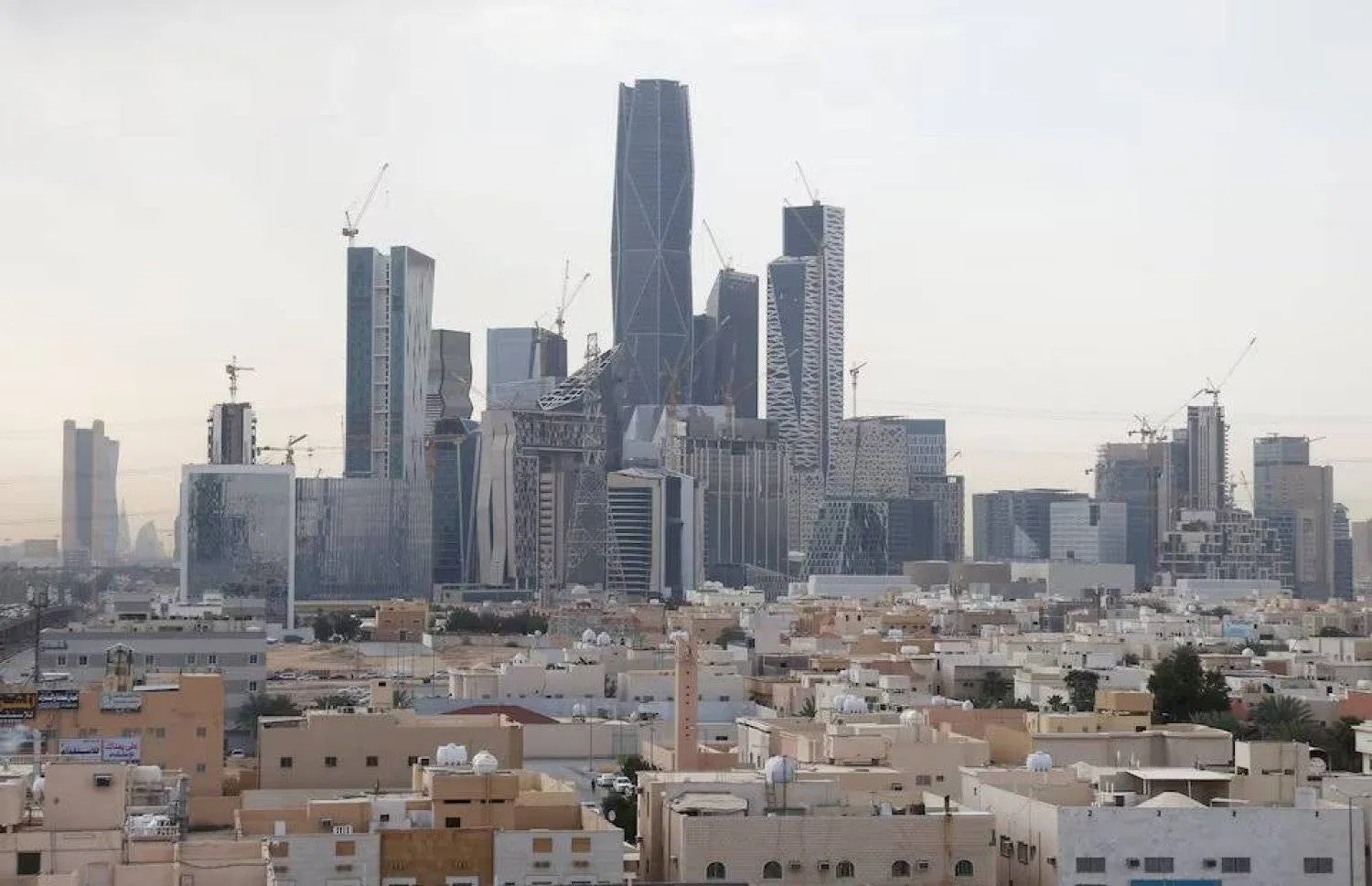
The Saudi market constitutes an attractive investment environment for international companies. (Photo: Reuters)
TT

Government Incentives Increase Saudi Arabia’s Foreign Investment Flows

The Saudi market constitutes an attractive investment environment for international companies. (Photo: Reuters)

Figures of net foreign direct investment (FDI) flows published in the fourth quarter of 2023, which amounted to about 13 billion riyals ($3.4 billion), indicate that the Saudi government succeeded in creating a flexible investment environment in accordance with global standards.

Foreign direct investment flows recorded very high levels in the fourth quarter, according to the figures of the General Authority for Statistics (GASTAT). Those amounted to around SAR 19 billion ($5 billion), with an increase of 16.6 percent compared to the third quarter of 2023.

The Saudi government has recently presented a package of new tax incentives for a period of 30 years to support the program to attract the regional headquarters of international companies, including exemption from income tax.

Economic analyst at King Faisal University Dr. Mohammad bin Dulaim Al-Qahtani told Asharq Al-Awsat that the flow of foreign investment into the country was expected to exceed SAR50 billion in the fourth quarter of 2026, with the completion of the infrastructure for a number of giant projects, including NEOM, the Red Sea tourism projects, and others.

He said the Kingdom will witness a major development as the Saudi economy has multiple resources, including oil, gas, minerals, gold, cultural and religious tourism, as well as sports and non-oil industries.

Dr. Salem Bajajah, an academic at King Abdulaziz University, said that the Saudi market is attractive for investment in several promising sectors, including tourism, entertainment, sports, and nutrition.

He attributed the increase in foreign direct investment flows in the Kingdom to companies making several lucrative returns, in addition to the government incentives that turn the investment environment attractive to international companies.


Exxon Mobil to Supply South Africa's First Planned LNG Terminal

AUSTIN, TEXAS - JUNE 16: Gas prices are displayed at an Exxon Mobil gas station on June 16, 2026 in Austin, Texas. Brandon Bell/Getty Images/AFP
TT

Exxon Mobil to Supply South Africa's First Planned LNG Terminal

AUSTIN, TEXAS - JUNE 16: Gas prices are displayed at an Exxon Mobil gas station on June 16, 2026 in Austin, Texas. Brandon Bell/Getty Images/AFP

Exxon Mobil has signed a preliminary deal to supply liquefied natural gas to Zululand Energy Terminal, which will be South Africa's first LNG import facility once built, the companies said on Wednesday.

The planned terminal is part of South Africa's pivot away from coal-fired power generation, which accounts for the bulk of its electricity supply.

Reuters reported in March that the Zululand Energy Terminal (ZET) hoped to strike a deal with Exxon Mobil on LNG supply.

Exxon Mobil's ⁠participation helps reinforce ⁠the importance of Richards Bay port, where ZET is being built on South Africa's east coast, as an entry point for LNG and supports plans to unlock a "competitive and sustainable gas market", said Oliver Naidu, ZET director.

Exxon Mobil has identified South Africa ⁠as a priority market and wants to grow its LNG supply to more than 40 million metric tons per annum (mtpa) by 2030.

"This agreement reflects Exxon Mobil's global LNG experience and our commitment to support South Africa's energy security with reliable supply," said Andrew Barry, chairman of ExxonMobil LNG Market Development Inc.

Earlier this month, South African state power utility Eskom signed a long-term LNG agreement with ZET that will support a planned ⁠3,000 ⁠megawatt gas-to-power plant project.

Phase 1 of the terminal includes a floating storage unit and an onshore regasification system with capacity of around 3 mtpa, or 400 million standard cubic feet of gas a day.

Phase 2, which will bring the project's total expected cost to $1 billion, will introduce extra regasification capacity and storage onshore, boosting total volumes to 4.5 mtpa, or about 600 million standard cubic feet a day, Naidu said.


IEA Sees Gradual Hormuz Recovery Tipping Into Significant 2027 Surplus

Vessels at the Strait of Hormuz, as seen from Musandam, Oman, June 16, 2026. REUTERS/Stringer
TT

IEA Sees Gradual Hormuz Recovery Tipping Into Significant 2027 Surplus

Vessels at the Strait of Hormuz, as seen from Musandam, Oman, June 16, 2026. REUTERS/Stringer

The world oil market will recover gradually from the closure of the Strait of Hormuz before tipping into a significant surplus in 2027, the International Energy Agency said in its monthly oil market report on Wednesday.

The US and Iran reached an agreement to end the three-month-old war, which includes Iran reopening the Strait of Hormuz ⁠and the US lifting ⁠its naval blockade, potentially bringing an end to the largest oil supply disruption in history which shut in over 14 million barrels per day of Middle East oil output, according ⁠to the IEA.

"If the deal holds, exports and production from the Gulf should see a gradual recovery – not least because Iranian oil exports can fully resume once the US blockade is lifted," the agency, which advises industrialized countries, said.

The oil market will then enter a significant supply overhang next year, the IEA said ⁠in ⁠its first look at 2027, with global oil supply set to surge by 8 million bpd and demand rising by just 2 million bpd.

"This may provide a welcome respite to the market and an opportunity to replenish depleted inventories, or to build new strategic reserves, as countries review their energy strategies and policies in response to the crisis."


US Fed Set to Hold Rates Steady at Warsh’s First Meeting in Charge

Federal Reserve Chair Kevin Warsh delivers a speech on the day of his swearing-in ceremony, in the East Room of the White House in Washington, DC, US, May 22, 2026. (Reuters)
TT

US Fed Set to Hold Rates Steady at Warsh’s First Meeting in Charge

Federal Reserve Chair Kevin Warsh delivers a speech on the day of his swearing-in ceremony, in the East Room of the White House in Washington, DC, US, May 22, 2026. (Reuters)

The US Federal Reserve is expected to hold interest rates steady on Wednesday at Kevin Warsh's first meeting in charge of the central bank, with rate hikes potentially on the horizon to combat surging inflation.

Warsh has presided over the two-day meeting of the Fed's open market committee (FOMC) this week, with a decision to be announced at 2:00 pm local time (1800 GMT) on Wednesday.

US inflation came in at a three-year high in April. It has been fueled this year by President Donald Trump's war on Iran, which saw energy prices skyrocket, with knock-on effects on a range of sectors.

With the labor market firming, Fed policymakers flagged an increased concern about inflation, and rate hikes are potentially in the pipeline to tame raging prices.

Such a move would be sure to anger Trump, who has launched an unprecedented campaign of intimidation to pressure the Fed to lower interest rates.

Warsh has backed interest rate cuts in the recent past, despite inflation remaining well above the Fed's long-term two-percent target -- it was 3.8 percent in April, according to the central bank's preferred gauge.

On Wednesday, however, analysts expect Warsh to join other policymakers in allowing the energy price shock to wash over the world's largest economy before making a move.

"I think he's going to be in the wait-and-see camp," said Dan North of Allianz Trade. "It's pretty hard to justify a cut when you've got inflation in the pipeline already."

- 'Fractured' -

While Wednesday's decision is all but certain to hold interest rates at a range between 3.50 and 3.75 percent, all eyes will be on the language the Fed uses in its statement.

At least four of 12 voting members of the committee have backed a change in wording to indicate that the next rate move could just as likely be a hike as a cut.

Warsh himself has called for removing the Fed's forward guidance messaging altogether, arguing that it locks policymakers into a position rather than allowing them to react to changing situations.

Still, change at the central bank tends to be gradual, and analysts do not expect Warsh to take a big swing at his first meeting in charge.

"It may be a more fractured environment, certainly," Greg Daco, chief economist at EY-Parthenon, told AFP.

"In this first instance, he may be going to suggest some changes to communication, and we may be in the early steps of a move towards more discretionary decisions when it comes to monetary policy."

Wednesday's announcement will also see the release of the Fed's quarterly summary of economic projections, which includes policymakers' expectations on inflation, growth and the interest-rate path.

As part of his "reform-oriented" agenda, Warsh has called for the Fed to drop its "dot-plot," an anonymized projection of where Fed leaders expect rates to go.

On Wednesday, the new Fed chair is expected to withhold his own "dot," but analysts say he is unlikely to drop the entire exercise immediately.

- 'Not helping his case' -

Pao-Lin Tien, an economics professor at George Washington University, told AFP that moving towards more opaque monetary policymaking could mean inflation expectations are less anchored.

"I think our fear would be that without the forward guidance, inflation expectations might become a little bit more volatile," she said.

As for Trump, any move short of a rate cut is likely to anger the Republican, who wants to see the Fed lower borrowing costs to increase economic activity -- despite the already high inflation.

"President Trump is not helping his own case by making these demands so openly, it makes it harder for anyone he appoints to actually do that," said Tien.

"He does the opposite of what he needs to do in order to make sure the rates go lower," she added, referring to the war on Iran.