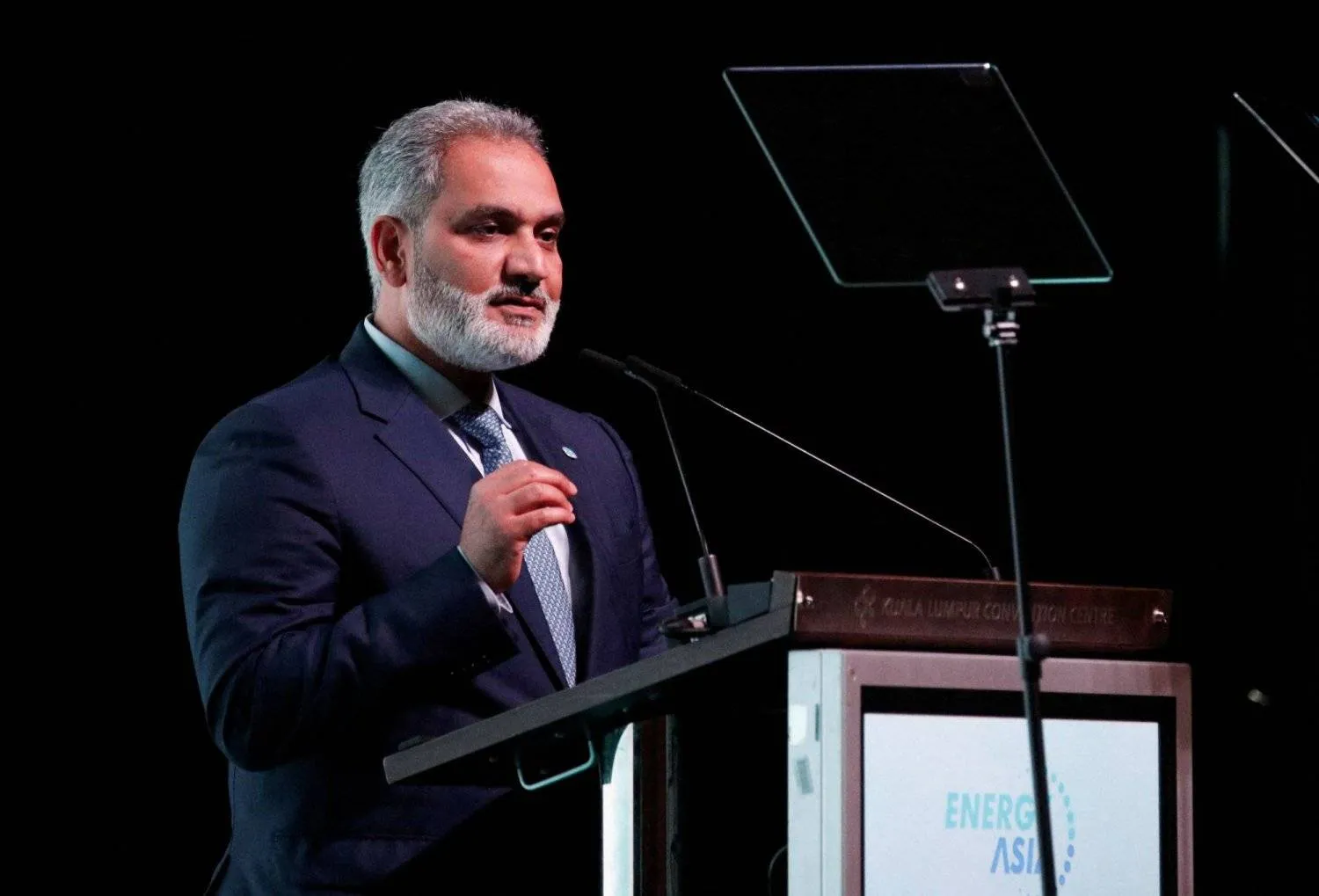

Secretary-General of the Organization of Petroleum Exporting Countries (OPEC) Haitham Al-Ghais stressed the importance of the decisions taken by the organization in stabilizing the global oil industry, reiterating that the world’s need for oil will continue for many years and decades.
In an interview with Independent Arabia, Al-Ghais said many official and international agencies, in addition to a large number of specialized advisory bodies in the energy and oil industries, recently praised OPEC’s constructive role, through its proactive, objective and effective decisions aimed at supporting the balance and stability of oil markets and stimulating the growth of the global economy.
He pointed out that in its recent report, OPEC expected that economic growth rates would maintain the better-than-expected improvement witnessed by the world in the second half of 2023, as the organization believes that economic growth for this year will reach the level of 2.8 percent, and 2.9 percent in 2025.
The secretary-general reminded of the success of the organization and its allies in adopting the Joint Cooperation Declaration agreement, in the wake of the outbreak of the Covid-19 pandemic and its repercussions on travel, transportation, and other activities, which led to a sharp decline in demand for global energy and oil.
He said that in order to confront these deteriorating conditions, this group of countries cooperated and reached a unique, historic agreement aimed at curbing oil production to a record level of approximately ten percent of global oil supplies. This agreement was followed by regular routine meetings with the aim of studying market conditions and gradually resume production, he remarked.
On whether OPEC was affected by Angola’s withdrawal and Brazil’s joining the OPEC+ alliance, Al-Ghais noted that since its founding in 1960 by five oil-producing countries (Iran, Iraq, Kuwait, Saudi Arabia, and Venezuela), OPEC has sought to attract many oil-producing countries that share the same vision and its most prominent goal, which is coordinating efforts and policies to support the stability of global oil markets.
“OPEC is an ideal role model characterized by cohesion, constructive dialogue, cooperation and mutual respect among member states regardless of the geographical locations, languages and different cultures of these countries... There are also countries that withdrew from the organization and then returned to it. As for Angola, the door is still open for its return to the OPEC family,” he remarked.
Al-Ghais also said that OPEC believes that the oil industry needs about $14 trillion by 2045, according to the organization’s annual report.