

There was talk of drone strikes and presidential bribes, of a potential ruling “for the ages” and of the Founding Fathers, too. The presidential race went unmentioned but was not far from mind.
The Supreme Court heard more than 2 1/2 hours worth of arguments on the landmark question of whether former President Donald Trump is immune from prosecution in a case charging him with plotting to overturn the 2020 presidential election, the Associated Press said.
Though the justices appeared likely to reject Trump's absolute immunity claim, it seemed possible he could still benefit from a lengthy trial delay, possibly beyond November’s election.
A look at some of the many notable moments:
‘A RULE FOR THE AGES’
Justice Neil Gorsuch conveyed concern that prosecutors, or political opponents, could have bad motives in pursuing political rivals. Michael Dreeben, a lawyer for special counsel Jack Smith's team, responded that this fear was inapplicable in this case.
“I appreciate that,” Gorsuch said. “But you also appreciate that we’re writing a rule for the ages.”
Other justices were no less lofty in describing the historic stakes of the case and the potential for precedent that will stand the test of time far beyond Trump. For conservative justices, that approach seemed a way to set aside the facts of the Trump indictment and the brazen abuse of power it alleges and focus instead on the implication of a court ruling on cases that have yet to be charged — but theoretically could be.
“This case has huge implications for the presidency, for the future of the presidency, for the future of the country, in my view,” said Justice Brett Kavanaugh, a Trump appointee who served in the George W. Bush White House and is generally seen as a staunch protector of presidential power.
All in all, the court seemed more interested in the future than the present as it contemplated the ruling ahead. There were plenty of historic callbacks, too, with frequent invocations of the nation's Founding Fathers.
WORDS NOT SPOKEN
There was no reference in the arguments to “November.” Nor to “2024.” Even Trump's name was barely uttered, and mostly in the context of the formal title of court cases.
Yet there's no question that the 2024 election was the proverbial elephant in the room, and in that sense, the words not spoken were almost as loud as those that were.
Hovering in the background of Thursday's session was the tacit acknowledgment that the court is helping decide not only whether Trump is immune from prosecution but also whether he can stand trial before the vote.
The uncomfortable reality for an institution loath to be thought of as a political actor is that a decision that takes until late June or early July to write, or that directs a lower court to do additional analysis about which acts Trump could conceivably be entitled to immunity for, could delay the trial until after the election.
Dreeben took care not to note the consequences of the court's ruling on the election or to urge a speedy ruling for political purposes.
The closest, albeit still oblique, reference to the election came from Justice Amy Coney Barrett, who at one point said to Dreeben: “The special counsel has expressed some concern for speed and wanting to move forward."
MORE WORK AHEAD?
While the court seemed highly skeptical of Trump’s bid to dismiss the case, several justices suggested it may have to be sent back for more legal wrangling before the case could go to trial.
Such a ruling would almost certainly delay the trial until after the election. That would be a victory for Trump because, if he defeats President Joe Biden in November, he could presumably order his new attorney general to dismiss the case, or issue a pardon for himself.
Barrett and others repeatedly tried to pin down Trump’s lawyer and Smith’s team on whether the acts alleged in the indictment were official acts — and, therefore, potentially shielded from prosecution — versus private acts.
And even as Chief Justice John Roberts made clear his resistance to Trump’s sweeping absolute immunity claims, he also said he had “concerns” about an earlier appeals court ruling that rejected Trump's immunity arguments but that did not provide a detailed analysis of whether the acts in the indictment were official or private ones.
The lower court, Roberts said, appears to be saying simply that “a former president can be prosecuted because he’s being prosecuted.”
“Why shouldn’t we either send it back to the Court of Appeals or issue an opinion making clear that that’s not the law?” Roberts asked Dreeben.
Smith’s team has told the court that even if it finds that some level of immunity exists for official acts, there are enough private actions alleged in the indictment — like scheming to submit slates of fake electors — for the case to proceed to trial immediately.
“The president has no functions with respect to the certification of the winner of the presidential election,” Dreeben said. “So it’s difficult for me to understand how there could be a serious constitutional question about saying ‘you can’t use fraud to defeat that function, you can’t obstruct it through deception, you can’t deprive millions of voters of their right to have their vote counted for the candidate who they chose.’”
THE JUSTICES TO WATCH
The liberal justices appeared likely to side with Smith’s team in ruling that the trial should move forward, suggesting that Trump’s argument turned the Constitution on its head.
“The Framers did not put an immunity clause into the Constitution. They knew how to,” Justice Elena Kagan said. “And, you know, not so surprising, they were reacting against a monarch who claimed to be above the law. Wasn’t the whole point that the president was not a monarch and the president was not supposed to be above the law?”
Meanwhile, Kavanaugh and fellow conservative Samuel Alito seemed more receptive to Trump’s claims, particularly the suggestion that not granting immunity could open the door to former presidents being prosecuted for political reasons.
But ultimately, the matter may come down to Roberts, who at one point questioned whether the case would be able to move forward if official acts were removed from the indictment, saying that doing so could create a “one-legged stool.”
Barrett’s nuanced questioning suggested that she’s another one to watch.
Barrett, who was appointed by Trump, got Trump’s attorney, D. John Sauer, to concede that former presidents could be prosecuted for private actions. And Sauer acknowledged that some of Trump’s alleged conduct surrounding the 2020 election was not the official act of a president.
Trump “turned to a private attorney, he was willing to spread knowingly false claims of election fraud to spearhead his challenges to the election results. Private?” Barrett asked Sauer.
“That sounds private to me,” he replied.
HYPOTHETICALS GALORE
Sure, the justices pressed the lawyers about the actual acts in the indictment, wanting to know which of the steps Trump took in his failed but frantic bid to remain in power might deserve legal protection.
But there were plenty of hypothetical scenarios, too, which is hardly surprising given how the justices and courts in general enjoy testing the outer boundaries of lawyers' arguments as they determine where to draw a line.
Sauer opened the door by saying that, without immunity, President George W. Bush could have been prosecuted for “allegedly lying to Congress to induce war in Iraq” and Biden for “unlawfully inducing immigrants to enter the country illegally for his border policies.”
Roberts picked it up from there, asking whether a president who accepted a bribe for an ambassador appointment could be prosecuted.
And so it went. What about selling nuclear secrets to a foreign adversary? Kagan wanted to know. A drone strike on a US citizen abroad authorized by then-President Barack Obama? asked Kavanaugh.
One particularly notable hypothetical came from Alito, who raised the prospect that an outgoing president who loses a closely contested race but fears indictment upon leaving office might try to remain in power, creating “a cycle that destabilizes the functioning of our country as a democracy."


Key Moments from Landmark Supreme Court Arguments on Trump's Immunity Claims
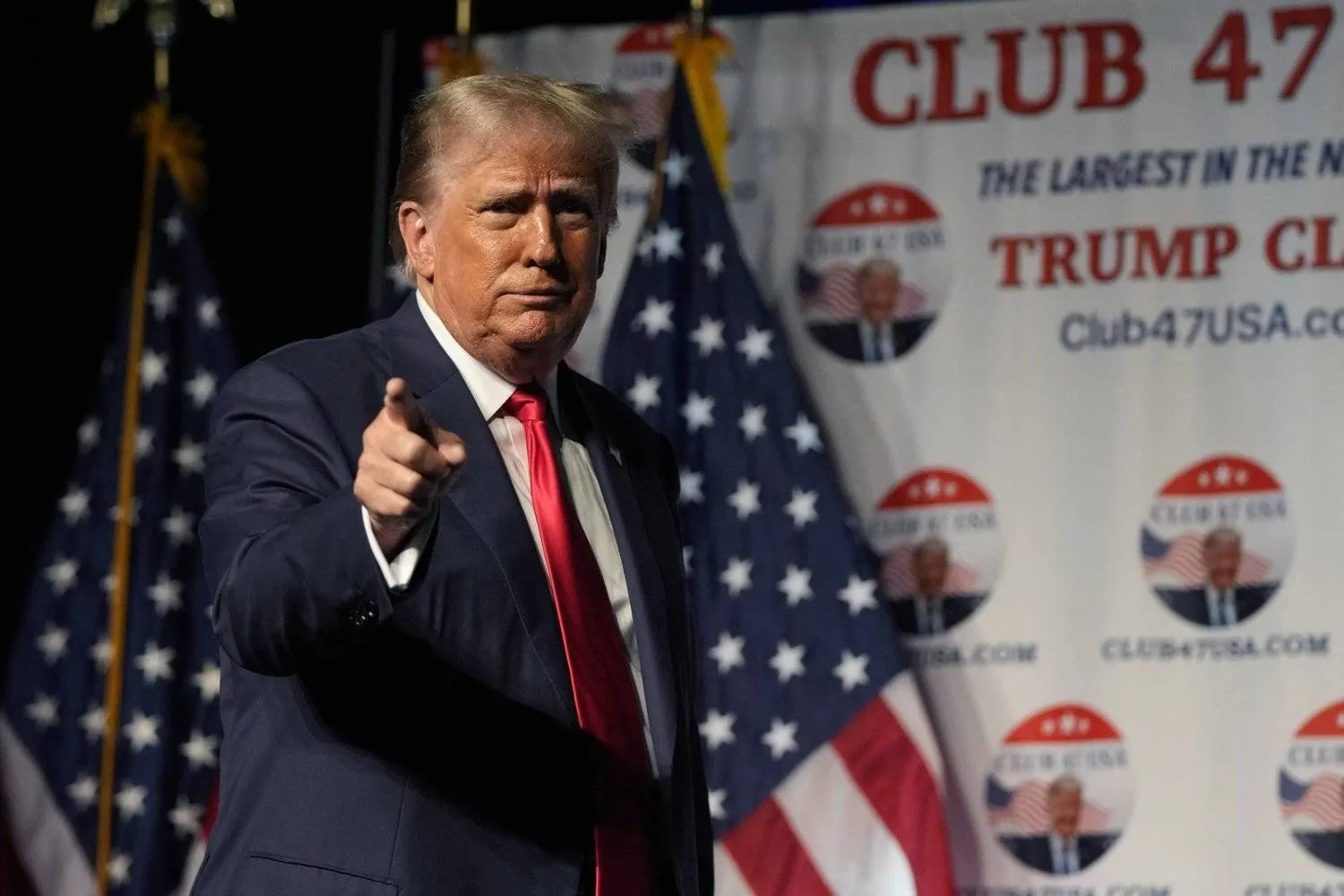
Former US President Donald Trump (AP)

Key Moments from Landmark Supreme Court Arguments on Trump's Immunity Claims
Former US President Donald Trump (AP)


لم تشترك بعد
انشئ حساباً خاصاً بك لتحصل على أخبار مخصصة لك ولتتمتع بخاصية حفظ المقالات وتتلقى نشراتنا البريدية المتنوعة
