


TikTok Sues US to Block Law That Could Ban the Social Media Platform 

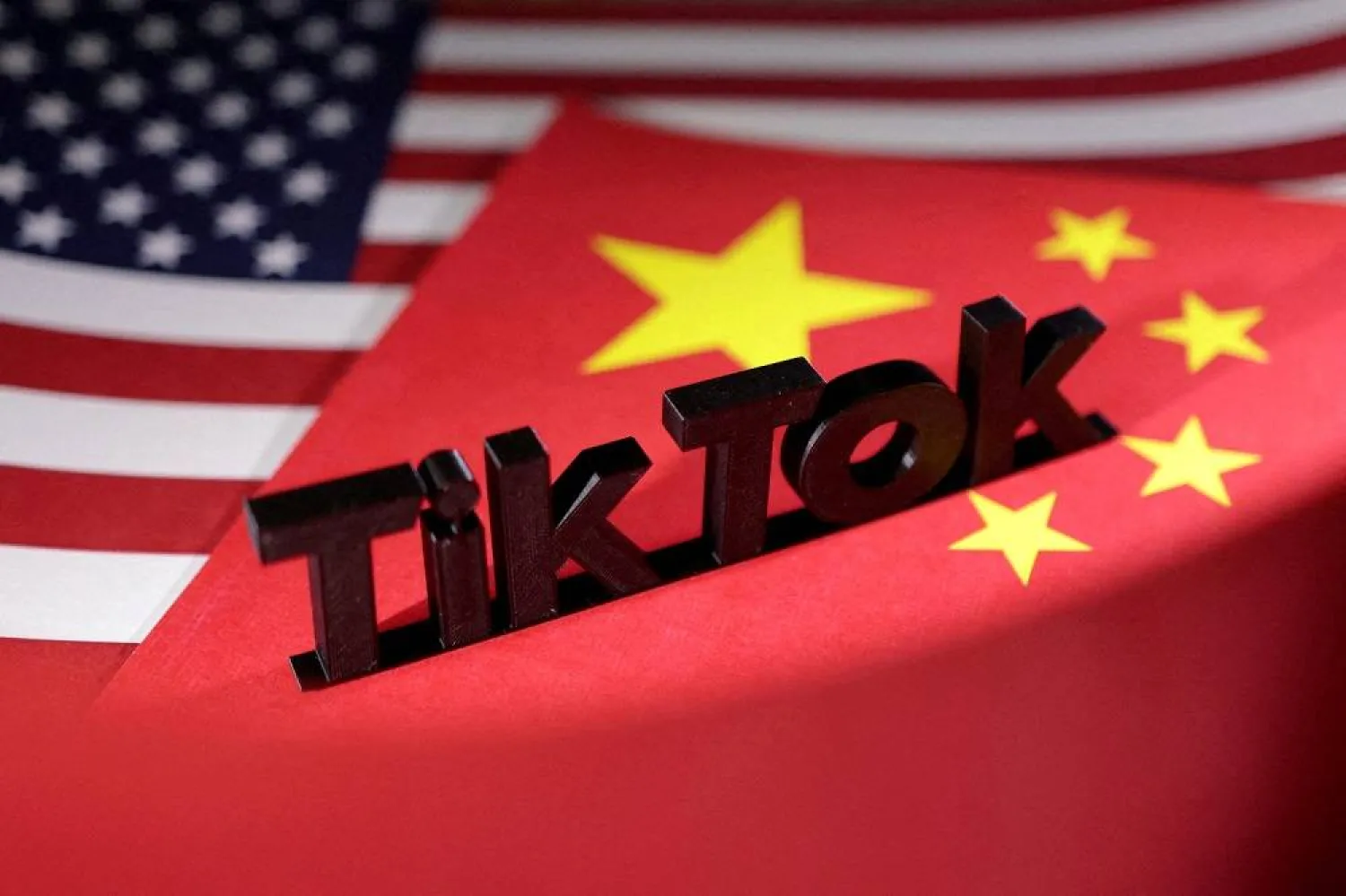
The TikTok logo is placed on the US and Chinese flags in this illustration taken, April 25, 2024. (Reuters)
TT

TikTok Sues US to Block Law That Could Ban the Social Media Platform 

The TikTok logo is placed on the US and Chinese flags in this illustration taken, April 25, 2024. (Reuters)

TikTok and its Chinese parent company filed a lawsuit Tuesday challenging a new American law that would ban the popular video-sharing app in the US unless it's sold to an approved buyer, saying it unfairly singles out the platform and is an unprecedented attack on free speech.

In its lawsuit, ByteDance says the new law vaguely paints its ownership of TikTok as a national security threat in order to circumvent the First Amendment, despite no evidence that the company poses a threat. It also says the law is so “obviously unconstitutional” that its sponsors are instead portraying it as a way to regulate TikTok's ownership.

“For the first time in history, Congress has enacted a law that subjects a single, named speech platform to a permanent, nationwide ban, and bars every American from participating in a unique online community with more than 1 billion people worldwide,” ByteDance asserts in the lawsuit filed in a Washington appeals court.

The law, which President Joe Biden signed as part of a larger foreign aid package, marks the first time the US has singled out a social media company for a potential ban, which free speech advocates say is what would be expected from repressive regimes such as those in Iran and China.

The lawsuit is the latest turn in what's shaping up to be a protracted legal fight over TikTok's future in the United States — and one that could end up before the Supreme Court. If TikTok loses, it says it would be forced to shut down next year.

The law requires ByteDance to sell the platform to a US-approved buyer within nine months. If a sale is already in progress, the company would get another three months to complete the deal.

ByteDance has said it doesn’t plan to sell TikTok. But even if it wanted to divest, the company would need Beijing's blessing.

According to the lawsuit, the Chinese government has “made clear” that it wouldn't allow ByteDance to include the algorithm that populates users' feeds and has been the “key to the success of TikTok in the United States.”

TikTok and ByteDance say the new law leaves them with no choice but to shut down by next Jan. 19 because continuing to operate in the US wouldn't be commercially, technologically or legally possible.

They also say it would be impossible for ByteDance to divest its US TikTok platform as a separate entity from the rest of TikTok, which has 1 billion users worldwide — most of them outside of the United States. A US-only TikTok would operate as an island that's detached from the rest of the world, the lawsuit argues.

The suit also paints divestment as a technological impossibility, since the law requires all of TikTok's millions of lines of software code to be wrested from ByteDance so that there would be no “operational relationship” between the Chinese company and the new US app.

The companies argue that they should be protected by the First Amendment's guarantee of freedom of expression and are seeking a declaratory judgment that it is unconstitutional.

The Justice Department declined to comment on the suit Tuesday. And White House press secretary Karine Jean-Pierre declined to engage on questions about why the president continues to use TikTok for his political activities, deferring to the campaign.

Rep. Raja Krishnamoorthi, an Illinois Democrat who is the ranking member of the House Select Committee on the Chinese Communist Party, issued a statement Tuesday defending the new law.

“This is the only way to address the national security threat posed by ByteDance’s ownership of apps like TikTok. Instead of continuing its deceptive tactics, it’s time for ByteDance to start the divestment process,” he said.

ByteDance will first likely ask a court to temporarily block the federal law from taking effect, said Gus Hurwitz, a senior fellow at the University of Pennsylvania’s Carey Law School who isn't involved in the case. And the decision whether to grant such a preliminary injunction could decide the case, because its absence, ByteDance would need to sell TikTok before the broader case could be decided, he said.

Whether a court will grant such an injunction remains unclear to Hurwitz, largely because it requires balancing important free speech issues against the Biden administration’s claims of harm to national security. “I think the courts will be very deferential to Congress on these issues,” he said.

The fight over TikTok comes amid a broader US-China rivalry, especially in areas such as advanced technologies and data security that are seen as essential to each country’s economic prowess and national security.

US lawmakers from both parties, as well as administration and law enforcement officials, have expressed concerns that Chinese authorities could force ByteDance to hand over US user data or sway public opinion by manipulating the algorithm that populates users' feeds.

Some have also pointed to a Rutgers University study that maintains TikTok content was being amplified or underrepresented based on how it aligns with the Chinese government's interests — a claim the company disputes.

Opponents of the law argue that Chinese authorities — or any nefarious parties — could easily get information on Americans in other ways, including through commercial data brokers that rent or sell personal information. They say the US government hasn't provided public evidence that shows TikTok has shared US user information with Chinese authorities or tinkered with its algorithm for China's benefit.

“Data collection by apps has real consequences for all of our privacy,” said Patrick Toomey, deputy director of the ACLU’s National Security Project. “But banning one social media platform used by millions of people around the world is not the solution. Instead, we need Congress to pass laws that protect our privacy in the first place.”

Jameel Jaffer, executive director of the Knight First Amendment Institute at Columbia University, expects TikTok's lawsuit to succeed.

“The First Amendment means the government can’t restrict Americans’ access to ideas, information, or media from abroad without a very good reason for it — and no such reason exists here,” Jaffer said in a statement.

Although TikTok prevailed in earlier First Amendment challenges, it isn't clear whether the current lawsuit will be as simple.

“The bipartisan nature of this federal law may make judges more likely to defer to a Congressional determination that the company poses a national security risk,” said Gautam Hans, a law professor and associate director of the First Amendment Clinic at Cornell University. “Without public discussion of what exactly the risks are, however, it’s difficult to determine why the courts should validate such an unprecedented law.”



Google Says to Build New Subsea Cables from India in AI Push

A logo of Google is on display at Bharat Mandapam, one of the venues for AI Impact Summit, in New Delhi, India, February 17, 2026. REUTERS/Bhawika Chhabra
TT

Google Says to Build New Subsea Cables from India in AI Push

A logo of Google is on display at Bharat Mandapam, one of the venues for AI Impact Summit, in New Delhi, India, February 17, 2026. REUTERS/Bhawika Chhabra

Google announced Wednesday it would build new subsea cables from India and other locations as part of its existing $15 billion investment in the South Asian nation, which is hosting a major artificial intelligence summit this week.

The US tech giant said it would build "three subsea paths connecting India to Singapore, South Africa, and Australia; and four strategic fiber-optic routes that bolster network resilience and capacity between the United States, India, and multiple locations across the Southern Hemisphere".


Mark Zuckerberg Set to Testify in Watershed Social Media Trial 

Meta's CEO Mark Zuckerberg testifies during the Senate Judiciary Committee hearing on online child sexual exploitation at the US Capitol in Washington, US, January 31, 2024. (Reuters)
TT

Mark Zuckerberg Set to Testify in Watershed Social Media Trial 

Meta's CEO Mark Zuckerberg testifies during the Senate Judiciary Committee hearing on online child sexual exploitation at the US Capitol in Washington, US, January 31, 2024. (Reuters)

Mark Zuckerberg will testify in an unprecedented social media trial that questions whether Meta's platforms deliberately addict and harm children.

Meta's CEO is expected to answer tough questions on Wednesday from attorneys representing a now 20-year-old woman identified by the initials KGM, who claims her early use of social media addicted her to the technology and exacerbated depression and suicidal thoughts. Meta Platforms and Google’s YouTube are the two remaining defendants in the case, which TikTok and Snap have settled.

Zuckerberg has testified in other trials and answered questions from Congress about youth safety on Meta's platforms, and he apologized to families at that hearing whose lives had been upended by tragedies they believed were because of social media.

This trial, though, marks the first time Zuckerberg will answer similar questions in front of a jury. and, again, bereaved parents are expected to be in the limited courtroom seats available to the public.

The case, along with two others, has been selected as a bellwether trial, meaning its outcome could impact how thousands of similar lawsuits against social media companies would play out.

A Meta spokesperson said the company strongly disagrees with the allegations in the lawsuit and said they are “confident the evidence will show our longstanding commitment to supporting young people.”

One of Meta's attorneys, Paul Schmidt, said in his opening statement that the company is not disputing that KGM experienced mental health struggles, but rather that Instagram played a substantial factor in those struggles.

He pointed to medical records that showed a turbulent home life, and both he and an attorney representing YouTube argue she turned to their platforms as a coping mechanism or a means of escaping her mental health struggles.

Zuckerberg's testimony comes a week after that of Adam Mosseri, the head of Meta's Instagram, who said in the courtroom that he disagrees with the idea that people can be clinically addicted to social media platforms.

Mosseri maintained that Instagram works hard to protect young people using the service, and said it's “not good for the company, over the long run, to make decisions that profit for us but are poor for people’s well-being."

Much of Mosseri's questioning from the plaintiff's lawyer, Mark Lanier, centered on cosmetic filters on Instagram that changed people’s appearance — a topic that Lanier is sure to revisit with Zuckerberg.

He is also expected to face questions about Instagram’s algorithm, the infinite nature of Meta’ feeds and other features the plaintiffs argue are designed to get users hooked.


US Tech Giant Nvidia Announces India Deals at AI Summit

FILED - 04 February 2026, Bavaria, Munich: The NVIDIA logo is seen during a press conference at the opening of Telekom and NVIDIA's AI factory "Industrial AI Cloud". Photo: Sven Hoppe/dpa
TT

US Tech Giant Nvidia Announces India Deals at AI Summit

FILED - 04 February 2026, Bavaria, Munich: The NVIDIA logo is seen during a press conference at the opening of Telekom and NVIDIA's AI factory "Industrial AI Cloud". Photo: Sven Hoppe/dpa

US artificial intelligence chip titan Nvidia unveiled tie-ups with Indian computing firms on Wednesday as tech companies rushed to announce deals and investments at a global AI conference in New Delhi.

This week's AI Impact Summit is the fourth annual gathering to discuss how to govern the fast-evolving technology -- and also an opportunity to "define India's leadership in the AI decade ahead", organizers say.

Mumbai cloud and data center provider L&T said it was teaming up with Nvidia, the world's most valuable company, to build what it touted as "India's largest gigawatt-scale AI factory".

"We are laying the foundation for world-class AI infrastructure that will power India's growth," said Nvidia boss Jensen Huang in a statement that did not put a figure on the investment.

L&T said it would use Nvidia's powerful processors, which can train and run generative AI tech, to provide data center capacity of up to 30 megawatts in Chennai and 40 megawatts in Mumbai.

Nvidia said it was also working with other Indian AI infrastructure players such as Yotta, which will deploy more than 20,000 top-end Nvidia Blackwell processors as part of a $2 billion investment.

Dozens of world leaders and ministerial delegations have come to India for the summit to discuss the opportunities and threats, from job losses to misinformation, that AI poses.

Last year India leapt to third place -- overtaking South Korea and Japan -- in an annual global ranking of AI competitiveness calculated by Stanford University researchers.

But despite plans for large-scale infrastructure and grand ambitions for innovation, experts say the country has a long way to go before it can rival the United States and China.

The conference has also brought a flurry of deals, with IT minister Ashwini Vaishnaw saying Tuesday that India expects more than $200 billion in investments over the next two years, including roughly $90 billion already committed.

Separately, India's Adani Group said Tuesday it plans to invest $100 billion by 2035 to develop "hyperscale AI-ready data centers", a boost to New Delhi's push to become a global AI hub.

Microsoft said it was investing $50 billion this decade to boost AI adoption in developing countries, while US artificial intelligence startup Anthropic and Indian IT giant Infosys said they would work together to build AI agents for the telecoms industry.

Nvidia's Huang is not attending the AI summit but other top US tech figures joining include OpenAI's Sam Altman, Google DeepMind's Demis Hassabis and Microsoft founder Bill Gates.

Indian Prime Minister Narendra Modi and other world leaders including French President Emmanuel Macron and Brazil's Luiz Inacio Lula da Silva are expected to deliver a statement at the end of the week about how they plan to address concerns raised by AI technology.

But experts say that the broad focus of the event and vague promises made at previous global AI summits in France, South Korea and Britain mean that concrete commitments are unlikely.

Nick Patience, practice lead for AI at tech research group Futurum, told AFP that nonbinding declarations could still "set the tone for what acceptable AI governance looks like".

But "the largest AI companies deploy capabilities at a pace that makes 18-month legislative cycles look glacial," Patience said.

"So it's a case of whether governments can converge fast enough to create meaningful guardrails before de facto standards are set by the companies themselves."