Saudi Arabia Launches Training Program to Combat Money Laundering, Terrorism Financing

Director-General of Saudi Arabia’s Financial Academy Mana bin Mohammed Al-Khamsan. (Asharq Al-Awsat)
TT

Saudi Arabia Launches Training Program to Combat Money Laundering, Terrorism Financing

Director-General of Saudi Arabia’s Financial Academy Mana bin Mohammed Al-Khamsan. (Asharq Al-Awsat)

Saudi Arabia has unveiled a new training program to fight money laundering and terrorism financing. The initiative targets leaders in financial and non-financial sectors across the country.

The announcement was made during the "Arab Forum for Anti-Corruption Agencies and Financial Intelligence Units," a two-day event sponsored by Prince Mohammed bin Salman, Crown Prince and Prime Minister of Saudi Arabia, in Riyadh.

The 18-month program aims to train personnel to better prevent, analyze, and report illegal activities. It also seeks to improve information sharing between financial institutions and regulatory bodies, bolstering the overall integrity of the financial system.

The program, presented by Mana bin Mohammed Al-Khamsan, Director-General of Saudi Arabia’s Financial Academy, is a joint effort with the Kingdom’s state security and an international consultancy.

Al-Khamsan stressed the importance of combating financial crimes and highlighted the academy’s commitment to providing specialized training and certifications.

Aligned with Saudi Arabia’s national transformation plan, Vision 2030, the academy aims to support entities combating corruption and financial crimes. It has conducted over 500 training programs benefiting thousands of professionals from various sectors.

Al-Khamsan emphasized the value of professional certifications in boosting workforce efficiency, noting partnerships with respected international associations and institutions.


IMF: Non-Oil Activities Bolster Saudi Economy’s Resilience to Disruptions

King Fahd Highway in Riyadh (SPA)
TT

IMF: Non-Oil Activities Bolster Saudi Economy’s Resilience to Disruptions

King Fahd Highway in Riyadh (SPA)

The International Monetary Fund’s outlook for the Saudi economy points to promising prospects for recovery and growth, despite pressures from regional disruptions affecting energy production, trade flows and supply chains.

While the Kingdom’s GDP is expected to be affected in 2026 by a decline in oil and gas activity, non-oil activities are proving more resilient. The economy is projected to rebound strongly in 2027 as energy production gradually returns to normal and security and trade conditions improve.

The IMF’s Regional Economic Outlook, issued in October 2026, places Saudi Arabia among the major economies of the Middle East, North Africa, Afghanistan and Pakistan region, at a time when the region is grappling with the repercussions of conflicts and disruptions to energy supplies and global trade.

Temporary Growth Contraction, Non-Oil Activities Remain Resilient

The report forecasts that Saudi Arabia’s real GDP will contract by 3.3 percent in 2026, reflecting a decline in hydrocarbon-sector activity during the first half of the year amid disruptions affecting energy production, shipping and regional supply chains, particularly those linked to the Strait of Hormuz and Bab al-Mandab.

By contrast, the Kingdom’s non-oil activities have demonstrated resilience and performed relatively better than the energy sector, supported by sustained investment momentum and economic diversification programs associated with Vision 2030.

In the tourism sector, the Kingdom recorded the smallest decline in hotel occupancy rates compared with other countries directly affected by regional tensions, reflecting its relative ability to sustain tourism and services activity under the current circumstances.

Strong Rebound Expected in 2027

Despite the contraction expected in 2026, the IMF projects a strong rebound in the Saudi economy the following year, with real GDP forecast to grow by 7.9 percent in 2027.

The recovery is linked to the gradual return of energy production to normal levels, greater stability in security and trade conditions, and an improvement in global supply chains.

Over the medium term, the report projects Saudi real GDP growth to stabilize at around 3.6 percent by 2031, reflecting a return to a more stable growth trajectory following the volatility expected during the current period.

Inflation and Monetary Policy

On prices, average inflation in Saudi Arabia is estimated at around 2.7 percent in 2026 before stabilizing at approximately 2 percent in subsequent years, according to the projections cited in the report.

Factors including subsidies, price controls and fiscal discipline have helped contain inflationary pressures and maintain relative price stability compared with several other economies in the region.

On monetary policy, Gulf central banks, including Saudi monetary authorities, have taken steps in line with moves by the US Federal Reserve, with the aim of supporting financial market stability and limiting potential inflationary pressures.

Fiscal Resilience and Capacity to Absorb Shocks

Saudi fiscal policy in 2026 is characterized by discipline and prudence, while retaining room to direct spending toward strategic priorities, including infrastructure development, improving spending efficiency and supporting long-term structural reforms.

According to the report, the Kingdom also entered the period of regional disruption with comfortable reserves and fiscal buffers, helping it absorb temporary shocks that could affect the current account and official reserves.

These fiscal buffers are particularly important amid heightened regional and global uncertainty, providing greater capacity to withstand volatility while continuing to invest in economic priorities.

Artificial Intelligence

Investment in technology and artificial intelligence is one of the areas in which Saudi Arabia, alongside other Gulf countries, is seeking to expand its presence. The report examines announced investments in AI infrastructure and data centers, which, according to figures cited in the report, exceed 5 percent of GDP. These investments are expected to contribute to stronger productivity and growth over the medium term.

At the same time, structural reforms remain an important factor in strengthening the economy’s ability to withstand external shocks by increasing labor-market flexibility, investing in human capital and diversifying non-oil exports.

The report also points to the progress made by Gulf Cooperation Council countries in diversifying their merchandise exports over the past two decades, underscoring the importance of continuing efforts to broaden the production and trade base and reduce dependence on traditional sources of income.

Taken together, these trends underscore the importance of economic diversification and investment in new sectors in strengthening Saudi Arabia’s ability to weather the repercussions of current disruptions while preserving its medium-term growth prospects.


IMF Says 2027 Recovery in Middle East Hinges on Easing Conflict, Resumption of Trade

IMF Middle East and Central Asia Department Director Jihad Azour speaks during the Regional Economic Outlook for the Middle East and Central Asia press briefing at the Annual Meetings of the International Monetary Fund (IMF) and the World Bank Group (WBG) at the Queen Sirikit National Convention Center (QSNCC) in Bangkok on October 15, 2026. (Photo by Lillian SUWANRUMPHA / AFP)
TT

IMF Says 2027 Recovery in Middle East Hinges on Easing Conflict, Resumption of Trade

IMF Middle East and Central Asia Department Director Jihad Azour speaks during the Regional Economic Outlook for the Middle East and Central Asia press briefing at the Annual Meetings of the International Monetary Fund (IMF) and the World Bank Group (WBG) at the Queen Sirikit National Convention Center (QSNCC) in Bangkok on October 15, 2026. (Photo by Lillian SUWANRUMPHA / AFP)

Jihad Azour, director of the International Monetary Fund’s Middle East and Central Asia Department, said the war in the Middle East was weighing on the region’s economic outlook, with economies across the Middle East and North Africa, Afghanistan and Pakistan expected to contract by 1.3% in 2026 before rebounding strongly in 2027, provided the conflict eases and trade gradually returns to normal.

Azour made the remarks at a news conference on Thursday to present the IMF’s Regional Economic Outlook report, which examines the economic fallout from the conflict and its varying effects across countries in the region.

The impact of the war is being felt through multiple channels, including energy, shipping, tourism, trade and confidence. Its effects vary across regional economies depending on whether countries export or import oil, their exposure to disruptions and their capacity to contain the economic fallout.

Recovery expected in 2027

The IMF’s growth projections are based on a scenario in which the conflict subsides in early 2027 and trade gradually returns to normal. Under this scenario, the economies of the Middle East and North Africa, Afghanistan and Pakistan are expected to contract by 1.3% in 2026 before growing by 6.6% in 2027.

The 2026 growth forecast is around 3 percentage points lower than the projection issued in April, reflecting the conflict’s impact on economic activity across the region.

The effects of the war differ between oil-exporting and oil-importing countries. Oil exporters have faced disruptions to energy production and shipping, while oil-importing economies have shown resilience, supported by domestic demand, remittances, tourism revenues and financial conditions, as well as government measures to limit the pass-through of higher commodity prices to consumers.

Gulf Cooperation Council economies are expected to experience a V-shaped recovery, with economic activity declining before rebounding. However, output is likely to remain below pre-conflict projections over the medium term, Azour said.

By contrast, growth in oil-importing countries is expected to accelerate in 2026 and 2027.

Economies in the Caucasus and Central Asia are projected to grow by 5.2% in 2026 and 5% in 2027, while inflation continues to ease.

The IMF raised its growth forecasts for the Caucasus and Central Asia compared with its April projections, as improved prospects for oil-importing countries offset downgrades for some oil exporters in 2026.

Inflation and external balances under pressure

Azour expects inflation to rise across the Middle East and North Africa, Afghanistan and Pakistan in 2026, while continuing to decline in the Caucasus and Central Asia.

Government measures, including subsidies, price controls and fixed exchange rates, have helped limit the pass-through of higher commodity prices to consumers in parts of the region. However, these measures come at a fiscal cost.

External positions are expected to weaken across most economies in both regions, with the GCC’s current account surplus projected to narrow from around 5% of gross domestic product in 2025 to 1.3% in 2026.

Uncertainty remains exceptionally high

Azour said uncertainty surrounding the outlook remained exceptionally high, with risks tilted to the downside.

Key risks include renewed disruptions to energy production or trade routes, which could drive up energy prices and intensify pressure on regional economies.

Other risks include a tightening of external financial conditions if markets reassess expected productivity gains from artificial intelligence, as well as higher interest rates amid concerns over inflation and public finances.

The Caucasus and Central Asia face additional risks, including renewed disruptions stemming from Russia’s war in Ukraine, lower oil prices and weaker external demand if markets linked to artificial intelligence undergo a sharp correction.

Low-income and fragile countries remain the most vulnerable, given their reliance on food imports, substantial financing needs and declining official development assistance, which constrain their ability to withstand economic shocks.

IMF urges stronger fiscal buffers, continued reforms

Azour said the main economic policy priorities were to maintain price stability and ensure fiscal sustainability. Monetary policy should serve as the first line of defense if upside inflation risks materialize, he said.

In the Caucasus and Central Asia, preserving gains in reducing inflation and strengthening central bank independence are key to anchoring inflation expectations and limiting the pass-through of future supply shocks to prices.

On fiscal policy, governments should provide temporary, targeted support to the households and businesses hardest hit by the crisis, rather than adopt broad-based measures that increase public debt without delivering lasting gains in economic activity.

Azour urged countries in the region to rebuild fiscal buffers through credible monetary frameworks, adequate reserves and sound public finances to strengthen their capacity to withstand future shocks.

He said the current disruptions also provided an incentive to seize long-term opportunities through structural reforms to boost productivity and create jobs, diversify trade and economic activity, deepen regional integration, and create conditions conducive to harnessing technology and artificial intelligence.


Saudi Transport Authority: Maritime Sector Proved Resilient Amid Global Trade Disruptions

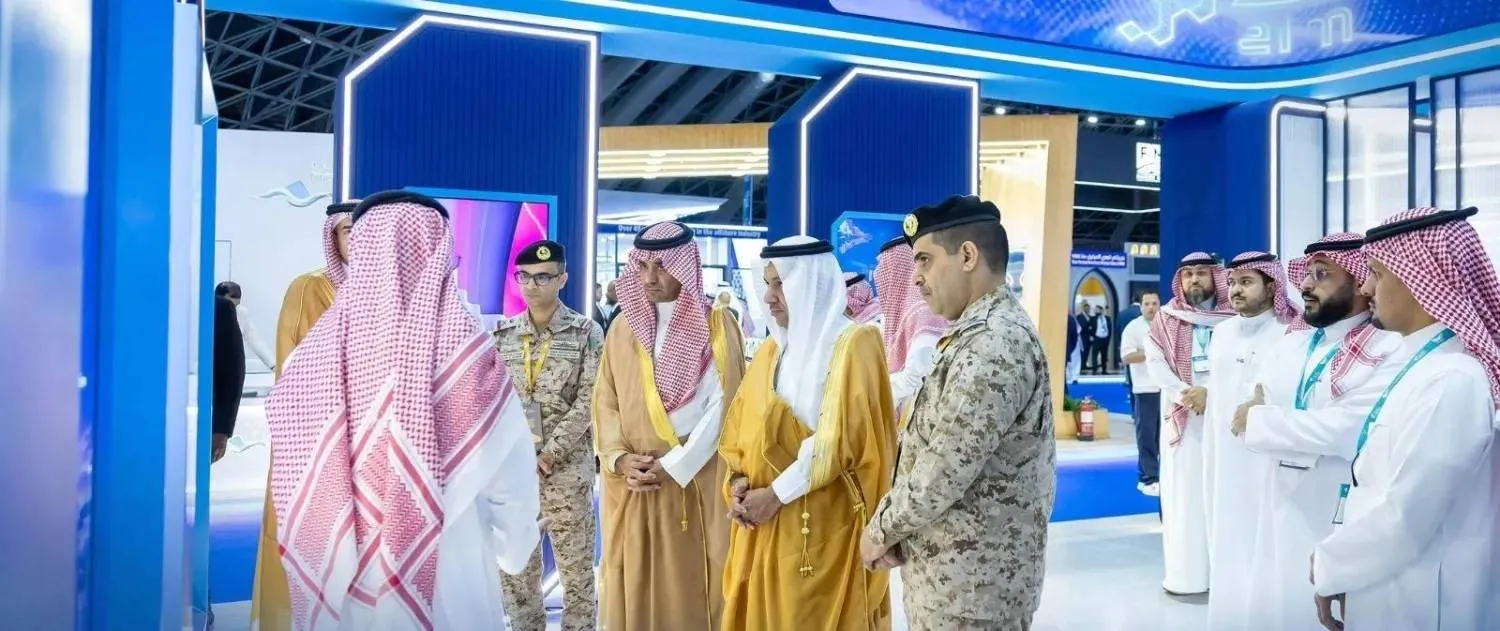
Transport General Authority President Fawaz Alsahli tours the exhibition held alongside the conference in Jeddah (Transport General Authority)
TT

Saudi Transport Authority: Maritime Sector Proved Resilient Amid Global Trade Disruptions

Transport General Authority President Fawaz Alsahli tours the exhibition held alongside the conference in Jeddah (Transport General Authority)

Saudi Arabia’s maritime sector has remained resilient amid disruptions to global trade and shipping in 2026, with the kingdom weathering the upheaval with limited impact on the sector.

Essam Alammari, Deputy for Maritime at the Saudi Transport general authority, told Asharq Al-Awsat that integration across the kingdom’s maritime, road, rail and air transport networks had strengthened its ability to navigate regional and international challenges and maintain maritime operations.

Alammari spoke on the sidelines of the Saudi Maritime and Logistics Congress 2026, which opened Wednesday in Jeddah under the patronage of Minister of Transport and Logistic Services Saleh Al-Jasser and Transport General Authority President Fawaz Alsahli.

The event brought together officials, experts and representatives of shipping companies, ports and logistics service providers from Saudi Arabia and abroad.

National strategy

"We were affected like other countries around the world, but thanks to the efforts of Saudi men and women, government support and the National Transport and Logistics Strategy, we were able to demonstrate the sector's resilience," Alammari said.

He stressed the importance of integrating different modes of transport to strengthen the kingdom's logistics network.

Alammari said Saudi Arabia's maritime fleet grew 34% in 2025, with its current carrying capacity reaching approximately 11.8 million tons.

He said the kingdom ranked first in the Middle East and 20th globally in terms of national fleet carrying capacity.

Saudi Arabia also ranked second among Group of 20 (G20) countries in maritime sector growth in 2025, he added, reflecting progress toward the targets of Saudi Vision 2030.

2026 indicators

On the maritime transport sector's performance this year, Alammari said final figures were not yet available because sector indicators are released annually. He expected the results by the end of 2026.

He said Saudi Arabia's maritime economy had seen significant activity recently and expressed optimism about the upcoming annual results and progress toward the sector's targets.

Alammari linked the sector's ability to withstand global disruptions to efforts under the National Transport and Logistics Strategy, a key initiative supporting Saudi Vision 2030.

He reiterated that integration across maritime, road, rail and air transport had strengthened the logistics network's resilience.

International maritime conference

The two-day conference at the Jeddah Superdome is examining the future of maritime trade, shifts in international shipping routes, port competitiveness, investment in maritime infrastructure, supply chain continuity, maritime security and digital transformation.

It is also highlighting growth opportunities in Saudi Arabia's maritime sector and the role of investment and public-private partnerships in developing maritime and logistics services and strengthening the kingdom's position in regional and global trade.