


Oil Steadies as OPEC+ Restraint Balances Interest Rate Concerns

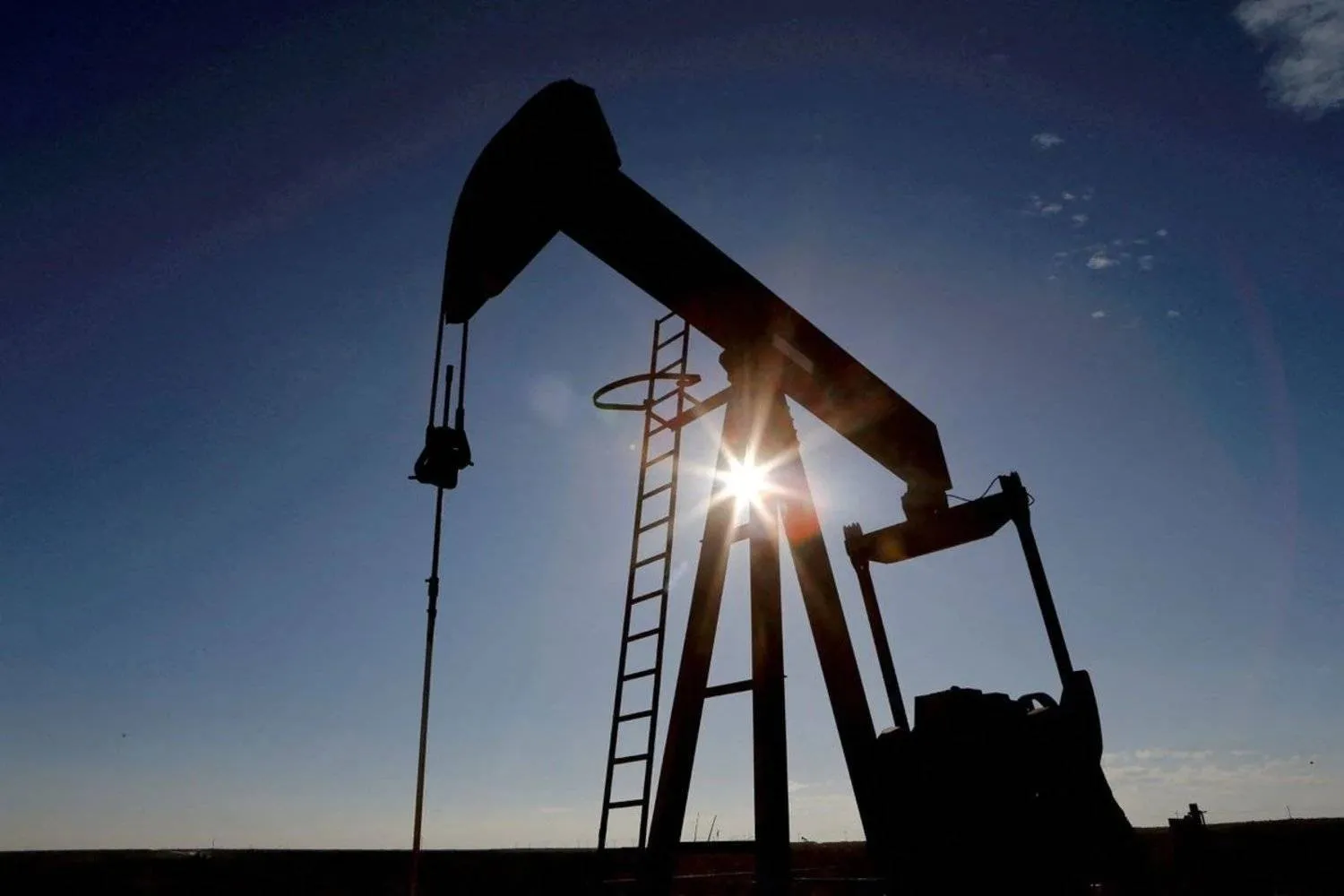
The sun is seen behind a crude oil pump jack in the Permian Basin in Loving County, Texas, US, November 22, 2019. REUTERS/Angus Mordant
TT

Oil Steadies as OPEC+ Restraint Balances Interest Rate Concerns

The sun is seen behind a crude oil pump jack in the Permian Basin in Loving County, Texas, US, November 22, 2019. REUTERS/Angus Mordant

Global oil prices steadied on Tuesday as the prospect of OPEC+ maintaining oil supply curbs at its June 2 meeting and hopes of strong US summer fuel demand balanced concern about higher-for-longer US interest rates.

On Monday, oil rose over 1% in muted trade owing to public holidays in Britain and the U.States, with hopes of strong fuel demand with the start of the US summer driving and vacation season providing support.

The July contract for Brent, the global benchmark, rose 12 cents, or 0.1%, to $83.22 a barrel by 1155 GMT. US West Texas Intermediate (WTI) crude was at $78.79, up $1.07, or 1.4%, from Friday's close, having traded through a US holiday to mark Memorial Day without a settlement.

"Oil has been in a recovery mode lately, perhaps driven by expectations of strong fuel demand due to the start of the summer driving and vacation season," said Charalampos Pissouros, analyst at broker XM, Reuters reported.

Worries over US interest rates remaining elevated for a longer period contributed to a weekly loss for crude last week. Higher rates boost the cost of borrowing, which can dampen economic activity and demand for oil.

"Despite the indisputably brighter mood seen in the last two days, interest rate concerns will most plausibly act as a (brake) on further attempts to send oil prices meaningfully higher in the immediate future," said Tamas Varga of broker PVM.

Nonetheless, despite the general view that high interest rates could result in softer oil demand growth, "real-time mobility data indicates oil demand growth is still broadly healthy," UBS analyst Giovanni Staunovo wrote in a client note.

On the air travel front, US seat numbers on domestic flights for May rose by 5% month on month and almost 6% year on year to slightly above 90 million, data from flight analytics firm OAG showed, surpassing 2019 levels.

Coming up is the online meeting of OPEC+ producers on Sunday, where traders and analysts are expecting 2.2 million barrels per day of voluntary production cuts to stay in place.

"It is a fair assumption that no changes in production levels will be forthcoming," PVM's Varga added regarding the OPEC+ meeting.



Saudi Arabia Issues 438 Industrial Licenses Worth $1.28 Billion in July

File photo of the Saudi capital Riyadh - File/AAWSAT
TT

Saudi Arabia Issues 438 Industrial Licenses Worth $1.28 Billion in July

File photo of the Saudi capital Riyadh - File/AAWSAT

Saudi Arabia's Ministry of Industry and Mineral Resources issued 438 new industrial licenses in July 2026, representing investments of approximately SAR 4.82 billion ($1.28 billion), while 189 factories began actual production during the same month, with investments totaling SAR 1.95 billion ($520 million), according to data from the ministry's National Industrial and Mining Information Center.

Ministry spokesperson Jarrah Al-Jarrah said the new industrial licenses are expected to create more than 3,708 jobs across various regions of the Kingdom.

He added that the factories that began production in July created 2,807 new jobs, reflecting the continued expansion of Saudi Arabia's industrial base and the growing number of factories entering operation.

The Ministry of Industry and Mineral Resources publishes monthly industrial activity indicators through the National Industrial and Mining Information Center to track new licenses, investment volumes and factories beginning production, as well as developments in the Kingdom's industrial sector.


GCC Chief Emphasizes Gulf Integration, Diversified Partnerships at IMF MENAP Meeting

Gulf Cooperation Council (GCC) Secretary-General Jasem Albudaiwi - SPA
TT

GCC Chief Emphasizes Gulf Integration, Diversified Partnerships at IMF MENAP Meeting

Gulf Cooperation Council (GCC) Secretary-General Jasem Albudaiwi - SPA

Gulf Cooperation Council (GCC) Secretary-General Jasem Albudaiwi underscored that GCC economies have demonstrated strong resilience against global economic shocks and geopolitical shifts, supported by solid fundamentals, substantial financial reserves, robust banking sectors, and prudent fiscal management.

Albudaiwi delivered his remarks during a meeting of the finance ministers and central bank governors of the Middle East, North Africa, Afghanistan, and Pakistan (MENAP) region with International Monetary Fund (IMF) Managing Director Kristalina Georgieva, held on the sidelines of the 2026 IMF and World Bank Group Annual Meetings in Bangkok, SPA reported.

Albudaiwi pointed out that recent geopolitical developments have impacted global energy production, maritime shipping, and trade flows, demonstrating the close link between Gulf stability and broader global economic security. He noted that disruptions along key energy corridors and trade routes inevitably reverberate across international markets.

Albudaiwi affirmed that the GCC economies possess the capacity to sustain recovery and growth through 2027 and beyond, propelled by strategic investments and non-oil diversification. He emphasized the necessity of balancing short-term economic responses with long-term fiscal sustainability, maintaining adequate buffers to mitigate future market volatility.

Highlighting future growth sectors, the secretary-general cited advanced industries, digital infrastructure, artificial intelligence, and human capital development, alongside empowering the private sector to expand its role in global value chains.

Concluding his address, Albudaiwi stressed that long-term resilience requires advancing Gulf economic integration, upgrading logistical corridors, and diversifying international partnerships to transform ongoing global challenges into sustainable economic opportunities.


Turkish Cenbank Says to Maintain Tight Monetary Stance Till Price Stability

Turkish Central Bank Governor Fatih Karahan speaks during a press conference in Istanbul, Türkiye, February 7, 2025. REUTERS/Dilara Senkaya
TT

Turkish Cenbank Says to Maintain Tight Monetary Stance Till Price Stability

Turkish Central Bank Governor Fatih Karahan speaks during a press conference in Istanbul, Türkiye, February 7, 2025. REUTERS/Dilara Senkaya

Turkish Central Bank Governor Fatih Karahan on Wednesday said the bank would maintain its tight monetary policy until price stability is achieved.

According to Reuters, He was speaking about Türkiye's monetary policy and macroeconomic outlook during a visit to Bangkok for a meeting of the World Bank.

Here are some details from the governor's presentation:

* Underlying inflation ⁠is moderating despite ⁠elevated energy prices
* Soft demand dampens inflationary impulses from supply shocks
* Proactive measures limit the possible contagion from trade-restricted funds
* Turkish lira preference remains strong under tight monetary policy
* The ⁠tight monetary policy stance, which will be maintained until price stability is achieved, will strengthen the disinflation process through demand, exchange rate, and expectation channels
* The Monetary Policy Committee (MPC) will determine the policy rate by taking into account realized and expected inflation and its underlying trend in a way to ensure ⁠the tightness ⁠required by the projected disinflation path in line with the interim targets
* Monetary policy decisions are made prudently on a meeting-by-meeting basis with a focus on the inflation outlook
* Monetary policy stance will be tightened in case of a significant deviation in inflation outlook from the interim targets