‘Takamol’ CEO: 1 Mln Daily Operations Tracked on ‘Qiwa’ Platform

One of the job fairs that bring together companies and job seekers in Saudi Arabia (Asharq Al-Awsat)
TT

‘Takamol’ CEO: 1 Mln Daily Operations Tracked on ‘Qiwa’ Platform

One of the job fairs that bring together companies and job seekers in Saudi Arabia (Asharq Al-Awsat)

A Saudi official has revealed a new initiative dedicated to achieving an integrated employment market and fixing issues in the Kingdom’s job market. The initiative combines various services into one platform, “Qiwa.”

Qiwa is a unified platform for automating the services of the Ministry of Human Resources in the labor sector to be a meeting point between establishments and workers in the private sector.

Qiwa connects businesses, individuals, and public services.

Dr. Ahmed Al-Yamani, CEO of “Takamol,” a Saudi government-backed company, explained that traditionally, tasks like visa issuance and contract documentation were scattered.

Now, everything happens on a single automated platform, making things much easier for employers. This move seeks to modernize and streamline the job market processes in Saudi Arabia.

Speaking to Asharq Al-Awsat, the CEO of Takamol reflected on how much the labor market has changed.

Al-Yamani revealed that Takamol used to handle 10,000 to 20,000 tasks daily on the Qiwa platform, but now it’s over a million.

This boost in efficiency makes services smoother and helps with economic growth, Al-Yamani stressed, saying Takamol is a big part of Saudi Arabia’s labor market, supporting the goals of the Kingdom’s national transformation plan, “Vision 2030.”

The services inspired by the Vision’s initiatives didn’t just stop at organization; the labor market always needs empowerment.

“We began by launching two platforms, around four or five years ago, for the Human Resources Development Fund,” said Al-Yamani.

“When we started, the idea was to address the problem of very low female participation in the Saudi labor market, which was below 19%,” he added.

“Our goal was to reach 39 or 40% by 2030. We launched several programs, including remote training and skill enhancement, so that women, youth, or anyone seeking or already in employment could develop their abilities easily and quickly through these platforms,” explained the CEO.

“Now, millions of users have accessed them, accumulating millions of training hours,” revealed Al-Yamani.


Ongoing Strait of Hormuz Disruption Could Drag Oil Market Recovery into 2027, Aramco CEO Says

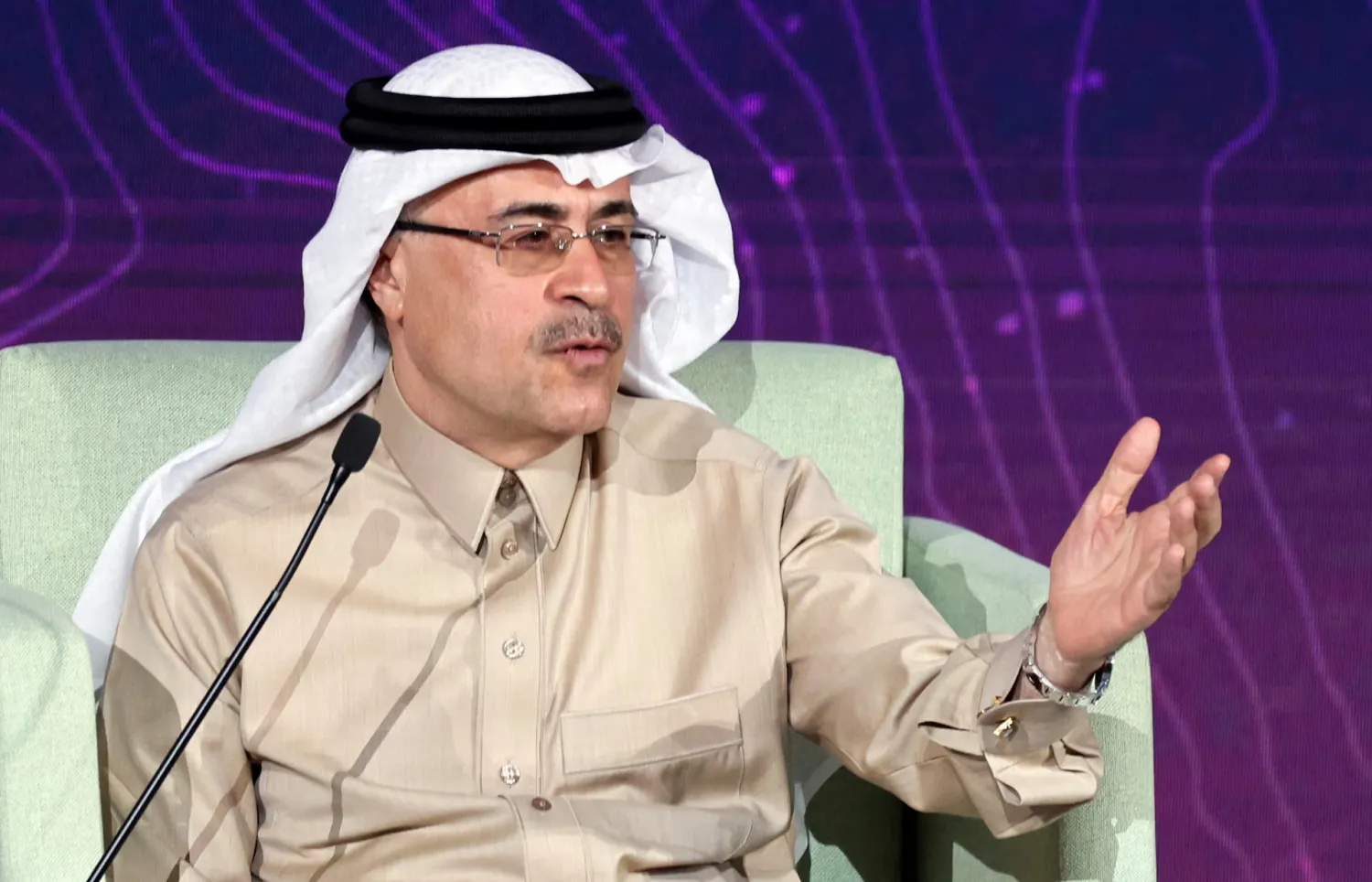
Aramco CEO Amin Nasser speaks at a conference. (Reuters file)
TT

Ongoing Strait of Hormuz Disruption Could Drag Oil Market Recovery into 2027, Aramco CEO Says

Aramco CEO Amin Nasser speaks at a conference. (Reuters file)

The ongoing energy supply shock is the largest the world has ever experienced, and continued disruption of the Strait of Hormuz could delay oil market normalization into 2027, Saudi Aramco CEO Amin Nasser warned on Monday.

"The longer the supply ‌disruptions continue, even ‌for another few more weeks, it ‌is ⁠going to take ⁠a much longer time for the oil market to rebalance and stabilize," he told analysts on a call to discuss the company's first-quarter results, which were released on Sunday and beat expectations.

The recovery could drag into 2027 if the situation continues until ⁠mid-June, Nasser said.

Iranian authorities effectively blocked ‌the vital waterway ‌in response to the US-Israel attacks on Iran that began ‌on February 28, sending energy prices surging and ‌stoking fears of spiraling inflation and a looming economic downturn.

Aramco has ramped up its East-West pipeline to its expanded capacity of 7 million barrels per day (bpd) to ‌divert crude from its production heartland to the Red Sea port of Yanbu.

⁠Nasser on Sunday ⁠called the pipeline a "critical lifeline".

The market is losing around 100 million barrels of oil for every week the maritime chokepoint remains closed, Nasser said, adding that only two to five vessels are now crossing the strait daily compared to around 70 before the war.

Even if the strait opens today, it will still take months for the market to rebalance, he said.

Nasser, however, predicted a very robust return to demand growth once normal shipping and trade resume.


Saudi Arabia Reshapes Its Industrial Identity... From Assembly to Independent Innovation

A view of the Saudi capital Riyadh. (SPA)
TT

Saudi Arabia Reshapes Its Industrial Identity... From Assembly to Independent Innovation

A view of the Saudi capital Riyadh. (SPA)

Saudi Arabia is moving rapidly and steadily toward building a comprehensive industrial system, surpassing ambitions of mere assembly and importation, but aiming to establish robust engineering capabilities capable of resilience and competition.

This was revealed by a recent report issued by Alvarez & Marsal, and confirmed by Andrea Di Lello, Senior Director of Strategy and Performance Improvement at the company, in an interview with Asharq Al-Awsat.

Saudi localization efforts are distributed across highly strategic sectors, including space, aviation, automotive, shipbuilding, information technology, artificial intelligence, and financial technology. In each of these sectors, local projects connect with major international partnerships, reflecting the depth of the ongoing transformation.

In the aerospace and aviation sector, the Saudi Arabian Military Industries (SAMI) has started locally producing spare parts for F-15 aircraft and airborne electronics systems, while Boeing, Lockheed Martin, and Airbus have signed localization agreements targeting 50% local content. The numbers here tell a remarkable story of growth; the actual localization rate has increased from 4 percent in 2018 to about 20 percent today.

However, Di Lello put these numbers in their proper context, saying agreements with international partners have laid the initial foundations by building operational capabilities and developing advanced infrastructure for maintenance, repair, and overhaul.

He warned that the next phase, which is building engineering capabilities in design and systems integration, is the true added value, and this is where the greatest opportunities lie.

Factories shaping a different future

At the King Abdullah Economic City, Lucid Motors opened the first car factory in the history of the Kingdom, while Ceer Motors is seeking to design and manufacture electric cars locally, and SNAM continues to assemble commercial vehicles with ambitions to transition to full manufacturing.

Asked about the realistic timelines for achieving independence in innovation in these sectors, Di Lello explained that tangible progress can be made within five years.

The critical factor is not the time itself, but the quality of execution, which includes the true definition of achievement and how the knowledge transfer process is organized, he added.

As for the shipbuilding sector, it is based on an ambitious pillar, the King Salman Global Maritime Industries Complex, which aims to localize more than 50 percent of construction activities and drilling platform manufacturing. This is supported by a joint venture with the Korea’s Hyundai Group, which aims to manufacture ship engines and their structural components.

Di Lillo described the complex as a "world-class facility," noting that long-term agreements with major local buyers provide a commercial foundation that is not usually available to most emerging countries in this sector.

The Alvarez & Marsal report does not hide the existing gaps. Di Lillo described them when discussing the readiness of local suppliers, saying that the priority today is to move from an assembly phase to a more mature phase based on independent design, systems integration, and the ability to grant certifications.

He identified the most urgent needs as building a base of "first-tier" suppliers capable of designing complex components and developing local engineering expertise able to modify products and certify them technically.

Regarding joint training programs with global companies, Di Lillo set a fundamental condition for their success, explaining that the programs most capable of producing sustainable outcomes are those that include clear engineering milestones, binding commitments to transfer technology, and a graduated pathway that moves trainees from operational training to possessing design capabilities.

He recommended that future agreements should guarantee clear qualitative outputs, not just participation targets.

The report paid special attention to one competitive advantage: Saudi Arabia’s capabilities in information technology and artificial intelligence. Di Lillo said these capabilities place the Kingdom in an advanced position in terms of readiness for innovation and adoption of modern technologies.

Research and development

The Kingdom currently invests about 0.56 percent of its GDP in research and development, a figure that has grown by more than 30 percent year on year.

Di Lillo stressed that the real opportunity now lies in ensuring that this growing investment is converted increasingly into applied industrial R&D, yielding strong and tangible results in trade and manufacturing.

The report does not overlook external risks, noting that fluctuations in oil prices and tensions in international trade may affect investment flows. However, it viewed these challenges as opportunities to attract talent and highly experienced small and medium-sized enterprises.

The report described the current phase as moving beyond the initial setup and establishment stages to approach “environmental maturity,” which is the third phase of localization. This phase focuses on building unique local knowledge capabilities and includes strengthening self-sustaining companies, establishing innovation centers, deepening local supply chains, and fostering partnerships between universities and industry.


Saudi Aramco Beats Forecasts with Adjusted First-Quarter Income of $33.6 Billion

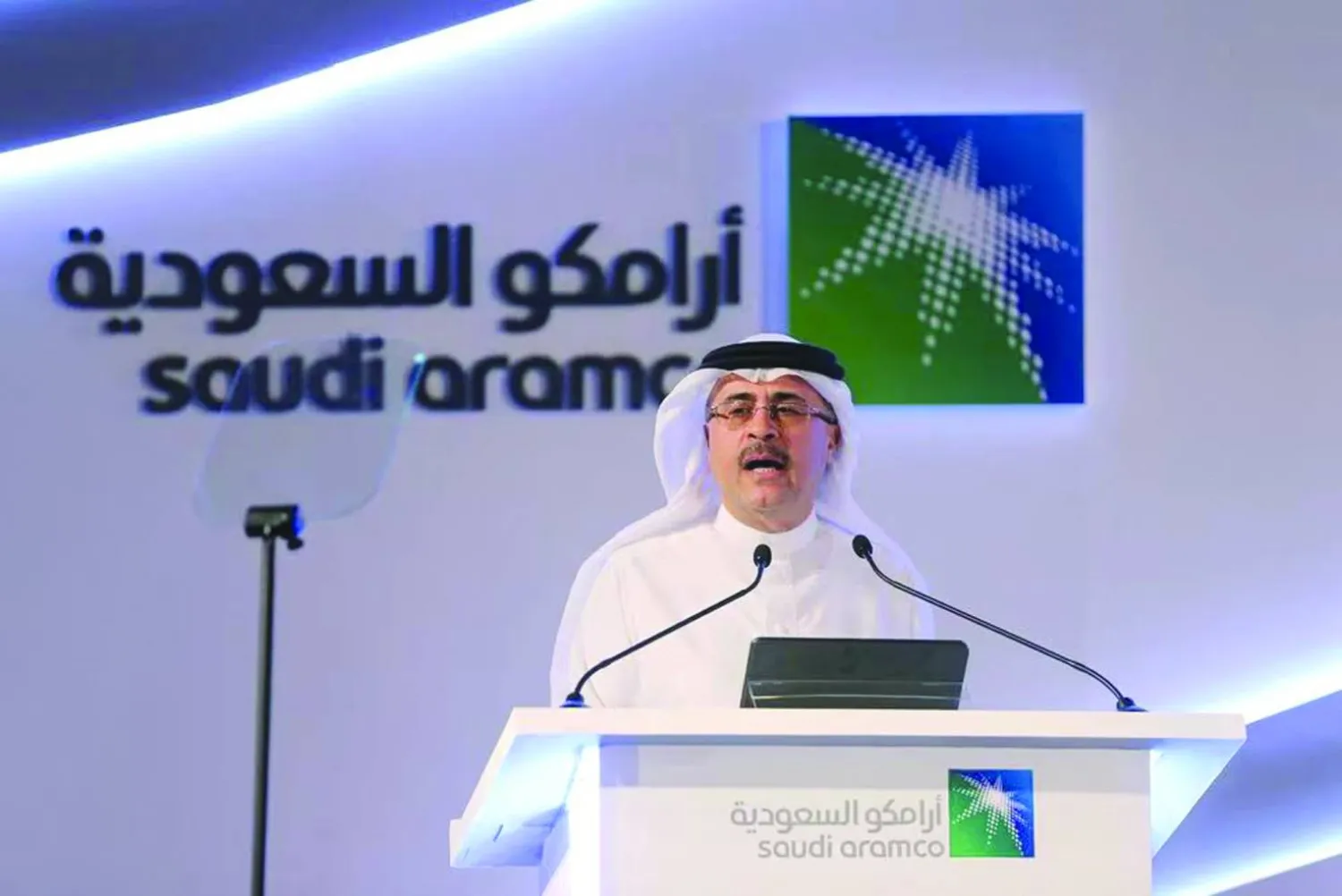
Aramco President and CEO Amin Nasser speaks at a previous Aramco event. (Reuters)
TT

Saudi Aramco Beats Forecasts with Adjusted First-Quarter Income of $33.6 Billion

Aramco President and CEO Amin Nasser speaks at a previous Aramco event. (Reuters)

Saudi Aramco reported a sharp rise in first-quarter profit for 2026, beating analyst expectations as higher oil prices and increased crude sales offset geopolitical disruptions linked to shipping constraints in the Strait of Hormuz.

Aramco’s adjusted net income rose nearly 26% to $33.6 billion (SAR126.0 billion), above analysts’ average forecast of SAR109 billion and up from SAR99.8 billion a year earlier, according to a company statement on Sunday.

The company approved a base dividend of $21.89 billion (SAR82.08 billion), in line with its strategy to provide sustainable and growing returns backed by strong cash flow generation and a solid balance sheet.

The results highlighted Aramco’s ability to generate cash flow from operating activities of $30.7 billion despite heightened geopolitical tensions affecting global energy markets.

Iran’s blockade of shipping through the Strait of Hormuz during the US-Israeli conflict disrupted global energy supplies and pushed oil prices higher, prompting Aramco to increase crude flows from its eastern facilities to the Red Sea port of Yanbu through its East-West pipeline network.

Aramco President and CEO Amin Nasser said in this regard: “Our East-West Pipeline, which reached its maximum capacity of 7.0 million barrels of oil per day, has proven itself to be a critical supply artery, helping to mitigate the impact of a global energy shock and providing relief to customers affected by shipping constraints in the Strait of Hormuz.”

“Recent events have clearly demonstrated the vital contribution of oil and gas to energy security and the global economy, and are a stark reminder that reliable energy supply is critical,” Nasser added.

Crude prices climbed from around $65 per barrel in early February to more than $100 in March after Iran closed the Strait of Hormuz, triggering a global energy shock.

Strong revenue and profit growth

Adjusted net income of $33.6 billion (SAR125.97 billion) exceeded analysts’ consensus estimate of $31.16 billion.

The figure reflects underlying operating performance excluding non-recurring items and accounting impacts related to replacement costs, fair-value movements in certain derivatives and financing costs totaling about $1.06 billion (SAR3.96 billion), according to results published on the Saudi stock exchange website.

Net income rose more than 25% year-on-year to $32.04 billion (SAR120.13 billion), compared with $25.51 billion (SAR95.68 billion) in the same quarter of 2025, driven by higher crude oil prices and increased sales volumes.

Revenue increased 7% to $115.49 billion (SAR433.10 billion), supported by higher prices for crude oil, refined products and chemicals, as well as higher sales volumes of crude and chemical products.

On a quarterly basis, net income jumped 72.9% from the fourth quarter of 2025, rising from $18.53 billion to $32.04 billion, helped by stronger margins and lower operating costs despite higher taxes and zakat payments.

Aramco said shareholders’ equity rose 3.9% year-on-year to $408.46 billion (SAR1.5 trillion), while earnings per share reached $0.13 (SAR0.50).

Cash flow and financial position

Cash flow from operating activities totaled $30.7 billion (SAR115.2 billion).

Free cash flow came in at $18.6 billion (SAR69.9 billion), down slightly from $19.2 billion a year earlier, reflecting a strategic increase in working capital of $15.8 billion (SAR59.1 billion) aimed at ensuring business continuity.

The company maintained a strong capital structure, with gearing at 4.8%, up from 3.8% at the end of 2025. Return on average capital employed stood at 20.7%.

Aramco shares rose 0.8% after the results announcement to close at SAR27.42, with trading volume of around 12 million shares.

Dividends and expansion plans

Aramco’s board declared a first-quarter base dividend of $21.9 billion (SAR82.1 billion), up 3.5% from a year earlier, to be paid in the second quarter.

The company also invested $12.1 billion (SAR45.4 billion) in capital expenditure during the quarter as part of plans to expand production capacity and strengthen strategic infrastructure.

Nasser said the company’s first-quarter performance reflected “strong resilience and operational flexibility in a complex geopolitical environment.”

“Despite these headwinds, Aramco remains focused on its strategic priorities and is leveraging both its domestic infrastructure and its global network to navigate disruption,” he stated.

In comments to Reuters, Nasser warned the global oil market could take time to stabilize after recent disruptions.

The world has lost about one billion barrels of oil over the past two months, Nasser said, adding: “Our goal is simple: to ensure energy keeps flowing, even under the pressure the system is facing.”

Resilience

Hussein Al-Attas, a financial and economic adviser, told Asharq Al-Awsat that Aramco’s results demonstrated the strength of its operating model and its ability to benefit from higher oil prices.

“What stands out in these results is not only profit growth, but also the company’s operational flexibility in managing supply chains and exports under complex geopolitical conditions, which preserved strong cash flow levels and sustainable shareholder distributions,” he noted.

Al-Attas said part of the earnings growth was linked to exceptional price increases during the quarter, meaning future profitability would remain closely tied to global oil price trends and supply stability.

For his part, Mohammed Al-Farraj, senior head of asset management at Arbah Capital, said Aramco’s large cash distributions enhanced the stock’s appeal as a defensive investment for institutional and long-term investors, particularly sovereign wealth funds and pension funds.

He told Asharq Al-Awsat that the company’s low production costs and strong balance sheet supported its ability to continue distributing dividends despite energy market volatility.

Al-Farraj also said Aramco’s $3 billion share buyback program, announced in March, reflected management confidence in the company’s valuation and long-term cash generation capacity.

The repurchased shares will be held as treasury shares and allocated to employee stock programs, the company said.

Al-Farraj added that Aramco continued pursuing diversification through investments in natural gas, liquefied natural gas and projects such as the Jafurah field, while also deploying artificial intelligence technologies to improve efficiency and reduce costs.