


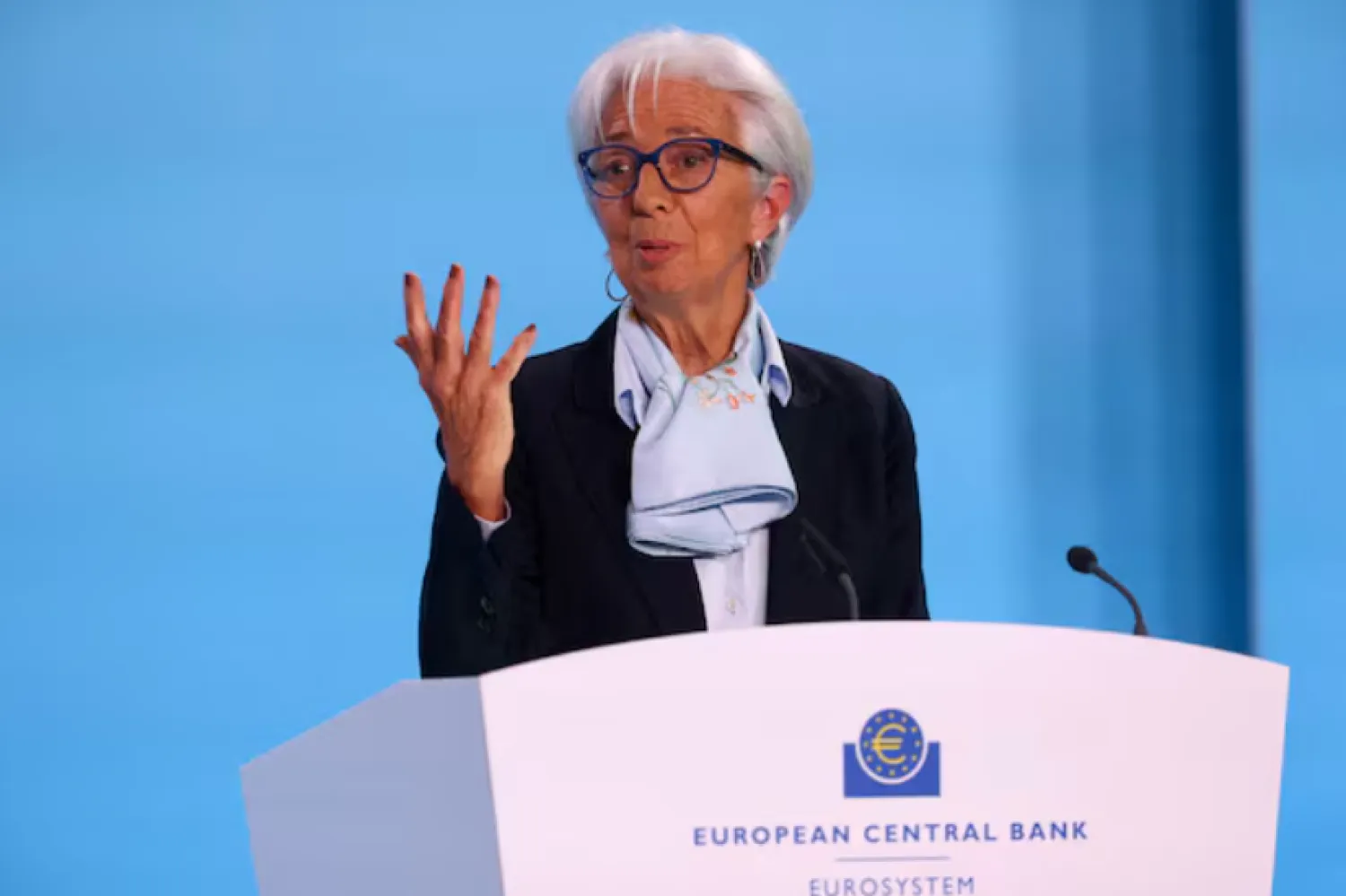

The European Central Bank was all but certain to cut interest rates from record highs on Thursday and was likely to acknowledge it had made progress in its battle against high inflation, while also stressing the fight was not yet over.
ECB policymakers have clearly telegraphed their intention to lower borrowing costs after seeing inflation in the 20 countries that share the euro fall from more than 10% in late 2022 to just above their 2% target in recent months, according to Reuters.
The broad-based decline was seen as more than enough for the ECB to begin undoing the steepest streak of interest rate hikes in its history, which were a response to spiralling prices in the wake of Russia's invasion of Ukraine.
Now, the ECB will join the central banks of Canada, Sweden and Switzerland in cutting rates and moving well ahead of the influential US Federal Reserve.
But what had looked like the start of a major easing cycle only a few weeks ago now appeared more uncertain amid signs that inflation may prove stickier than expected in the euro area, as has been the case in the United States.
This meant that ECB President Christine Lagarde and her colleagues were unlikely to commit to a further rate reduction at their July meeting or beyond just yet.
Instead, they were expected to stress any further move would depend on incoming data and that borrowing costs needed to remain high enough to keep a lid on inflation.
"The cut will set the new direction for policy but with economic momentum outperforming expectations and domestic inflation proving sticky in 2024, the ECB can afford to take things slowly and let the data set the parameters of the easing cycle," Deutsche Bank economists wrote in a note to clients.
The video player is currently playing an ad.00:18Luxury retail: haves versus have nots
All 82 economists polled by Reuters expected the ECB to trim its deposit rate to 3.75% on Thursday from a record 4.0%, in what would be its first cut since 2019.
But not all think it is a good idea.
Gabriele Foà, a portfolio manager at Algebris Investments, said the cut "may soon be viewed as a policy mistake" and JPMorgan economist Greg Fuzesi said it was "oddly rushed".
"The cost of waiting until September appears low while the benefit of getting more clarity on the inflation outlook appears high," Fuzesi added. "For some reason, the ECB Governing Council, however, seems already to have decided many weeks ago to deliver a June cut."


