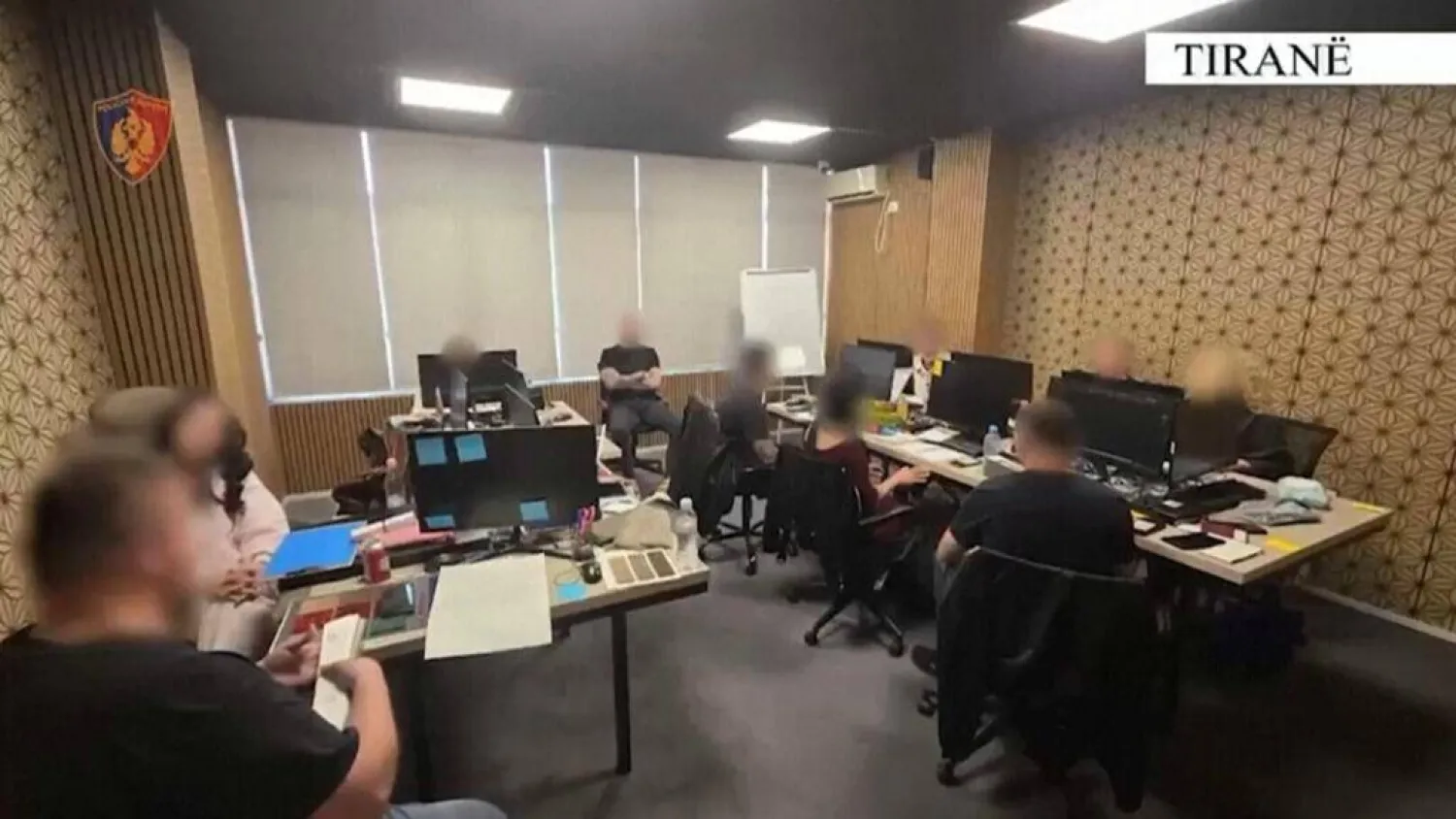
Despite facing up to 10 years in jail on fraud charges for allegedly luring people into putting their savings into an Albania-based cryptocurrency investment scam, Jon shows zero remorse.
"I don't see why I should have any qualms if people fall for it," he told AFP in an interview in a Tirana cafe.
The Albanian capital has become a favored location for scam call centers to set up in recent years, according to former policeman Fatjon Softa, thanks to the city's multilingual population, low wages and possibilities to launder funds.
Jon, whose name has been changed to preserve his anonymity, said he modelled himself on Jordan Belfort, the stockbroker who cheats his way to the top, played by Leonardo DiCaprio in the 2013 film "The Wolf of Wall Street".
In a luxury office building in the center of Tirana, Jon would pass himself off as an American as he contacted potential victims he said others had already identified.
"My job was to lure them in and convince them to invest," said Jon, adding that he sometimes felt "proud" of the job he did.
The job earned the twenty-something Albanian 1,450 euros (a little under $1,700) per month before performance bonuses, compared to the country's minimum wage of 500 euros before taxes.
Jon called it an "excellent opportunity, very well paid".
But after six months in the job he is now required to check in with the court every week until he is tried on fraud charges that carry a jail term of three to 10 years.
- French victims -
At the end of April several Albanian scam centers were dismantled, including the one Jon worked in, following an investigation by police in the southwestern French city of Pau.
French investigators had been seeking to track down the scammers since a complaint in 2023 by an investor who lost 30,000 euros investing on a platform called universatrade.io.
They eventually identified 19 French victims who had lost around 1.5 million euros in the scams.
One of those victims, a businesswoman based in the south of France, said her misfortune began by clicking on an ad about investing in oil.
"Ten minutes later I received a call," said Chantal, whose name has also been changed to protect her anonymity.
"My daughter was getting married, I told myself I could make a little bit extra," she added.
Initially Chantal only invested 250 euros, but after seeing her money quickly quadruple she succumbed when advisors asked if she wanted to invest more money. Soon she was in for 80,000 euros.
Chantal said she researched the investment platforms and found them on the internet, with profiles of their advisors on LinkedIn. One even sent a copy of his identity card.
- Ready to 'blow her brains out' -
In December of last year, three months after her initial investment, Chantal had 300,000 euros of gains in her app account and she tried to withdraw the equivalent of 30,000 euros in cryptocurrency.
"That's when everything went down the drain," she said.
Even though she realized there was a problem the scammers had such a tight grip on her -- calling 15 to 20 times per day -- that they persuaded her to continue investing with promises that additional funds would unlock withdrawals.
"They've got you. What can you do? They have your money," said Chantal.
"You don't sleep all night, your brain just can't cope. And the next day, they tell you: 'By noon there has to be this amount, otherwise you won't get your money back,'" she added.
"So you pay the amount. An hour later, they say it'll be in your account. But it's not there. And you cry, you scream your head off."
A lawyer helped Chantal recover part of the money, which she then lost again.
Chantal said finally she "wanted to blow her brains out", but her family saved her from going through with it.
"People say that victims are gullible, but the scams are put together well", they are very "sophisticated", said a source close to the investigation.
- 'They steal your dignity' -
French investigators were eventually able to track the scammers to Albania, and a police raid recovered a computer hard drive with the names and contact information of the French victims.
Five Albanian nationals were arrested, including the suspected mastermind and owner of the call center, who was remanded into custody pending trial.
As Albania does not extradite its citizens, French prosecutors plan to drop their case in favor of their Albanian colleagues, who have promised to seek compensation for French victims.
Chantal wants to testify so others avoid her misfortune.
"They steal more than your money. They steal your dignity," she said.