Global finance leaders, whipsawed by Middle East war news, came to grips this past week with their inability to mitigate the economic damage from increasingly frequent geopolitical shocks, and a realization that counting on US leadership to resolve crises is no longer the guarantee it had long been.
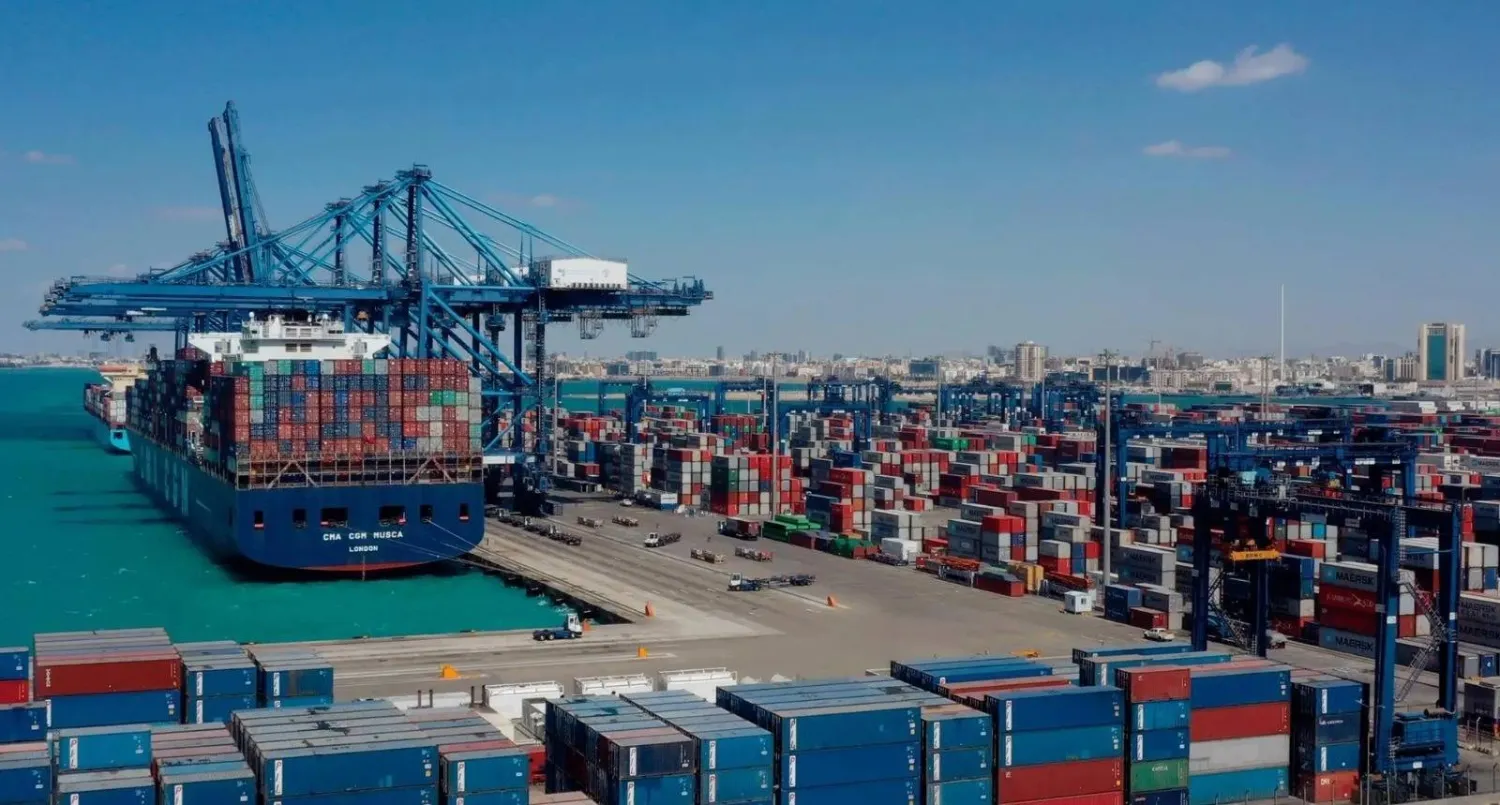
At International Monetary Fund and World Bank Spring Meetings in Washington, participants swung from gloom over a worsening global economic outlook due to deepening energy price and supply shocks to tentative optimism as it appeared Iran may reopen the Strait of Hormuz and allow flows of oil, gas, fertilizer and other commodities to resume.
By Saturday that optimism was already fading amid new attacks on shipping. The IMF and the World Bank pledged up to a combined $150 billion in new financing assistance for developing countries hit hardest by the massive energy price shock, and celebrated their re-engagement with Venezuela's acting government after a seven-year pause.
They warned countries not to hoard oil and not to go overboard with expensive and untargeted fuel price subsidies. But in the end, there was not much they could do but watch statements from Tehran and the White House.
"Actually, some of the most important decisions on the global economy are not happening here," Josh Lipsky, international economics chair at the Atlantic Council, said of the IMF and World Bank campus.
"The single most important development in the global economy happened between the US and Iran," he said. "We hope it's good news, and we'll wait and see."
Despite buoyant stock markets and a sharp drop in oil futures prices on Friday, Saudi Arabia's Finance Minister Mohammed Al-Jadaan summed up the mood of many officials when he said he would not be comfortable predicting an improved outlook until tankers start moving freely through the strait again with reasonably priced insurance and physical energy prices dropping.
"If the clear waters are open," Al-Jadaan told a news conference, "I think that's what would trigger, for me, a change in the scenario."
As soon as the IMF released a mild cut in its global growth forecast for 2026 to 3.1% under the most optimistic of three scenarios it devised for the task, it said that was already outdated and that the global economy was drifting towards a more adverse growth scenario of just 2.5%. The fund's latest World Economic Outlook said a prolonged war could push the global economy into recession.
SHOCK AFTER SHOCK
Before the US and Israel launched attacks on Iran at the end of February, the global economy had just been recovering from last year's shock from President Donald Trump's wave of steep tariffs on global trading partners. Discussions of trade tensions were more muted at this year's meetings, as was Russia's war on Ukraine, though G7 finance ministers pledged to keep up pressure on Russia.
But a constant drumbeat of shocks that started with the COVID-19 pandemic in 2020 and Russia's invasion of Ukraine in 2022 was teaching countries the US is no longer "the general" of the international order and would not necessarily provide solutions, Lipsky said.
US Treasury Secretary Scott Bessent on Friday launched an initiative calling for G20 countries, the IMF and World Bank to take coordinated action to ensure adequate access to fertilizers amid supply disruptions from Gulf countries. But seven weeks after the war's start, that will do little to ease shortages and high prices for farmers now planting spring crops across the Northern Hemisphere.
Kevin Chika Urama, chief economist at the African Development Bank, said the Middle East crisis provided a fresh imperative for African countries to deepen regional trade and economic ties, work on alternative energy sources, expand their domestic tax bases, and tap into enormous natural gas reserves.
"Geopolitical tensions are the new normal and uncertainty in policymaking has become certain," he told a panel with other chief economists from the multilateral institutions.
NOT OUR WAR
Finance ministers, central bankers and other officials attending the meetings expressed frustration at being thrust into another economic calamity by Trump's actions.
Behind closed doors, officials, particularly from Europe, sent a clear message to the US that Washington needed to take action to reopen the strait, a senior finance official who attended the meetings said. In public, the comments were more diplomatic with less finger-pointing.
"The knot of this conflict is the Strait of Hormuz. We need this to open, but not at any price," French Finance Minister Roland Lescure told reporters. "I don't want to pay a dollar to go through the Strait of Hormuz."
Successive shocks, including this war, have scrambled planning for developing economies "and you hardly have time to breathe," Retselisitsoe Adelaide Matlanyane, Lesotho's Minister of Finance and Development Planning, said during a panel of African ministers.
"For small, open, and vulnerable economies like Lesotho, these shocks have presented extraordinary pressures on the fiscals, on prices and on everything."
Matlanyane said managing debt has now become very complex and the tensions have "brought on a sense that we have to rethink policy and we have to think differently."
"It's frustrating dealing with this," she told Reuters.
For Thailand, a net energy importer that will host IMF and World Bank annual meetings in October, the lingering effects of destroyed Gulf oil and gas infrastructure will keep prices elevated for a long time, said Ekniti Nitithanprapas, deputy prime minister of Thailand.
But he said the crisis was an opportunity for Thailand to reduce its reliance on fossil fuels and boost the role of renewable energy, including solar farms - the opposite of Trump's energy agenda. "We need to commit to transform... to help people transform to face the new fragmented world and high oil prices," Nitithanprapas said.