


Saudi Arabia: Regional Security at Risk Without Addressing Palestinian Rights

Saudi Foreign Minister Prince Faisal bin Farhan speaking on Thursday during the Future Investment Initiative (FII) forum in Riyadh (Reuters)
TT

Saudi Arabia: Regional Security at Risk Without Addressing Palestinian Rights

Saudi Foreign Minister Prince Faisal bin Farhan speaking on Thursday during the Future Investment Initiative (FII) forum in Riyadh (Reuters)

Saudi Foreign Minister Prince Faisal bin Farhan said Thursday that normalization with Israel won’t happen until there’s progress toward a Palestinian state.

He stressed that a two-state solution must be implemented with practical steps to ensure Palestinians’ right to self-determination.

At the Future Investment Initiative (FII) forum in Riyadh, Prince Faisal said a Palestinian state “is not tied to whether or not Israel accepts it; it is tied to principles of international law.”

“UN resolutions that led to the establishment of the state of Israel clearly had a Palestinian state in view as well; so we need to make that happen,” added Prince Faisal.

He urged for Palestine to gain UN membership quickly, warning that regional security could suffer if Palestinian rights aren’t addressed.

“I would say certainly that normalization with the Kingdom of Saudi Arabia is not just at risk, it is off the table until we have a resolution to Palestinian statehood,” noted the top diplomat.

“But I would say more than that, it is not just the issue of the normalization with the Kingdom that is at risk, I would say that the security of the region at whole is at risk, if we do not address the rights of the Palestinians, and if we do not find a way for a pathway that leads us to a Palestinian state,” explained Prince Faisal.

The Minister said ceasefire talks in Gaza have repeatedly failed due to new demands from Israel.

He called Israeli attacks in northern Gaza a form of “genocide” that fuels violence and said the offensive has created “a humanitarian disaster.”

As for Iran, the Saudi Minister said ties are moving in the right direction despite regional challenges.

He revealed having open discussions with Iran to understand each other’s views better and avoid misunderstandings. Prince Faisal added that these efforts, in coordination with Gulf Cooperation Council (GCC) allies, aim to strengthen stability and build a positive relationship.

Prince Faisal noted that Iran seems to recognize the risks of further escalation and wants to avoid it.

“I conveyed to my Iranian counterpart (Abbas Araghchi) the importance of preventing any new escalation,” Prince Faisal noted, adding that he sensed that the Iranians understand the dangers and prefer restraint, though of course, they have their own strategic calculations to consider.

The Minister said Saudi Arabia’s tensions with Iran stemmed from Tehran’s regional actions, which Riyadh saw as destabilizing.

He relayed that Saudi Arabia was very clear in honest and open discussions with Iran as part of talks in Beijing, adding that these dialogues are being conducted in a way that ensures that the two countries are moving in the right direction.

He also dismissed reports of joint military exercises with Iran, adding, “Military drills are unlikely anytime soon.”

Prince Faisal said Saudi Arabia and Gulf countries are capable of managing regional conflicts while maintaining progress and stability.

He noted the significant achievements of Vision 2030 in Saudi Arabia, even amid occasional challenges. He emphasized the maturity of Saudi and Gulf economies, which enables them to withstand geopolitical impacts.

He also stressed that there is no ambiguity in Saudi foreign policy, stating that the Kingdom has been clear on all issues, including the situation in Gaza.

Regarding the situation in Lebanon, Prince Faisal said: “We never fully disengaged, we continue to have the view that it is up to the Lebanese and Lebanese politicians to seek a direction that puts Lebanon on the right track.”

“It’s not up to any outside influence, any outside countries or any outside powers to tell the Lebanese what to do or to influence the political process in Lebanon, that is our opinion,” he clarified.

Prince Faisal expressed hope for a ceasefire in Lebanon soon but noted he was unsure of the current situation.

However, he reiterated support for US efforts to create a path toward a ceasefire, and hoped this can be achieved for both Lebanon and Gaza.

In response to a question about Iran’s influence over certain Lebanese factions, Prince Faisal expressed hope that Iran would align with Saudi Arabia’s efforts to de-escalate crises throughout the region, not just in Lebanon.

He emphasized that this topic has been central to his discussions with his Iranian counterpart.

The Saudi Minister noted that Iran appears to be moving toward reducing escalation, recognizing it is not in their interest, and he hopes this intention will lead to tangible actions.

Prince Faisal further stated that the only way to ease tensions in the region is for all parties to make a conscious decision to do so, as any further escalation could pose significant risks for everyone involved, including Israel, which also needs to work toward reducing tensions.
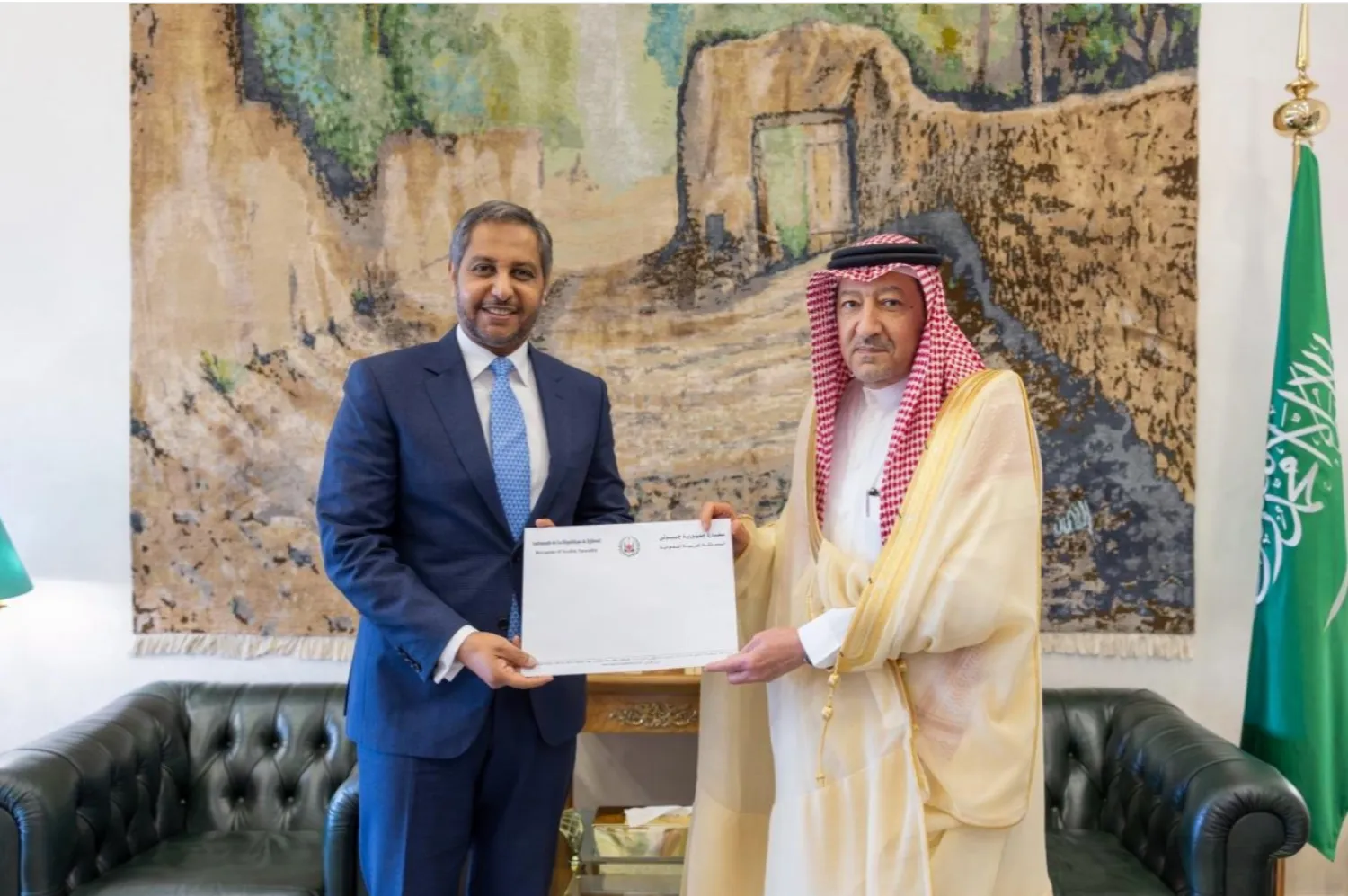



Saudi Foreign Minister, Slovak Deputy Prime Minister Sign General Cooperation Agreement

The two sides signed a general cooperation agreement aimed at enhancing cooperation and mutual understanding across various fields - SPA
TT

Saudi Foreign Minister, Slovak Deputy Prime Minister Sign General Cooperation Agreement

The two sides signed a general cooperation agreement aimed at enhancing cooperation and mutual understanding across various fields - SPA

Saudi Minister of Foreign Affairs Prince Faisal bin Farhan bin Abdullah met in Riyadh Monday Deputy Prime Minister and Minister of Defense of the Slovak Republic Robert Kaliňák.

They reviewed ways to strengthen cooperation between the two countries in a manner that serves their mutual interests and discussed regional and international developments, SPA reported.

The two sides signed a general cooperation agreement between the Government of the Kingdom of Saudi Arabia and the Government of the Slovak Republic, aimed at enhancing cooperation and mutual understanding across various fields.


Khalid bin Salman Visits Saudi Interior Ministry Pavilion at World Defense Show

Prince Khalid was briefed on the ministry’s operational capabilities to enhance decision-making. SPA
TT

Khalid bin Salman Visits Saudi Interior Ministry Pavilion at World Defense Show

Prince Khalid was briefed on the ministry’s operational capabilities to enhance decision-making. SPA

Saudi Minister of Defense Prince Khalid bin Salman bin Abdulaziz visited the Ministry of Interior's pavilion at the World Defense Show, held in Riyadh.

Prince Khalid was briefed on the ministry’s operational capabilities to enhance decision-making, command and control, and predictive intelligence, all aimed at protecting residents across the Kingdom.

During his tour, he explored how the ministry is advancing proactive security and efficient emergency management through innovative technical solutions.

The tour also underscored the role of the unified security operations centers (911) in the national response system and the ministry's commitment to international partnerships in security and smart systems.


OIC Condemns Israeli Cabinet's Legalization of Settlements

 Israeli soldier points his weapon towards the camera, during a weekly settlers' tour in Hebron, in the Israeli-occupied West Bank, February 7, 2026. (Reuters)
Israeli soldier points his weapon towards the camera, during a weekly settlers' tour in Hebron, in the Israeli-occupied West Bank, February 7, 2026. (Reuters)
TT

OIC Condemns Israeli Cabinet's Legalization of Settlements

 Israeli soldier points his weapon towards the camera, during a weekly settlers' tour in Hebron, in the Israeli-occupied West Bank, February 7, 2026. (Reuters)
Israeli soldier points his weapon towards the camera, during a weekly settlers' tour in Hebron, in the Israeli-occupied West Bank, February 7, 2026. (Reuters)

The General Secretariat of the Organization of Islamic Cooperation (OIC) condemned on Monday the Israeli cabinet’s approval of measures that aim to deepen Israeli control over the occupied West Bank and weaken the already limited powers of the Palestinian Authority.

The OIC said Israel’s “colonial settlement policy constitutes a war crime and a flagrant violation of international law and relevant United Nations resolutions, foremost among which is Security Council Resolution 2334 and the legal opinion issued by the International Court of Justice.”

It renewed its call on the international community, particularly the Security Council, “to shoulder its responsibilities and take immediate action to put an end to all crimes and violations committed by Israel against the Palestinian people, their land, and their holy sites.”

The office of Israeli far-right Finance Minister Bezalel Smotrich in a statement announced the decisions that would make it easier for Jewish settlers to force Palestinians to give up land, adding that “we will continue to bury the idea of a Palestinian state.”

Palestinian President Mahmoud Abbas in a statement called the decision “dangerous” and an “open Israeli attempt to legalize settlement expansion” and land confiscation. He called for the United States and UN Security Council to intervene immediately.

The decision was announced a few days before Israeli Prime Minister Benjamin Netanyahu is expected to meet with US President Donald Trump in Washington about Iran and other matters.

The measures announced Sunday include canceling a prohibition on sales of West Bank land to Israeli Jews, declassifying West Bank land registry records to ease land acquisition, transferring construction planning at religious and other sensitive sites in the volatile city of Hebron to Israeli authorities, and allowing Israeli enforcement of environmental and archaeological matters in Palestinian-administered areas.

The measures also would revive a committee that would allow the state of Israel to make “proactive” land purchases in the territory — “a step intended to guarantee land reserves for settlement for generations to come.”