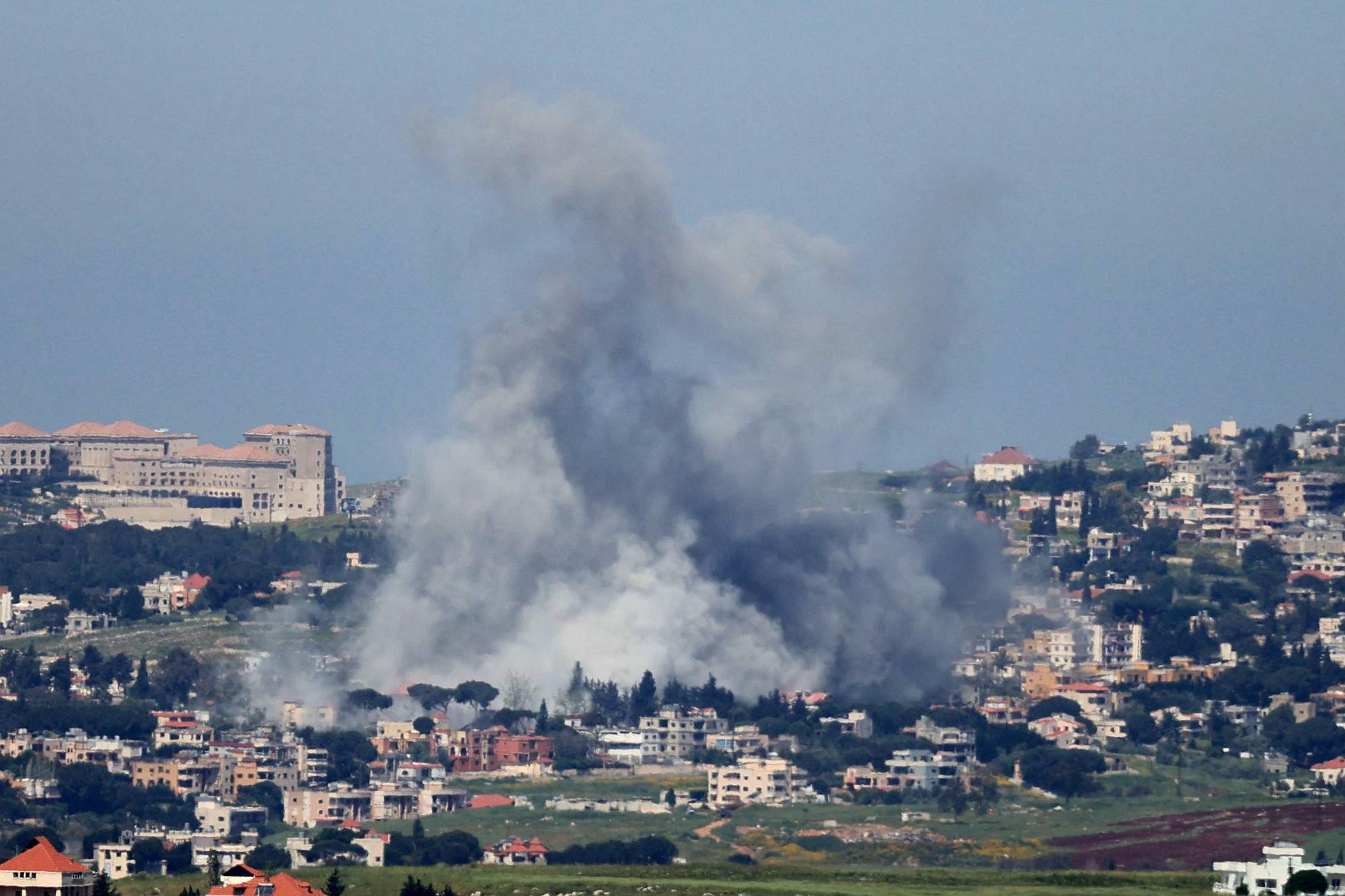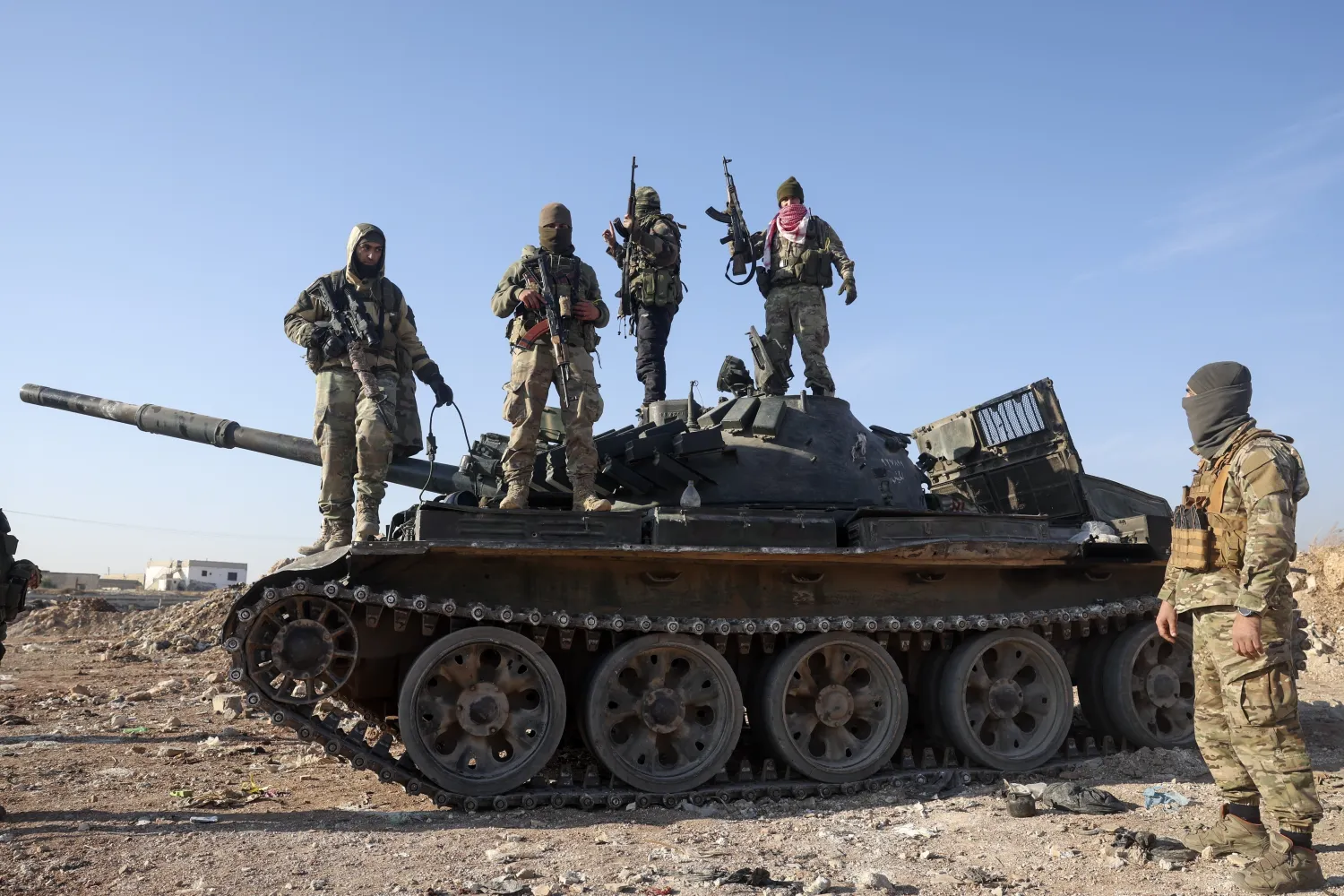

Thousands of people fled the central Syrian city of Homs, the country's third largest, as opposition factions seized two towns on the outskirts Friday, positioning themselves for an assault on a potentially major prize in their march against President Bashar al-Assad.
The move, reported by pro-government media and an opposition war monitor, was the latest in the stunning advances by opposition fighters over the past week that have so far met little resistance from Assad's forces. A day earlier, fighters captured the central city of Hama, Syria’s fourth largest, after the army said it withdrew to avoid fighting inside the city and spare the lives of civilians.
The opposition fighters, led by the Hayat Tahrir al-Sham group, or HTS, have vowed to march to Homs and the capital, Damascus, Assad’s seat of power. Videos circulating online showed a highway jammed with cars full of people fleeing Homs, a city with a large population belonging to Assad's Alawite sect, seen as his core supporters.
If Assad's military loses Homs, it could be a crippling blow. The city, parts of which were controlled by the opposition until 2014, is at an important intersection between Damascus and Syria’s coastal provinces of Latakia and Tartus, where Assad enjoys wide support. Homs province is Syria’s largest in size and borders Lebanon, Iraq and Jordan.
The foreign ministers of Iran, Iraq and Syria — three close allies — gathered Friday in Baghdad to consult on the rapidly changing war. Iraqi Foreign Minister Fuad Hussein expressed "deep concern," saying his government is closely following the situation in Syria.
Syrian Foreign Minister Bassam Sabbagh said the current developments may pose "a serious threat to the security of the region as a whole."
The opposition fighters on Friday took over the towns of Rastan and Talbiseh, putting them 5 kilometers (3 miles) from Homs, according to the Britain-based Syrian Observatory for Human Rights, an opposition war monitor.
"The battle of Homs is the mother of all battles and will decide who will rule Syria," said Rami Abdurrahman, the Observatory’s chief.
Pro-government Sham FM said the opposition entered Rastan and Talbiseh without facing any resistance. There was no immediate comment from the Syrian military.
The Observatory said Syrian troops had left Homs. But the military denied that in comments reported by the state news agency SANA, saying troops were reinforcing their positions in the city and were "ready to repel" any assault.
For the past week, government troops have repeatedly fallen back in the face of the sudden opposition offensive, which flipped the tables on a long-entrenched stalemate in Syria's nearly 14-year-old civil war.
After years of largely being bottled up in a northwest corner of the country, the opposition factions began their advances a week ago with the capture of the northern city of Aleppo, Syria's largest. Along with HTS, the fighters include forces of an umbrella group of Turkish-backed Syrian factions called the Syrian National Army.
The abrupt turnaround has struck a blow to Syria's already decrepit economy. On Friday, the US dollar was selling on Syria's parallel market for about 18,000 pounds, a 25% drop from a week ago. When Syria’s conflict erupted in March 2011, a dollar was valued at 47 pounds. The drop further undermines the purchasing power of Syrians at a time when the UN has warned that 90% of the population is below the poverty line.
Syria's economy has been hammered for years by the war, Western sanctions, corruption and an economic meltdown in neighboring Lebanon, Syria's main gate to the outside world.
Damascus residents told The Associated Press that people are rushing to markets to buy food, fearing further escalation.
The worsening economy could be undermining the ability of Syria's military to fight, as the value of soldiers' salaries melts away while the opposition are flush with cash.
Syria's military, which is backed by Russian forces stationed in the country, has not appeared to put up a cohesive counteroffensive against the opposition advances. SANA on Friday quoted an unnamed military official as saying the Syrian and Russian air forces were striking the opposition in Hama province, killing dozens of fighters.
Syria’s defense minister said in a televised statement late Thursday that government forces withdrew from Hama as "a temporary tactical measure" and vowed to gain back lost areas.
"We are in a good position on the ground," Gen. Ali Mahmoud Abbas said, saying troops remained "at the gates of Hama." He spoke before the opposition advanced further south toward Homs.
He said the opposition, whom he described as "takfiri" or Muslim extremists, are backed by foreign countries. He did not name the countries but appeared to be referring to Türkiye, which is a main backer of the opposition, and the United States.
Turkish President Recep Tayyip Erdogan said Friday that the opposition advances were not something Türkiye desired, but he appeared to welcome that they were proceeding without clashes or harm to civilians.
Erdogan appeared to blame the developments on Assad’s refusal to enter a dialogue with Türkiye.
"We had made a call to Assad. We said, ‘Come, let’s meet. Let’s determine the future of Syria together,’" he said. "Unfortunately, we could not get a positive response from Assad."